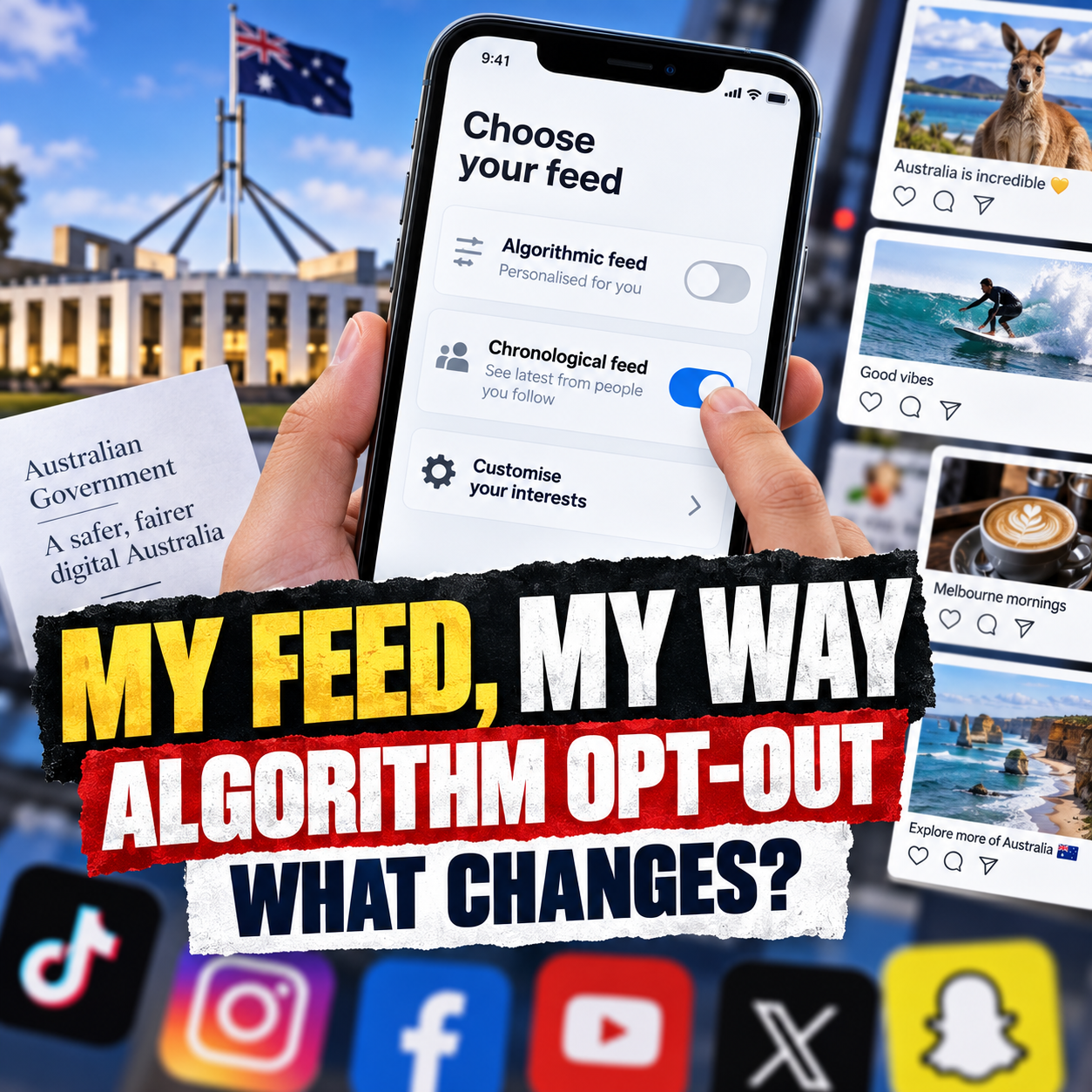
Australians could soon get a much clearer choice over what appears in their social media feeds under draft federal laws that would require major platforms to let users decide whether their default experience is driven by personalised recommendations or by the people and accounts they have chosen to follow.
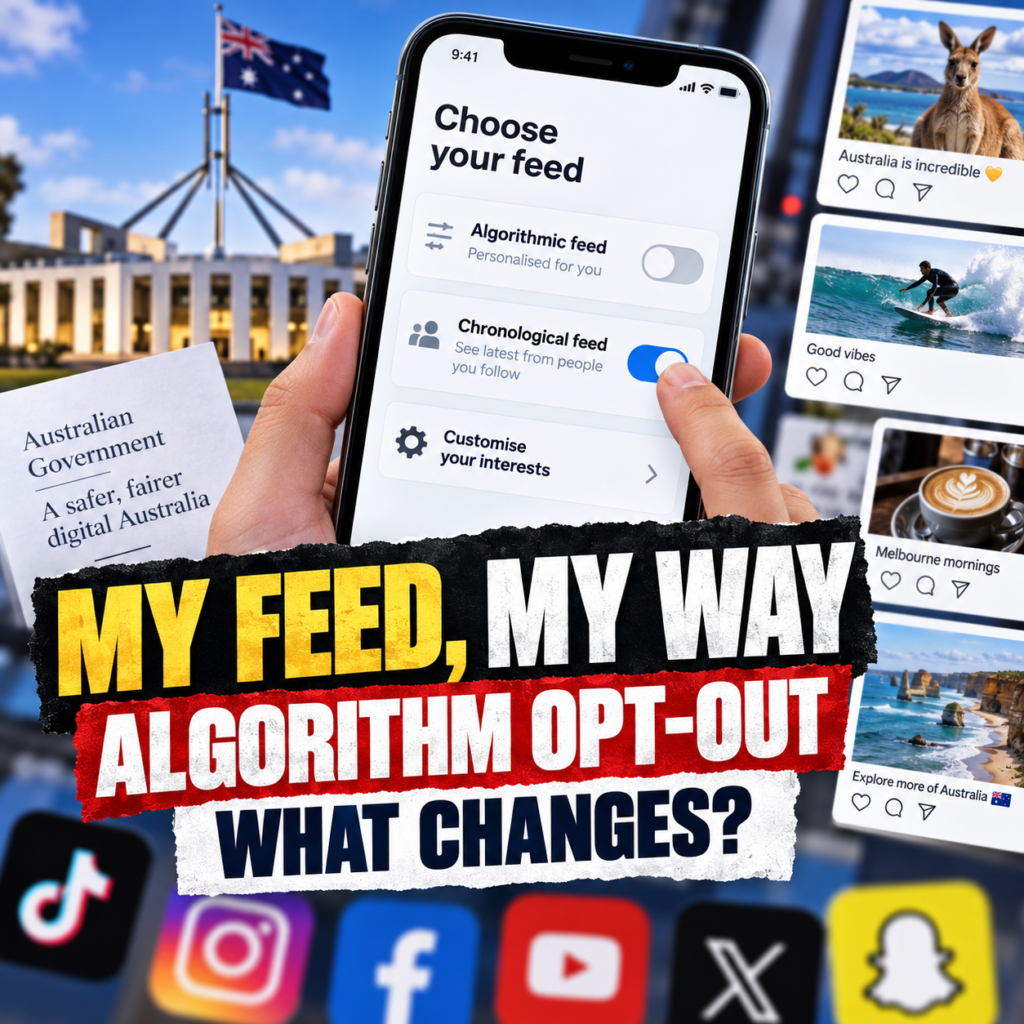
The Albanese government has called the proposal “My Feed, My Way”. It forms part of the draft Digital Duty of Care legislation released for consultation and is designed to shift some control away from recommendation systems that decide what users see based on data about their behaviour.
Under the proposal, social media companies would have to notify new and existing users and offer them a choice over their default primary feed. Users could choose a personalised algorithmic feed, or a feed focused on content from accounts they deliberately follow.
The government says the choice must be genuine and enduring, meaning users should be able to change their preference rather than being locked into a one-time setting. Communications Minister Anika Wells said the practical effect would be that platforms have to ask users what they want their default feed to be and then continue allowing them to change that decision.
The proposal does not ban algorithms. Australians who prefer personalised recommendations would still be able to use them. The policy is instead aimed at ending the situation where a recommendation engine is effectively the default for everyone, even if the user would rather see posts in a more direct or chronological way.
That distinction matters because modern social media feeds are no longer simple lists of posts from friends or followed accounts. Platforms increasingly use ranking systems that predict what a person is likely to watch, click, like or share, then use those predictions to select more content. The result can keep users engaged for longer, but it also means the platform — rather than the user — has a major role in deciding what is placed in front of them.
The government is presenting the measure as a consumer-choice reform rather than an attempt to dictate what Australians should see. Prime Minister Anthony Albanese said the aim is to put power back in the hands of users and allow people to decide whether they want algorithmic recommendations.
The draft laws sit within a wider Digital Duty of Care framework. The government says digital service providers would have to take reasonable steps to provide a safer online environment and meet minimum standards around the features and systems they use.
That broader package is particularly focused on online harm. The government has said platforms would be expected to protect children from harmful material, including content that promotes eating disorders, misogyny, pornography or the glorification of crime. It also proposes stronger powers for eSafety in areas including abusive content and so-called nudify services.
For adults, however, the feed-choice proposal could be the part users notice most directly. Instead of relying on settings buried several menus deep, the government wants platforms to actively offer the choice to users.
The proposal is also different from forcing all platforms to use a chronological feed. Some services already provide alternatives such as “following”, “latest” or “friends” tabs, but those options are not always the default and can be less prominent than the main recommendation feed. The draft reform seeks to make the user’s choice about the default experience more explicit.
There are several practical questions still to be worked through. Platforms have different designs and recommendation systems, and a following feed on one service may not function exactly like a following feed on another. Regulators would need to decide how much flexibility companies have in implementation while still meeting the requirement that users receive a meaningful alternative.
Another issue is how platforms present the choice. A nominal opt-out is very different from a neutral choice screen. If one option is easier, more colourful or more strongly encouraged than another, users may be steered back toward the platform’s preferred setting. The government has signalled that it wants a genuine choice rather than a setting that technically exists but is difficult to find or maintain.
Wells has acknowledged that overseas regulators have encountered forms of “malicious compliance” from large technology companies, where a platform follows the letter of a rule while designing the experience in a way that weakens its effect. The consultation process is intended to help determine how the Australian rules should prevent that outcome.
The reform follows the government’s separate move to restrict social media access for children under 16. The two policies address different issues. The age restrictions are about whether younger teenagers should be on certain services at all, while My Feed, My Way is about how Australians who can use those services control what appears in their feed.
The draft Digital Duty of Care would apply more broadly than a single app or company, but the exact services and obligations will depend on the final legislation and regulatory design. The government is consulting before introducing the final framework, so some details may change.
For major technology companies, the proposal challenges a core part of the social media business model. Recommendation engines are valuable because they can increase the amount of time people spend on a service and expose users to content beyond the accounts they already follow. More engagement can mean more opportunities to show advertising.
That does not mean most users will turn the algorithms off. Many people enjoy discovering new content and may choose to keep personalised recommendations. The policy’s significance is that the government wants the decision to belong to the user rather than being made automatically by the platform.
There is also a broader debate about whether algorithmic feeds contribute to polarisation, compulsive use or exposure to harmful material. Researchers and regulators have spent years examining those questions, but the effects can vary depending on the platform, the user and the type of content. The government’s proposal does not depend on proving that every algorithmic recommendation is harmful; it rests on the argument that people should have more control over systems that shape what they see.
For older Australians and people who primarily use social media to keep up with family, local groups or selected news sources, a following-based feed could make the experience simpler. For younger or highly active users, personalised recommendations may remain more attractive. The legislation is designed to allow both choices.
The proposal could also change how publishers, creators and small businesses think about reach. If a significant number of users switch away from recommendation feeds, content discovery could become more dependent on existing followers. On the other hand, users who deliberately choose a following feed may be more likely to see content from accounts they have already decided they value.
For news publishers, that would be a meaningful change. Social platforms have spent years reducing the predictability of organic distribution by changing ranking systems. A user-controlled default could make the relationship between followers and the pages they follow more direct, although the real effect would depend on how each platform implements the rules.
The government has not yet reached the final legislative stage. The exposure draft is being used for targeted consultation, meaning technology companies, safety advocates, experts and other stakeholders can argue over how the obligations should work before the bill is finalised.
There will also be questions about enforcement. A choice on paper will matter only if platforms comply and regulators have enough authority to act when they do not. The government has pointed to eSafety and the wider Digital Duty of Care framework as part of the enforcement architecture, but the final powers and penalties will be important.
If the measure becomes law in its proposed form, Australians may eventually see a new prompt when opening social media: keep the platform’s personalised recommendation system, or make posts from chosen accounts the default. It is a relatively simple user-facing decision, but it represents a significant policy shift in how Canberra wants large digital platforms to operate.
The larger principle behind My Feed, My Way is that the systems shaping online attention should not be entirely invisible or automatic. Australians would still be free to choose the algorithm. The difference is that, for the first time under a national law, platforms could be required to ask.