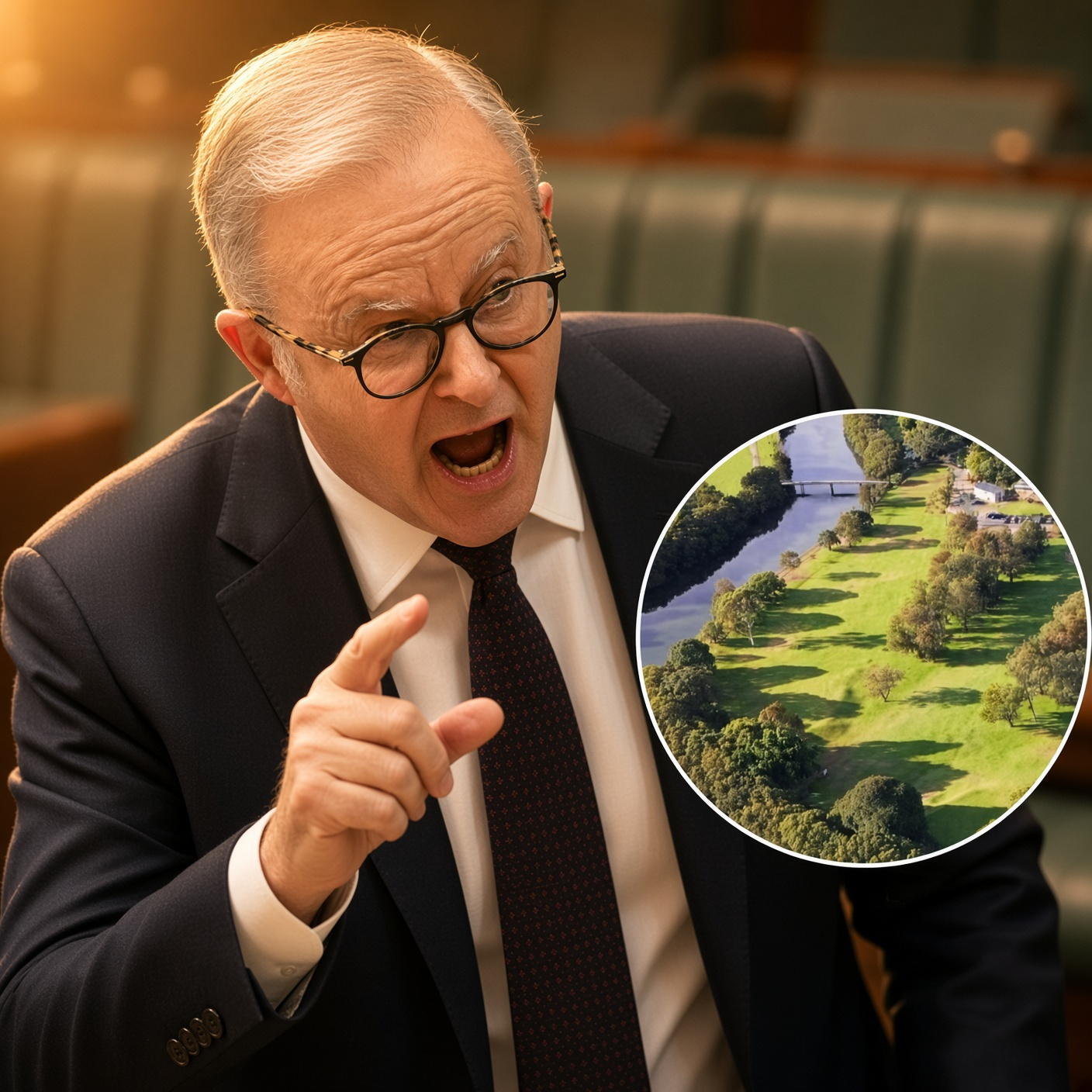
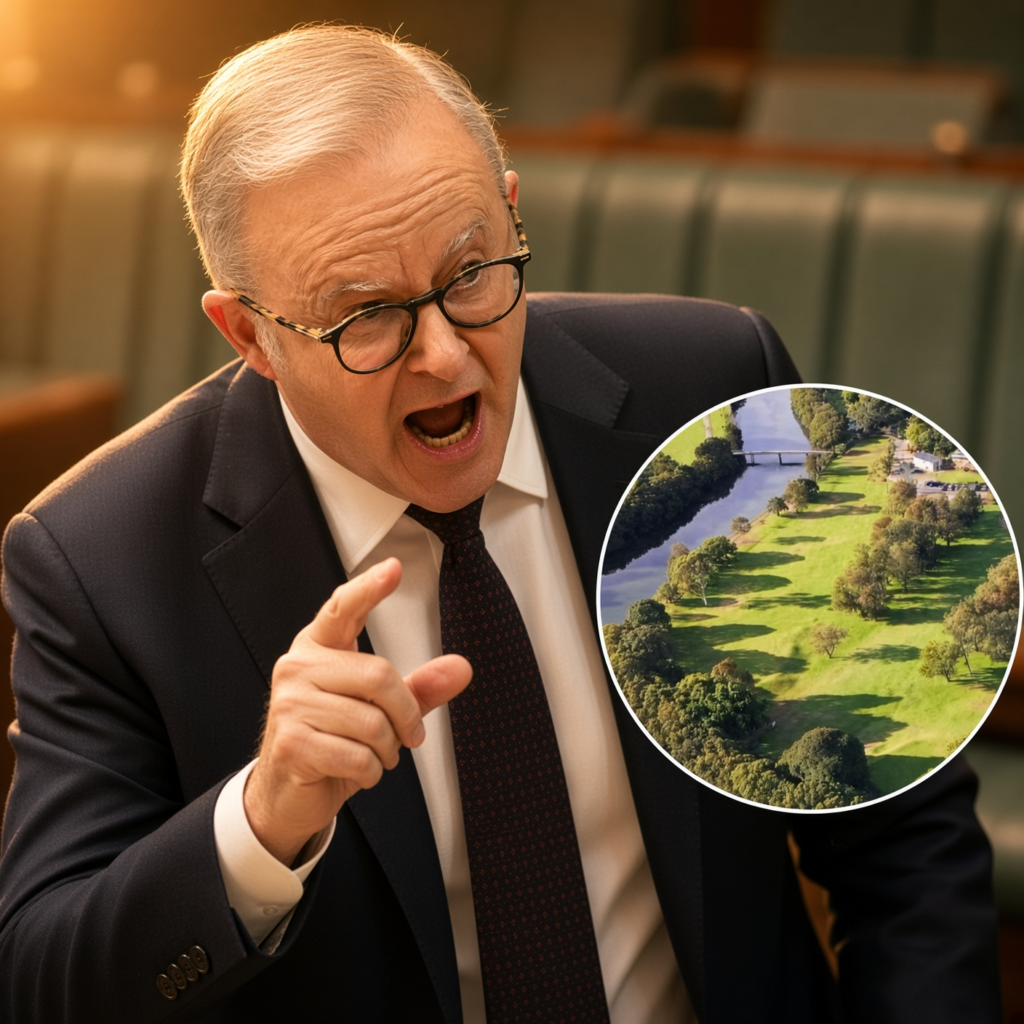
Prime Minister Anthony Albanese has told the ABC to “do better” after the public broadcaster examined his undeclared honorary membership of a golf club in his Sydney electorate that was awarded $6.05 million through a Labor election infrastructure program now facing wider scrutiny over how projects were selected.
Albanese has strongly defended both the funding and his relationship with Marrickville Golf Club, saying he does not play golf, has no membership card and had not realised an honorary membership given to him years ago was still recorded by the club.
He has also rejected suggestions that the grant represented an improper personal benefit.
The controversy, however, is increasingly about more than one golf club.
Fresh analysis of Labor’s $560 million Major and Local Community Infrastructure program has intensified questions over why particular organisations were invited to seek funding, why dozens of electorates received nothing and what role Labor politicians played in constructing the list of election commitments later assessed through the scheme.
‘The ABC chose to do this’
Albanese was challenged directly about the golf club during an ABC News Breakfast interview on September 9.
Host James Glenday asked whether he held an honorary membership and whether it should have appeared on his parliamentary register of interests.
The Prime Minister initially responded by explaining that three projects in his electorate had received funding.
He pointed first to an upgrade for the Leichhardt Women’s Health Centre and then to funding for a St Vincent de Paul shelter for women and children escaping domestic violence.
The third project was the Marrickville Golf Club redevelopment.
Albanese said the golf course was a public community facility owned by Inner West Council and argued the infrastructure work was needed partly because flooding could cause raw sewage to enter the Cooks River.
Pressed again on his membership, he said he had apparently been given an honorary membership about 15 years earlier.
He said he had no card, did not play golf and had not been inside the clubhouse for many years.
“The ABC chose to do this. That is up to them,” he said.
He later criticised the broadcaster’s coverage more directly and said it should do better.
The membership dates to 2012
Later in parliament, Albanese said he had been advised the honorary membership was conferred in 2012.
He sought to minimise its financial significance by pointing out that a basic two-year social membership at Marrickville Golf Club costs only $5.
A full playing membership is considerably more expensive, but Albanese says he was never an active golfing member.
The club itself told the ABC that Albanese remained “on the books” as an honorary member but that the arrangement dated back a long time and had not been reaffirmed.
That is important because the controversy does not involve evidence that the Prime Minister was enjoying regular free rounds of golf or receiving a substantial commercial benefit from the club.
The issue is instead whether a longstanding honorary association should have been disclosed once the club became the beneficiary of a multimillion-dollar government commitment.
Parliamentary rules are not as simple as ‘all memberships must be declared’
Members of the House of Representatives are required to register membership of organisations where a conflict with their public duties could foreseeably arise or be seen to arise.
But official explanatory guidance adds an important qualification.
Membership of ordinary local community, sporting or charitable organisations would generally not be expected to create such a conflict.
That means the mere existence of an honorary golf-club membership does not automatically establish that Albanese breached parliamentary rules by failing to list it.
There has been no formal finding that he did.
At the same time, Albanese has declared other honorary memberships.
His current register includes an honorary membership of Royal Sydney Golf Club, an honorary association with the Western Suburbs Lawn Tennis Association and membership of Marrickville Lawn Tennis Club, among other organisations.
That has allowed critics to ask why Marrickville Golf Club was treated differently.
The answer could ultimately depend on whether Albanese knew or reasonably regarded the old honorary status as sufficiently active or relevant to create an apparent conflict.
He says he did not know he remained an honorary member.
The Prime Minister’s association with the club is nevertheless longstanding
Although Albanese says he has not used the clubhouse in years, his links with the Marrickville course extend well beyond an old name on a membership list.
He has represented the surrounding area for decades and previously lived nearby.
He regularly walked his dog on the course and publicly fought against a 2019 proposal that would have reduced the 18-hole facility to nine holes.
During that campaign, Albanese referred to his long association with the club and said he had been coming there for decades.
He has also attended political events at the venue, including Labor candidate functions.
None of that demonstrates wrongdoing.
Members of parliament routinely advocate for sporting clubs, community centres and local organisations in their electorates.
Indeed, voters generally expect them to do so.
The political problem arises because that close local connection is now being examined alongside a $6.05 million taxpayer-funded commitment made during an election campaign.
How the golf club obtained the funding
Marrickville Golf Club told the ABC it approached Albanese’s electorate office after a redistribution returned the club to the federal seat of Grayndler in late 2024.
The club said the discussions were with staff rather than the Prime Minister personally.
It was encouraged to outline infrastructure needs and subsequently presented ideas for improvements.
The eventual $6.05 million commitment was designed to fund major clubhouse and community-facility works, including accessibility improvements, outdoor areas, landscaping and upgrades to sewerage and stormwater infrastructure.
Inner West Council publicly welcomed the commitment after Labor’s 2025 election victory and began planning how the project would be delivered with the club.
The physical need for some of the work is therefore not seriously in dispute.
The more difficult question is why Marrickville Golf Club had access to this particular funding process when many other organisations did not.
Only invited projects could apply
The MLCI program was created to deliver infrastructure commitments Labor had made during the 2025 federal election campaign.
It was not an open competition in which every council, club or community organisation could submit an application.
Projects first had to be identified and invited.
Once invited, they were subjected to grant processes including value-for-money assessment.
Labor argues that distinction is normal for election commitments.
Political parties campaign by promising particular projects, voters judge those promises and an elected government subsequently funds them.
Infrastructure Minister Catherine King has said the program complied with grant rules and that she provided the final approval for projects, making Albanese’s honorary membership irrelevant to the formal decision.
The government has also stressed that more than $1.7 billion was made available through other competitive grant programs.
Critics argue the unanswered question comes earlier in the process.
If only hand-picked projects are allowed through the door, a value-for-money assessment after invitation does not establish that the original choice of projects was politically neutral.
Fresh figures have widened the controversy
Analysis released by the Centre for Public Integrity and reported by the ABC shows the MLCI funding was distributed heavily towards electorates Labor held or was attempting to win.
Three quarters of the money committed under the program went to seats notionally held by Labor heading into the 2025 election.
More than $220 million went to marginal electorates where Labor was competitive.
Another roughly $270 million went into fairly safe or safe Labor seats.
Only about $66 million went to electorates where Labor was not considered competitive.
Forty-five federal electorates received no MLCI funding at all.
Those included seats held by prominent opposition figures, although seven Labor seats also received nothing.
The figures do not by themselves prove unlawful pork-barrelling.
Election commitments are inherently political and governments regularly spend money in electorates they have promised to support.
But the distribution has strengthened calls for disclosure of how the original project list was assembled.
Marrickville was the only golf club invited
The political comparison has been sharpened by the experience of Rutherglen Golf Club in independent MP Helen Haines’s Victorian electorate of Indi.
The ageing club reportedly needs extensive repairs, including work related to asbestos, white ants and structural deterioration.
Haines said she had previously tried to help the club seek government funding but discovered it could not put its case through the MLCI because it had never been invited.
Marrickville Golf Club was the only golf club invited into the scheme.
Haines has argued that this demonstrates why transparent selection criteria matter.
The criticism is not necessarily that Marrickville should receive nothing.
It is that taxpayers should be able to understand why one organisation was selected for access while similar organisations elsewhere were excluded before assessment began.
The Bridget McKenzie comparison is politically potent but imperfect
Shadow Infrastructure Minister Bridget McKenzie has been among the strongest critics of Albanese.
The comparison is awkward for Labor because McKenzie resigned from cabinet in 2020 after controversy over the Coalition’s sports grants program and the revelation that she held an honorary membership of a shooting club that received funding.
Labor attacked that perceived conflict aggressively at the time.
There is, however, a material difference between the two cases.
McKenzie was the minister directly responsible for the grants program and approving funding decisions.
In the current case, Catherine King says she was the approving minister, not Albanese.
That distinction does not eliminate questions about whether the Prime Minister or his office played a role in identifying Marrickville as an election commitment.
But it means the two cases should not simply be treated as legally or administratively identical.
Scrutiny is now moving beyond Question Time
The controversy is developing into a broader integrity battle.
The Greens have moved to have the $560 million scheme examined more closely, including how the program was designed, who decided which projects would be invited and whether any actual or perceived conflicts existed.
The Australian National Audit Office has also received a request for a performance audit of the Major and Local Community Infrastructure program and another election-commitment scheme.
That audit request predated the latest golf-club revelation, demonstrating that questions about the MLCI program were already developing before Albanese’s honorary membership became public.
The Centre for Public Integrity has argued that the government carries a heavy burden to explain why a closed process was chosen.
Labor maintains it followed the rules.
Those positions can both be true without resolving the central public-interest question.
A program can comply with existing grant rules and still provoke legitimate debate over whether those rules provide enough transparency for election commitments worth hundreds of millions of dollars.
The ABC story is no longer just about whether Albanese plays golf
Albanese clearly believes the original coverage gave excessive weight to an honorary membership he considers trivial.
His defence has several factual foundations.
He does not appear to be an active golfer at Marrickville.
The honorary membership was old.
The facility is publicly used and owned by council.
The proposed work includes genuine community and environmental infrastructure.
And another minister formally approved the grant.
None of those facts answers the broader transparency question now surrounding the MLCI scheme.
The issue is not whether a prime minister should be forbidden from advocating for a local golf course.
Nor is there currently an official finding that Albanese breached the register of interests or improperly awarded money to an organisation because he was an honorary member.
The more consequential question is how a $560 million invitation-only program produced its list of winners before the normal grant assessment process began.
That is why the story has survived the Prime Minister’s attack on the ABC.
The honorary membership made the controversy personal.
The distribution of hundreds of millions of dollars has made it a question of public administration.
Albanese says the ABC should do better.
His critics now want the government to do something more specific: show in greater detail how the projects were chosen.