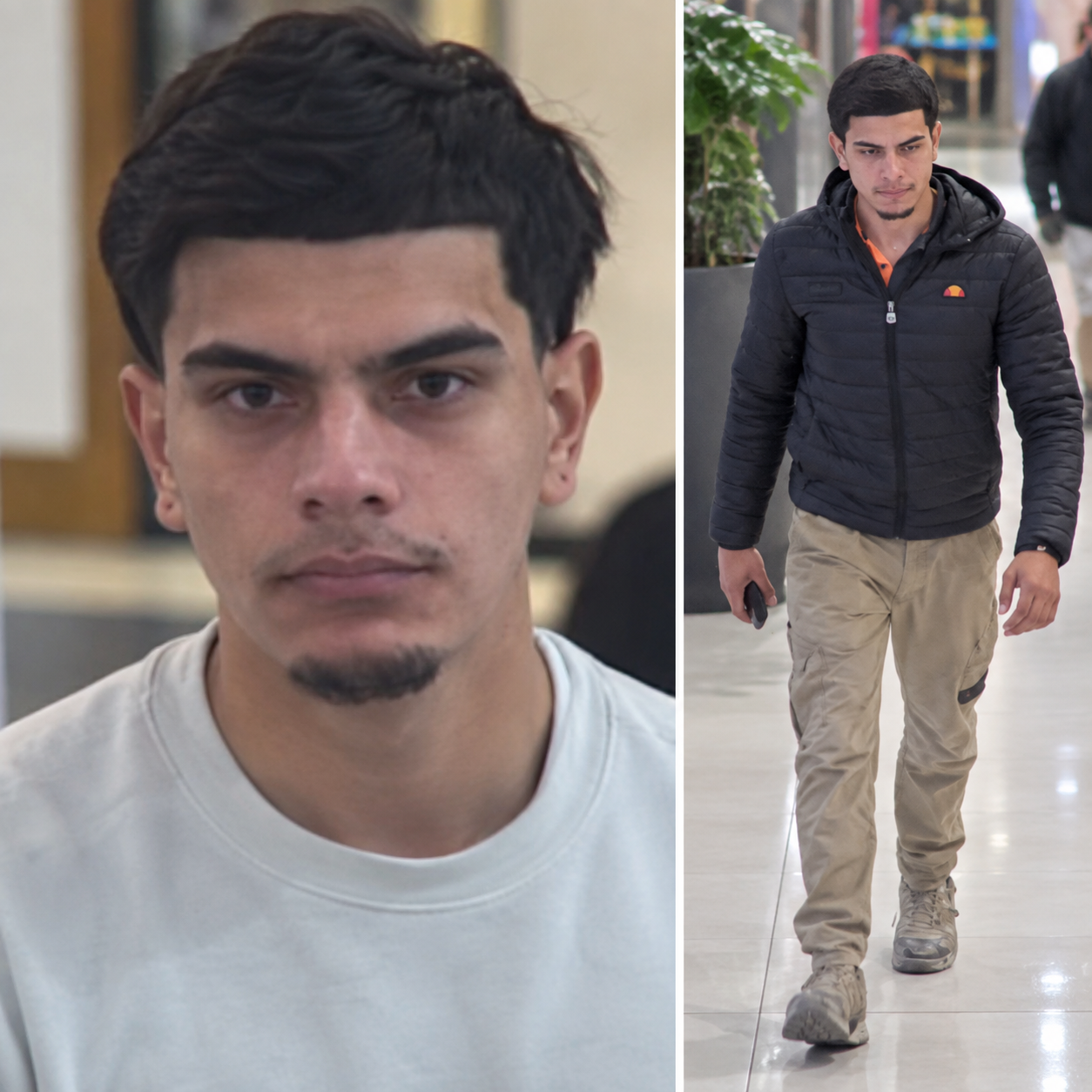
Police have released images of a man they want to speak to after three women were allegedly targeted in separate incidents involving sexual acts inside Westfield Parramatta in Sydney’s west.
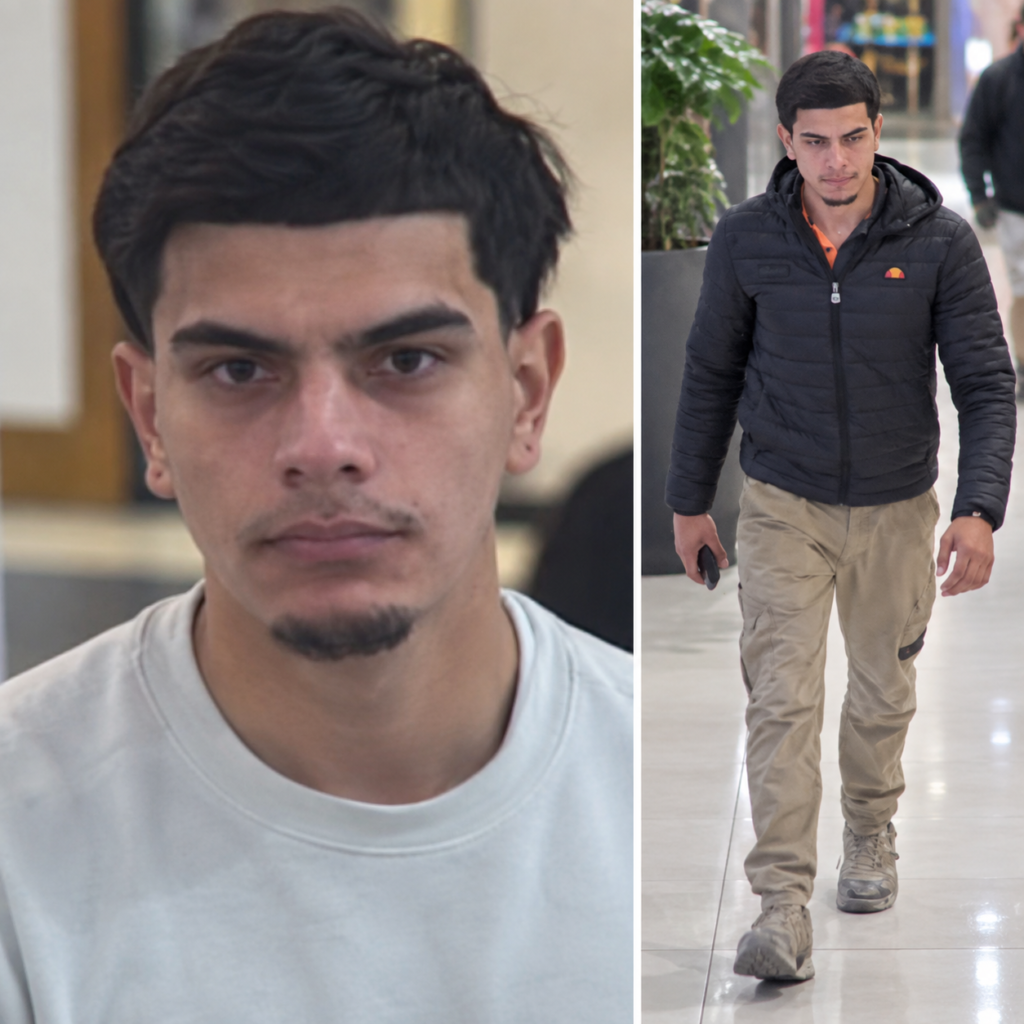
Investigators believe the three incidents are linked and occurred across less than two weeks at two retail businesses inside the busy Church Street shopping centre.
No arrest or charge has been announced.
Police have released CCTV images of a man they believe may be able to assist with their inquiries and are asking the public for information that could identify him.
According to police information provided about the investigation, the first alleged incident occurred about 4.15pm on Sunday, August 23.
A second woman was allegedly targeted at about 3.20pm on Monday, August 31.
The third reported incident occurred about 3.45pm on Thursday, September 3.
Police allege a man performed sexual acts in front of three different women during the three incidents.
The alleged conduct occurred at two businesses within Westfield Parramatta.
The shopping centre is one of the largest and busiest retail precincts in western Sydney and is located at 159–175 Church Street, adjacent to Parramatta’s major rail and bus interchange.
Its high pedestrian traffic and extensive CCTV network are likely to form an important part of the police investigation.
Officers believe the incidents are connected rather than unrelated reports involving different offenders.
They have not publicly disclosed what evidence led them to that conclusion.
That may include similarities in physical description, behaviour, location or CCTV footage, but those matters remain part of the investigation.
Police described the man shown in the released images as being of “Middle Eastern/Mediterranean appearance”, aged in his late 20s to early 30s, with dark hair and a beard.
That description is being used by investigators as an identification aid.
It does not establish the man’s nationality, citizenship, ethnic background or religion.
Nor does the release of an image mean the person shown has been charged with an offence.
NSW Police commonly describe people captured in CCTV material as individuals who “may be able to assist with inquiries” while detectives work to establish their identity and role in an incident.
That wording is particularly important in an active investigation.
The man police want to identify has not been publicly named and no court has made any finding against him.
Headlines describing the unknown person as a “serial sex pest” therefore go further than the present legal position.
What police have said is that three alleged incidents involving three women appear to be linked and that they want to speak with the man in the released images.
If investigators identify a suspect, they will still need to determine whether there is sufficient evidence to lay charges.
That evidence could include statements from the women, CCTV footage from inside and around the businesses, shopping-centre security records and information supplied by members of the public.
Where alleged conduct takes place inside a major shopping centre, investigators can potentially draw on footage from multiple cameras to reconstruct where a person entered, how they moved through the centre and whether they appeared on more than one date.
Electronic payment records or transport information can also become relevant in some investigations, although police have not said whether such material is being examined in this case.
The fact the incidents allegedly occurred during busy afternoon periods may also mean other shoppers witnessed conduct without immediately recognising its significance.
The first alleged incident took place on a Sunday afternoon.
The later reports were on a Monday and Thursday, also during shopping hours.
Investigators will be interested in anyone who remembers suspicious behaviour around the relevant businesses, even if that person did not directly witness the alleged sexual acts.
NSW law contains offences dealing with sexual and indecent behaviour in public places.
Section 5 of the Summary Offences Act 1988, for example, makes it an offence for a person to wilfully and obscenely expose themselves in or within view of a public place or school.
The maximum penalty for that offence is six months’ imprisonment.
Depending on the precise conduct alleged, circumstances can potentially engage other offences as well.
It is therefore too early to say what, if any, charge would follow from the Westfield investigation.
Police have not publicly announced charges and have not provided a final legal characterisation of each alleged act.
The investigation comes amid broader scrutiny of sexual misconduct in public and commercial spaces across Sydney.
Earlier this month, in an unrelated case, NSW Police charged a rideshare driver over a series of alleged sexual acts involving women in several locations.
That investigation has no publicly established connection to the Westfield Parramatta reports.
It does, however, illustrate how police can link incidents that were initially reported separately once investigators identify similarities in alleged behaviour or evidence.
Police appeals using CCTV images can be particularly important when the alleged offender is not known to the victim.
Unlike investigations involving partners, colleagues or acquaintances, detectives may begin without a name, address or other obvious starting point.
In those circumstances, images from security cameras and information from the public can become central to identifying a person of interest.
Westfield Parramatta’s location may increase the number of potential leads.
The centre connects directly with a major transport hub and attracts workers, students, families and shoppers from across western Sydney.
A person seen there may have arrived by train, bus, car or on foot, increasing the range of available CCTV and witness evidence.
At the same time, the sheer number of people moving through a large retail centre can make identification difficult without public assistance.
Police are therefore asking anyone who recognises the man in the released images, or who has information about any of the incidents, to contact Crime Stoppers.
Information can be provided confidentially.
People who witness an offence in progress or believe someone is in immediate danger should call Triple Zero.
NSW Police guidance says suspicious activity that does not require an emergency response can be reported to Crime Stoppers on 1800 333 000.
The three women involved have not been publicly identified.
There is no suggestion they knew one another or knew the man before the alleged encounters.
Police have also not disclosed whether staff at the two businesses witnessed the conduct or whether security personnel were contacted at the time.
Those details may emerge if an arrest is made or the investigation progresses to court.
For now, the public appeal is focused on identification rather than prosecution.
That requires careful language.
A police description based on appearance is intended to help locate a particular individual; it should not be treated as a description of an entire community.
“Middle Eastern/Mediterranean appearance” is the terminology police provided for the man depicted in the images.
It does not tell the public where that person was born, what passport he carries or what cultural or religious background he has.
Those distinctions matter in western Sydney, one of Australia’s most culturally diverse regions, where broad appearance-based descriptions can otherwise be easily turned into assumptions unsupported by evidence.
The useful identifying features released by police are the combination of estimated age, dark hair, beard and the CCTV images themselves.
Anyone who believes they know the man should provide the information to investigators rather than confronting him or circulating an unverified name online.
Misidentification through social media can expose innocent people to harassment and can interfere with an active police investigation.
The same principle applies to speculation about the three incidents.
Police believe they are linked, but until a suspect is identified and evidence tested, the precise sequence remains an allegation.
The investigation will need to establish what occurred on each date independently.
If charges are ultimately laid, prosecutors would then have to prove the relevant offences beyond reasonable doubt.
For the women who reported the incidents, however, the investigation is already about conduct police consider serious enough to warrant a public identification appeal.
Three separate reports within 12 days suggest investigators are concerned the behaviour may be repeated if the person responsible is not located.
That is why the newly released images matter.
Police are hoping somebody who knows the man, saw him at Westfield Parramatta or remembers relevant behaviour on August 23, August 31 or September 3 can help give investigators the lead they need.
Until then, the man remains unidentified publicly, no charge has been announced and the allegations remain under active investigation.