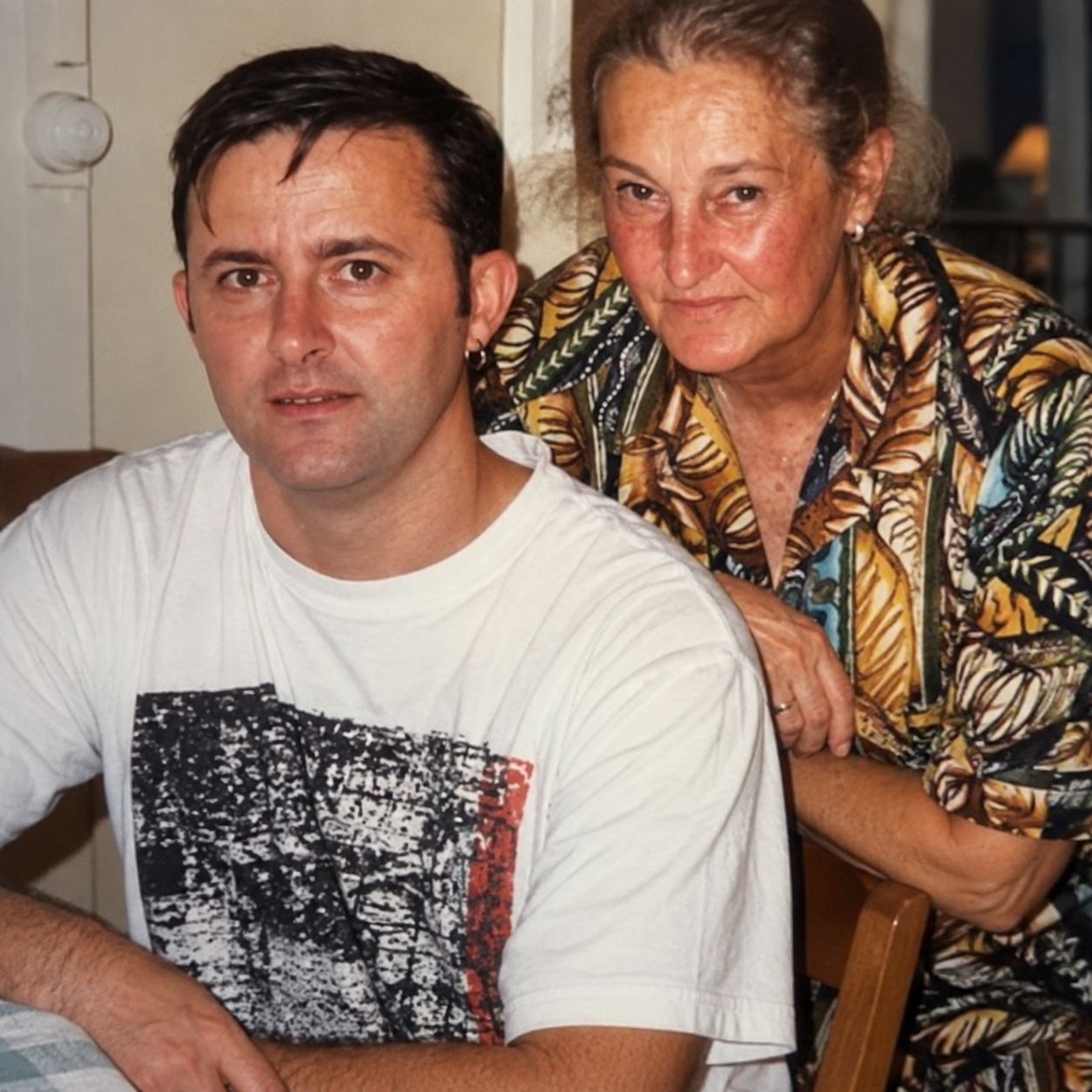
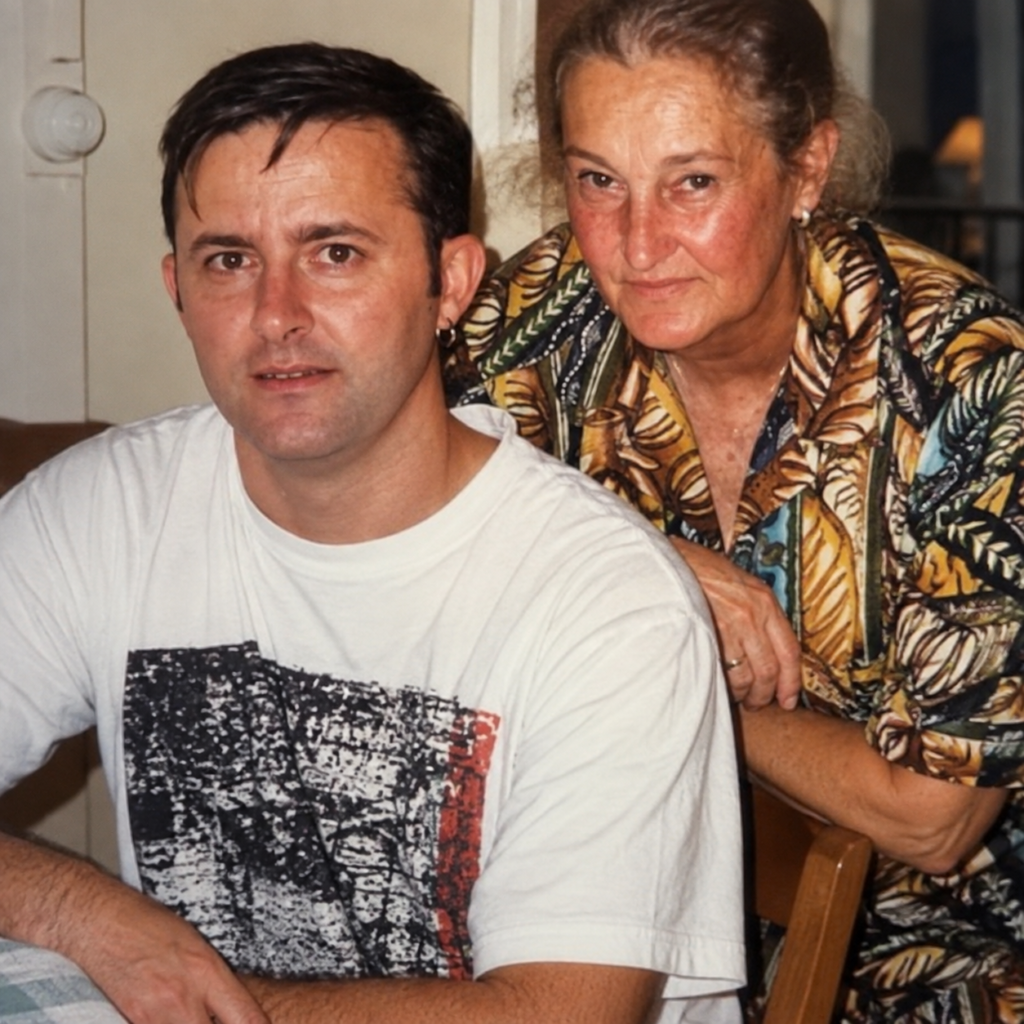
Anthony Albanese has delivered an emotional defence of his late mother after Pauline Hanson criticised her for spending her life in public housing, calling the One Nation leader’s remarks “nasty and spiteful” as politicians from both sides of parliament urged Hanson to apologise.
The Prime Minister responded on Sunday after remarks Hanson made earlier this year resurfaced in which she questioned why his mother, Maryanne, had remained in the same Sydney public housing home for 65 years.
Hanson’s broader argument was that public housing should provide temporary assistance rather than become a home for life.
But her decision to make Albanese’s mother the example has triggered a fierce response.
“I tell you what’s weakness: nastiness and spitefulness, and I am stunned at these comments,” Albanese told reporters.
He said Hanson was entitled to attack him politically but drew a clear line around his mother.
“If Pauline Hanson wants to criticise me, then that’s fine. But my mother was way out of Pauline Hanson’s league. Way out.”
Albanese described himself as proud of both his mother and his upbringing in public housing.
Maryanne raised him as a single parent in Camperdown in Sydney’s inner west.
She suffered severe rheumatoid arthritis, which badly affected her joints and left her unable to work for much of her adult life. The family relied heavily on her disability pension and the security provided by their council home.
She died in 2002 at the age of 65.
Albanese has spoken repeatedly about that childhood throughout his political career, describing it as one of the experiences that shaped his belief in public services and social mobility.
His official biography as Prime Minister still describes him growing up with Maryanne in a council house and watching her manage the challenges of life on a disability pension.
He has previously said she lived in the same public housing property in which she was born for all 65 years of her life.
Hanson seized on precisely that point during a podcast appearance earlier this year.
She argued that housing commission properties should not generally remain occupied by the same household for 30 or 40 years when other people are waiting for assistance.
“It should be limited time,” Hanson said.
Her position was that public housing should provide people with a “hand up”, after which the property should become available to another household.
She also accused Albanese of relying too heavily on his childhood story for political purposes, describing his repeated references to growing up in public housing as “pathetic”.
The remarks resurfaced at a particularly volatile political moment for Hanson.
One Nation has been enjoying renewed electoral momentum, but its leader has also spent the past week defending herself against criticism over a party cartoon that repeatedly called Liberal frontbencher and former SAS captain Andrew Hastie a “traitor”.
Now Hastie is among those condemning Hanson over her comments about Albanese’s mother.
The Liberal MP said political disagreements with a prime minister were legitimate but family members should not become collateral damage.
His intervention is significant because it means the criticism cannot easily be dismissed as Labor defending its leader.
Trade Minister Don Farrell called Hanson’s remarks “appalling” and said she should apologise.
Farrell said there was something deeply unpleasant about attacking the deceased mother of a political opponent and described One Nation’s approach as displaying a bitterness he regarded as un-Australian.
Energy Minister Chris Bowen also accused Hanson of crossing a line.
He argued that the comments revealed more than an argument about housing policy because they involved a woman who died more than two decades ago and who was unable to work because of serious illness.
Bowen also challenged Hanson’s claim to represent struggling Australians, noting that many people who depend on public housing are precisely the kind of economically vulnerable voters One Nation says it wants to champion.
Hanson has found some support.
Barnaby Joyce, now a One Nation MP, argued that the central point was a legitimate policy question: whether scarce public housing should be provided indefinitely when other families are waiting.
Joyce said Hanson’s remarks could be understood as criticism of the system rather than of Maryanne Albanese personally.
He also acknowledged he did not know the full circumstances of Albanese’s mother.
That distinction lies at the heart of the controversy.
There is a genuine policy debate about how social housing should be allocated.
There is also a separate question about whether a political leader should single out a deceased disabled mother as an example of what she believes is wrong with the system.
The two issues do not have to be treated as the same thing.
Modern NSW public housing policy is, in fact, more complicated than either a permanent entitlement or a simple fixed deadline.
Most new tenants housed directly by Homes NSW are now offered fixed-term leases of two, five or 10 years.
Before those leases expire, the government reviews whether the tenant remains eligible for public housing.
Officials consider factors including household income, assets, age, disability, medical requirements and whether the household can reasonably secure suitable accommodation elsewhere.
If tenants continue to meet the criteria, their lease can be extended.
If they no longer qualify, Homes NSW can require them to leave at the end of the tenancy.
Some older tenants remain under continuous agreements created under earlier systems.
Maryanne Albanese’s tenancy belonged to a very different era of Australian public housing and predated the modern fixed-term regime by decades.
It would therefore be misleading to judge the administration of her tenancy as though today’s NSW lease-review framework existed throughout her lifetime.
The underlying scarcity Hanson is pointing to, however, is real.
As of July 31 this year, 70,244 households were on the NSW Housing Register waiting for social housing.
Of those, 13,776 had been approved as priority applicants and 56,468 were on the general list.
That backlog places enormous pressure on governments to decide who should receive public housing, for how long and under what conditions.
Demand has increased amid high rents, low vacancy rates and severe housing affordability problems across Sydney and much of regional NSW.
Public and community housing stock has not kept pace with need.
This means Hanson’s underlying policy question — whether homes should be continually reassessed so scarce properties go to those in greatest need — is already part of the way NSW’s current system operates.
Where she differs is in suggesting that lengthy tenure itself is evidence a household has stayed too long.
Current policy does not impose that principle.
A tenant who continues to have low income, serious disability or other qualifying housing needs can remain eligible when their lease is reviewed.
That is particularly relevant to the circumstances Albanese has described about his mother.
Maryanne was not a healthy wage earner who remained in subsidised housing despite acquiring substantial means.
According to Albanese’s consistent account over many years, rheumatoid arthritis left her severely disabled and dependent on an invalid pension.
For him, the family’s council home was not simply cheap accommodation.
It provided stability to a household with little money and few alternatives.
Albanese has repeatedly connected that experience to a broader political story about aspiration.
When he became Labor leader in 2019, he described aspiration not merely as becoming wealthy but as wanting children to have opportunities their parents never had.
After winning the 2022 election, he again pointed to the fact that the son of a single mother on a disability pension from public housing could become prime minister.
Critics have occasionally accused him of overusing that biography as a political narrative.
Hanson has now made that criticism personal.
She has linked Albanese’s repeated references to his background with her argument that his mother should not have remained in the property for so long.
For Albanese, that appears to be the point at which ordinary political criticism became something else.
His response on Sunday was unusually personal for a prime minister who has increasingly been involved in a direct political contest with One Nation.
Hanson and Albanese have traded accusations for weeks over immigration, social cohesion, political violence and One Nation’s growing electoral support.
Albanese has accused hard-right populists of being dangerous, divisive and dishonest.
Hanson has accused him of demonising her supporters and worsening the country’s housing problems through high migration.
The argument over Maryanne Albanese now puts a human face on that larger political conflict.
It also presents Hanson with a strategic problem.
One Nation has built much of its recent political appeal around the claim that mainstream parties have forgotten ordinary Australians facing high housing costs, economic insecurity and pressure on public services.
Public housing tenants are among the Australians most exposed to those pressures.
A political message that appears contemptuous of people who remain in social housing for long periods risks colliding with the party’s attempt to present itself as the defender of struggling households.
Hanson would argue the opposite: that people waiting years for homes are harmed when others occupy properties indefinitely.
That is an argument that can be debated on its merits.
It does not require a judgement about whether Albanese’s late mother personally deserved her home.
That is why the calls for an apology have crossed party lines.
The controversy is not principally over whether public housing should be reviewed or whether governments should make scarce homes available to those most in need.
NSW already performs eligibility reviews for most newer tenancies.
It is over Hanson’s decision to turn a deceased woman with a severe disability into an example in a political attack on her son.
Albanese’s response made clear that he has no intention of allowing that attack to pass unanswered.
He said his mother was a battler, expressed pride in where he came from and rejected the suggestion that remaining in public housing should be treated as a personal failing.
For a prime minister who has told the story of his mother throughout his public life, it may be the most personal confrontation yet in his increasingly hostile contest with Pauline Hanson.