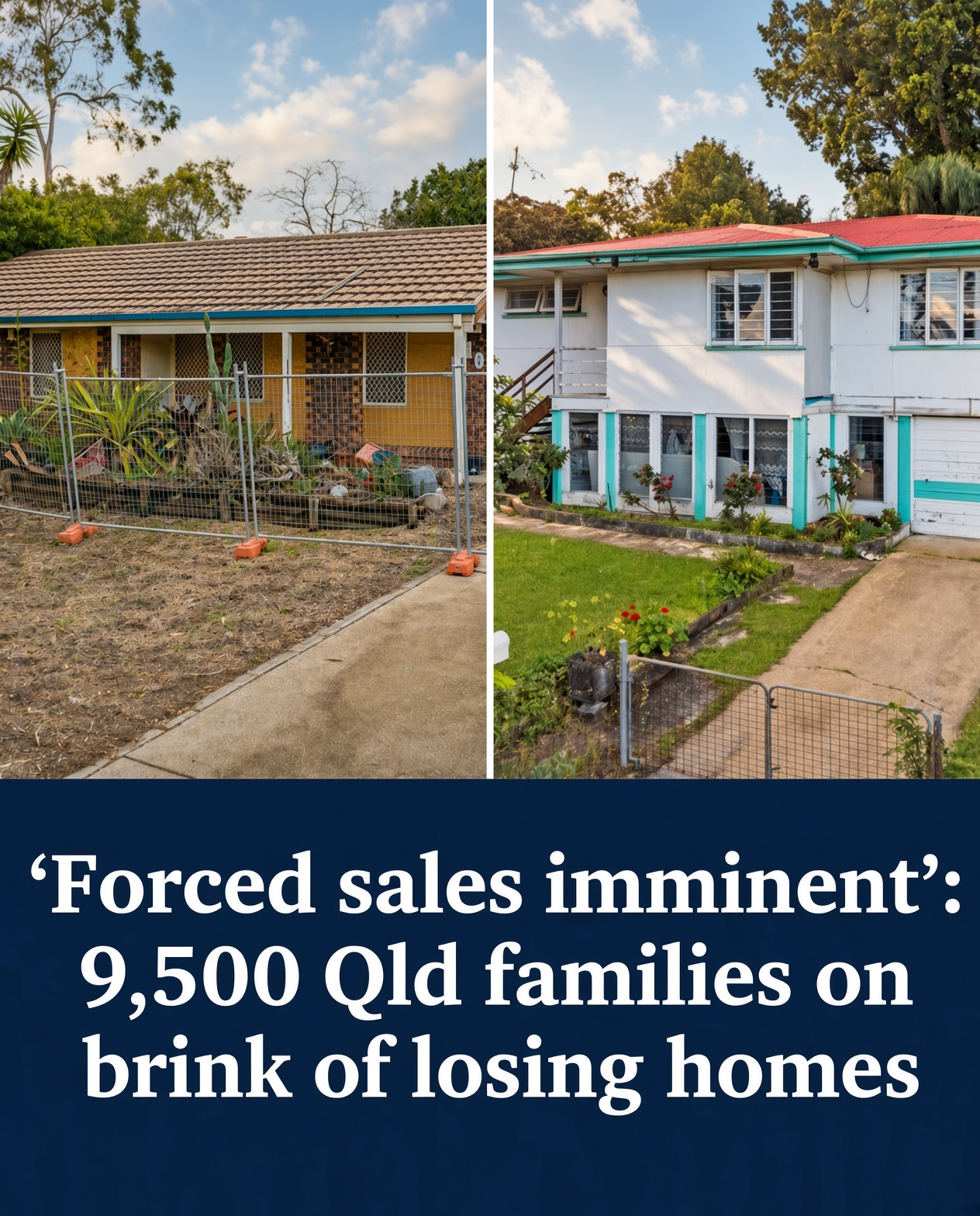
More than 9,500 additional Queensland households have fallen into mortgage stress in just three months, intensifying warnings that years of high borrowing, rising living costs and renewed interest rate pressure are pushing some homeowners towards a financial breaking point.
New modelling from Digital Finance Analytics shows the number of mortgage-stressed households across the Queensland postcodes examined in its latest report climbed from 65,075 to 74,649 during the June quarter.
That represents an increase of 9,574 households in only three months.
Queensland recorded the second-largest increase among the jurisdictions examined, behind Western Australia, where the number jumped by 14,746.
The findings point to an increasingly difficult financial environment for borrowers who purchased property near the limits of their borrowing capacity and have subsequently been hit by higher mortgage repayments and persistent household expenses.
But there is an important distinction between mortgage stress and mortgage default.
The Queensland households identified in the report have not necessarily missed mortgage payments, received default notices or been forced to sell their homes.
DFA uses a cash-flow model to measure mortgage stress.
A household is classified as stressed when its regular expenses — including owner-occupier mortgage repayments — exceed its income.
That differs from the commonly used measure under which housing stress is defined as spending more than 30 per cent of income on housing costs.
It also differs from bank arrears data, which measures borrowers who have actually fallen behind on scheduled repayments.
The significance of the DFA numbers is therefore not that tens of thousands of Queenslanders are already defaulting.
It is that a growing number of households appear to have insufficient income to cover their normal expenditure without relying on savings, credit, spending cuts or some other financial buffer.
The longer that continues, the greater the risk those buffers eventually run out.
Digital Finance Analytics principal Martin North says time is becoming the critical factor for some mortgage holders.
Many households that bought during or after the pandemic stretched their finances to secure homes at elevated prices, he said.
They have since spent years absorbing higher living costs and mortgage repayments.
“This is more about time in cash flow stress than anything else,” North said.
For some borrowers, savings accumulated before or during the pandemic initially provided protection.
Others cut discretionary spending, refinanced, took additional work or relied on credit to maintain their repayments.
Those strategies can postpone serious financial difficulty.
They cannot necessarily sustain a household indefinitely.
North says that is why some borrowers are approaching a “tipping point”.
If a household spends more than it earns month after month, eventually something has to change.
Income must increase, expenses must fall, the mortgage must be restructured or assets may have to be sold.
For the most financially stretched homeowners, the final option can ultimately mean selling their property.
That possibility is driving warnings of increasing defaults and forced sales if economic conditions deteriorate further.
It should not, however, be confused with a prediction that every household currently identified as stressed will lose its home.
Many will not.
Some borrowers will successfully refinance.
Others will obtain temporary hardship assistance from their lender.
Household incomes may rise.
Interest rates may eventually fall.
Some families will make sufficiently large spending reductions to remain current on their loans.
But the latest figures suggest the number of households needing those escape routes is increasing.
The OurTop10 Mortgage Stress Report, using DFA modelling, found mortgage stress spreading well beyond the areas traditionally associated with highly leveraged borrowers.
Across 80 postcodes examined nationally, the number of stressed households reached 421,725 by June.
That represented a 14 per cent quarterly increase and an 18 per cent rise over the year.
Western Australia recorded the largest quarterly increase, while Queensland followed closely behind.
In Queensland, the total across the postcodes examined reached 74,649.
The Sunshine State consequently ranked behind Victoria and New South Wales for the total number of distressed households in those locations.
Queensland’s result is particularly significant because its property market was one of Australia’s strongest during the post-pandemic housing boom.
Brisbane property values climbed rapidly as interstate migration, population growth and limited housing supply intensified competition.
Regional Queensland also experienced substantial price growth as households relocated from southern capitals and flexible working arrangements changed where people could live.
For existing owners, that produced enormous increases in housing wealth.
For people entering the market, it meant increasingly large mortgages.
Those mortgages are now being tested by a very different interest-rate environment.
The Reserve Bank has increased the cash rate three times during 2026, taking it to 4.35 per cent.
Each increase flows progressively through to borrowers on variable mortgage rates.
For a household carrying a large loan, even a quarter-percentage-point increase can translate into a meaningful increase in monthly repayments.
Repeated increases compound the effect.
A family that originally structured its finances around one repayment level can suddenly find hundreds of additional dollars leaving its account each month.
The mortgage is only part of the squeeze.
Households must simultaneously pay for food, electricity, insurance, council rates, transport, childcare and other essential expenses.
When those costs rise at the same time as mortgage repayments, families can experience financial stress even if they have never missed a payment.
That is precisely what DFA’s methodology attempts to capture.
Instead of asking only whether a mortgage consumes a predetermined percentage of income, it looks at the household’s overall cash position.
Two families with identical mortgages can therefore receive very different classifications.
A household with high income and low other expenses may comfortably service a large mortgage.
A family earning less while paying childcare, medical expenses and other substantial costs may be cash-flow negative with a smaller loan.
The model is intended to capture that difference.
There is, however, another important qualification when interpreting the figures.
DFA’s household counts are modelled estimates, not a census of borrowers supplied directly by Australian banks.
The analysis is based on a rolling household survey combined with DFA’s financial modelling.
The underlying survey contains more than 52,000 households and is continually updated, with thousands of additional household observations incorporated each month.
OurTop10 says the resulting postcode household estimates are rounded.
That makes the research useful for identifying trends and areas of pressure, but the figures should not be presented as if lenders had reported exactly 74,649 Queensland customers who were behind on their mortgages.
Official arrears and default statistics measure something different.
The distinction becomes particularly important when phrases such as “mortgage crisis” or “forced sales” are used.
Cash-flow stress is an early-warning indicator.
Default is an event.
A borrower generally moves through several stages before reaching the point at which a lender could pursue enforcement action.
Financial pressure may begin with a household running down savings.
The borrower may then reduce spending, use credit cards, seek additional employment or attempt to refinance.
If those options fail and repayments are missed, the loan can fall into arrears.
Only after the situation becomes substantially more serious does a forced sale become a potential outcome.
Banks also have hardship processes specifically intended to prevent temporary financial difficulty from becoming mortgage default.
Borrowers can contact their lender and seek arrangements such as altered repayment schedules or other forms of hardship assistance depending on their circumstances.
That intervention can be particularly effective when the underlying problem is temporary.
A borrower who has lost work but expects to return to employment may require a different solution from a household whose mortgage has become structurally unaffordable.
The more worrying category is households that have been cash-flow negative for a prolonged period with no obvious improvement ahead.
North says recent buyers are especially exposed.
Some purchased when property prices were near their peaks and took on mortgages close to their maximum borrowing capacity.
They consequently entered the current tightening cycle with less room to absorb higher repayments.
Long-term homeowners can be in a very different position.
Someone who purchased a Brisbane house 15 years ago may have a much smaller mortgage relative to both their income and the value of the property.
Even if higher rates hurt their household budget, substantial accumulated equity provides additional financial options.
A recent first-home buyer with a large loan and small deposit has far less flexibility.
That difference becomes more serious if property values fall.
Australia’s housing market has recently moved into a downturn, with national values falling for consecutive months.
Declining prices can ultimately improve affordability for future buyers.
For an existing highly leveraged homeowner, however, they can erode the equity that might otherwise provide a way out of financial trouble.
A borrower who owes $700,000 on a home worth $900,000 has substantial equity available if circumstances force a sale.
If the property falls towards the value of the outstanding mortgage, that safety margin disappears.
In an extreme case, the homeowner can enter negative equity, where the mortgage is worth more than the property.
Negative equity does not itself mean a borrower must sell.
A homeowner who continues making repayments can generally remain in the property regardless of short-term movements in its market value.
But it becomes a serious problem if that household needs to sell because of unemployment, divorce, illness or another financial shock.
Mortgage-market activity suggests households are already responding to tighter conditions.
Equifax data released this month showed mortgage inquiry demand fell sharply during the June quarter.
Annual mortgage inquiry growth swung from a 3.7 per cent increase in March to a 12.5 per cent decline by June.
First-home buyer inquiries fell about 15 per cent compared with a year earlier.
Brisbane was among the major cities recording significant weakness in mortgage demand.
The figures indicate higher borrowing costs are not only hurting existing homeowners.
They are reducing the capacity and willingness of prospective buyers to take out new loans.
Equifax also reported deterioration in financial hardship.
Accounts subject to hardship arrangements increased by more than 5 per cent during the second quarter.
That provides a separate indicator that pressure is appearing in actual borrower behaviour rather than only in household modelling.
The combination creates a difficult housing-market dynamic.
Existing borrowers are under increasing pressure.
Potential buyers can borrow less.
Mortgage demand is weakening.
Property prices are beginning to fall.
And the RBA remains focused on inflation rather than protecting housing values.
That last point matters enormously.
The Reserve Bank does not set interest rates to ensure homeowners make money on property.
Its monetary policy decisions are directed towards inflation and employment.
If inflation requires restrictive monetary policy, mortgage holders experience the consequences through higher borrowing costs.
Australian households are particularly sensitive to that transmission mechanism because mortgage debt is high and variable-rate lending is widespread.
A change in the cash rate can therefore affect household budgets comparatively quickly.
That sensitivity becomes most visible in rapidly growing outer suburbs.
Many such areas contain younger families who purchased recently, often with larger mortgages and fewer accumulated financial assets than homeowners in established inner suburbs.
They may also face significant childcare and transport costs.
Recent national DFA analysis has identified outer Melbourne and outer Sydney among the most prominent mortgage-stress and default-risk locations.
Queensland is showing similar vulnerabilities.
Those patterns help explain why strong property-price growth does not necessarily protect households from mortgage stress.
A homeowner can live in a suburb where values have risen substantially and still struggle to pay the mortgage every month.
Housing wealth is not the same as cash flow.
Unless the property is sold or equity can be accessed through refinancing, a higher valuation does not buy groceries or pay an electricity bill.
That distinction has become increasingly important during the cost-of-living squeeze.
Many Australian households look wealthy on paper because they own valuable property while having relatively little disposable income after servicing debt and essential expenses.
Higher interest rates expose that vulnerability.
The risk now is that prolonged stress begins converting into actual arrears.
DFA’s national modelling suggests default risk has increased sharply during the past quarter.
Recent reporting based on its data describes an 18 per cent national increase in homeowners facing heightened default risk over three months.
That does not mean defaults themselves have risen by 18 per cent.
It means the model identifies more households with characteristics associated with a greater probability of falling behind.
North says there is no simple or immediate solution for households that have exhausted their buffers.
Refinancing can help if a borrower qualifies for a cheaper loan.
But refinancing becomes harder when household income has weakened, the loan-to-value ratio has deteriorated or lenders determine the borrower no longer meets serviceability requirements.
Cutting spending also has limits.
A household may be able to cancel subscriptions, reduce restaurant meals or postpone holidays.
It cannot indefinitely eliminate spending on food, electricity, insurance or essential transport.
Once discretionary expenditure has already been removed, further adjustment becomes substantially more painful.
That is when borrowers can begin making decisions they previously regarded as unthinkable.
They may sell an investment property.
They may move children from paid activities or change childcare arrangements.
They may take a second job.
They may sell the family home and move to a cheaper property.
For a smaller group, missed payments and eventual lender enforcement can follow.
The danger for the broader property market arises if enough distressed households decide to sell at the same time.
A normal housing market always contains owners who must sell because their personal circumstances change.
Forced or highly motivated sellers behave differently from owners who can simply withdraw a property when their desired price is not achieved.
They need a transaction.
If the number of those sellers increases while buyer demand is weakening, prices can come under additional downward pressure.
Falling prices can then make refinancing harder for other highly leveraged borrowers, creating another source of financial stress.
That feedback loop is why analysts monitor mortgage distress even before official arrears rise dramatically.
Australia is not necessarily at that point now.
The banking system remains highly regulated, employment continues to provide an important buffer for borrowers and lenders have hardship programs designed to keep viable customers in their homes.
But Queensland’s latest numbers show how quickly the population vulnerable to a further shock is growing.
An additional 9,574 stressed households in three months is not merely a statistical change.
It represents thousands more families whose regular budgets, according to DFA’s model, no longer balance.
For those households, the next interest-rate decision matters.
So does the next electricity bill.
So does job security.
A major unexpected expense can matter.
And the amount of savings left in the bank increasingly matters.
That is the “tipping point” North is warning about.
Mortgage stress can continue for a surprisingly long time when households have buffers.
Once those buffers are exhausted, the transition from financial stress to missed repayments can happen much faster.
Queensland is not alone.
Victoria has more than 600,000 homeowners classified as being in mortgage stress under DFA’s broader state modelling, with outer Melbourne particularly exposed.
New South Wales has also experienced a sharp increase in default risk, reflecting the enormous mortgages required in Sydney and surrounding areas.
Western Australia recorded the biggest quarterly increase in stressed households across the postcodes covered by the latest OurTop10 analysis.
The emerging picture is therefore national rather than a problem confined to one overheated property market.
But Queensland’s combination of rapid post-pandemic price growth, recent high borrowing and renewed interest-rate pressure makes the state an important test.
Homeowners who purchased during the boom have already demonstrated an extraordinary capacity to absorb higher costs.
The question is how much longer the most stretched can continue doing so.
The answer will determine whether the current surge remains primarily a story about household budgets — or begins turning into the wave of arrears, distressed listings and forced property sales analysts fear could come next.