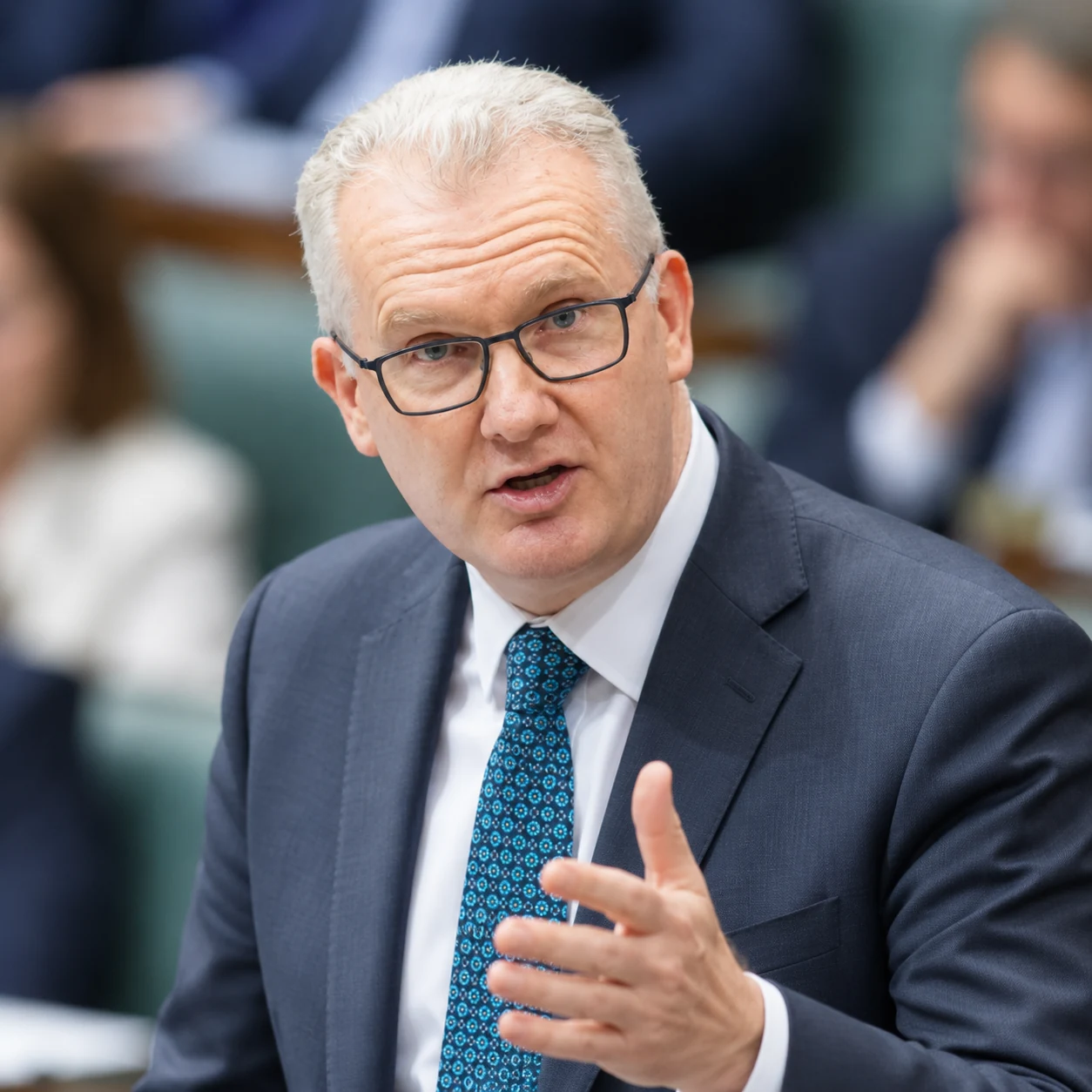
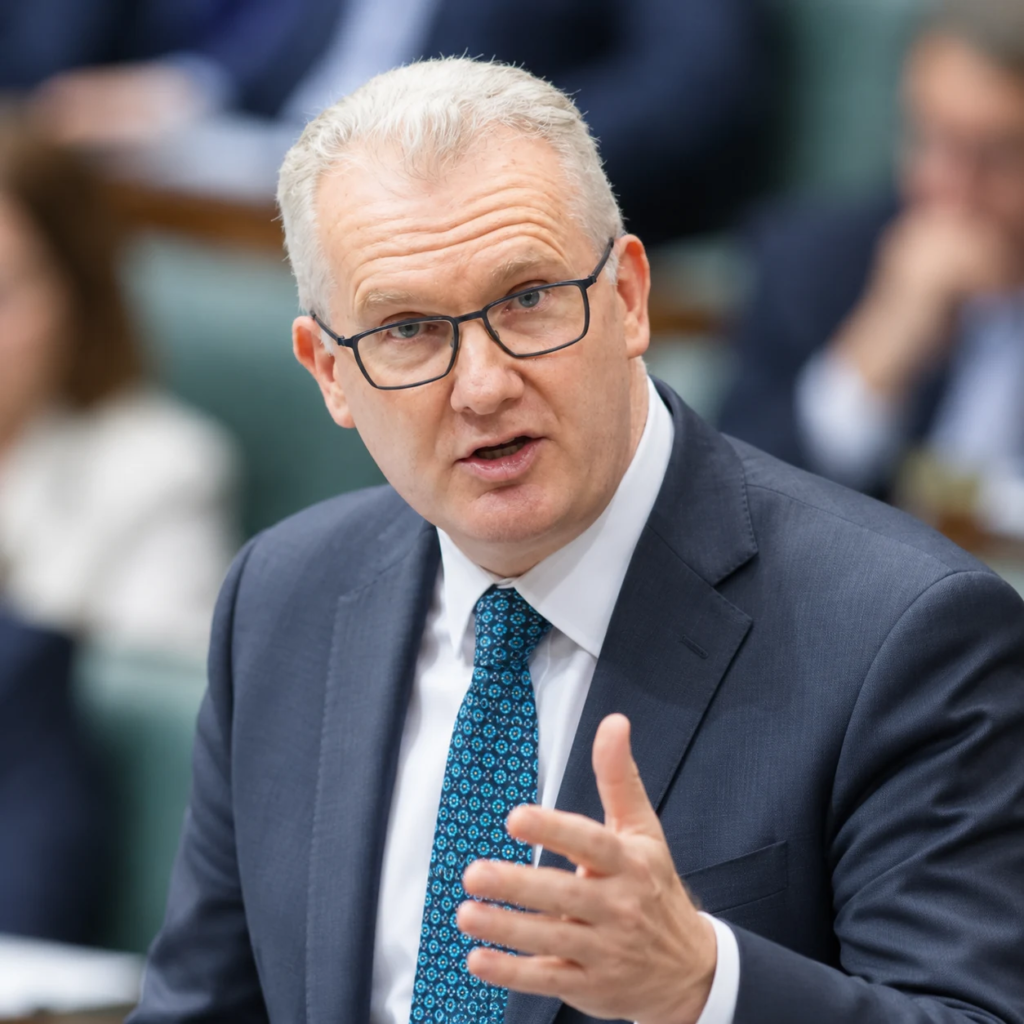
Home Affairs Minister Tony Burke has argued that Australia needs lower migration for a period to give housing supply room to catch up, while rejecting the claim that immigration itself created the country’s housing shortage.
The distinction has become a flashpoint in the national migration debate after Burke used a National Press Club speech and subsequent interviews to set out Labor’s latest immigration reforms.
Burke’s argument is that household size has fallen over several decades, increasing the number of dwellings required for a given population. He said the average number of people per Australian household had declined from about 2.9 during the Hawke years to about 2.5 today.
According to Burke, every 0.1 reduction in average household size creates a need for roughly 450,000 additional homes. He used that figure to argue that the housing shortage cannot be explained simply by comparing migration numbers with dwelling construction.
At the same time, Burke said migration still needs to be “part of the solution” because reducing the pace of population growth can create breathing space while housing construction increases.
That is more nuanced than the claim circulating in some commentary that the minister simply “blamed empty bedrooms” and denied any connection between migration and housing demand. Burke did deny that immigration caused the existing shortage, but he also explicitly said migration must be tempered because Australia does not currently have enough housing.
In his National Press Club speech, Burke said Australia’s population had increased by about 75 per cent since the Hawke era while the number of homes had increased by about 100 per cent. He asked how a housing shortage could still emerge if dwelling numbers had grown faster than population.
His answer was household formation: fewer people living in each home means more dwellings are needed even if the overall population grows more slowly than the housing stock.
The argument reflects a real demographic factor. Household size can fall because of ageing, relationship breakdown, young adults leaving family homes, people choosing to live alone, smaller families and changes in preferences after the pandemic. Those trends increase housing demand independently of migration.
But household size is not the only factor affecting housing pressure. Population growth, including migration, adds to the number of people who need somewhere to live. Housing supply is also affected by construction costs, planning delays, infrastructure, interest rates, land availability, labour shortages and the mix of dwellings being built.
Burke’s position is therefore not that migration has zero effect on current demand. Rather, he argues that the underlying shortage was created by a mismatch between housing supply and changing household needs, and that migration should now be moderated to help supply catch up.
In an ABC interview after the speech, he said the government needed to “temper the numbers for a period of time” while avoiding cuts so deep that Australia loses workers needed in health, aged care and construction.
The government’s current budget path is for net overseas migration to fall to about 245,000 this financial year and around 225,000 by 2027–28.
Burke says the government is already tracking towards those figures following the unusually high post-pandemic surge. He has pointed to recent net overseas migration data showing a substantial decline from the peak.
The new policy package includes tighter rules for working holidaymakers, restrictions on some family members attached to student and graduate visas, stronger “no further stay” conditions for visitors, measures against visa hopping, changes to the skilled migration points system and an expansion of compliance activity targeting visa overstayers.
The government is also trying to prioritise migrants with skills relevant to housing construction. Burke said construction occupations would receive greater weight under a redesigned points test and argued that Australia cannot solve a housing shortage by cutting off the tradespeople needed to build homes.
He has repeatedly cited the large share of overseas-born workers in some construction trades as evidence that blunt migration cuts could slow new housing supply.
That claim forms the economic core of Labor’s response to calls for much sharper reductions. The government accepts that migration needs to fall, but says the composition of the intake matters as much as the headline number.
Critics of Labor argue the government is trying to have both sides of the debate by acknowledging housing pressure while resisting a stronger causal link between migration and rents or house prices. They say rapid population growth can intensify competition for housing in the short term even if other structural problems also exist.
Supporters of the government’s approach argue that treating migration as the single cause of the housing crisis ignores decades of planning, construction and demographic change. They also warn that cutting skilled migration indiscriminately could reduce the workforce available to expand housing supply.
Migration has become one of the most contested federal political issues as Australians deal with high rents, expensive home prices and visible queues at rental inspections.
One Nation has proposed much larger reductions in temporary migration, while the Coalition has also argued for lower migration in response to housing and infrastructure pressure. Labor has rejected those approaches as too blunt and potentially damaging to hospitals, aged care, farming, universities and construction.
Burke’s speech attempted to define a middle position: immigration remains a national strength, the post-pandemic peak was too high, numbers should continue falling, and government should exercise more control over who arrives, who stays and who leaves.
The debate over “empty bedrooms” illustrates how political shorthand can distort that position. Burke did refer to the decline in people per household and argued that it is a major reason Australia needs more dwellings. He did not announce a policy aimed at forcing Australians to fill spare bedrooms, nor did he say vacant rooms alone explain every aspect of the housing market.
Instead, he used household size as a statistical explanation for why dwelling growth can outpace population growth without eliminating a shortage.
Whether voters find that argument convincing is a political question. Economists can also disagree about the relative weight of migration, household formation, supply constraints and interest rates in different periods and cities.
What is clear from the government’s own policy is that Labor believes migration is relevant to the housing equation. If it were not, there would be little reason to slow net overseas migration in order to give housing supply time to catch up.
The disagreement is therefore partly about language. Burke rejects the statement that immigration “caused” the shortage, while accepting that current migration settings affect how quickly the shortage can be eased.
For households struggling with rents or trying to buy a home, that distinction may feel academic. The practical test will be whether housing construction rises fast enough, migration falls as projected and vacancy pressures ease.
Until then, the migration-housing argument will remain politically potent. The government is betting that a controlled reduction, combined with a more targeted skilled intake, can lower population pressure without damaging the workforce needed to build homes and run essential services.
Burke also used the speech to reject a series of claims he said had distorted the migration debate. He said the post-pandemic migration peak was too high but noted that the latest net overseas migration figure was about 47 per cent below that peak. He argued that Australia should move away from a largely demand-driven system towards one in which government has more control over the size and composition of temporary migration.
His housing argument sits inside that broader policy shift. If migration is moderated while construction continues, the government expects the ratio between new people and new dwellings to improve. But the outcome depends on more than migration settings: builders must still secure labour, finance, approvals, materials and serviced land.
The opposition and other critics are likely to continue arguing that the government is understating the immediate demand effect of migration. Labor, meanwhile, will point to demographic change and supply constraints to argue that simply cutting arrivals cannot solve the shortage on its own.
Both propositions can be true to some degree: migration adds housing demand, while a shortage can also be produced or worsened by falling household size and inadequate supply. The political disagreement is about the weight given to each factor and the speed at which migration should be reduced.