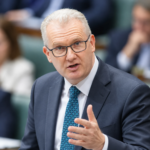
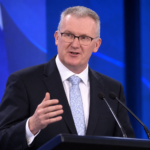
One Nation leader Pauline Hanson has accused Home Affairs Minister Tony Burke of misleading Australians after he unexpectedly postponed a major speech that was expected to unveil sweeping changes to Australia’s migration system.
Burke had been scheduled to address the National Press Club, where he was widely expected to announce a significant package of migration reforms aimed at further reducing net overseas migration. However, the appearance was cancelled only days before it was due to take place, with his office saying elements of the policy package were not yet finalised.
The abrupt postponement immediately sparked political speculation.
Reacting to the cancellation, Hanson claimed Burke was hiding the real reason behind the delay and accused the minister of failing to be honest with the public.
“He’s lying,” Hanson said, arguing the government was divided internally over how far it should go in tightening Australia’s migration settings. Her comments form part of her political criticism of the government and have been rejected by Labor.
According to government representatives, the speech was delayed because several components of the migration package required further work before they could be publicly announced.
A spokesperson for Burke said additional policy details were still being finalised and the address would be rescheduled rather than abandoned altogether.
Deputy Prime Minister Richard Marles also rejected suggestions that cabinet infighting had forced Burke to cancel the event.
Marles insisted the decision was made by Burke himself and denied reports that senior ministers had blocked or significantly watered down the proposed reforms. He described the postponement as part of the normal process of preparing a major policy announcement rather than evidence of political conflict.
Despite the delay, multiple media outlets report that Labor is still preparing one of its most significant migration policy overhauls since taking office.
The proposed package is expected to include measures designed to reduce net overseas migration by tightening aspects of the visa system, limiting abuse of migration pathways and encouraging more temporary visa holders to leave Australia when their visas expire.
Reports have also suggested ministers have examined changes affecting some family visas, working holiday arrangements and appeal processes, although the final package has not yet been released.
The migration debate has become increasingly important in Australian politics.
After borders reopened following the COVID-19 pandemic, net overseas migration reached a record peak of more than 550,000 before beginning to decline. Government projections indicate the figure has already fallen substantially, but migration remains one of the country’s most closely watched political issues because of its perceived links to housing affordability, infrastructure demand and cost-of-living pressures.
One Nation has argued for much deeper reductions than those reportedly being considered by Labor.
Pauline Hanson has repeatedly called for annual migration to be cut to around 130,000 people, saying Australia’s housing supply, roads, hospitals and public services have struggled to keep pace with rapid population growth.
She has also argued that Australia’s migration program should place greater emphasis on occupations facing genuine skill shortages while reducing visas for lower-skilled work.
Labor has consistently rejected suggestions it is adopting One Nation’s immigration platform.
Instead, ministers argue their objective is to create a migration system that is sustainable, economically productive and less vulnerable to exploitation, while continuing to support industries experiencing genuine workforce shortages.
The government has maintained its permanent migration planning level while focusing on reducing net migration through administrative reforms and visa integrity measures rather than broad numerical cuts.
The political pressure surrounding migration has nevertheless intensified.
Opinion polling has shown immigration becoming a higher priority for many voters amid persistent housing shortages and rising rents. Political analysts say those concerns have increased pressure on both Labor and the Coalition to demonstrate stronger control over Australia’s migration system.
Business groups, however, have urged caution.
Organisations representing employers have warned that large reductions in skilled migration could worsen labour shortages in industries including construction, mining, engineering, healthcare and aged care.
Several Labor MPs have likewise cautioned against making sweeping policy changes driven primarily by political pressure rather than economic evidence.
Housing remains central to the debate.
Supporters of lower migration argue reducing population growth could ease pressure on Australia’s rental market and improve housing affordability over time.
Many economists agree migration affects housing demand but also note that planning restrictions, construction capacity, labour shortages and years of underbuilding are major contributors to the country’s housing shortage.
The Albanese Government continues to argue that boosting housing supply and improving migration integrity should proceed together rather than being treated as competing policy objectives.
The postponement of Burke’s speech has therefore become more than a scheduling issue.
It has highlighted the political sensitivity surrounding immigration ahead of the next federal election, with Labor attempting to balance economic needs, employer concerns and growing public expectations for lower migration.
For Hanson, the cancellation provided another opportunity to argue that the government has lost control of migration and is only now responding to sustained political pressure.
For Labor, the challenge is to convince voters that the forthcoming reforms represent a considered policy response rather than a reaction to criticism from political opponents.
With the migration package expected to be rescheduled in the coming weeks, attention will now turn to the final details of the reforms and whether they produce the reductions in net overseas migration the government has indicated it wants to achieve.