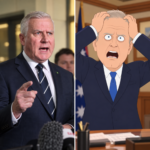
Prime Minister Anthony Albanese is set to face a fresh electoral challenge in his long-held Sydney seat of Grayndler after independent media executive Hannah Ferguson confirmed she will contest the electorate at the next federal election.

Ferguson, the founder and chief executive of independent news outlet Cheek Media, announced she would run as an independent candidate in the Inner West electorate, arguing that many younger Australians no longer feel represented by Australia’s major political parties.
Her candidacy sets up a high-profile contest against Albanese, who has represented Grayndler continuously since 1996 and has served as Prime Minister since 2022.
Speaking after launching her campaign, Ferguson described Grayndler as her home electorate, saying she was born in Marrickville and has longstanding ties to Sydney’s Inner West.
“I live in Grayndler. It’s my home electorate. It’s where I was born,” she said, arguing that younger residents deserve stronger local representation after nearly three decades under the same federal member.
Ferguson said her decision was motivated by a belief that Australia’s political system had become increasingly disconnected from ordinary voters.
She has criticised both major parties over issues including gambling reform, political donations, transparency, climate policy and the taxation of Australia’s gas industry, arguing that independent representatives can provide greater accountability in Parliament.
Her campaign represents a significant change in direction.
Ferguson had previously indicated she was considering a Senate bid, but later decided to contest Grayndler directly after concluding that her strongest connection was with the community where she was born and now lives. She has said she intends to step away from the day-to-day operation of Cheek Media before campaigning full-time to preserve the publication’s editorial independence.
Despite the attention surrounding her announcement, Grayndler remains one of Labor’s safest seats.
Anthony Albanese first entered Parliament after winning the electorate in 1996 and has retained it comfortably at every subsequent federal election. At the 2025 election he secured the seat on first-preference votes, reinforcing Labor’s longstanding dominance across Sydney’s Inner West.
The electorate covers much of Sydney’s Inner West, including suburbs such as Marrickville, Newtown, Petersham, Enmore, Summer Hill, Leichhardt and Dulwich Hill.
Historically a working-class Labor stronghold, Grayndler has evolved into a socially progressive electorate with a substantial Greens vote and growing support for community independents. Even so, Labor has held the seat continuously since its creation in 1949.
Political observers note that challenging a sitting Prime Minister in their own electorate is unusual but not unprecedented.
While defeating a nationally recognised incumbent remains a formidable task, high-profile independent campaigns have become increasingly common in Australian federal politics following the success of several community-backed independents at recent elections.
Those campaigns have often focused on integrity in government, political transparency, climate policy and stronger local representation rather than traditional party structures.
Ferguson’s platform reflects many of those themes.
She has argued that the major parties have become too heavily influenced by vested interests and large political donors, saying Parliament should better reflect the priorities of local communities rather than party machines.
Among the issues she has highlighted are gambling advertising reform, stronger action on climate change, greater transparency around political donations and a review of Australia’s taxation of gas exports.
Her announcement has also generated discussion because of her background outside traditional party politics.
Cheek Media has built a significant following among younger Australians through social media, podcasts and digital news content. Ferguson’s public profile has therefore developed largely outside conventional political pathways, giving her an existing audience before formally entering electoral politics.
Labor has not indicated that Albanese intends to alter his campaign strategy in response to the independent challenge.
The Prime Minister has consistently retained strong support within Grayndler and remains one of Australia’s best-known political figures after almost three decades representing the electorate.
The next federal election is due by 2028 unless called earlier.
Although Grayndler is widely regarded as a safe Labor seat, Ferguson’s candidacy ensures Albanese will face renewed scrutiny over local representation as well as his government’s national record.
Political analysts caution that independent campaigns are not judged solely by whether they win.
High-profile challengers can influence public debate, force greater attention onto local issues and shape campaign narratives, particularly when contesting prominent electorates represented by senior ministers or party leaders.
For Ferguson, the campaign is being presented as an attempt to offer voters an alternative to Australia’s traditional two-party system.
For Albanese, it represents another political test in an electorate he has represented for nearly 30 years while continuing to lead the federal government.
Whether the independent campaign can convert public attention into electoral momentum remains uncertain, but Grayndler is now expected to attract significantly greater national interest as Australia’s next federal election approaches.