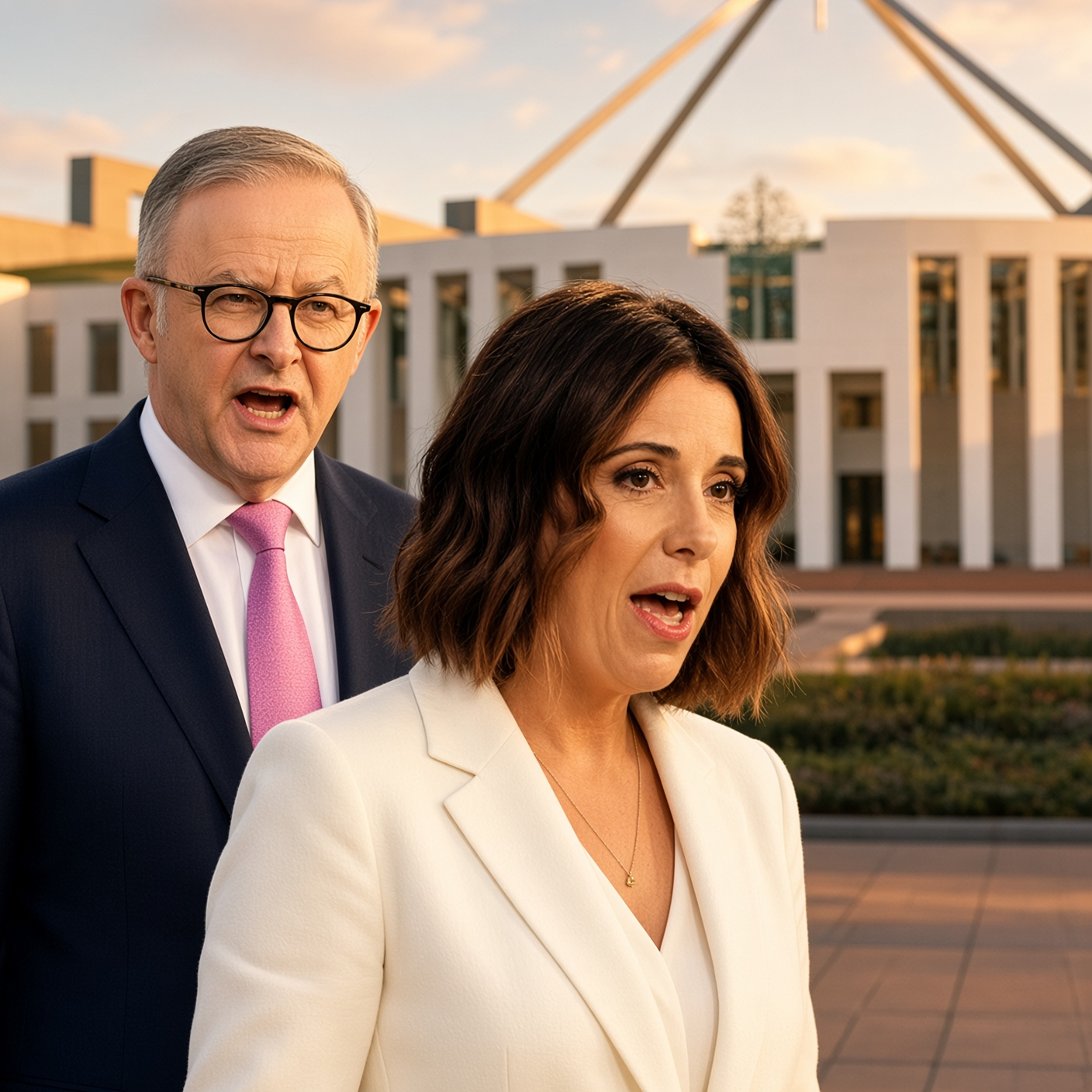
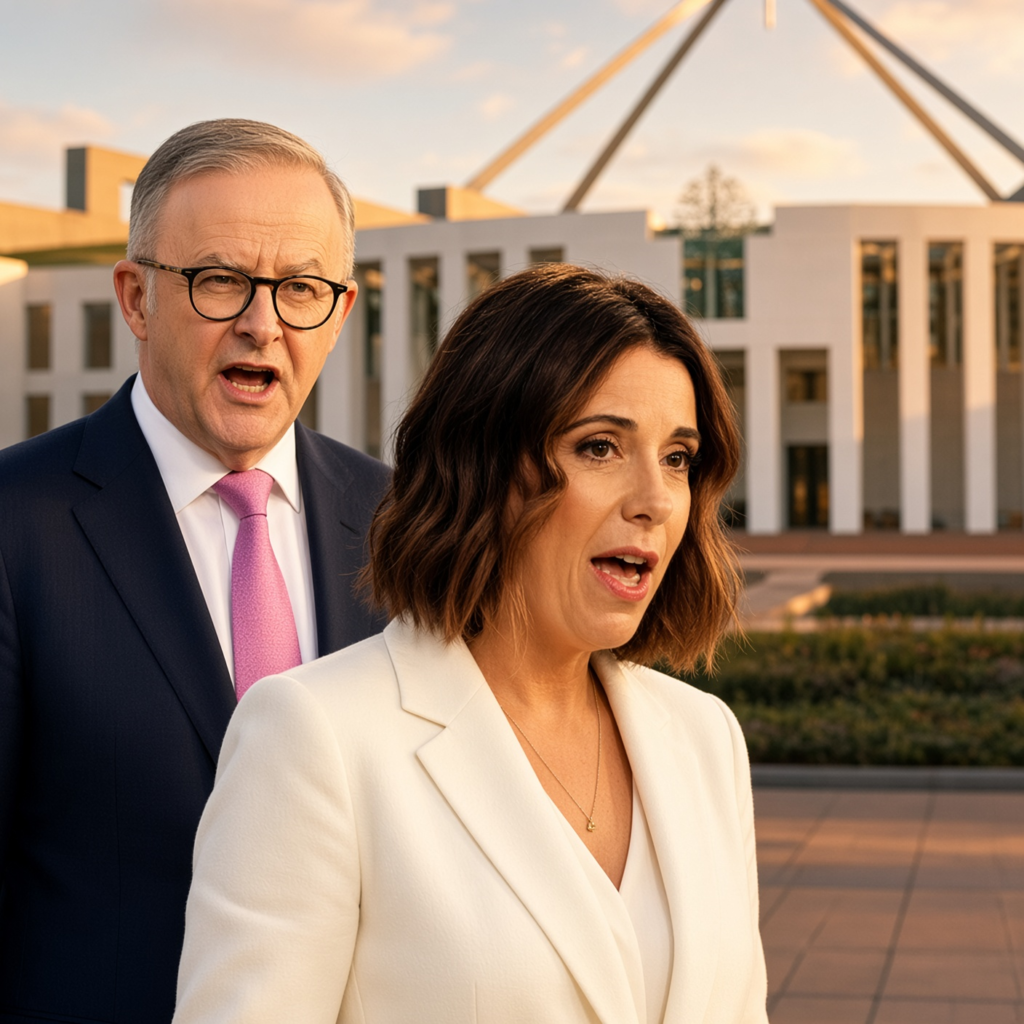
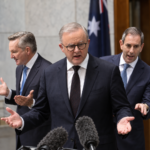
Communications Minister Anika Wells has confirmed the Albanese government’s proposed Digital Duty of Care will impose new safety obligations across a broad range of online services, as critics raise concerns about how far Australia’s expanding internet regulation could ultimately reach.
The government released an exposure draft of the Online Safety Amendment (Digital Duty of Care) Bill 2026 on Tuesday, setting out a major expansion of Australia’s online safety framework beyond conventional social media platforms.
Asked how the proposed system would operate, Wells said the baseline was that “all online services must identify risks on their platform and mitigate against those risks”, with companies expected to incorporate safety considerations into the design of their products and services.
The breadth of that language has fuelled a renewed political debate about online censorship, ministerial power and the role of the eSafety Commissioner. However, claims that the proposal simply gives the government a power to police news reporting require important qualification.
The exposure draft does not specifically name news websites or journalistic content. Instead, it creates a wide definition of an “online service” that includes categories such as social media services, relevant electronic services, designated internet services, hosting services, internet search engines, app distribution services and certain artificial intelligence services.
That means the proposed framework is deliberately intended to reach far beyond Facebook, Instagram or TikTok. The government says the aim is to ensure emerging technologies including AI chatbots, games, messaging tools and other internet services cannot escape basic safety responsibilities simply because they do not fit the traditional definition of social media.
What the Digital Duty of Care would require
Under the draft legislation, those responsible for covered online services would have a duty, so far as reasonably practicable, to provide a safe online environment for Australians.
Providers would be expected to assess risks associated with their services, introduce measures to mitigate those risks and consider how product features themselves can contribute to harm.
The legislation specifically addresses design features such as recommendation systems, endless feeds, engagement mechanisms and other functions capable of influencing how users behave online.
The proposal would also give the government scope to require certain services to provide what it calls “user empowerment tools”. One of the government’s flagship examples is its “My Feed, My Way” policy, under which social media users aged over 16 would be offered a genuine choice between an algorithmically recommended feed and a feed based on people or creators they have chosen to follow.
Prime Minister Anthony Albanese said the reform was designed to put control in the hands of users rather than government.
The government has also warned that companies failing to comply with the new framework could face penalties exceeding $100 million.
Wells said the duty was intended to change the responsibility placed on technology companies. Instead of regulators waiting until harmful material had circulated and attempting to deal with it afterwards, companies would be required to consider foreseeable risks when designing and operating their services.
Government rejects censorship accusation
The most contentious questions concern what counts as harm and who ultimately gets to decide.
At Tuesday’s press conference, a journalist asked Albanese and Wells directly whether the proposed legislation could allow the eSafety Commissioner or other regulators to police misinformation, political statements or commentary.
Albanese said the measure was not about censorship, while Wells responded: “We can emphatically rule that out.”
Wells said the framework would treat adults and children differently. For adults, she said the focus would remain on illegal material and conduct, including child sexual exploitation and grooming, serious violence, threats and harassment, and material promoting terrorism or extremism.
For children, the proposed protections are broader. The exposure draft identifies categories including pornography, material promoting disordered eating, content encouraging hostile attitudes towards women or gender equality, material glorifying crime or dangerous stunts, abuse and cyberbullying, as well as other forms of content capable of causing serious harm.
This distinction is central to the government’s defence of the bill. Labor argues that it is not creating a general system for deciding which lawful political opinions adults are allowed to read. Instead, it says the new regime is intended to force technology companies to manage risks that already cause demonstrable harm, particularly to children.
Critics remain concerned about provisions allowing additional categories of serious harm or problematic design features to be prescribed through legislative instruments.
Wells has defended that flexibility, arguing technology can change too quickly for Parliament to pass an entirely new Act every time an unforeseen online threat emerges.
She pointed to the rapid emergence of artificial intelligence tools capable of generating sexualised or “nudified” images as an example of why regulators need the ability to respond to new forms of harm without waiting years for legislation to catch up.
Any such rule-making power is likely to be a major focus as the bill moves through consultation and eventually Parliament. Opponents are expected to demand safeguards against mission creep, while the government argues that flexibility is necessary if an online safety regime is to remain relevant as technology develops.
Where news websites enter the debate
The debate has become more complicated because a separate piece of Labor’s recent internet regulation does explicitly place obligations on online publishers, including news websites, in relation to gambling advertising.
During a Canberra press conference on August 20, a journalist asked Wells whether the government’s new wagering advertising opt-out system would apply across social media platforms, news websites, other websites and podcasts.
Wells did not dispute that description. She explained that services wanting to continue displaying wagering advertising would need to comply with the new requirements and said the simplest way to avoid those obligations would be not to show gambling advertisements.
When subsequently asked whether the compliance burden might prompt major online platforms to stop carrying gambling ads altogether, Wells replied: “What a great outcome that would be.”
That legislation has since gone beyond the proposal stage.
The Interactive Gambling Amendment (Gambling Reform) Act 2026 received Royal Assent on August 26. Most of its substantive schedules are due to commence on January 1, 2027.
The law establishes restrictions around wagering advertising delivered through online content services. In broad terms, an online provider that carries wagering advertising will need to comply with protections designed to prevent restricted users receiving the material, ensure relevant users are accessing it through registered accounts and provide an effective mechanism allowing people to opt out.
A separate Wagering Advertising Opt-out Register is also being established, creating a central mechanism for Australians who do not want to receive betting advertising online.
The law gives the Australian Communications and Media Authority a significant compliance and enforcement role.
This is where descriptions of the government “policing news websites” have some factual foundation but can also become misleading if the two regimes are blurred together.
A news website carrying wagering advertising can be subject to gambling-advertising obligations. That does not mean the government is being given a general power under the gambling reforms to approve, suppress or rewrite the site’s political reporting.
Likewise, the new Digital Duty of Care is drafted broadly enough to regulate many categories of online service, but the exposure draft itself does not specifically declare news journalism to be a category of harmful material.
The distinction matters because Australia is now building several overlapping layers of internet regulation at the same time.
There are existing Online Safety Act powers, the social media minimum-age regime, new gambling advertising restrictions and now the proposed Digital Duty of Care. Each deals with different risks, uses different legal mechanisms and imposes different obligations.
Treating them as a single government “internet censorship law” risks obscuring what Parliament is actually being asked to approve.
At the same time, the breadth of the government’s approach means questions about regulatory boundaries are legitimate. The Digital Duty of Care is expressly designed to cover technology beyond today’s largest social media companies, while the draft provides for regulators and ministers to respond to new technologies and categories of harm as they emerge.
That makes the precise definitions, safeguards and review mechanisms particularly important.
What happens next
The Digital Duty of Care remains an exposure draft rather than enacted law.
The Department of Infrastructure, Transport, Regional Development, Communications, Sport and the Arts released the draft on September 8 and has invited submissions until midday on September 22.
The consultation will give technology companies, civil liberties advocates, child-safety organisations, media groups and other stakeholders an opportunity to challenge or support the scope of the proposed obligations before final legislation is settled.
The government is presenting the reforms as the next stage of Australia’s push to make technology companies responsible for the real-world consequences of their products. Wells argues that businesses designing online services should face basic safety expectations in much the same way other industries must account for risks in products used by the public.
Its opponents are likely to focus increasingly on who defines harm, how much discretion is given to regulators and ministers, and whether rules originally justified by extreme cases could gradually extend into lawful expression.
For now, the government’s stated position is clear: political commentary and misinformation are not intended to be targets of the Digital Duty of Care, and adult users are primarily being protected from illegal content while receiving greater control over their feeds.
Whether the final legislation draws those boundaries tightly enough to satisfy free-speech critics will be one of the key questions facing Parliament as Australia’s already extensive online regulatory system expands further.