Labor has seized on an embarrassing migration-policy dispute inside One Nation after Barnaby Joyce conceded rookie MP David Farley got the party’s numbers wrong, while Pauline Hanson moved to reassert her headline target of 130,000 net overseas migrants a year.
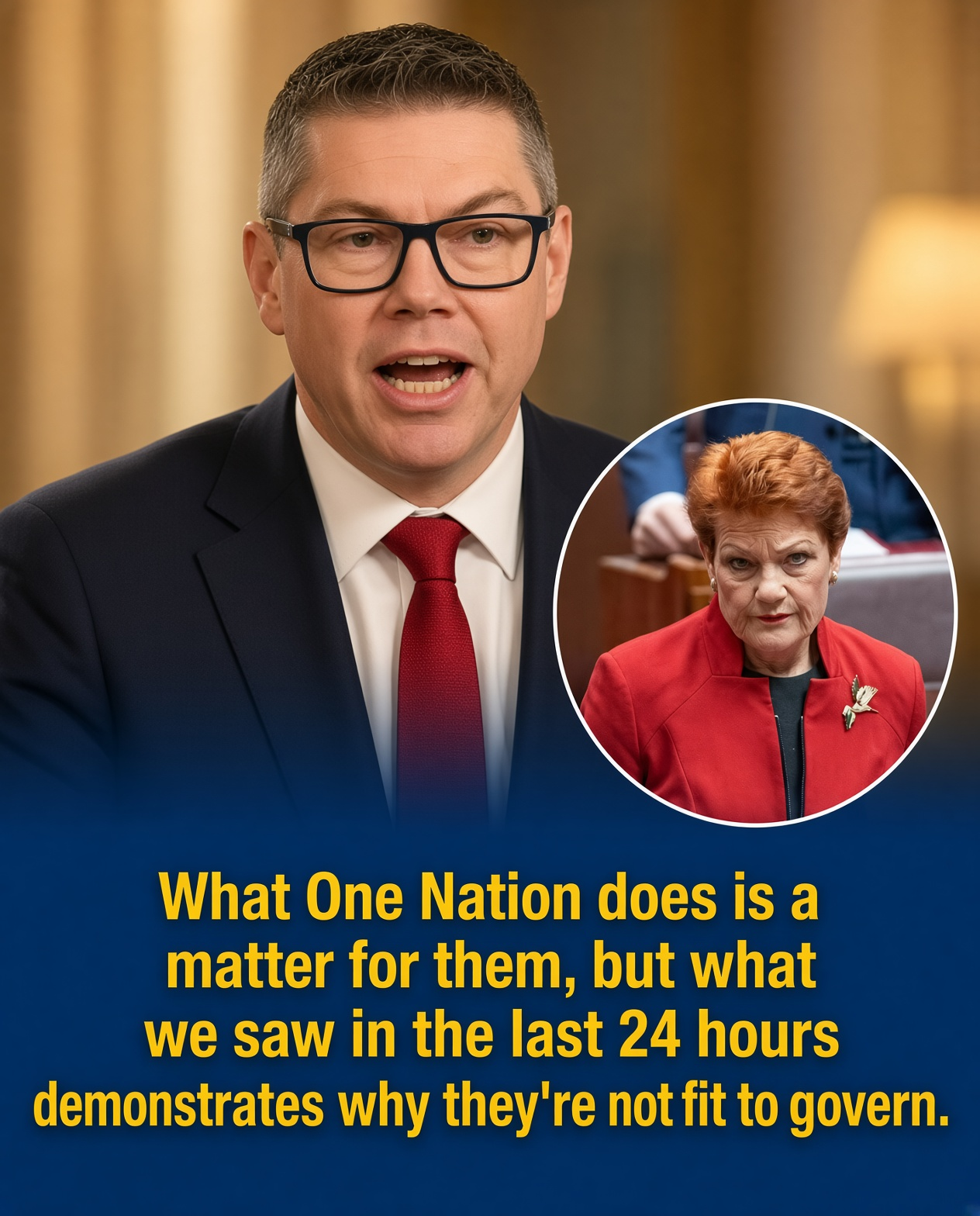
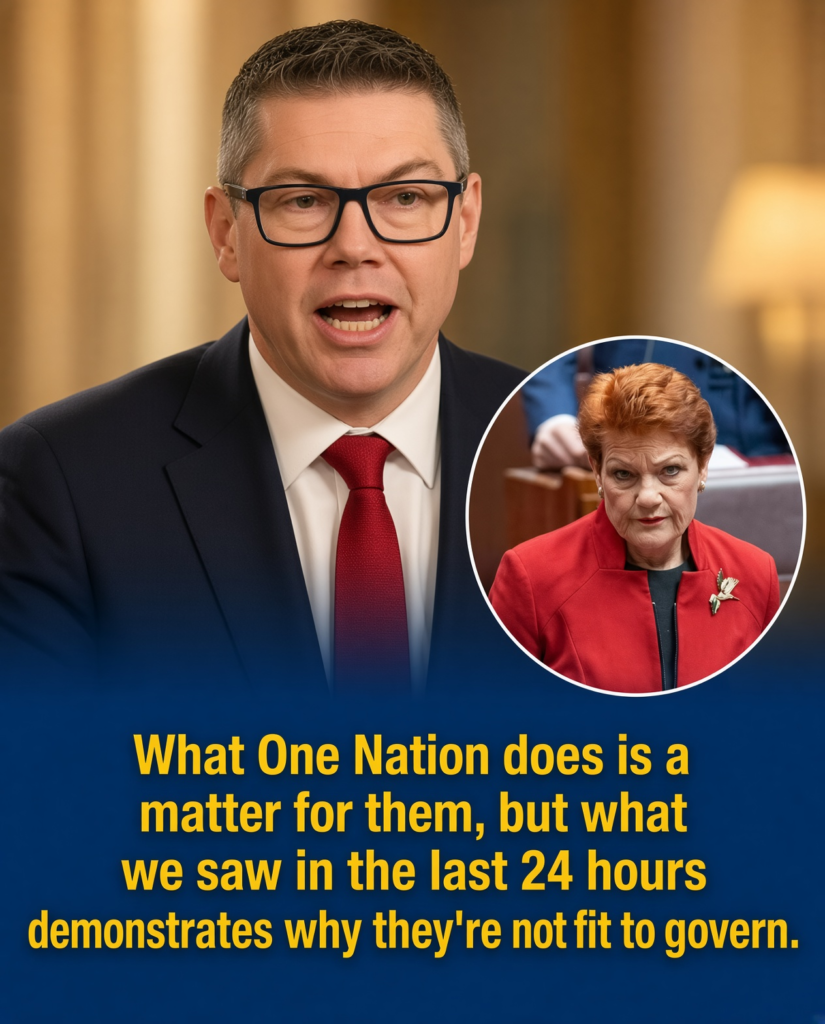
Defence Industry Minister Pat Conroy accused the surging minor party of “policy incoherence” after Farley’s attempt to explain how One Nation would reconcile dramatically lower migration with Australia’s need for agricultural and skilled workers.
The newly elected member for Farrer had said One Nation wanted net overseas migration, or NOM, reduced to 130,000.
But he then discussed at least another 100,000 overseas workers entering through categories including skilled migration, backpackers and Pacific and Timor-Leste labour programs.
That appeared to produce an overall figure around 230,000 — prompting questions over whether One Nation’s practical migration settings would actually be much different from Labor’s.
Farley’s interview creates a political headache
The controversy began during Farley’s appearance on ABC’s Insiders on Sunday.
Farley, who won the NSW seat of Farrer for One Nation in May, was pressed on how the party’s migration policy would operate in practice.
He reaffirmed its 130,000 NOM target but argued Australia would continue to require significant numbers of overseas workers.
Those workers included skilled migrants as well as backpackers and participants in the Pacific Australia Labour Mobility scheme.
Farley suggested at least another 100,000 people could be required.
Asked about the resulting number, he acknowledged One Nation’s migration level could ultimately be “not too different” from Labor’s.
The arithmetic immediately became a problem
Adding 100,000 to 130,000 produces an apparent total of approximately 230,000.
That number attracted attention because the Albanese government’s current forecasts have net overseas migration declining to 245,000 in 2026–27 and 225,000 in 2027–28.
On the surface, Farley’s explanation therefore appeared to leave One Nation slightly above Labor’s eventual 225,000 forecast.
That was a potentially damaging admission for a party that has made reducing migration one of its most recognisable political positions.
But it also involved mixing visa and worker numbers with NOM, a population measure that does not count every person entering Australia in the same way.
Pauline Hanson steps in
Hanson intervened on Sunday to reject the interpretation given by her own MP.
She said One Nation’s policy remained to reduce net overseas migration to 130,000.
The party leader specifically argued that short-term seasonal agricultural workers who do not meet the Australian Bureau of Statistics residency test are not counted in NOM.
That distinction is important.
Net overseas migration is calculated using movements into and out of Australia and whether people meet a residency-duration threshold, rather than simply counting every temporary or permanent visa issued.
Hanson’s position was therefore clear: 130,000 remains One Nation’s NOM target and the party does not accept Farley’s apparent 230,000 formulation.
Barnaby Joyce admits Farley got it wrong
By Monday morning, Barnaby Joyce was publicly cleaning up the dispute.
Appearing on Seven’s Sunrise, Joyce rejected the suggestion that another 100,000 people should simply be added to the party’s 130,000 NOM target.
He conceded that Farley had made a mistake.
Joyce defended his colleague by arguing that newly elected politicians occasionally get details wrong and said he was not prepared to throw Farley “under a bus” over the episode.
His intervention removed any remaining ambiguity about One Nation’s official position: the party says the target is 130,000, not 230,000.
Labor calls it ‘policy incoherence’
Labor quickly turned the internal correction into an attack on One Nation’s ability to develop and administer policy.
Defence Industry Minister Pat Conroy said the conflicting explanations demonstrated why he believed One Nation was not ready to govern.
He characterised the episode as evidence of policy incoherence inside a party receiving increasing electoral scrutiny.
Conroy contrasted the dispute with Labor’s approach, arguing the government was focused on achieving the appropriate migration mix to support Australia’s economy and longer-term objectives.
“What we saw in the last 24 hours demonstrated why they’re not fit to govern,” Conroy told ABC Radio.
Labor’s ‘unfit to govern’ attack is a political judgment
The government’s language should nevertheless be distinguished from the underlying facts of the dispute.
Farley gave an explanation of One Nation’s migration policy that Hanson rejected.
Joyce subsequently acknowledged that Farley had made a mistake.
Those facts demonstrate an internal policy communication failure.
Whether that makes One Nation “unfit to govern” is Labor’s political conclusion, not an independently established fact.
The significance of the episode instead lies in the subject on which the mistake occurred: migration is one of One Nation’s defining policies and a major driver of its recent political growth.
Labor has its own migration policy questions
Conroy’s attack came as the Albanese government continues working through its own migration settings.
Immigration Minister Tony Burke had been expected to use a National Press Club address earlier this month to unveil changes to the government’s approach.
That speech was cancelled at short notice before the policy had been finalised by cabinet.
Asked on Monday whether Labor’s revised position could move closer to One Nation’s 130,000 target, Conroy did not nominate a figure.
Instead, he argued migration was a complex area in which getting the policy right mattered more than producing an immediate answer.
Labor can therefore attack One Nation’s confusion, but the government has not yet settled the political debate by announcing a new long-term target of its own.
Government forecasts are already falling
The latest figures and forecasts show net overseas migration declining from the extraordinary levels reached after Australia’s borders reopened following the pandemic.
NOM reached 301,000 rather than the previously expected 295,000 in the last financial year.
The government forecasts a further decline to 245,000 in 2026–27.
It then expects the figure to fall to approximately 225,000 in 2027–28.
That means One Nation’s official 130,000 target would still represent a reduction of roughly 95,000 from Labor’s 2027–28 forecast if Hanson succeeded in implementing it as stated.
NOM is not the same thing as permanent migration
Much of the political confusion stems from different migration measures being discussed as though they are interchangeable.
They are not.
Net overseas migration measures the net population impact of people moving into and out of Australia while satisfying the relevant residency criteria.
It includes temporary migrants who remain long enough to qualify, as well as Australians departing and returning.
Short-term visitors are excluded.
Permanent migration, by contrast, concerns permanent visa places available through programs including skilled and family migration.
The permanent migration program is set at 185,000 places for the current financial year.
That is why simply adding a temporary-worker number to a NOM target can produce misleading arithmetic.
Seasonal farm workers sit at the centre of the dispute
Farley’s difficulty arose because his electorate makes the tension between lower migration and labour shortages particularly obvious.
Farrer covers a vast area of southern New South Wales containing major agricultural and food-processing industries.
Those businesses can rely heavily on temporary overseas labour, including workers arriving under the PALM scheme.
Farley has argued those workers remain essential even as One Nation seeks to reduce Australia’s overall migration intake.
He has previously acknowledged that the party needed a better understanding of agriculture’s labour requirements.
His underlying point — that regional employers still need overseas workers — remains a genuine policy challenge even though his explanation of the numbers was wrong.
One Nation says student migration would bear much of the cut
Hanson’s proposed path towards 130,000 relies heavily on reducing migration streams the party believes have expanded excessively.
International students are a particular target.
One Nation has also advocated tighter treatment of temporary graduate visas and dependants, while arguing skilled migration should be focused more closely on Australia’s genuine workforce shortages.
The political proposition is that Australia could retain essential workers for industries such as agriculture while substantially reducing other migration categories.
Farley’s interview has increased pressure on One Nation to demonstrate mathematically how all those components fit inside its 130,000 NOM objective.
The Coalition is attacking from the other side
One Nation is not facing scrutiny only from Labor.
The Coalition also has an obvious political interest in challenging a party taking votes from the traditional centre-right.
Opposition figures have argued that One Nation’s headline migration policies need greater detail and economic costing.
Shadow Defence Minister James Paterson said the Farley controversy showed the party was “all over the shop” on migration.
Meanwhile, Coalition home affairs spokesman Jonathon Duniam has said the opposition will reveal its own migration numbers closer to the next federal election rather than during 2026.
The result is an unusual three-way contest in which all sides advocate tighter or better-managed migration while attacking their opponents over how the numbers would actually work.
The Coalition has had its own disagreement over numbers
One Nation can also point out that migration-policy disagreements are not unique to its parliamentary team.
Coalition frontbencher Andrew Bragg recently proposed a migration cap of 180,000 during a National Press Club speech.
The suggestion prompted a rebuke from his own leadership.
Duniam has since stressed that the Coalition’s official number will not be announced this year.
Migration has consequently become an unusually volatile policy area across Australian politics, with Labor, the Coalition and One Nation all under pressure to translate demands for lower numbers into detailed workforce and economic settings.
Farley has stumbled on migration before
The Insiders appearance was not the first time Farley’s comments on migration required attention from the party leadership.
During the Farrer campaign, he was counselled by Hanson after agreeing that net overseas migration of 306,000 in the previous year was “probably not” too high.
That answer sat awkwardly beside One Nation’s much lower national target.
His latest mistake therefore carries more political weight than an isolated numerical slip.
For Hanson, it demonstrates the difficulty of maintaining message discipline as One Nation expands beyond a political organisation dominated by a small group of longstanding figures.
Electoral success brings a different kind of scrutiny
One Nation’s growing support means its representatives are increasingly being questioned as prospective policymakers rather than simply protest politicians.
That distinction matters.
It is relatively straightforward to argue that migration is too high.
Governing requires decisions about international students, permanent skilled migration, family visas, seasonal workers, healthcare recruitment, agricultural labour and the population consequences of every category.
The stronger One Nation becomes, the more journalists and political opponents will interrogate those details.
Farley’s experience on Insiders illustrates the transition from campaigning on a headline number to defending the machinery required to deliver it.
One Nation’s polling strength raises the stakes
The controversy arrives as One Nation remains a major force in federal polling.
A Demos poll released on Monday placed the party’s primary support at 24 per cent, one point behind the Coalition, while Labor was on 26 per cent.
Individual polls should not be treated as election forecasts, but results at that level explain why both major parties are devoting increasing attention to Hanson’s policies.
A One Nation polling in the mid-20s is no longer merely competing at the margins of the political system.
It is competing directly with Labor and the Coalition for large blocs of voters — and consequently being subjected to the scrutiny normally applied to parties aspiring to wield substantial power.
Hanson has clarified the number, but not every detail
The immediate numerical dispute now has a relatively clear answer.
Farley’s apparent 230,000 formulation is not One Nation’s official policy.
Hanson says the target is 130,000 NOM.
Joyce agrees and says Farley was mistaken.
But clarification of the headline number does not eliminate the more difficult question Farley stumbled into.
Australia still needs workers in agriculture, health, aged care, engineering and other sectors, and some of those workers will contribute to NOM depending on how long they remain in the country.
One Nation will ultimately have to show how it can accommodate those labour needs while cutting the population impact of migration to the level Hanson has promised.
Labor has found an opening — but the migration fight is far from over
Conroy’s attack gives Labor an opportunity to portray One Nation as a party whose rapid electoral growth has outpaced its policy discipline.
Farley’s mistake undeniably provided ammunition for that argument.
But migration remains politically difficult for the government as well.
Labor is still working through its own future settings, while the Coalition is withholding its final target until closer to the next election.
All three political forces therefore face variations of the same question: how low can migration realistically go without creating serious economic and workforce consequences?
For now, Hanson has restored One Nation’s official answer to 130,000. The political damage will depend on whether voters regard Farley’s intervention as an understandable rookie mistake — or evidence that the party has yet to master the detail behind one of its biggest promises.