For generations, one of the safest assumptions in Australian politics has been that when voters turn against a government, the established opposition is the natural beneficiary.
Victoria is threatening to break that rule.
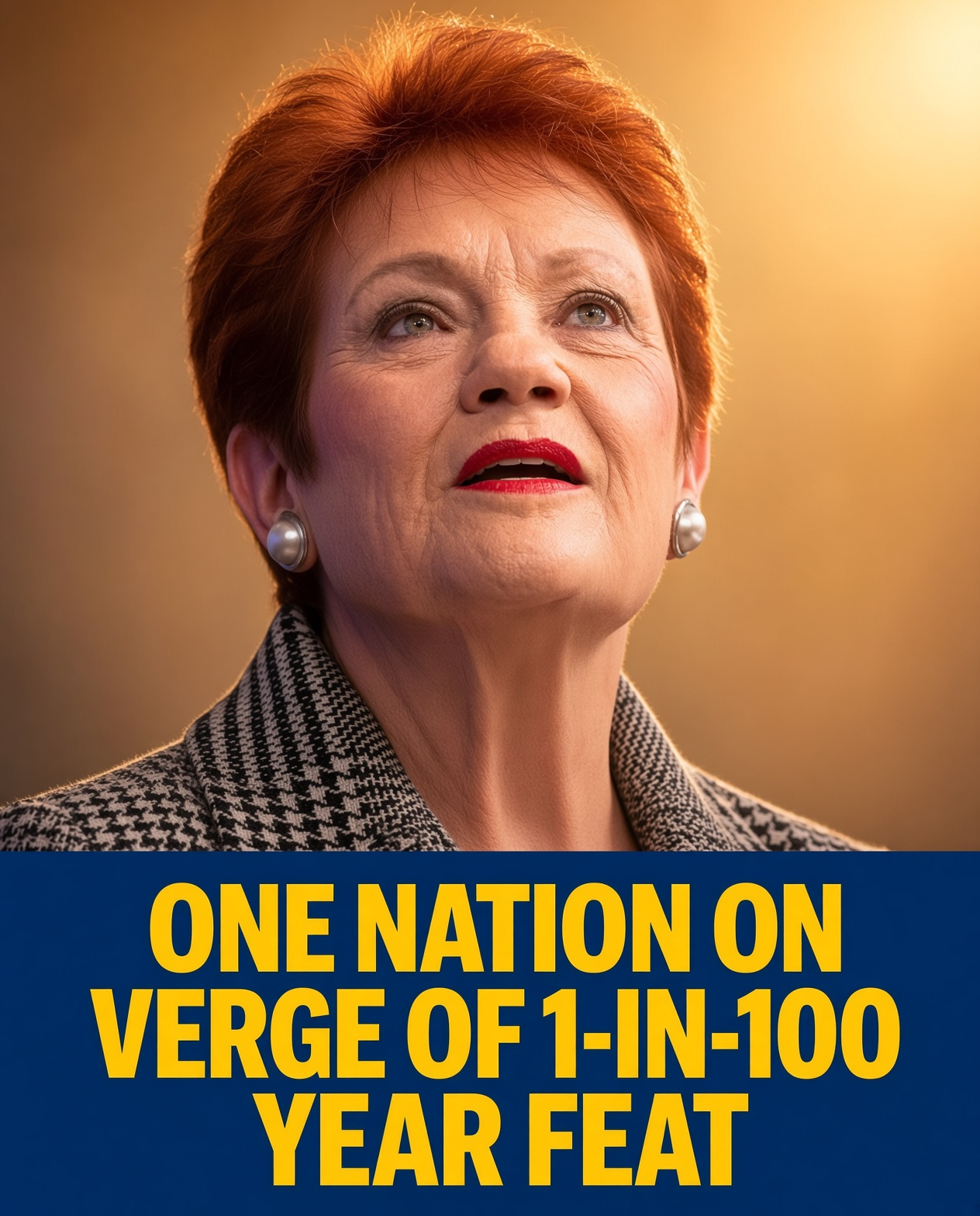
With the state election approaching on November 28, Pauline Hanson’s One Nation has emerged as a genuine third force in a contest that would traditionally have been fought between Labor and the Liberal-National Coalition.
Polling has increasingly pointed towards something resembling a three-horse race, with none of the three political forces commanding anything close to the dominant primary vote normally associated with a government-in-waiting.
That is creating an extraordinary problem for both sides of Victoria’s traditional political divide.
For Labor, One Nation is reaching into working-class communities that were once assumed to be safely within its electoral coalition. For the Liberals and Nationals, Hanson’s party is competing directly for voters who want to remove Labor but are not convinced the Coalition deserves their support.
The result is an election in which voter anger is abundant but the eventual beneficiary is increasingly difficult to predict.
Recent reporting has put Labor, the Coalition and One Nation at roughly a quarter of the primary vote each, turning what would normally be a contest between government and opposition into a much more complicated electoral equation.
Earlier polling had already demonstrated the scale of the change. A Freshwater Strategy poll reported in June put the Coalition on 27 per cent, One Nation on 25 per cent and Labor on 23 per cent.
Those numbers represented something far more significant than another difficult poll for the government.
They suggested that Victoria’s electorate was fragmenting.
The old rule is no longer reliable
Australia’s preferential electoral system has historically reinforced a broadly two-sided contest.
Minor parties and independents have always mattered, but government has overwhelmingly been a choice between Labor and the Coalition parties. When one side becomes deeply unpopular, voters wanting a change of government have generally migrated towards the other major political bloc.
That assumption is now much less secure.
One Nation’s Victorian surge means an unhappy Labor voter does not necessarily become a Liberal voter, while a disillusioned conservative voter does not necessarily remain inside the Coalition.
Instead, both can move to the same third party.
That helps explain why the political consequences of One Nation’s rise are so difficult to model.
Initially, some Labor figures were relatively relaxed about Hanson’s growing support because they expected most of it to come from the Coalition. Under that scenario, a stronger One Nation would simply divide the conservative vote and make it harder for the Liberals and Nationals to defeat Labor.
But evidence that One Nation is also attracting former Labor supporters changes the calculation dramatically.
ABC political analysis in June reported growing concern within Victorian Labor that the party was losing voters in working-class suburbs in Melbourne’s north and west — areas that have traditionally provided some of Labor’s most dependable support.
The further voters are from Melbourne’s inner core, the stronger the One Nation challenge appears to become.
That places outer-suburban Labor MPs under pressure while simultaneously threatening Nationals MPs in regional Victoria and complicating Liberal attempts to capture marginal suburban electorates.
It is precisely the sort of electoral map that makes a three-way contest unpredictable.
Why primary votes do not tell the whole story
Victoria’s next government will not be determined simply by which party receives the largest statewide primary vote.
The state has 88 seats in its Legislative Assembly, with one MP elected from each district. A government must command majority support in that chamber.
Each lower-house electorate uses preferential voting, meaning voters rank candidates rather than simply choosing one.
If no candidate receives an absolute majority of first-preference votes, candidates are progressively eliminated and their ballots redistributed according to voters’ subsequent preferences until one candidate passes 50 per cent.
That system becomes particularly consequential when three major political forces are polling in the same broad range.
Election analyst Antony Green has warned that with Labor, the Coalition and One Nation all polling below one-third, translating statewide polling into actual seats is extremely difficult.
The crucial variables will include which candidate finishes third in individual electorates and where that candidate’s preferences then flow.
Imagine, for example, an electorate in which Labor receives 30 per cent of the primary vote, the Liberals 29 per cent and One Nation 27 per cent.
If One Nation is eliminated and enough of its voters preference the Liberal candidate, Labor could lose. Reverse the order of the final three candidates, however, and preference flows could produce an entirely different outcome.
This means the identity of the final two candidates in dozens of seats could become just as important as the statewide primary vote.
It also explains why preference strategy between the Coalition and One Nation could become one of the defining issues of the campaign.
Labor’s heartland is no longer guaranteed
Perhaps the most politically significant feature of the One Nation surge is where some of its new support appears to be coming from.
Working-class voters have traditionally been central to Labor’s identity, particularly in Melbourne’s outer northern and western suburbs.
But cost-of-living pressures, housing affordability, crime, immigration and dissatisfaction with the direction of government are creating opportunities for One Nation to appeal to voters who may never previously have considered supporting the party.
Political strategists have increasingly described the electorate less in conventional left-versus-right terms and more as a contest between voters satisfied with the political establishment and those wanting to punish it.
That distinction is potentially valuable for Hanson.
One Nation can present itself simultaneously as an alternative to Labor and as an alternative to the Coalition — something neither major political bloc can do.
Victoria has also been governed by Labor since 2014. After three consecutive election victories, fatigue with a long-serving government can become an electoral force in its own right.
The government has already undergone a major leadership reset, with Ben Carroll replacing Jacinta Allan as premier ahead of the November election.
But changing leaders does not automatically remove the broader frustrations accumulated during 12 years of government.
For the Coalition, that should ordinarily create an ideal environment.
Yet the opposition faces its own dilemma: a substantial number of voters who want Labor removed are apparently considering One Nation rather than automatically moving to the Liberals or Nationals.
One Nation is building an organisation to match its polling
Polling support means little if a party cannot convert it into credible candidates, campaign workers and votes in individual electorates.
That has historically been one of One Nation’s biggest weaknesses.
The party is now attempting to address that problem in Victoria.
One Nation has said it intends to contest every lower-house seat at the November election and has been progressively unveiling candidates across the state.
Its Victorian campaign includes Warren Pickering in Pakenham and former AFL footballer and Moonee Valley councillor John Barnes in Essendon, alongside candidates targeting suburban, outer-metropolitan and regional electorates.
The party also has a sitting Victorian parliamentarian, Rikkie-Lee Tyrrell, who entered parliament through the Legislative Council and is seeking another term.
The scale of the candidate recruitment effort matters because One Nation’s previous electoral surges have sometimes been undermined by weak organisation, controversial candidates and an inability to convert broad protest support into constituency-level campaigns.
The November election will test whether the current version of One Nation has overcome those weaknesses.
Labor and the Coalition are likely to scrutinise every candidate closely, knowing that candidate controversies could become one of the most effective ways of persuading undecided voters that a protest vote carries risks.
One Nation, in turn, needs to demonstrate that it can move beyond Pauline Hanson’s personal political brand and operate as a serious statewide organisation.
A hung parliament is no longer an exotic scenario
The biggest consequence of a genuine three-way contest is the possibility that nobody wins enough seats to govern alone.
ABC analysis earlier in the campaign reported that Victorian Labor MPs and strategists were increasingly contemplating a hung parliament in which a substantial One Nation bloc could hold the balance of power.
Former Victorian Labor assistant state secretary and pollster Kos Samaras described the possibility as very real.
One scenario would see Labor emerge as the largest individual party without a majority. Another could leave the Coalition and One Nation with enough seats between them to construct an alternative government.
Which party held more seats within such an arrangement could itself become politically explosive.
One Nation does not need to win anywhere near 45 seats to transform Victorian politics. Even a comparatively modest bloc of lower-house MPs could become decisive if neither Labor nor the Coalition reaches a majority.
That would force questions that Australia’s major parties have often preferred to avoid.
Would the Coalition negotiate with One Nation to remove Labor? What policy concessions would One Nation demand? Would support be formalised through a coalition, or provided through confidence-and-supply agreements? And could Labor construct a minority government with support from the Greens, independents or other crossbench MPs?
Those questions cannot be answered from polling alone.
But the fact they are being seriously discussed shows how much the political environment has changed.
The upper house adds another layer of uncertainty
The Legislative Assembly is only half of the Victorian Parliament.
The Legislative Council has 40 MPs elected from eight regions, with five representatives in each.
Victoria also retains group voting tickets for above-the-line voting in the upper house, a system abolished for the Australian Senate and criticised for allowing complex preference arrangements to produce results bearing little resemblance to parties’ primary support.
Antony Green has warned that the system could make the 2026 result particularly unpredictable at a time when support for the traditional major parties is declining.
With a quota of 16.7 per cent in each five-member region, One Nation’s increased vote gives it an obvious opportunity to expand its representation. But group voting tickets and preference deals mean the final result could still vary substantially from headline polling.
A fragmented lower house combined with a fragmented upper house would make governing Victoria significantly more complicated after November.
Victoria has become a national political experiment
The importance of the election extends well beyond the state.
Victoria is Australia’s second-most populous state and has historically been regarded as one of the country’s more progressive electorates. A major One Nation breakthrough there would therefore challenge the assumption that the party’s strongest appeal is confined to Queensland or particular regional communities.
It would also provide a test of whether the decline in support for Australia’s traditional parties is temporary voter frustration or the beginning of a structural political realignment.
For Labor, the danger is that voters once considered part of its working-class base are becoming politically available to populist challengers.
For the Liberals and Nationals, the threat is arguably just as serious. If voters who want a conservative alternative no longer regard the Coalition as their automatic first choice, the opposition cannot rely on government unpopularity to carry it into office.
And for One Nation, Victoria represents something it has rarely possessed during Pauline Hanson’s three decades in Australian politics: an opportunity to demonstrate that strong opinion polling can be converted into a large parliamentary presence in a major state.
There are still more than three months before Victorians vote, and campaigns can change dramatically once voters begin concentrating on candidates, policies and the practical question of who they want governing the state.
One Nation’s support could fall. The Coalition could consolidate voters determined to remove Labor. Premier Ben Carroll could restore enough confidence in the government to keep Labor competitive. Candidate controversies, preference decisions and local campaigns could reshape individual contests.
But the political assumption that has guided Victorian elections for generations can no longer simply be taken for granted.
A vote against Labor is not automatically a vote for the Coalition. A vote lost by the Coalition does not necessarily help Labor. And a party once treated primarily as a protest movement is now polling strongly enough to influence who occupies the government benches.
That is what makes November different.
For the first time in modern Victorian politics, the central question may not simply be whether Labor or the Coalition wins.
It may be which of them can survive a genuine three-horse race.