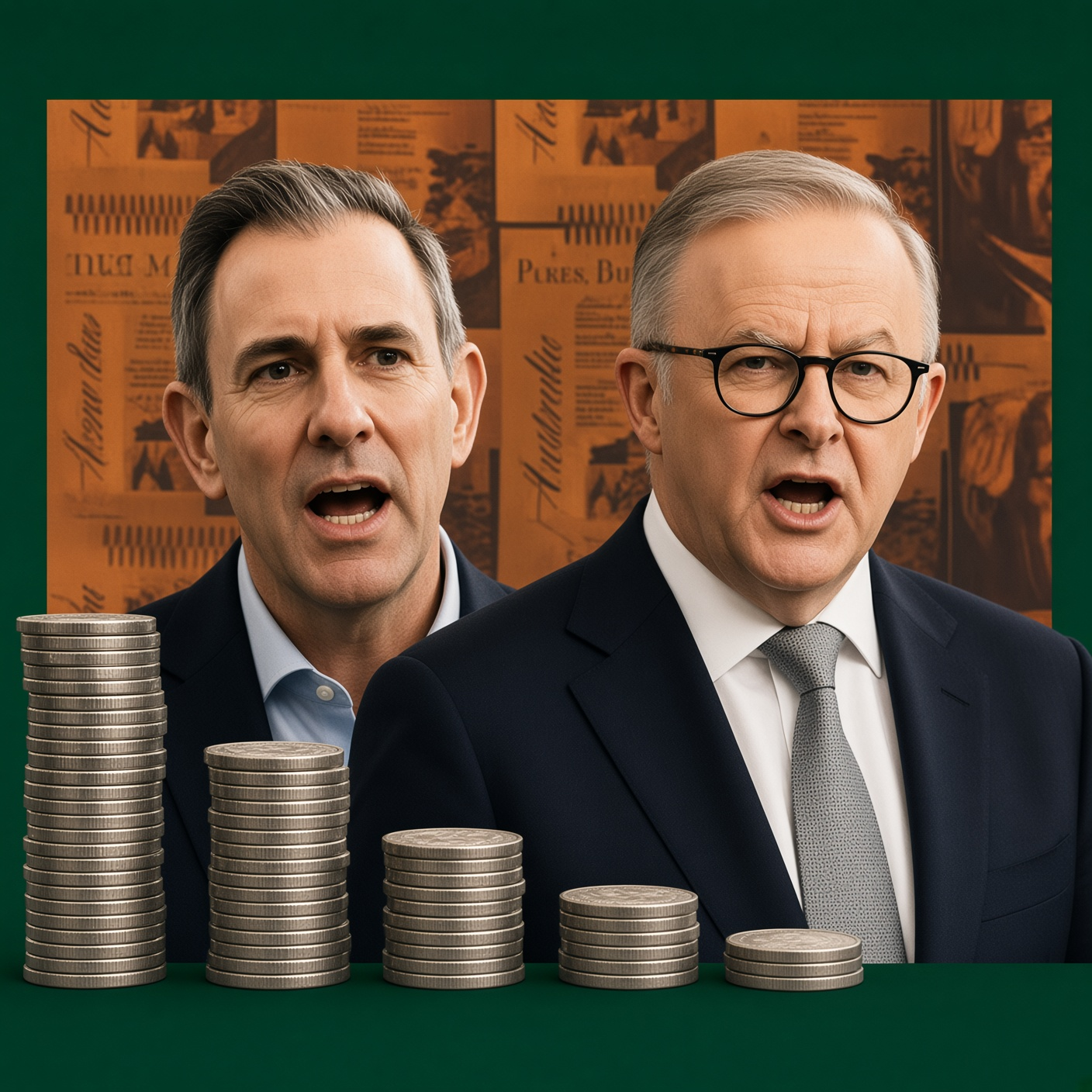
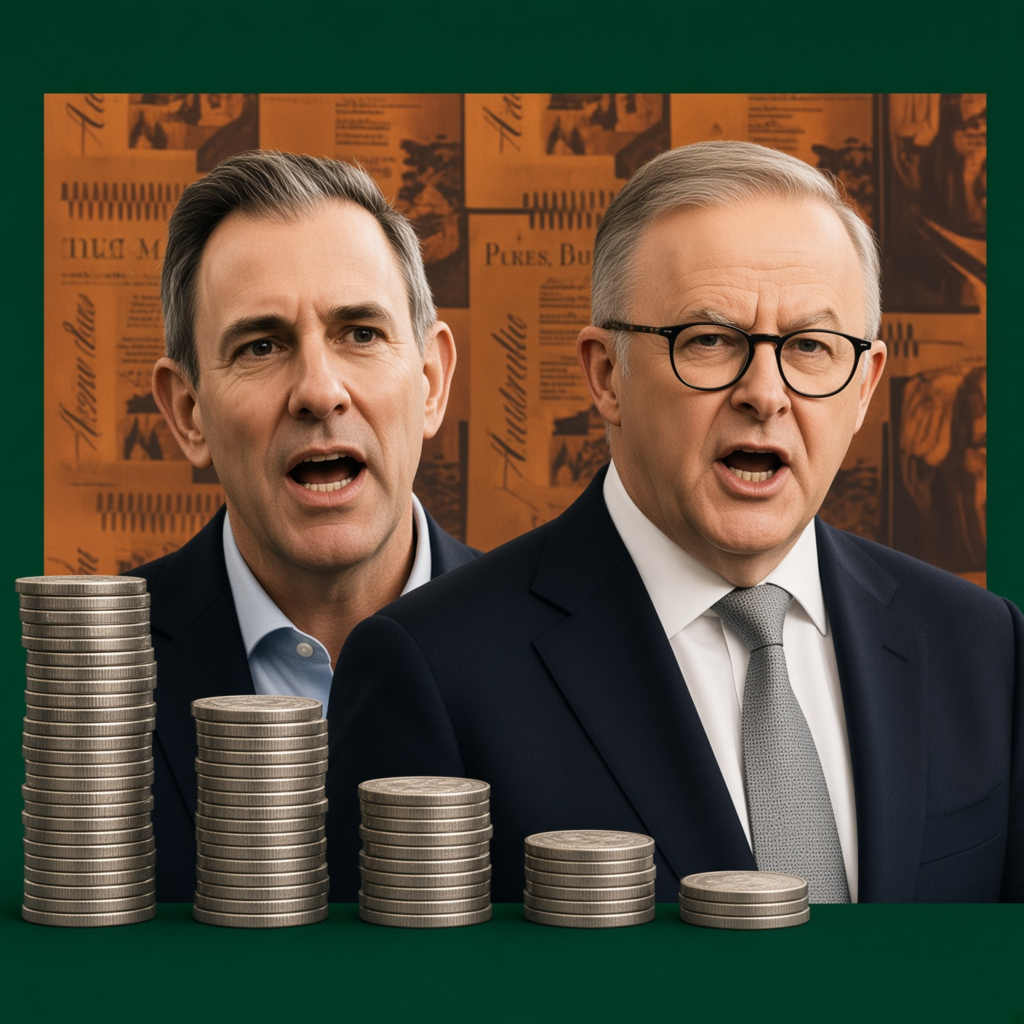
Australia’s gross federal debt has crossed $1 trillion for the first time in history, marking a symbolic fiscal milestone two decades after the Howard government celebrated eliminating Commonwealth net debt — with taxpayers now facing an annual interest bill forecast to climb beyond $42 billion by the end of the decade.
The trillion-dollar threshold was reached this week as the Commonwealth issued additional government securities to finance its operations, bringing renewed attention to years of deficits, rising expenditure and the growing cost of servicing Australia’s borrowings.
But the headline figure requires an important qualification.
Australia has crossed $1 trillion in gross Commonwealth debt. That is not the same measure as net debt, nor does it mean Australia owes $1 trillion to foreign governments.
Australia crosses the trillion-dollar line
The milestone nevertheless carries considerable political weight.
A trillion dollars is $1,000 billion.
It is a number that would have been almost unimaginable when the Commonwealth eliminated net debt during the Howard-Costello era.
Today, Australia’s fiscal position looks very different.
The 2026–27 federal budget forecasts gross debt of $1.051 trillion by the end of this financial year.
And it is forecast to keep rising
The trillion-dollar mark is not expected to be the peak.
Official budget figures project gross debt rising to approximately $1.120 trillion in 2027–28.
It is then forecast to reach $1.193 trillion in 2028–29.
By 2029–30, gross debt is projected at approximately $1.249 trillion.
That means almost another quarter of a trillion dollars could be added to the headline stock of federal debt before the end of the decade.
What exactly is ‘gross debt’?
This distinction matters enormously when interpreting the numbers.
The federal budget defines gross debt as the face value of Australian Government Securities on issue at the end of the financial year.
These securities include Commonwealth government bonds and other debt instruments used to borrow money.
Investors purchase them and the Commonwealth agrees to repay according to their terms while making the required interest payments.
Gross debt measures those liabilities without subtracting the government’s relevant financial assets.
Net debt tells a different story
Net debt takes selected financial assets into account.
That is why Australia’s net-debt figure is substantially below the trillion-dollar gross-debt headline.
The 2026–27 budget forecasts net debt at approximately $616.6 billion, equivalent to 19.9 per cent of GDP.
It is projected to rise to $668.8 billion in 2027–28, $725.5 billion in 2028–29 and $767.8 billion in 2029–30.
Both measures are important, but they answer different questions about the Commonwealth balance sheet.
That makes the comparison with 2006 more complicated
Twenty years ago, then treasurer Peter Costello famously announced that the Commonwealth had eliminated net debt.
The Howard government celebrated what became known as “Debt Free Day”.
It was an extraordinary fiscal position produced after years of budget surpluses, asset sales and strong economic conditions.
The contrast with today’s trillion-dollar headline is dramatic.
But saying Australia went from zero debt in 2006 to $1 trillion today would be misleading because the two milestones use different measures.
Australia still had government securities in 2006
The Commonwealth continued maintaining a government bond market even when net debt had been eliminated.
Government assets could offset its relevant liabilities for the purpose of calculating net debt without every Commonwealth security disappearing.
That technical distinction is essential to understanding the current political argument.
The Howard-Costello achievement was the elimination of net Commonwealth debt.
Today’s milestone is the crossing of $1 trillion in gross Commonwealth debt.
The historical comparison remains striking, but it is not a like-for-like movement from zero to $1 trillion.
The interest bill may matter more than the headline number
For taxpayers, debt becomes tangible through the cost of servicing it.
Federal interest payments are expected to rise substantially over the remainder of the decade.
Current estimates put the annual interest burden at about $29.5 billion before climbing to approximately $42.2 billion by 2029–30.
That is money that must be paid before it can be spent on other government priorities.
More than $42 billion a year in interest represents funding unavailable for hospitals, defence, infrastructure, tax reductions or debt repayment.
Interest will consume a growing share of revenue
The Parliamentary Budget Office has highlighted the increasing pressure debt servicing places on Commonwealth finances.
By 2029–30, gross interest payments are expected to consume about 6.2 per cent of government revenue.
That makes interest one of the fastest-growing constraints on future budgets.
The problem is not simply the amount borrowed.
It is the combination of the debt stock and the interest rates governments must pay when borrowing or refinancing.
Higher borrowing costs make every additional deficit more expensive to carry into the future.
Why does Australia owe so much more?
There is no single government or event that explains the increase.
Australia’s debt accumulated across multiple administrations and major economic shocks.
The global financial crisis pushed the budget deeply into deficit.
Governments subsequently struggled to restore sustained surpluses.
Then COVID-19 produced extraordinary spending programs and another enormous increase in Commonwealth borrowing.
The Albanese government inherited a large debt stock in 2022, but it is now responsible for managing — and adding to — that position.
Labor initially delivered two surpluses
The current fiscal story is therefore more complicated than a simple claim that Labor has continuously run deficits.
The Albanese government recorded back-to-back underlying cash surpluses in its first term.
Those results benefited substantially from stronger-than-expected revenue, including high commodity prices and employment.
They also represented the first consecutive federal surpluses in many years.
But the budget has since returned to deficit.
Current projections show deficits continuing through the forward estimates even as gross debt rises further.
The 2026–27 deficit is forecast at $31.5 billion
The latest budget estimates an underlying cash deficit of approximately $31.5 billion for 2026–27.
Another deficit of about $31 billion is projected for 2027–28.
The shortfall then increases to roughly $34.4 billion in 2028–29 before improving to approximately $25.3 billion in 2029–30.
Those continuing deficits help explain why debt is forecast to keep increasing even after the trillion-dollar milestone has been passed.
Until receipts consistently cover expenditure and other financing requirements, the Commonwealth remains dependent on additional borrowing.
Structural spending is the harder problem
The fiscal challenge extends beyond temporary cost-of-living measures.
Australia faces rapidly increasing expenditure across several large government programs.
The NDIS remains a major source of spending growth despite continuing reform efforts.
Health expenditure is increasing as the population ages.
Defence requires substantially greater investment in an increasingly difficult strategic environment.
Housing, aged care and Commonwealth payments to the states add further pressure.
These are difficult expenses to reduce because each represents either a major public service or an important political commitment.
Defence alone will require enormous spending
Australia’s deteriorating strategic environment has created pressure for significantly higher defence expenditure.
AUKUS, submarines, missile capabilities, military infrastructure and personnel all require long-term funding.
Neither major party is proposing that Australia respond to fiscal pressure by abandoning its national-security commitments.
That leaves governments looking elsewhere for savings or additional revenue.
The more money required to service accumulated debt, the harder it becomes to fund those new strategic priorities without increasing taxes or borrowing again.
The NDIS is another major budget battleground
The National Disability Insurance Scheme has transformed the lives of hundreds of thousands of Australians but has also become one of the Commonwealth’s fastest-growing expenditure programs.
The Albanese government is pursuing reforms intended to make its growth more sustainable.
Those changes have generated intense political debate over eligibility, supports and the rights of people with disability.
For the budget, however, the arithmetic is unavoidable.
Small changes in the growth rate of a program as large as the NDIS can shift future Commonwealth spending by tens of billions of dollars.
The PBO says debt-to-GDP should eventually peak
The long-term outlook is not simply an endlessly rising line.
The Parliamentary Budget Office projects gross debt as a share of the economy to peak at approximately 35.8 per cent of GDP in 2028–29.
It is then expected to begin declining.
Under current policy and economic assumptions, the PBO projects gross debt falling to about 27.2 per cent of GDP by 2036–37.
That distinction matters because a country’s ability to service debt depends heavily on the size of its economy, not merely the nominal dollar value of its borrowings.
A trillion dollars sounds worse without economic context
Nominal debt almost inevitably grows over long periods as economies, prices and government budgets become larger.
That is why economists frequently focus on debt relative to GDP.
Australia’s 2026–27 gross debt is forecast at approximately 34 per cent of GDP.
That is substantial by Australian historical standards.
But it remains below the debt burdens carried by many comparable advanced economies.
The $1 trillion headline is therefore politically powerful without, by itself, demonstrating that Australia faces a sovereign debt crisis.
Australia still has a AAA credit rating
Another important piece of context is the judgment of international credit-rating agencies.
Australia retains its top-tier AAA sovereign rating.
Both Moody’s and S&P Global have reaffirmed Australia’s rating, indicating continuing confidence in the Commonwealth’s capacity to meet its financial obligations.
That status helps Australia borrow on favourable terms compared with less creditworthy governments.
Crossing $1 trillion has not triggered a finding that Commonwealth debt is unsustainable.
But AAA is not a licence to ignore debt
A strong credit rating does not make borrowing free.
Nor does it guarantee Australia will retain the highest rating regardless of future policy.
Credit agencies assess factors including economic growth, fiscal performance, institutional stability and the trajectory of government finances.
A sustained deterioration could eventually change that assessment.
The immediate warning sign is therefore not insolvency but declining fiscal flexibility.
Every dollar of interest reduces future choices
This is the central economic problem with persistent debt.
A government may reasonably borrow during a recession, pandemic or national emergency.
Borrowing for productive infrastructure can also create assets that benefit future generations.
But interest payments continue regardless of whether the original expenditure remains politically useful.
As the debt stock grows, an increasing portion of future revenue becomes committed before governments make any new decisions.
Today’s deficits therefore narrow the options available to tomorrow’s taxpayers and governments.
The Coalition is turning the milestone into a political weapon
Opposition figures have seized on the trillion-dollar threshold as evidence that Labor has failed to control expenditure.
They argue households are being asked to absorb higher taxes and cost pressures while Canberra continues expanding spending.
The intergenerational argument is particularly potent.
Future workers will be required to service liabilities accumulated before many of them entered the workforce.
For the Coalition, $1 trillion provides an extraordinarily simple number around which to build a much broader argument about Labor’s economic management.
Labor says the Coalition’s own forecasts were worse
The government rejects the suggestion that the debt milestone demonstrates fiscal irresponsibility.
Treasurer Jim Chalmers has repeatedly argued that Commonwealth debt is substantially lower than the trajectory Labor inherited.
The government points to more than $100 billion in identified savings and says its fiscal management has avoided tens of billions of dollars in additional interest costs.
Labor also points to its first-term budget surpluses and Australia’s continuing AAA rating.
Its defence is not that debt is unimportant, but that Australia’s fiscal position would have been materially worse without the government’s decisions.
Both parties carry part of the historical record
The partisan argument can obscure how long Australia’s debt accumulation has taken.
Commonwealth net debt disappeared under Howard and Costello.
It returned following the global financial crisis under Labor.
It then continued growing through successive Coalition governments.
COVID produced another extraordinary increase under Scott Morrison.
Debt is now continuing to rise under Anthony Albanese.
The trillion-dollar milestone is therefore the product of roughly two decades of economic shocks, political choices and deficits under governments of both persuasions.
COVID fundamentally changed the numbers
No discussion of the current debt stock is complete without the pandemic.
The Morrison government spent enormous sums through JobKeeper, business support, health measures and other programs designed to prevent economic collapse.
Those interventions received broad political support at the time.
They also dramatically expanded Commonwealth borrowing.
The alternative — allowing businesses and household incomes to collapse during lockdowns — carried potentially enormous economic costs of its own.
Debt accumulated during an emergency can be justified while still becoming a real fiscal burden once the emergency is over.
The harder test comes after the crisis
Governments usually find it easier to agree on borrowing during a crisis than on paying debt down afterwards.
Returning a budget to structural balance requires some combination of spending restraint, stronger economic growth and increased revenue.
Every option creates political losers.
Cutting expenditure means reducing services or payments.
Increasing taxes reduces household or business income.
Relying entirely on economic growth may prove unrealistic.
That is why persistent deficits can survive long after the event that originally justified the borrowing.
Australia’s states have their own debt problem
The Commonwealth is only part of the national fiscal picture.
State and territory governments have also accumulated substantial debt, particularly through major infrastructure programs.
Recent Parliamentary Budget Office analysis points towards combined Commonwealth and state government debt exceeding $2 trillion around the end of the decade.
State and territory debt alone is projected to reach approximately $770.9 billion by 2029–30.
That means the $1 trillion federal milestone understates the total government-debt burden across Australia.
Victoria and NSW face particularly large obligations
Australia’s two largest states are undertaking enormous transport and infrastructure programs while carrying increasingly expensive debt.
Higher interest rates have made those borrowings more costly.
The states also have narrower revenue bases than the Commonwealth, leaving them particularly exposed when financing costs rise.
That creates another challenge for Canberra because state governments frequently seek additional Commonwealth funding for infrastructure, health and other services.
Fiscal stress at one level of government can therefore migrate to another.
Australia has reached two trillion-dollar conversations at once
The federal milestone arrives as policymakers increasingly confront the possibility of more than $2 trillion in combined Commonwealth and state debt.
Those figures do not mean Australia is about to default.
They do mean governments will spend considerably more servicing liabilities accumulated over previous years.
That cost will compete with an expanding list of demands from voters.
The fiscal argument of the next decade may therefore be less about whether Australia can borrow and more about what Australians are prepared to sacrifice to stop borrowing so much.
The real test is whether deficits become permanent
Crossing an arbitrary round number does not fundamentally change Australia’s finances overnight.
The Commonwealth was not safe at $999 billion and suddenly in crisis at $1 trillion.
What matters is the trajectory.
If economic growth strengthens, primary budget balances improve and debt falls relative to GDP, today’s milestone may ultimately prove manageable.
If structural deficits persist and interest costs continue consuming a larger share of revenue, the problem becomes much more difficult.
Debt sustainability is a direction, not a single number.
The PBO offers one reason for cautious optimism
Its medium-term projections show the primary underlying cash balance — the budget balance before public debt interest — returning to surplus within the forward estimates in 2029–30.
That would mean ongoing government operations, excluding the cost of servicing accumulated debt, were no longer adding to debt through a primary deficit.
From there, debt as a percentage of GDP is projected to decline.
But projections stretching a decade into the future depend heavily on economic assumptions and governments maintaining current policy settings.
A recession, major war, new spending commitments or weaker revenue could rapidly change the trajectory.
Twenty years after ‘Debt Free Day’
The political symbolism remains impossible to miss.
In 2006, Costello could tell Australians the Commonwealth had eliminated net debt.
Twenty years later, the country is debating its first trillion dollars of gross federal debt.
Those figures are not directly comparable, but they capture two radically different fiscal eras.
Australia has passed through a global financial crisis, a pandemic and years of expanding demands on government.
The Commonwealth balance sheet carries the accumulated financial history of those two decades.
The next milestone matters more than the trillionth dollar
Australia has already crossed $1 trillion.
Nothing can change that historical milestone.
The more consequential question is what happens next.
Official forecasts have gross federal debt approaching $1.25 trillion by 2029–30 and annual interest costs heading towards $42.2 billion.
At the same time, the PBO expects debt relative to the economy eventually to peak and begin declining.
Whether that improvement actually occurs will depend on decisions Canberra has yet to make — about spending, taxation, economic growth and the willingness of governments to impose fiscal restraint.
Australia is not facing an immediate sovereign debt crisis, and its AAA credit rating remains intact.
But $1 trillion is more than a politically convenient number.
It represents liabilities that have to be serviced, refinanced and ultimately carried by Australian taxpayers.
The real warning is the $42.2 billion annual interest bill coming behind it.