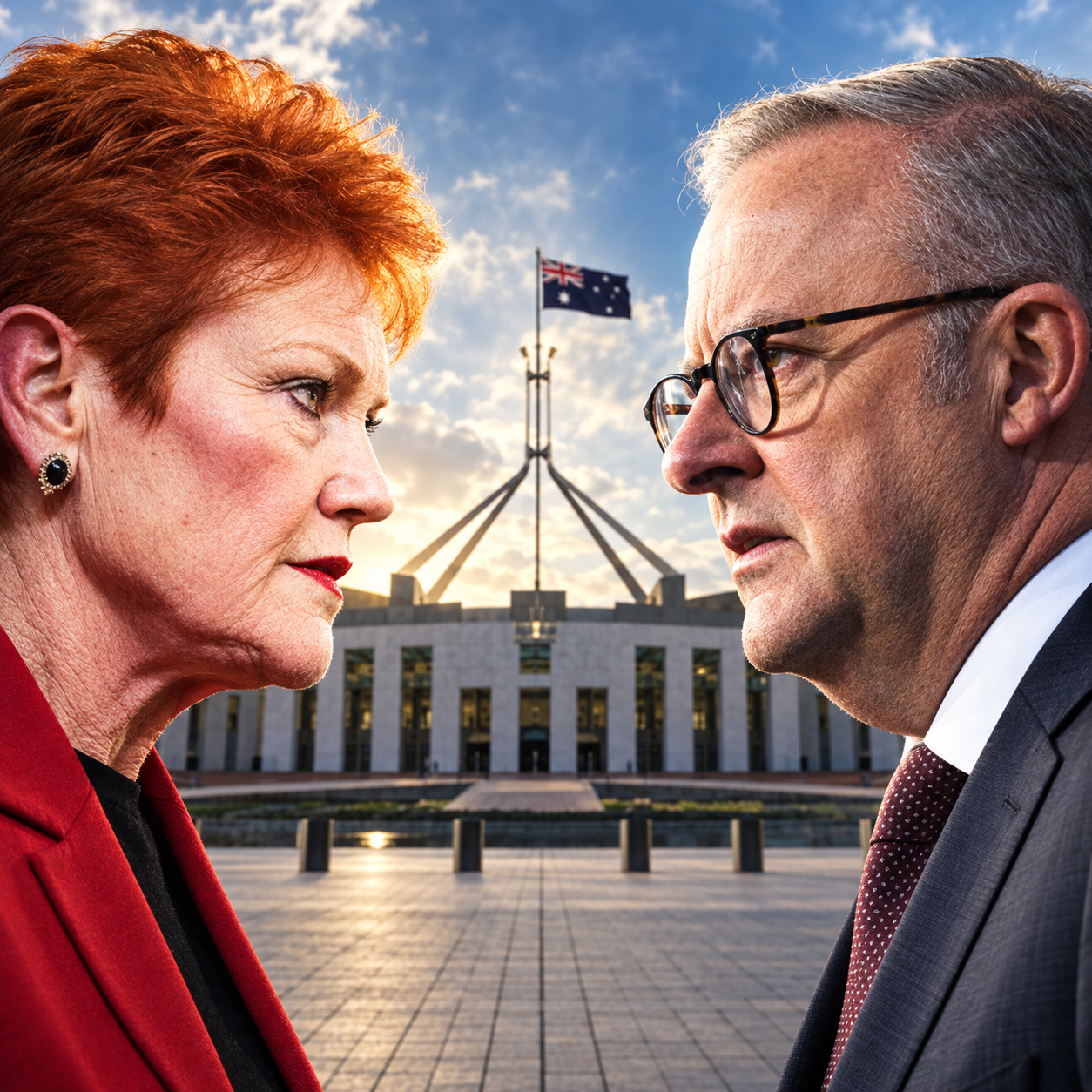
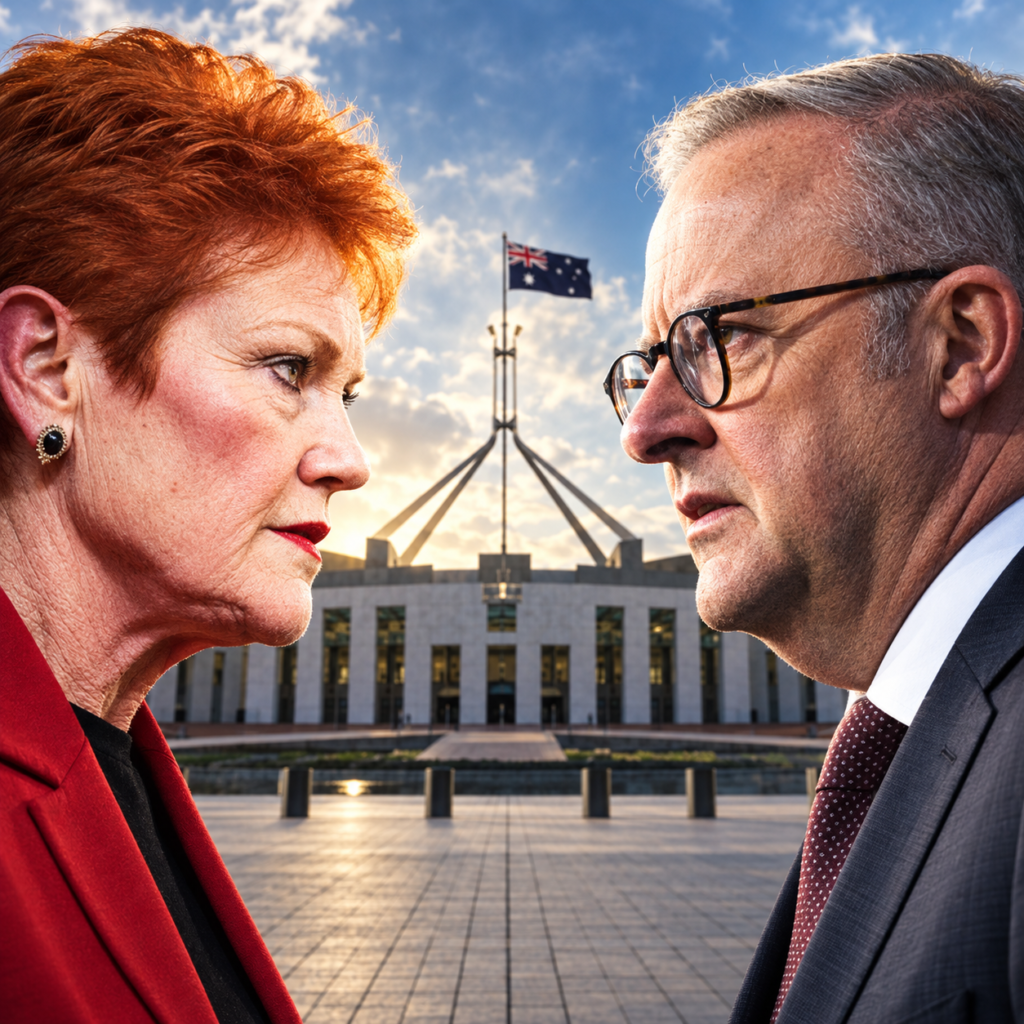
Pauline Hanson’s One Nation is building something more politically significant than a temporary protest vote, with new research suggesting a large section of its supporters have become firmly attached to the party and increasingly resistant to appeals from Labor or the Coalition.
The study of 1,014 intending One Nation voters found 52 per cent were considered locked in to voting for the party, a result that challenges the long-held assumption that Hanson’s support will simply drift back to the major parties once political conditions change.
At the same time, One Nation’s electorate is not uniformly made up of long-term loyalists. Four in 10 supporters surveyed had moved to the party only within the past year, revealing a political coalition that combines hardened Hanson supporters with a much newer group of Australians dissatisfied with the established parties.
That combination is becoming increasingly important as One Nation contests political territory once dominated by the Liberal-National Coalition and, in some outer-suburban and regional communities, Labor.
The research was conducted by veteran pollster John Utting and former Labor strategist Bruce Hawker following focus groups and survey work in August. It was commissioned by the TJ Ryan Foundation, a progressive think tank with longstanding links to the labour movement, a background that is relevant when assessing the research but does not diminish the significance of the attitudes recorded among respondents.
The findings suggest One Nation’s rise is being powered not by a single issue or a single demographic but by a broader sense among its voters that Australia’s political and economic system is failing to deliver for them.
A voter base convinced Australia is heading the wrong way
Perhaps the most striking finding is the depth of pessimism among One Nation supporters.
Ninety-one per cent of respondents said Australia was heading in the wrong direction, compared with substantially lower levels of pessimism across the broader electorate.
Two-thirds, or 67 per cent, said their household was worse off than it had been three or four years earlier. Another 71 per cent agreed with the proposition that most politicians looked after themselves rather than the country.
Those figures point to a constituency driven by more than disagreement with a particular government policy. They describe voters who have become deeply sceptical of mainstream political institutions and increasingly doubtful that either Labor or the Coalition represents their interests.
Immigration and the cost of living emerged as the two dominant concerns.
Among respondents discussing immigration, the number of people entering Australia was the most commonly identified concern, followed by pressure on housing and public services and, to a lesser extent, crime and safety.
When respondents were specifically asked why they wanted lower immigration, 57 per cent nominated concern that Australia’s culture and identity were changing too quickly.
But the research also identified important differences inside the One Nation electorate. Newer supporters were more likely to focus on the volume of migration and the resulting pressure they believed it placed on housing, roads and public services. Some longer-term supporters were more likely to emphasise questions about the cultural background of migrants.
That distinction matters because One Nation is now attempting to hold together a much broader electoral coalition than the party attracted during earlier periods of its history.
Coalition voters are driving much of the shift
The biggest immediate danger is confronting the Coalition.
Thirty-eight per cent of the One Nation supporters surveyed said they had voted for the Coalition at the 2025 federal election. Only 17 per cent had voted Labor.
Overall, seven in 10 current One Nation supporters either voted for another party at the last federal election or did not vote, demonstrating just how rapidly Hanson’s electoral coalition has expanded.
The Australian Electoral Commission recorded One Nation receiving 6.4 per cent of House of Representatives first preferences at the May 2025 federal election. During 2026, published national polls have repeatedly placed the party above 20 per cent and, on several occasions, ahead of both major political blocs on primary support.
A Newspoll released at the beginning of September put One Nation on 30 per cent, Labor on 29 per cent and the Coalition on 19 per cent.
Other surveys have produced significantly different results. A Guardian Essential poll around the same period put Labor and the Coalition on 26 per cent each and One Nation on 23 per cent, while a late-August YouGov poll had Labor at 29 per cent, One Nation at 26 per cent and the Coalition at 21 per cent.
The variation is an important reminder that no single poll should be treated as a prediction of the next federal election. What is much harder to dispute is the broader trend: One Nation is currently attracting several times the share of voters it won at the 2025 federal election.
That transformation has already produced real electoral consequences.
In Western Australia, One Nation’s Luke Herdegen won the Secret Harbour state by-election on 29 August, delivering the party its first lower-house seat in the state.
With most votes counted, Herdegen recorded about 39 per cent of first preferences and led Labor on the two-candidate count by roughly 57 to 43 per cent, representing an almost 19-point swing away from Labor.
The result came in a coastal, outer-suburban electorate filled with many working families — precisely the kind of constituency both major parties are now trying to understand.
Not simply a vote for Pauline Hanson
The study also challenges another assumption: that One Nation support is primarily a personal vote for Hanson.
Asked about the main reason for supporting the party, 45 per cent said it was because of what One Nation stood for. About 34 per cent said their support was mainly the result of being let down by other political parties, while about one in five said Hanson herself was the principal reason.
That does not mean Hanson is unimportant. Her political identity remains central to One Nation, and the survey recorded extremely strong support for her among party voters.
But the numbers suggest that, for many supporters, One Nation is developing into something closer to an ideological home rather than merely a vehicle for one political personality.
The researchers concluded that the party was no longer attracting a conventional protest vote and that its support had become considerably more entrenched.
Hawker said the movement was shifting away from being purely a protest party and towards one containing firmly held views about the direction Australia should take.
That finding helps explain why political attacks on Hanson do not necessarily drive her supporters back towards the major parties.
If those voters believe their political and economic concerns are being ignored, criticism of One Nation from Canberra may reinforce rather than weaken their conviction that the established political system is hostile to them.
The MAGA comparison has limits
The loyalty of Hanson’s core supporters has prompted comparisons with Donald Trump’s MAGA movement in the United States, but the analogy requires some caution.
Hawker described one section of One Nation’s electorate as long-term political veterans prepared to embrace what he called an Australian equivalent of MAGA. He distinguished them from newer supporters who intend to remain with Hanson for now but are less angry and less committed to some of One Nation’s positions.
The Australian research did not, however, conduct a direct statistical comparison between One Nation supporters and Trump voters in the United States. Claims that the two groups are equally “locked in” should therefore be understood as a political comparison rather than a measured cross-country finding.
There are nevertheless similarities in the forces surrounding the two movements: distrust of institutions, strong dissatisfaction with established political parties, concerns about immigration and national identity, and support for a political figure whose followers often praise a willingness to confront conventional political language.
There are also substantial differences between Australia and the United States, including electoral systems, political institutions, compulsory voting and the structure of the major parties.
One Nation’s emerging voter coalition should therefore be understood on its own Australian terms.
The major parties still have an opening
For all the evidence of stronger voter loyalty, the research does not suggest every One Nation supporter is permanently lost to the major parties.
A substantial group remains persuadable.
More than a quarter of respondents indicated that a united and credible Liberal Party could potentially win them back, with reducing immigration repeatedly identified as one of the changes most likely to shift their vote.
Labor faces a steeper climb. The One Nation voters surveyed were overwhelmingly hostile towards the Albanese government, with more than seven in 10 saying the Prime Minister said one thing and did another.
Yet the political challenge for both sides is more complicated than simply copying One Nation policies.
The survey revealed disagreements between Hanson and some of her newer voters on a range of issues. When respondents were presented with several of the party leader’s positions, around one in five newer supporters indicated they could reconsider their vote. Only a small proportion of the party’s most committed supporters responded in the same way.
That suggests One Nation’s expanded electorate contains both strength and vulnerability.
A core group appears highly committed, but rapid growth has also brought in voters with different motivations, different priorities and less attachment to every element of the party’s platform.
The party’s challenge will be keeping those groups together as its policies, candidates and capacity to govern receive greater scrutiny.
For Labor and the Coalition, the challenge is different. They can no longer assume One Nation voters are simply expressing temporary anger before returning home at election time.
The new research suggests many believe they have already found a new political home.