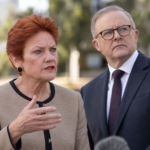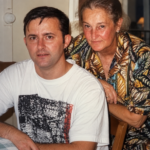
Pauline Hanson has demanded the Albanese government do everything legally possible to prevent Australian Islamic State-linked doctor Tareq Kamleh from returning home, as the fate of the man dubbed “Dr Jihad” becomes a test case in the growing political battle over foreign terrorist fighters.

Kamleh, a Perth-born and Adelaide-trained paediatrician, travelled to Syria in 2015 and subsequently appeared in Islamic State propaganda.
For years he was widely believed to have been killed during the collapse of the terrorist group’s self-declared caliphate.
That assumption was overturned in July when reports emerged that Kamleh was alive and being held in an Iraqi prison.
He is reportedly among more than a dozen Australian men accused of links to Islamic State who were transferred from detention in Syria to Iraq earlier this year.
His discovery has reignited a difficult question for Canberra: what happens if an Australian citizen accused of joining a terrorist organisation overseas is eventually released and attempts to come home?
Hanson’s answer is unequivocal.
She says Kamleh should never be allowed to return.
Hanson says Kamleh gave up any moral claim to Australia
The One Nation leader has argued that Australians who voluntarily travelled overseas to support Islamic State should not be entitled to rely on Australian citizenship to secure their eventual return.
In a statement responding to reports that Kamleh remained alive, Hanson said he had waived any “moral claim” to Australian citizenship.
She promised a One Nation government would take every available measure to stop people in his circumstances from coming back.
That position is now part of a much larger legislative campaign by One Nation to strengthen Australia’s powers over citizens accused of joining terrorist organisations overseas.
The party argues the existing system places too much emphasis on the right of citizenship and not enough on protecting the Australian community from people who voluntarily travelled to territory controlled by Islamic State.
Labor says the situation is more complicated because there are constitutional limits on permanently excluding Australian citizens from their own country.
Who is Tareq Kamleh?
Kamleh was an Australian-trained doctor who worked in hospitals in South Australia, Queensland and the Northern Territory.
His life took a dramatic turn when he travelled to Syria in 2015.
He subsequently appeared in an Islamic State propaganda video wearing medical scrubs and calling for other medical professionals to travel to territory controlled by the group.
Australian authorities alleged that his activities went considerably further than providing medical care.
The Australian Federal Police charged Kamleh with terrorism offences, including allegedly joining Islamic State and recruiting for the organisation.
An Adelaide court issued a warrant for his arrest in June 2015.
Police also alleged he had entered a declared area in Syria contrary to Australian law.
The warrant meant Australian authorities could arrest him if he returned to the country.
Kamleh was eventually captured in Baghuz in 2019 as the last substantial territory controlled by Islamic State in Syria collapsed.
For years, however, Australians had been told he was probably dead.
His family had reportedly believed he was killed during the fighting around Raqqa in 2017.
The revelation that he remained alive therefore reopened a case many Australians assumed had effectively ended.
Kamleh now denies joining Islamic State
Adding another layer to the case is a resurfaced interview Kamleh gave while detained in Syria.
In that interview, published by a German media project in 2025 and reported in Australia after his survival became known, Kamleh claimed he never formally joined Islamic State.
He denied pledging allegiance to the organisation and portrayed himself primarily as a doctor who had travelled to Syria to provide medical care.
Kamleh claimed he had initially wanted to work in Syria through Médecins Sans Frontières but ultimately travelled independently after being offered an assignment elsewhere.
He also claimed he had been forced to participate in at least one Islamic State propaganda video.
Those claims have not caused Australian authorities to withdraw the allegations against him.
AFP terrorism charges remain outstanding.
The allegations against Kamleh have not been determined by an Australian court, and he is entitled to contest them if proceedings eventually take place.
His own account should therefore be understood as a denial of allegations rather than a judicial finding about what occurred in Syria.
Iraqi authorities have their own investigation
Kamleh’s immediate legal problem is not in Australia.
It is in Iraq.
Reports citing an Iraqi Supreme Court statement indicate he remains in custody while Iraqi authorities investigate his alleged activities.
The Iraqi material reportedly alleges his activities were not confined to providing medical services and includes allegations relating to extremist propaganda.
That creates the possibility that Kamleh could face legal consequences in Iraq before the question of an Australian return ever becomes relevant.
Home Affairs Minister Tony Burke has made clear that is the government’s preferred immediate outcome.
Asked in late July whether Australia would seek to extradite Kamleh to face the outstanding Australian allegations, Burke pointed to the proceedings already under way overseas.
“At the moment, he’s facing charges in the place where he is, as I understand it,” Burke said.
“And I expect he’ll face the legal consequences there.”
Burke added that there were people imprisoned overseas whom he was “very glad” remained imprisoned overseas.
Government says it will not help him return
The Albanese government’s political position on Kamleh is considerably closer to Hanson’s than the constitutional dispute might initially suggest.
Labor ministers have repeatedly said they do not want him back.
Housing Minister Clare O’Neil said in July that, as far as she was concerned, Kamleh could “rot in jail”.
The government has also stated that it will not provide assistance designed to facilitate the return of Australians who made the decision to join a terrorist organisation.
Burke has been similarly emphatic.
Asked whether Kamleh was receiving Australian assistance, he distinguished basic consular obligations from assistance in returning to Australia.
The government, he said, would “not lift a finger” to assist his return.
But refusing to help someone come back and permanently prohibiting an Australian citizen from entering Australia are legally different things.
That distinction sits at the centre of the fight between Labor and One Nation.
Can Australia permanently ban one of its own citizens?
Burke says no.
The Home Affairs Minister argues existing Australian counter-terrorism legislation already goes close to the constitutional limit.
Australia has Temporary Exclusion Orders that can temporarily prevent an Australian citizen aged 14 or older from returning where authorities reasonably suspect the person would substantially assist in preventing a terrorism-related threat.
But the key word is temporary.
The system is designed to give police, intelligence and security agencies time to prepare for a person’s return.
It can allow authorities to arrange surveillance, impose conditions and prepare criminal proceedings where appropriate.
Burke argues it cannot lawfully become a permanent banishment mechanism.
“You can delay for a little while the return of a citizen,” he said in an ABC radio interview.
But once Australian authorities are prepared, he said, the government cannot indefinitely keep one of its citizens outside the country.
The minister also argues Australia has a broader national interest in maintaining the international principle that countries must accept their own citizens.
Burke says Australia needs other countries to take their citizens back
Burke’s argument is not based solely on the rights of Australians accused of terrorism.
It also involves Australia’s ability to deport foreign nationals.
The Home Affairs Minister says Australia removes or cancels the visas of hundreds of people each year following serious criminal conduct.
Those people may include convicted violent offenders, sex offenders and drug criminals.
Their countries of citizenship may have little desire to receive them.
Australia nevertheless relies on the principle that a country ultimately has responsibility for accepting its own citizens.
Burke argues abandoning that principle in order to permanently exclude Australians associated with Islamic State could weaken Australia’s ability to insist that other countries take back citizens Australia wants to deport.
Hanson rejects the argument that existing constitutional constraints should end the debate.
Her party has instead drafted legislation designed to give the government additional powers.
One Nation takes its plan to Parliament
On August 12, Hanson introduced the Protecting Australians from Foreign Terrorist Fighters Bill 2026 into the Senate.
The private senator’s bill remains before Parliament.
It is specifically aimed at Australians linked to terrorist organisations overseas and proposes a new system of Foreign Terrorist Fighter Exclusion Orders.
Under the proposal, the Federal Court could make an exclusion order following an application by the responsible minister.
The legislation also seeks stronger powers relating to passports and travel documents.
It proposes tighter bail provisions for terrorism-related offences and new offences targeting people who knowingly help an excluded person return to Australia without authorisation.
Hanson argues these mechanisms would give governments meaningful tools to prevent dangerous foreign fighters from simply relying on their citizenship to come home.
The government says the proposed solution would run directly into Australia’s constitutional limits.
Bill faces a Senate committee test
The legislation is not law.
On August 13, the Senate referred it to the Legal and Constitutional Affairs Legislation Committee.
Submissions closed on August 27, with the committee scheduled to report by September 7.
The inquiry means the constitutional arguments surrounding Hanson’s proposal will receive further scrutiny.
That will be crucial because the entire value of the legislation depends on whether its exclusion mechanisms can survive a legal challenge.
Burke has been openly dismissive of that prospect.
He says the advice available to the government is that legislation attempting to permanently exclude Australian citizens would not survive scrutiny by the High Court.
Hanson disputes that position and says her proposal has been prepared with constitutional issues in mind.
Until the legislation is passed and potentially tested by the courts, neither political rhetoric nor a ministerial assertion can substitute for a definitive High Court ruling on the precise provisions One Nation has drafted.
Kamleh already faces arrest if he reaches Australia
The dispute over whether Kamleh should be allowed back can also obscure another important point.
Returning to Australia would not mean simply walking through an airport and resuming an ordinary life.
There is an active Australian arrest warrant associated with terrorism allegations against him.
If Kamleh eventually returned, Australian law-enforcement agencies would be positioned to act on those outstanding matters.
The federal government has repeatedly said Australians in this cohort who have committed crimes can expect to face the full force of Australian law.
That could mean arrest and criminal proceedings rather than freedom.
It also means the political debate contains two different models for dealing with suspected foreign fighters.
Hanson wants stronger powers to keep them outside Australia.
The government’s legal position is that citizens ultimately have to be accepted back, after which Australian police, courts and security agencies can deal with them under domestic law.
The unanswered question is what Iraq will do
For all the political debate in Canberra, Kamleh’s immediate future remains largely in Iraqi hands.
He is detained there.
Iraqi authorities are investigating him.
And Burke says Australia will not make an effort to bring him home while that process continues.
If Kamleh is prosecuted and imprisoned in Iraq, the question of his return could remain theoretical for years.
If he is released, however, Canberra could face a much more immediate decision.
Australian security agencies would need to determine what measures were necessary before any return.
Police would have to deal with the outstanding warrant and criminal allegations.
The government could consider the counter-terrorism powers already available to it.
And if One Nation’s legislation had advanced by then, its proposed new exclusion system could become part of the political and legal debate.
A broader argument over Australians who joined Islamic State
Kamleh is not the only reason the issue has returned to the national agenda.
Australia has been grappling with the status of men, women and children who travelled to territory controlled by Islamic State or became caught up in the organisation’s collapse.
The government confirmed earlier this year that a group of seven women and 12 children from the Australian cohort in Syria had made plans to travel to Australia.
Burke said the government did not assist that group’s return and stressed that anyone who had committed crimes could face Australian law.
The separate reports concerning Australian men held in Baghdad have produced an even more politically explosive question because some are accused of direct involvement with Islamic State.
Hanson has seized on that distinction to argue Parliament should act before any of the men are released.
Her position is that Australia should not wait until a suspected foreign fighter reaches the border before attempting to manage the risk.
Labor says intelligence and law-enforcement agencies have spent years preparing for precisely such possibilities and that any response must remain within constitutional limits.
The politics and the law are not the same
There is little disagreement between Hanson and senior Labor ministers over whether they want Kamleh voluntarily brought back to Australia.
They do not.
The disagreement is over what Australia can lawfully do if an Australian citizen manages to return.
Hanson’s declaration that “Dr Jihad” should never set foot in Australia again is a clear political position.
It is not a description of the law as it currently stands.
The government says it will provide no assistance to facilitate his return, wants him to face justice overseas and is prepared for Australian law enforcement to act if he eventually arrives.
One Nation says that is insufficient and wants Parliament to create stronger powers aimed at keeping foreign terrorist fighters out.
Kamleh, meanwhile, remains in Iraqi custody with serious allegations hanging over him in two countries.
For the moment, that means the argument over his return is hypothetical.
But his unexpected reappearance after years of being presumed dead has ensured Australia is confronting a question it thought it might never have to answer: what should happen if one of the country’s most notorious Islamic State-linked citizens asks to come home?