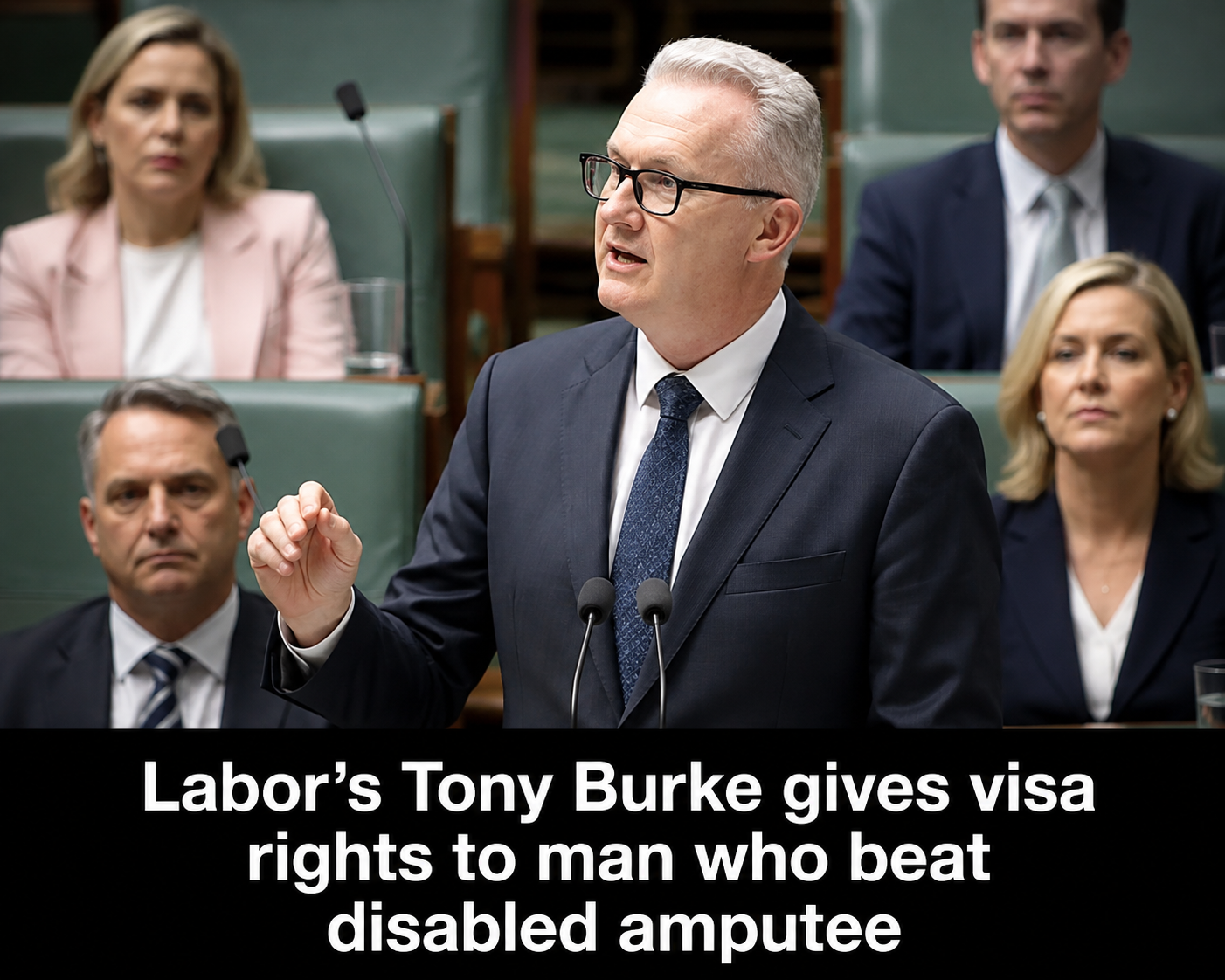
A South Sudanese man who struck a triple amputee around the head 77 times with the victim’s own metal crutch has prevailed in another major Federal Court migration case, after judges rejected the Immigration Minister’s attempt to overturn a ruling requiring a fresh assessment of whether his visa status could affect his risk of reoffending.
The Full Court of the Federal Court dismissed the Commonwealth’s appeal in Minister for Immigration and Citizenship v GNHW [2026] FCAFC 107 on August 25, leaving the Administrative Review Tribunal to reconsider the anonymous man’s protection visa case.
The decision does not grant GNHW permanent residency and does not direct the tribunal to approve his protection visa.
Instead, it reinforces an increasingly important legal principle for non-citizens who cannot simply be removed from Australia after a visa refusal: when assessing protection of the Australian community, decision-makers may need to compare the risk posed under each realistically available immigration outcome.
In GNHW’s case, that means considering whether he presents a different risk while living in Australia on the restrictive temporary Bridging Visa R than he might if granted a protection visa with access to different employment, education and support arrangements.
The ruling follows a similar Full Federal Court decision in May involving another former immigration detainee, DVRL, and intensifies political questions about how Australia’s post-NZYQ migration system deals with serious offenders who remain in the community despite failing the character test.
A shocking assault on a vulnerable man
The background to the legal dispute is an extraordinarily violent assault committed in Victoria in August 2019.
Federal tribunal records show GNHW attacked a man who was a triple amputee and relied on two prosthetic legs and a crutch for mobility.
According to sentencing remarks subsequently considered by the migration tribunal, GNHW wrestled the man to the ground, repeatedly punched him in the face, stomped on his head twice and then used the victim’s own metal crutch as a weapon.
He struck the victim about 77 times around the head.
The assault continued for four minutes and 51 seconds and did not immediately stop when a witness attempted to intervene. The sentencing judge described the CCTV footage as showing a shocking assault against a defenceless and vulnerable victim.
GNHW was convicted in January 2020 of intentionally causing injury and other offences. The Magistrates’ Court initially sentenced him to 24 months’ imprisonment and imposed a $1,000 fine.
On appeal later that year, the County Court set aside the 24-month sentence for intentionally causing injury and imposed seven months’ imprisonment instead, taking into account matters including his remorse and alcohol and mental health problems.
The criminal conviction nevertheless had profound immigration consequences.
Humanitarian visa cancelled after conviction
GNHW is a citizen of South Sudan who arrived in Australia on Christmas Day 2017 as the holder of a Global Special Humanitarian subclass 202 visa.
His humanitarian visa was mandatorily cancelled in February 2020 under the character provisions of the Migration Act.
He later sought a protection visa.
A departmental delegate refused that application on character grounds on November 14, 2024. On the same day, however, GNHW was released from immigration detention into the Australian community on a Bridging Visa R.
That unusual situation sits at the heart of the present case.
Ordinarily, refusing a visa to a serious offender might be understood as protecting the community by facilitating that person’s removal from Australia. But the legal and practical position is substantially more complicated where a non-citizen cannot presently be removed and will therefore remain in the community regardless of whether the permanent visa is granted.
GNHW had been found to engage Australia’s protection obligations in relation to South Sudan. His circumstances also placed him within the group affected by the High Court’s landmark 2023 NZYQ decision, which held that indefinite immigration detention is constitutionally impermissible where there is no real prospect of removal becoming practicable in the reasonably foreseeable future.
As a result, the immediate alternatives before the migration decision-maker were not simply “visa or deportation”.
The practical comparison was between GNHW remaining in Australia on a Bridging Visa R and remaining in Australia after being granted a protection visa.
Tribunal found protection of the community weighed heavily against him
When the Administrative Review Tribunal considered GNHW’s case, his criminal history was central to its assessment.
The tribunal examined the brutality of the 2019 assault as well as evidence concerning his alcohol consumption, mental health and prospects of further offending.
It regarded protection of the Australian community as weighing strongly against granting the visa.
Evidence before the tribunal included an assessment of the relationship between alcohol use and GNHW’s offending. The tribunal considered there was a continuing risk if he returned to problematic drinking.
It also considered subsequent interactions with police. Some involved allegations or charges that had not been determined by a court, meaning they could not properly be treated as proven criminal offending.
But another issue became increasingly important: what effect would the type of visa GNHW held have on his future behaviour?
His representatives argued that remaining indefinitely on a temporary bridging visa could create instability, stigma and psychological pressure, while a protection visa could improve his ability to study, work and obtain support.
The argument was not that committing a serious crime should itself entitle someone to permanent residency.
Rather, it was that if GNHW was going to remain physically present in Australia under either outcome, the tribunal’s statutory task of assessing community safety required it to consider which outcome actually presented the greater risk.
Education and disability support entered the visa argument
Among the submissions advanced for GNHW was that permanent immigration status could give him opportunities unavailable, or less readily available, while holding his temporary visa.
His representatives argued that temporary status could contribute to feelings of stigma and ostracisation and potentially damage his mental health.
They also submitted that holding a protection visa could give him access to government-supported university financing and greater opportunities to return to study.
Access to disability support was also raised in the broader argument about services that might reduce future risk.
These submissions have generated political controversy because they place taxpayer-supported services within a legal argument concerning the rehabilitation and future risk of a man convicted of an exceptionally violent assault.
But the distinction between an argument and a court order is crucial.
The Federal Court has not ordered the Commonwealth to provide GNHW with NDIS funding or university loans. Nor has it ruled that access to those benefits automatically outweighs his criminal history.
The legal issue is narrower: where differences between visa categories may affect the risk a person poses while remaining in Australia, the tribunal cannot necessarily ignore those differences when carrying out the community-protection assessment required by the ministerial direction.
The DVRL ruling changed the legal landscape
The Full Court had already confronted almost the same question in Minister for Immigration and Citizenship v DVRL [2026] FCAFC 73, decided on May 27.
That case concerned another non-citizen who would remain in the Australian community on a bridging visa even if his protection visa application was refused.
The Minister argued that the tribunal did not have to compare the risk under a positive visa outcome with the risk under a negative one.
The Full Court disagreed.
It found that Direction 110 — the ministerial direction governing character-related visa decisions — requires consideration of the risk a non-citizen may pose to the Australian community and does not confine that assessment to what happens if the person receives the visa.
Where refusing a protection visa does not result in the person being removed from Australia, and where the alternative visa arrangements provide meaningfully different supports relevant to reoffending, the actual risk under both scenarios can matter.
The principle does not mean a criminal automatically receives a visa because temporary status is stressful.
It means the decision-maker must undertake the comparison where it is relevant rather than assume visa refusal necessarily produces the safer outcome.
That distinction became decisive in GNHW’s litigation.
Three judges dismiss Minister’s appeal
The GNHW appeal was heard by Justices Burley, O’Bryan and Jackson.
On August 25, the Full Court dismissed the Minister’s appeal.
The result leaves in place the requirement that the tribunal reconsider GNHW’s application according to law, applying the principles governing comparative community risk.
The Commonwealth was also ordered to bear the respondent’s costs of the appeal.
The judgment is significant beyond one applicant because the reasoning operates within a much broader migration framework created after the High Court’s NZYQ decision.
For members of that cohort who cannot presently be removed from Australia, character-based visa refusal may not result in detention or deportation. Instead, it can leave them living in the same Australian community under a different and more restrictive immigration status.
That creates a question that did not carry the same practical significance when detention pending removal remained an available long-term outcome: if the person remains in the community either way, which immigration arrangement better protects that community?
Direction 110 puts community protection first
Direction 110 came into effect in June 2024 and governs how decision-makers approach visa refusal, cancellation and revocation decisions under the character provisions of the Migration Act.
Protection of the Australian community is a primary consideration under the direction.
Decision-makers examine matters including the nature and seriousness of offending, the risk of further offending and the harm that could result if further offending occurs.
The controversy exposed by DVRL and GNHW concerns how that principle operates when a visa refusal does not remove the applicant from Australian society.
If a person would instead remain on a bridging visa, the court’s approach requires attention to the conditions and supports accompanying that outcome when they are capable of changing the risk calculation.
That may include access to employment, accommodation, treatment, education or other stabilising services where evidence links those factors to the likelihood of reoffending.
It remains open to a tribunal, after carrying out that analysis, to conclude that the seriousness of an applicant’s offending and the danger posed to Australians justify refusing the visa.
What it cannot do is avoid a legally required part of the risk assessment simply because the comparison produces an uncomfortable policy question.
Third-country removal complicates claims he can never be deported
There is another important complication in GNHW’s long-running litigation.
Although his protection status prevents Australia simply returning him to South Sudan in circumstances that would breach its protection obligations, earlier Federal Court proceedings revealed government efforts to develop third-country reception arrangements for members of the post-NZYQ cohort.
In separate proceedings involving GNHW in 2025, the Federal Court examined documents concerning negotiations between Australia and Nauru.
The evidence showed negotiations had been under way from 2024 over arrangements allowing certain non-citizens who could not be returned to their countries of origin to settle in Nauru.
Those negotiations eventually produced an interim arrangement involving a small initial group.
The issue became relevant to GNHW because he argued the government had information about potential third-country removal options that was relevant to the tribunal’s understanding of whether he would actually remain indefinitely in Australia.
That history means it is too broad to describe GNHW as legally incapable of ever being removed from Australia.
The more accurate position is that Australia has protection obligations preventing his return to South Sudan in the relevant circumstances, while third-country removal has separately been explored by the Commonwealth.
Opposition demands scrutiny of the migration framework
The latest ruling has renewed political pressure on the Albanese Government over the interaction between the Migration Act, Direction 110 and the consequences of the NZYQ decision.
Opposition home affairs spokesman Jonno Duniam has argued the government needs to determine whether the cases reveal a systemic problem.
The politically difficult feature is obvious.
An applicant can fail the character test because of serious violence, yet the consequences of keeping that person on temporary status can themselves become relevant to the legal assessment of whether granting a more secure visa would reduce danger to the public.
Critics argue that outcome appears to reward an offender with a pathway to greater security and services.
The legal reasoning takes a different starting point: if the person remains in Australia regardless, the decision-maker’s obligation is to determine which realistic outcome produces the lower risk, while still giving appropriate weight to the seriousness of past conduct.
Those competing perspectives are likely to keep the issue politically contentious even though the Full Court’s ruling turns on administrative law rather than a judicial view that GNHW deserves permanent residency.
GNHW still has not won a protection visa
The next stage is important.
GNHW has succeeded in litigation over how his application must be assessed, but he has not yet secured the substantive outcome he wants.
The Administrative Review Tribunal must reconsider the matter and perform the comparative assessment required by the Federal Court authorities.
It will still be entitled to examine the extreme seriousness of the 2019 assault, his history involving alcohol, his mental health evidence, his rehabilitation and the consequences for the Australian community if he commits another serious offence.
It must then weigh those matters under the governing migration framework while also considering any meaningful difference in risk created by the available visa outcomes.
The tribunal could ultimately grant the protection visa or refuse it again, provided the new decision is made according to law.
That is why describing the judgment simply as a violent offender being “given permanent residency” would misstate what the Full Court actually decided.
The much larger issue is arguably more consequential.
Australia now has a cohort of non-citizens for whom refusing a visa does not necessarily mean removing them from the community. Once that is the factual starting point, the migration system has to confront an uncomfortable choice between immigration status as punishment and immigration status as part of risk management.
The Full Court has now made clear in two significant cases that, under the existing Direction 110 framework, the tribunal cannot avoid that comparison where it is relevant.
For the Albanese Government, the political challenge is whether to accept that framework, amend the ministerial direction or pursue broader legislative changes.
For GNHW, the immediate outcome is simpler: more than six years after an assault in which a vulnerable triple amputee was struck around the head 77 times with his own crutch, his immigration status remains unresolved and his protection visa application is heading back for another assessment.