One Nation’s Victorian leader Warren Pickering has admitted using illegal drugs when he was younger, complicating the party’s defence of its state election frontman after serious historical allegations were made by his former partner.
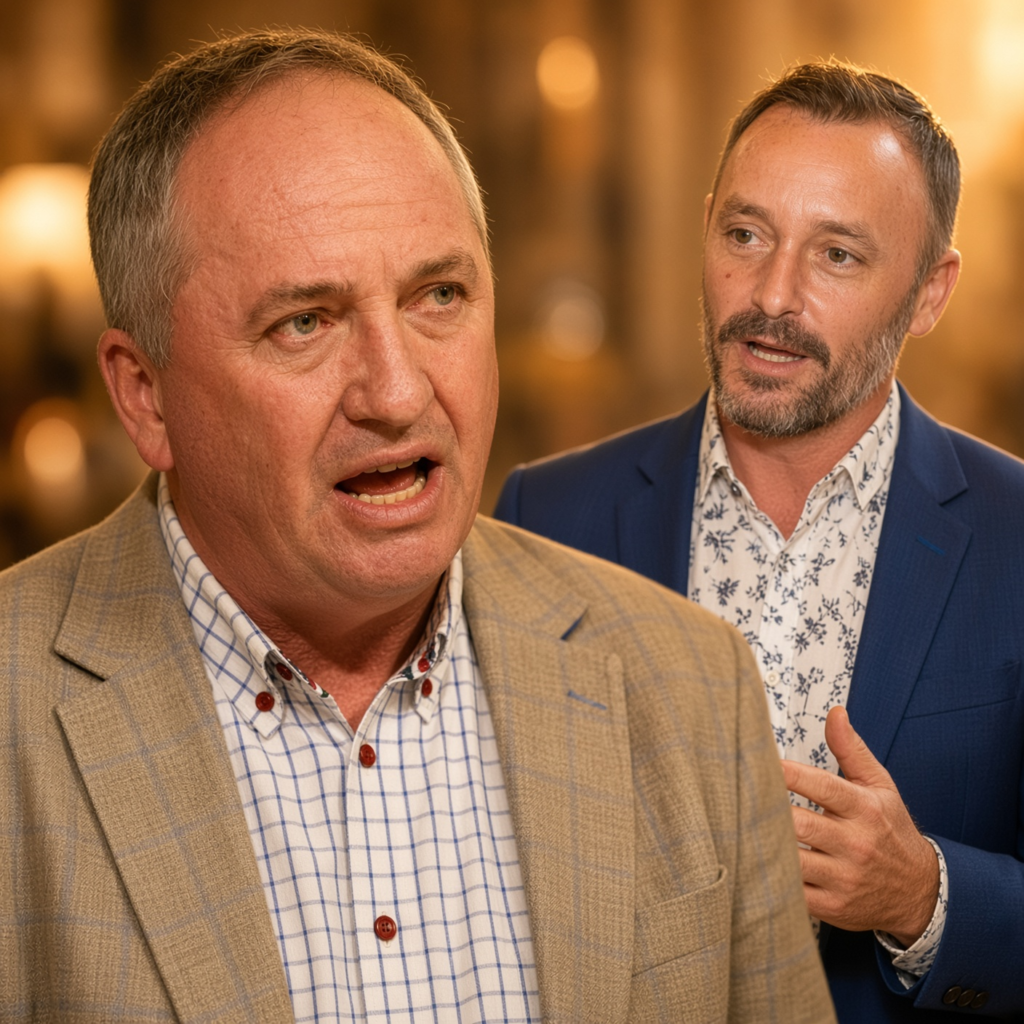
Pickering, who is leading Pauline Hanson’s Victorian campaign and contesting the marginal lower-house seat of Pakenham, addressed the controversy publicly on Tuesday after days of scrutiny over claims concerning his past.
The 44-year-old acknowledged that he had used illicit substances including ecstasy, methamphetamine, speed and marijuana during his 20s.
“I did use them as a young man and I’m not proud of that,” he said.
He described himself as “no angel” and said he had made mistakes that hurt people he loved.
Pickering also confirmed that he had lost his driver’s licence three times for drink-driving offences, including incidents when he was about 18 and 20 and another roughly a decade later.
But he strongly rejected one of the most serious allegations reported from his former partner, Jo Scott: that he had smoked ice, or crystal methamphetamine, while children were present in the home.
Asked directly whether he had done so, Pickering said: “No, I did not.”
He said he was receiving legal advice about reporting on the allegations and was considering defamation proceedings.
The distinction is important because the controversy has moved beyond a simple dispute in which one side makes allegations and the other denies everything.
Pickering is now acknowledging that some historical drug use did occur, while continuing to reject the more specific allegations about when, where and under what circumstances drugs were used.
That makes precise attribution essential.
Scott, who was Pickering’s partner for about 18 years, has alleged that illicit drug use occurred during their relationship and has provided material she says supports her account.
Reporting by The Australian has referred to statutory declarations, old messages and handwritten correspondence said to relate to the couple’s past.
Those materials have generated significant public scrutiny, but they do not amount to a criminal conviction or a judicial finding that every allegation made by Scott is true.
Pickering has disputed her account and One Nation has described the matter as arising from a long and difficult family history.
No publicly reported criminal charge has been identified arising from the specific alleged drug conduct described by Scott.
That legal position must be separated from Pickering’s own admissions.
He has now personally confirmed past illegal drug use and multiple drink-driving episodes.
Those facts no longer depend on his former partner’s account.
Pickering says his life changed significantly when he became a father and later joined the Australian Defence Force.
He served as a combat engineer and says military service gave him purpose, discipline and a desire to continue serving the community through politics.
One Nation figures have made that later chapter central to their defence of him.
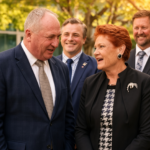
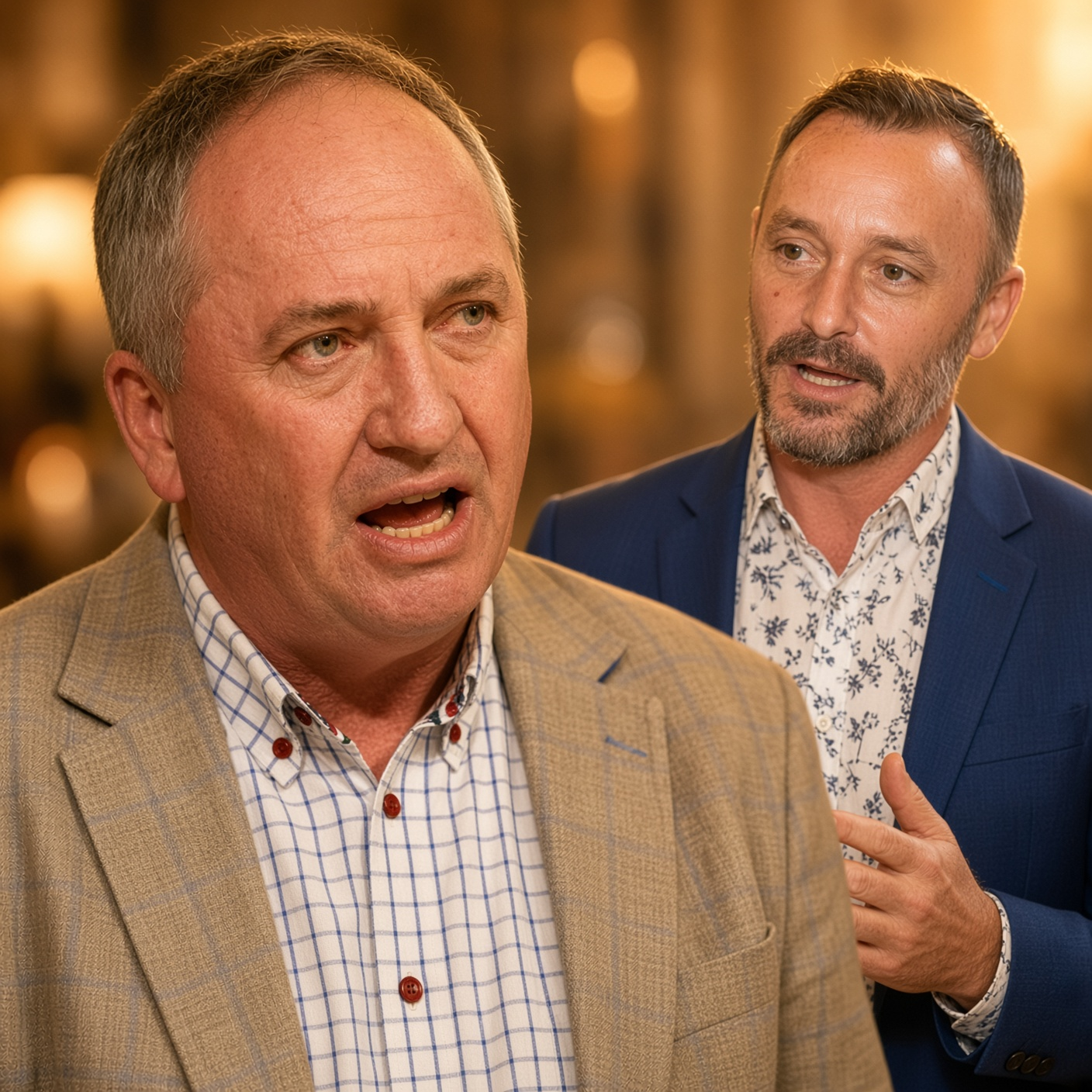
Barnaby Joyce, one of the party’s most prominent federal MPs, backed Pickering after speaking with him about the controversy.
Joyce said he was “big on the redemption of the human spirit” and argued that people should be capable of moving on from mistakes made many years earlier.
He also pointed to Pickering’s subsequent Australian Army service as evidence that his life had taken a different direction.
The argument is not that military service determines whether a historical allegation is true or false.
Rather, Joyce’s position is that conduct from a person’s youth should be considered alongside what they did with their life afterwards.
That approach has allowed One Nation to present the controversy partly as a question of rehabilitation and second chances.
But it does not resolve another increasingly important political issue: what One Nation knew before Hanson selected Pickering to lead its Victorian election campaign.
Hanson initially attempted to draw a firm boundary around the dispute.
“This is a personal matter,” she told reporters, saying One Nation had responded to the claims and she had nothing more to add.
Pressed over whether Pickering had disclosed historical drug use as part of the party’s vetting process, Hanson again characterised the matter as personal and family-related.
She said allegations had been put to Pickering and denied.
That response came before Pickering’s subsequent public admission that he had, in fact, used several illicit drugs while younger.
It does not necessarily mean Hanson was referring specifically to the drug use he has now admitted.
The allegations published against Pickering contain multiple claims, and he continues to deny important parts of them.
But the difference between the party’s earlier broad rejection and Pickering’s later admissions is likely to intensify questions about how thoroughly he was vetted.
According to reporting by The Australian, Scott first contacted Hanson’s parliamentary office in September 2025 with concerns about Pickering.
The newspaper reported that Hanson’s office responded and asked for an attachment that had apparently been omitted from Scott’s initial correspondence.
Scott is also reported to have contacted the office again in May this year about a separate matter involving a first home owner grant.
There has been no independent public inquiry determining exactly what information was supplied to Hanson, who read it, what steps the party took to investigate it or how those steps affected Pickering’s later selection.
Federal Opposition Leader Angus Taylor has nevertheless seized on the issue.
He has called on One Nation to release its correspondence with Scott and explain when senior party figures became aware of concerns about Pickering.
For Taylor, the controversy has become part of a broader argument that One Nation should face the same level of scrutiny as parties seeking to form or influence government.
The timing makes that argument politically potent.
Hanson officially installed Pickering as One Nation’s Victorian state leader only last month.
The party is attempting an ambitious expansion at the November election and says it will campaign heavily on law and order, cost of living, energy, housing and government accountability.
Pickering is therefore not an obscure candidate whose personal history affects only one electorate.
He is the figure Hanson chose to lead the Victorian team.
That makes questions about his background and the party’s internal vetting directly relevant to the political judgment voters are being asked to make.
The issue is particularly sensitive because One Nation has adopted a tough law-and-order position in Victoria.
Pickering has promoted stronger responses to crime and has positioned the party as an alternative to both Labor and the Liberals on public safety and institutional accountability.
Historical misconduct does not automatically make a politician incapable of advocating tougher laws later in life.
But the contrast guarantees that his personal record will receive greater examination during the campaign.
The controversy widened again when separate reporting revealed historical drink-driving matters.
Pickering has now confirmed the essence of those reports himself, saying he had lost his licence three times.
He has framed the offences as mistakes made at different stages of his younger life rather than evidence of his present character.
One Nation is making essentially the same case.
The party wants voters to judge Pickering on what it says he became after those years — a father, soldier and political organiser — rather than on conduct he regrets from decades earlier.
Critics say that argument does not answer the vetting question.
A party can believe in rehabilitation while still being expected to know the background of the person it selects to lead a statewide campaign.
Those two propositions are not mutually exclusive.
A further complication involves a historical first home owner grant.
Documents reported by The Australian indicate the Victorian State Revenue Office issued Pickering a demand in 2010 to repay $13,500 relating to a grant for a property in Mernda.
The issue reportedly concerned eligibility questions connected with property interests held by his then-partner.
The State Revenue Office has declined to publicly discuss Pickering’s individual tax affairs because of confidentiality rules.
There is currently no verified public information establishing whether the amount was ultimately repaid.
The existence of the demand does not itself establish criminal wrongdoing.
It does, however, add another unanswered question to a rapidly expanding examination of the Victorian leader’s history.
Pickering’s press conference was also controversial for another reason.
Reporters from the ABC and Guardian Australia were not allowed to remain at the event after identifying the organisations they represented.
Journalists from other outlets, including The Australian, were permitted to attend.
One Nation has previously restricted ABC access to some campaign events.
The decision to exclude outlets from a press conference specifically called to address questions about transparency added another layer to criticism of the party’s handling of the episode.
The electoral consequences are difficult to predict.
Pickering is running in Pakenham, one of Labor’s most vulnerable seats.
Labor won the electorate by only 307 votes after preferences in 2022, and sitting MP Emma Vulin is not seeking re-election.
One Nation has been campaigning intensely in the outer south-east, where mortgage stress and cost-of-living pressure have created fertile conditions for political disruption.
Hanson has personally campaigned with Pickering in Pakenham, signalling that the party regards the electorate as one of its best opportunities for a lower-house breakthrough.
The Victorian election will be held on November 28.
That leaves One Nation less than three months to determine whether Pickering’s admissions become a lasting problem or a story the party can successfully frame around personal change.
There is precedent in Australian politics for voters forgiving candidates who admit past misconduct, particularly when the conduct is old and followed by years of otherwise lawful and productive life.
There is equally a long history of political damage when parties appear evasive about what they knew during candidate selection.
That may ultimately prove to be the more important issue for Hanson.
Pickering has now answered at least some questions himself.
He used illegal drugs when younger.
He lost his licence multiple times for drink-driving.
He says he changed his life, stopped using drugs and joined the Defence Force.
He denies the specific allegation that he smoked ice in front of children and is considering legal action over reporting he says is wrong.
The remaining unresolved questions concern the allegations he disputes and the political process that placed him at the head of One Nation’s Victorian campaign.
Hanson would prefer to regard much of that history as a private family matter.
But once Pickering became the party’s state leader and candidate for public office, at least some of the questions inevitably became political ones.
Joyce’s defence is that people deserve the possibility of redemption.
One Nation’s challenge between now and November is convincing Victorian voters that it also conducted the scrutiny expected of a party asking them for power.