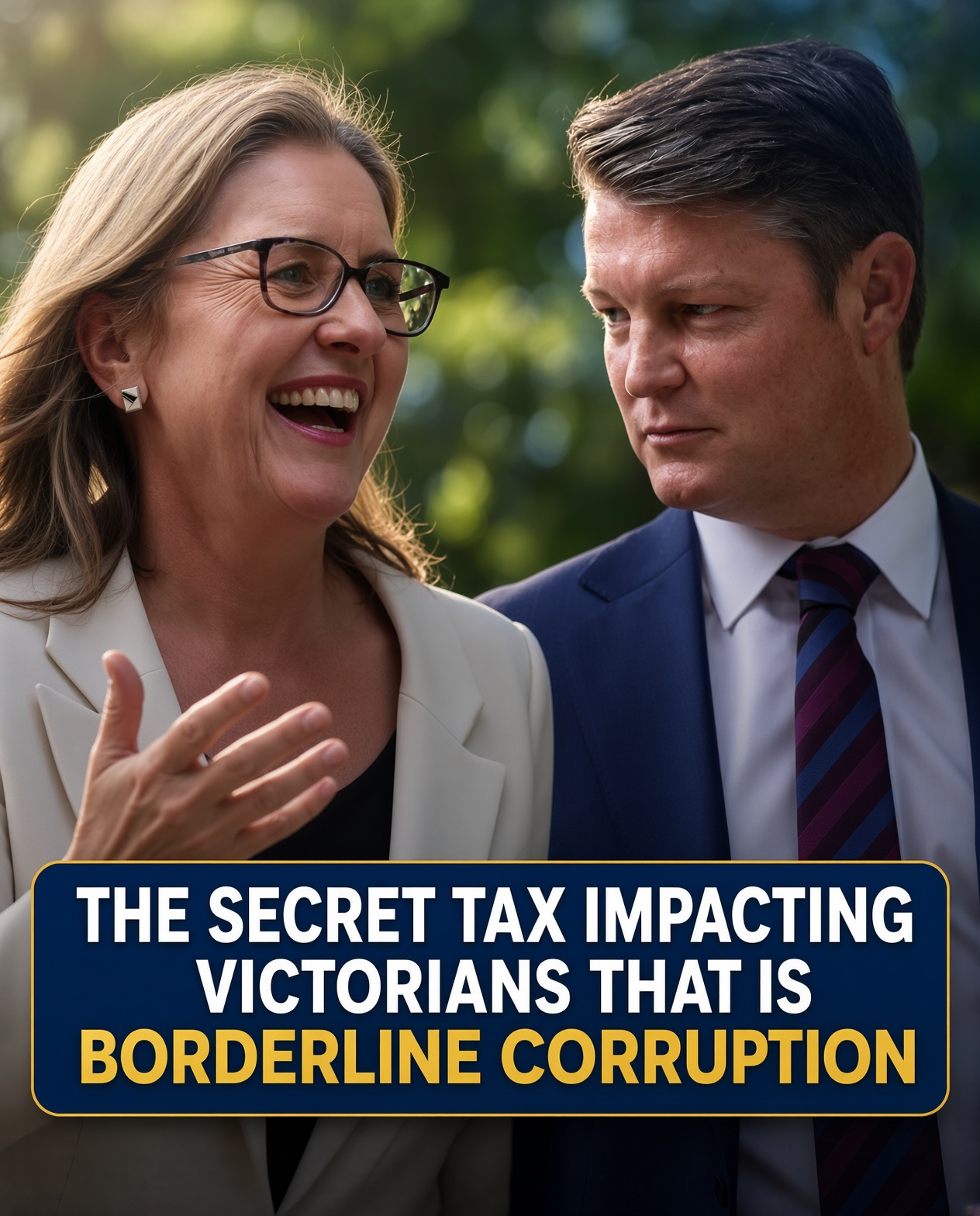
Victorians have been paying an undisclosed public transport levy for almost 20 months to help fund the Suburban Rail Loop, after the state’s Auditor-General exposed a revenue measure that was approved years ago but never transparently explained to commuters.
The Victorian Auditor-General’s Office has confirmed the government introduced what it calls a “rail improvement charge” on January 1, 2025.
It adds an extra one per cent to public transport fares each year, on top of the normal annual CPI adjustment.
The government expects the charge to raise approximately $8 billion in net present value terms through to 2062, with 60 per cent — about $4.8 billion — allocated to the first stage of the Suburban Rail Loop.
Yet despite the enormous amount of money involved, the levy was not identified in public communications announcing the 2025 or 2026 fare increases.
The Auditor-General exposed the levy
The extraordinary funding arrangement was revealed in VAGO’s Delivering the Suburban Rail Loop report, tabled in Parliament on August 26.
The independent watchdog examined whether SRL East was progressing according to the government’s cost, timetable and benefit targets.
Its findings raised serious concerns about delays, funding uncertainty and the transparency of the government’s financing strategy.
The charge started on January 1, 2025
Victorians did not suddenly begin paying the levy this week.
They have already been paying it since the beginning of last year.
The rail improvement charge was embedded in annual public transport fare increases from January 1, 2025.
It applies across metropolitan Melbourne and regional Victoria, including concession fares, with regional buses excluded.
It is not simply a one-off one per cent increase
This is one of the most important details of the Auditor-General’s findings.
The levy is structured as an additional annual one per cent increase.
Each year, that increase sits on top of the existing CPI-linked adjustment.
The result is a compounding effect on fares over decades.
That makes the long-term impact considerably greater than a single one per cent surcharge.
The government expected to raise about $8 billion
The scale of the revenue involved demonstrates why the disclosure matters.
The levy was designed to raise approximately $8 billion in net present value terms over 37 years to 2062.
Sixty per cent of that revenue — approximately $4.8 billion — was earmarked for SRL East.
The remaining portion was intended to support other Big Build projects.
It was the biggest single value-capture revenue source
According to VAGO, the rail improvement charge was set to become the largest individual source of value-capture revenue supporting SRL East.
That makes its absence from the government’s public explanation of the project’s funding arrangements particularly significant.
This was not a minor administrative charge buried deep inside a multibillion-dollar infrastructure program.
It was central to the financing strategy.
The levy was approved back in 2021
The origins of the charge go considerably further back than its implementation in January 2025.
VAGO found the Victorian Government first approved the levy in August 2021.
The government subsequently confirmed it again in December 2023 and November 2024 while refining the project’s value-capture funding package.
By November 2024, the government had confirmed the levy was needed to service borrowings for the project.
Ben Carroll was public transport minister in 2021
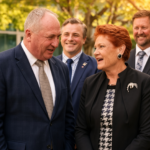
There is an uncomfortable political dimension for Victoria’s new Premier.
Ben Carroll was the state’s public transport minister when the government first approved the levy in August 2021.
He is now the Premier promising to abolish it.
That naturally raises questions about what Carroll knew about the measure and when he knew it.
Carroll won’t say when he learned about it
Asked directly when he became aware of the levy, the Premier declined to provide a clear answer.
Instead, he focused on his decision to abolish the charge and his commitment to greater transparency under his leadership.
That leaves a significant unanswered question given his previous responsibility for the public transport portfolio.
The government publicly announced five other funding measures
The secrecy becomes even harder to explain when the government’s December 2025 announcement is examined.
At that time, Victorians were told five value-capture mechanisms would contribute towards SRL East.
They included existing land-tax revenue in SRL precincts, windfall-gains tax revenue, infrastructure contributions from developers, a future car-parking levy and profits from state-initiated property development.
But the transport levy was missing
What the announcement did not tell Victorians was that another revenue measure had already been operating for almost a year.
The rail improvement charge was omitted.
That omission is especially striking because it was projected to become the largest single value-capture revenue stream for the project.
VAGO explicitly concluded that the timing and content of the government’s announcements lacked transparency.
The 2025 fare announcement didn’t disclose it either
The government and Transport Victoria also failed to identify the levy when publicly communicating the annual fare increase that took effect in 2025.
Commuters were therefore told fares were changing without being told that part of the increase represented a separate revenue measure linked to major infrastructure funding.
Then it happened again in 2026
The same problem continued into the following year.
Public communications surrounding the 2026 annual fare increase also did not acknowledge the rail improvement charge.
As of June 2026, according to VAGO, the government still had not publicly announced it.
VAGO’s language is damning but precise
The Auditor-General did not describe the arrangement as corruption.
That distinction is important.
VAGO’s finding was that the government’s funding strategy lacked transparency and that the levy had not been transparently disclosed to commuters.
The watchdog also found the measure was not fully consistent with Victoria’s own value-capture policy framework.
Why doesn’t it fit the government’s own framework?
Victoria’s Value Creation and Capture Framework contains principles governing how governments should recover some of the economic benefits generated by major infrastructure.
Among those principles are transparency and equity.
Value-capture measures are supposed to recover revenue from people and businesses that benefit from the investment.
The public transport levy creates an obvious problem with that principle.
Commuters across Victoria are paying for a Melbourne project
The levy applies not merely to people living around the six SRL East stations.
It applies to public transport users across metropolitan Melbourne and regional Victoria.
Some of those commuters may never use the Suburban Rail Loop.
Some may receive little or no direct benefit from the project.
Yet public transport users were expected to contribute more value-capture revenue than any other group.
They started paying nine years before trains were due to run
SRL East is scheduled to begin passenger services in 2035.
The levy began in January 2025.
That means commuters began contributing to the funding stream approximately nine years before they could experience any transport benefit from the new railway.
VAGO specifically identified this timing as one reason the measure did not fully align with the government’s value-capture framework.
The government was warned about affordability
The concerns were not discovered only after the levy began.
Advice provided to government while the funding package was being developed warned that the compounding annual increase could create affordability problems for public transport users in future years.
The Department of Transport and Planning was also concerned that higher fares could encourage passengers to abandon public transport for private cars.
That could create more road congestion
This produced a potential policy contradiction.
The government was using higher public transport fares to fund a project designed to improve public transport.
But its own advice warned that the fare increase could push some passengers back into cars.
If that occurred, the levy could contribute to additional congestion while attempting to finance infrastructure intended partly to reduce transport pressure.
The long-term fare effect was substantial
ABC reporting based on the audit found the cumulative impact would become increasingly significant.
By 2035, the levy would add about $1.60 to the cost of a full-fare daily journey.
By 2062, a daily Zone 1 and 2 full fare was projected to be $12.10 higher because of the compounding charge.
Those figures illustrate why describing the measure merely as a “one per cent levy” understates its eventual impact.
Jacqui Felgate called it ‘borderline corruption’
3AW presenter Jacqui Felgate reacted furiously to the Auditor-General’s revelations.
She characterised the arrangement as covert taxation and argued the secrecy surrounding it could be regarded as “borderline corruption”.
That is Felgate’s assessment, not a finding of corruption by VAGO.
The distinction matters because the Auditor-General’s report makes findings about transparency and policy consistency rather than criminal conduct.
‘You are paying a covert tax that no one told you about’
Felgate’s criticism focused on the fact that commuters had been contributing without being explicitly told what part of their fare increase was funding.
That argument goes to the heart of the controversy.
Governments routinely increase fees and charges.
The exceptional feature here was that a specific additional levy had been deliberately approved as a revenue-raising mechanism yet was not transparently identified when fares increased.
Jess Wilson accused Labor of corruption
Victorian Opposition Leader Jess Wilson went further.
She labelled the Labor government “corrupt” over the episode and described the undisclosed levy as a fundamental breach of trust with Victorians.
Again, that is a political accusation.
Neither VAGO nor a court has made a finding that the government’s conduct constituted corruption.
But the transparency failure itself is independently established
Wilson does not need to be accepted at her strongest rhetoric for the underlying issue to remain serious.
The independent Auditor-General has already established the central facts.
The levy existed.
It was approved years earlier.
It was implemented.
Commuters paid it.
It was central to the SRL funding strategy.
And it was not transparently disclosed.
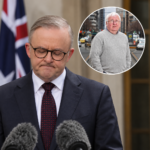
Carroll moved quickly once the report became public
Within a day of the Auditor-General’s findings becoming public, Premier Carroll announced that the government would abolish the rail improvement charge.
He conceded that its creation and implementation had not met acceptable standards of transparency.
Carroll said his government would move forward by eliminating the charge rather than defending the process that produced it.
He effectively conceded it failed the transparency test
The Premier’s decision represents a significant reversal.
This was not an obsolete funding mechanism collecting negligible revenue.
It was expected to become the single biggest value-capture revenue source for SRL East.
Removing it therefore has real consequences for the project’s finances.
The abolition still needs cabinet approval
Carroll’s announcement does not mean the levy has already disappeared from the government’s books.
The decision still needs to go through cabinet.
Once formally removed, the government will need to determine how to replace the revenue it expected to collect.
That creates another SRL funding hole
The Auditor-General’s report already identified substantial uncertainty surrounding the project’s financing.
At June 2026, there was a $5.5 billion gap in approved funding required to deliver SRL East.
Removing a revenue mechanism projected to generate billions of dollars therefore makes the funding challenge harder.
The federal government has not committed the full requested amount
The SRL financing strategy assumes the project cost will effectively be divided into thirds.
The Victorian budget, Commonwealth government and value-capture mechanisms were each expected to contribute approximately $11.5 billion towards the original $34.5 billion SRL East cost.
But Commonwealth funding remains below Victoria’s desired contribution.
VAGO said the Australian Government had publicly committed $6 billion by June 2026.
The project is already under financial pressure
SRL East consists of approximately 26 kilometres of twin underground tunnels between Cheltenham and Box Hill.
Six new underground stations are planned.
The government says trains are expected to begin operating in 2035.
Contracts worth approximately $13.2 billion had been signed by June 2026.
Carroll has promised to cut the cost
The new Premier has simultaneously attempted to reset the government’s approach to the controversial megaproject.
He recently announced changes intended to reduce the estimated cost.
The government says the current cost has been reduced from $34.5 billion to approximately $33.3 billion, with further savings being pursued.
Carroll insists the project can still be delivered on schedule.
The Auditor-General is much less certain
VAGO’s assessment is considerably more cautious.
The authority responsible for SRL East is forecasting delivery within the government’s announced cost and completion targets.
But the Auditor-General concluded that delays, cost increases and emerging risks mean this outcome cannot yet be reasonably assured.
Station procurement is about a year behind
The audit identified significant project delays.
One early-works package finished approximately six months late.
Procurement processes for station packages were around a year behind schedule.
VAGO also found the state did not yet have sufficient approved funding to sign the contract for the second stations package.
The financing strategy itself remains uncertain
The hidden levy is therefore only one part of a much larger funding problem.
VAGO found significant uncertainty that revenue expected from sources outside the state budget and debt would be fully achieved.
That raises the possibility of additional borrowing or further revenue-raising measures if existing funding assumptions fail.
There is another extraordinary federal funding detail
The audit found Victoria had provided the Commonwealth with an implementation plan supporting its request for additional federal SRL funding.
But that plan did not include information about the rail improvement charge, despite the levy being the largest individual revenue-raising measure in the value-capture package.
That further strengthens the Auditor-General’s concerns about transparency surrounding the financing strategy.
Infrastructure Australia wanted a complete funding strategy
Infrastructure Australia’s assessment had recommended that the Commonwealth receive and approve a comprehensive funding and financing strategy before committing further money to SRL East.
VAGO found Victoria had not provided complete information about the approved value-capture package.
The omission of the rail improvement charge was particularly significant because of the scale of revenue it was expected to generate.
This story is bigger than one per cent
For an individual passenger on a single trip, a one per cent increase may initially appear small.
That is not the real issue exposed by the audit.
The charge was annual and compounding.
It was designed to operate for decades.
It was expected to raise billions.
And it was part of the financing architecture of Victoria’s largest infrastructure investment.
The fundamental issue is informed consent
Governments have the authority to impose many taxes, levies, fares and charges.
They also have a responsibility to explain those decisions to the people paying them.
Victorians could have debated whether public transport users should contribute to SRL.
Regional commuters could have questioned why they were helping fund a Melbourne suburban railway.
Passengers could have assessed whether the additional fare burden was justified.
But those debates require people to know that the levy exists.
VAGO’s findings make that transparency failure difficult to dispute
The political argument will continue over whether the episode deserves labels such as “covert taxation”, “borderline corruption” or “corrupt”.
Those are judgments made by broadcasters and opposition politicians.
The independent finding is narrower — but damaging enough.
The government introduced a new levy, collected it for more than a year, failed to identify it in fare announcements and omitted it from its public explanation of the SRL value-capture package.
Carroll’s response creates a new test
The Premier has now promised to abolish the levy.
That deals with the immediate political controversy but creates two new questions.
First, where will the government find the billions of dollars the charge was supposed to contribute?
Second, will Carroll explain how a measure first approved while he was public transport minister remained undisclosed to Victorians until an independent audit exposed it?
The answers matter beyond the Suburban Rail Loop
Victoria is spending tens of billions of dollars on major infrastructure while carrying significant debt.
Public confidence in those projects depends not merely on whether governments can build them.
It depends on whether taxpayers understand how they are being funded.
When a government-approved charge can operate inside public transport fares for almost 20 months before commuters discover what they were paying, that confidence is inevitably damaged.
The Auditor-General did not find “borderline corruption”. It found something more precise and independently established: a multibillion-dollar revenue measure lacked transparency, was not fully consistent with the state’s own value-capture framework and had been collected from Victorian commuters without being transparently disclosed to them.
Ben Carroll has now decided the levy has to go. The harder question is why Victorians had to wait for the Auditor-General to discover it existed in the first place.