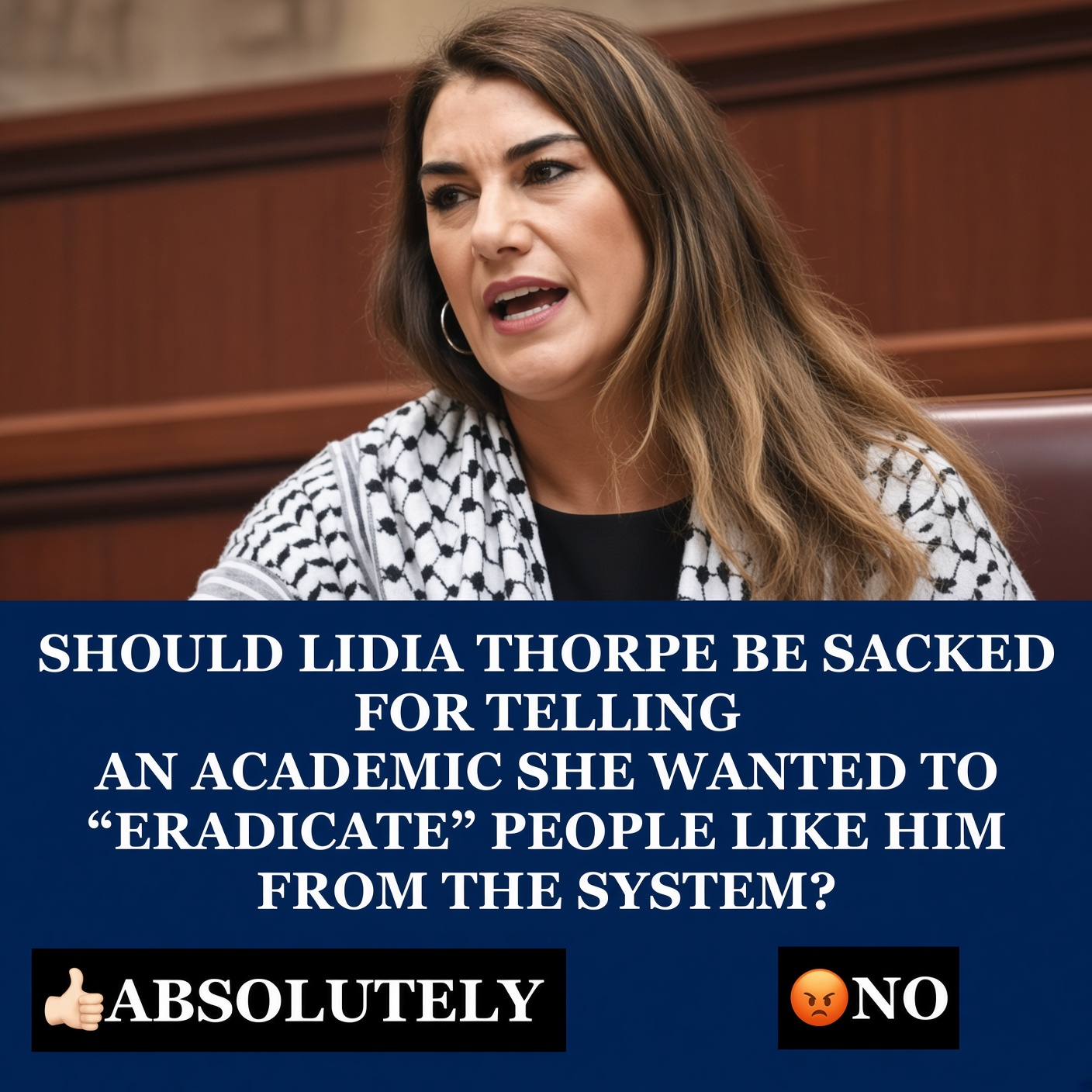
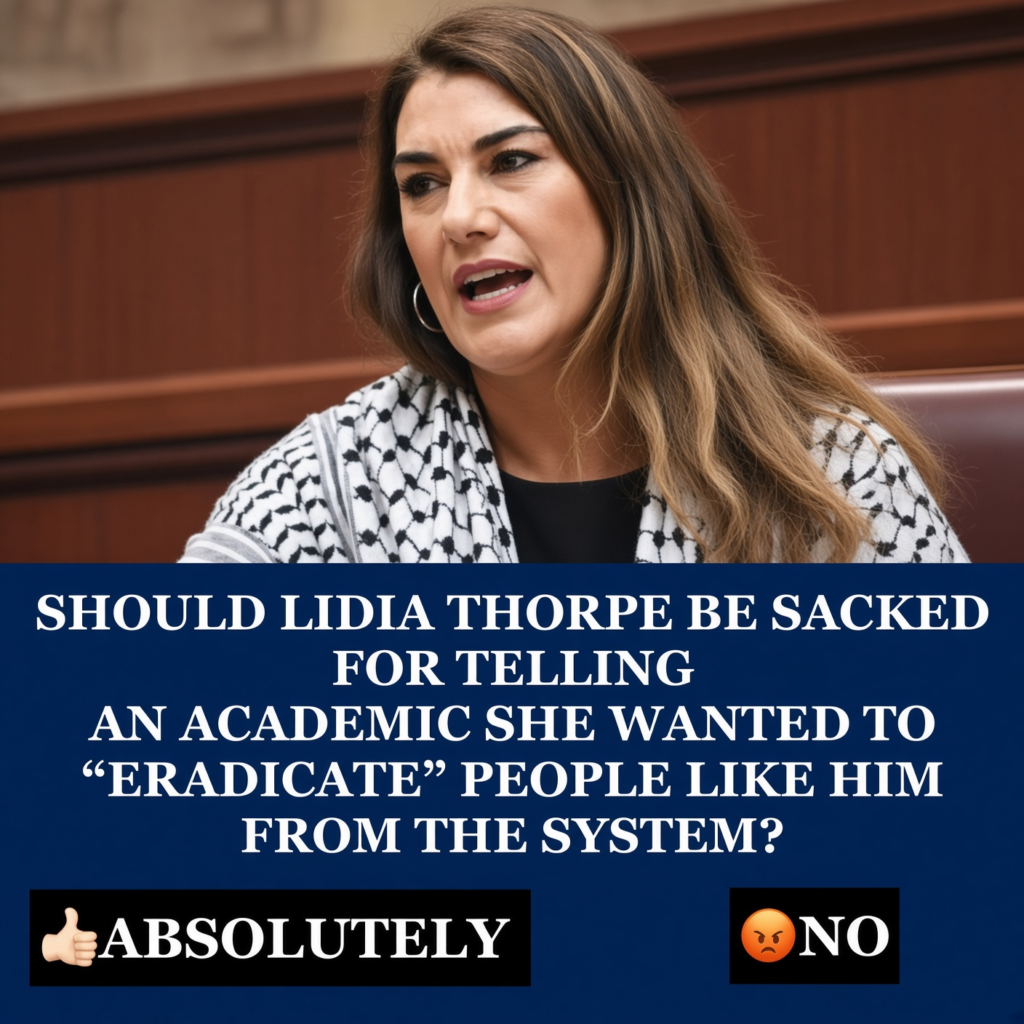
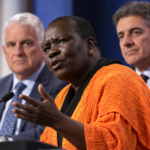
Independent Senator Lidia Thorpe is facing renewed criticism over an extraordinary confrontation at a parliamentary racism inquiry in which she told an academic who opposed Welcome to Country ceremonies that the system was trying to “eradicate people like you”.
The remarks were directed at Dr Peter Balan OAM during a public hearing in Brisbane on July 28 and have now triggered a demand for a formal written apology.
Balan argues he attended the inquiry to present a legitimate policy position but instead found himself subjected to personal accusations of racism and “cultural genocide”.
What followed was one of the most confrontational exchanges yet to emerge from the federal parliamentary inquiry into racism, hate and violence directed at Aboriginal and Torres Strait Islander people.
What was the inquiry actually investigating?
The confrontation occurred before the Joint Standing Committee on Aboriginal and Torres Strait Islander Affairs.
The committee formally adopted its inquiry on March 4, 2026, following a referral from Indigenous Australians Minister Malarndirri McCarthy.
Its mandate is to investigate racism, hate and violence directed towards Aboriginal and Torres Strait Islander Australians.
Public hearings have been held around the country, including Sydney, Adelaide, Canberra, Perth, Darwin, Alice Springs and Brisbane.
Balan appeared at the Brisbane hearing on July 28.
He travelled there at his own expense to present his position to federal parliamentarians.
Who is Peter Balan?
Balan is an academic and former business executive who has worked extensively in tertiary education.
He was awarded the Medal of the Order of Australia in 2026 for service to tertiary education and the South Australian community.
His submission represented a distinctly different perspective from many of the arguments generally associated with Indigenous reconciliation policy.
Balan’s central contention was that government should move away from policies and practices that distinguish Australians according to race.
Among the measures he questioned were Welcome to Country ceremonies.
Balan wanted Welcome to Country ceremonies discontinued
Balan argued that Australia should reconsider practices he believes reinforce racial distinctions rather than diminish them.
That included a proposal to discontinue Welcome to Country ceremonies and objections to some official displays of Aboriginal and Torres Strait Islander flags.
His position is deeply contested.
Welcome to Country ceremonies are conducted by Traditional Owners or authorised Indigenous representatives and have become established features of many government, corporate, sporting and cultural events.
Supporters regard the ceremonies as recognition of continuing Indigenous connection to Country and an important expression of respect.
Critics such as Balan argue they can instead emphasise division based on ancestry.
That fundamental disagreement quickly became the centre of his exchange with Thorpe.
Thorpe challenged him over First Peoples
Thorpe began questioning Balan about whether he recognised Aboriginal and Torres Strait Islander people as Australia’s First Peoples.
Balan resisted framing his position around racial or ancestral categories.
The questioning then moved to Australia’s colonial history.
Thorpe challenged him over whether he accepted that Australian wealth had been built through colonial exploitation and oppression of First Peoples.
The two were operating from fundamentally different conceptions of Australian history and contemporary equality.
Thorpe’s position emphasised dispossession and the continuing consequences of colonisation.
Balan argued for treatment based on individual citizenship rather than ancestry.
Then came the ‘stolen land’ exchange
The questioning became considerably more heated when Thorpe asked Balan whether he accepted that he was living on stolen land.
He said no.
Thorpe then questioned whether he paid “the rent” for living on land she characterised as belonging to Traditional Owners.
Balan responded that he paid taxes.
From that point, the hearing moved increasingly away from a conventional examination of evidence and towards a direct ideological confrontation between senator and witness.
Neither side accepted the assumptions underlying the other’s position.
Thorpe accused Balan of ‘cultural genocide’
The dispute intensified over Balan’s opposition to Welcome to Country ceremonies and other forms of Indigenous recognition.
Thorpe characterised his proposals as an attempt to eliminate Indigenous culture from public life.
She accused him of advocating what she described as “cultural genocide”.
Balan rejected the accusation.
He told Thorpe she was exaggerating and maintained that what he wanted was greater fairness and dignity within Australian society.
The disagreement then escalated into the statement that would dominate subsequent coverage.
‘We are trying to eradicate people like you’
Thorpe argued that Balan’s contribution was causing harm and represented precisely the type of racism the inquiry was examining.
She said the racism represented by his position was something that needed to be eradicated.
Then came the crucial phrase.
Thorpe said they were trying to “eradicate people like you from the system”.
The wording immediately created controversy because of the distinction between saying racist ideas should be eradicated and saying “people like you” should be eradicated from a system.
Critics have seized on that distinction.
The context of the full sentence matters
The remarks should not be presented as Thorpe literally calling for Balan or other people to be physically harmed or eliminated.
Her statement referred to removing what she regarded as racism — and people representing it — “from the system”.
But the inclusion of the words “people like you” nevertheless dramatically personalised the exchange.
That is one reason the comment has attracted criticism beyond the underlying policy disagreement.
Opponents argue a parliamentary inquiry examining racism should be particularly careful about rhetoric directed personally at witnesses.
Balan’s appearance ended shortly afterwards
The session did not return to a calm examination of his policy proposals.
Reporting indicates Balan’s appearance lasted only about 12 minutes before the proceedings were interrupted.
The hearing was subsequently suspended.
Balan has said that during the break he was escorted from the building by security.
Importantly, there is a distinction between those events and saying the committee formally expelled Balan as punishment.
Available reporting does not establish that the committee made such a formal finding against him.
Balan has said he was given no explanation for being escorted out.
Now Balan wants a written apology
The confrontation might have ended with the hearing had Balan decided to leave the episode there.
He has not.
Fresh reporting confirms he is demanding a formal written apology over Thorpe’s treatment of him.
Balan argues he came before Parliament in good faith and was entitled to have his evidence examined without being personally attacked.
He has complained about the incident to committee chair Senator Jana Stewart.
His argument is that Thorpe’s conduct was inconsistent with the purpose of an inquiry established to examine racism and social division.
He says the exchange prevented scrutiny of his evidence
Balan’s complaint is about more than the language directed at him.
He argues the confrontation prevented other committee members from properly examining the ideas he had travelled to Brisbane to present.
Parliamentary inquiries routinely hear evidence from witnesses whose views committee members may strongly reject.
The purpose is not necessarily to endorse those views.
It is to test them.
Balan believes that process broke down during his appearance.
He has indicated he is prepared to present his submission again.
Thorpe’s supporters would see the exchange differently
There is another side to the confrontation.
Thorpe has consistently argued that racism against First Nations Australians cannot be separated from colonisation, dispossession and the institutions that followed.
From that perspective, proposals to eliminate Indigenous-specific recognition are not necessarily neutral calls for equality.
They can be viewed as removing recognition of historical and continuing Indigenous status.
Thorpe clearly regarded Balan’s proposals as harmful rather than merely academic.
Her questioning reflected that assessment.
The controversy is therefore not about whether she was entitled to challenge him vigorously.
It is about how far an elected committee member should go when doing so.
Welcome to Country is at the centre of a much larger debate
The confrontation occurred amid a broader national argument over Indigenous ceremonial recognition.
Welcome to Country has increasingly become a political flashpoint.
Supporters argue it recognises Traditional Owners and maintains a cultural practice with profound meaning for Aboriginal communities.
Opponents question how frequently ceremonies are conducted and whether they should be incorporated into so many official events.
Those debates intensified following the defeat of the Indigenous Voice referendum in 2023.
But the referendum result did not settle every question about reconciliation, recognition or Indigenous policy.
Welcome to Country has become one of the places where those unresolved arguments now collide.
The inquiry itself makes the confrontation more significant
Had the exchange occurred during a television interview or political rally, it might have been dismissed as another episode of Australia’s increasingly aggressive political discourse.
But this happened inside a parliamentary inquiry specifically examining racism, hate and violence.
That gives the language used by everyone involved greater significance.
Witnesses appearing before parliamentary committees are participating in an official democratic process.
Committee members are entitled to challenge their evidence.
Witnesses, meanwhile, must be able to provide unpopular evidence without assuming that disagreement itself will end the examination.
Critics say Thorpe crossed that boundary
Political and media critics have argued that Thorpe’s wording transformed legitimate questioning into a personal attack.
Some have characterised the episode as political theatre rather than constructive inquiry.
The strongest criticism focuses on the apparent contradiction inherent in the situation.
An inquiry into racism and hate became the scene of an elected senator telling a witness that “people like you” should be eradicated from the system.
For critics, that language undermined the deliberative purpose of the hearing regardless of Thorpe’s intended meaning.
But Balan’s ideas were also highly provocative
Any complete account of the hearing must acknowledge that Balan was not presenting an uncontroversial technical submission.
He was challenging policies and symbolic practices that many Indigenous Australians regard as fundamental forms of recognition.
Ending Welcome to Country ceremonies is itself a significant political proposition.
So is moving away from programs Balan considers “race-based”.
Thorpe had every right as a committee member to interrogate the consequences and assumptions behind those proposals.
The question is whether the interrogation should have remained focused on the evidence rather than the witness.
That distinction is now the heart of the controversy
Parliamentary scrutiny can and often should be uncomfortable.
A witness cannot expect immunity from difficult questions simply because they volunteered to appear.
Equally, senators possess institutional authority that witnesses do not.
That imbalance creates an obligation to use questioning powers carefully.
There is a meaningful difference between saying “this idea is racist” and telling a witness that “people like you” should be eradicated from a system.
Balan’s demand for an apology rests on that distinction.
Jacinta Nampijinpa Price has defended Balan’s right to participate
Coalition Senator Jacinta Nampijinpa Price has also defended Balan’s right to put his position before the inquiry.
Her intervention does not amount to endorsement of every proposal he advanced.
Rather, the argument is that Australians should be able to participate in parliamentary policy debates without being subjected to personal attacks by elected representatives.
That turns the controversy into a question of democratic process as much as Indigenous policy.
Can parliamentary inquiries genuinely test controversial ideas if witnesses fear personal denunciation for presenting them?
The episode exposes Australia’s unresolved reconciliation divide
Beneath the personalities, the exchange between Thorpe and Balan revealed two fundamentally incompatible approaches to equality.
Balan argues Australia should minimise distinctions based on race and treat citizens primarily as individuals.
Thorpe argues that such an approach can ignore the unique history, sovereignty claims and continuing disadvantage experienced by First Nations Australians.
One side sees race-specific recognition as perpetuating division; the other sees removing that recognition as perpetuating injustice.
That disagreement cannot be resolved simply by declaring one side offensive.
It requires the kind of substantive argument parliamentary inquiries are supposed to facilitate.
That is why the 12-minute exchange matters
The significance of the confrontation is not ultimately the viral quote.
Nor is it simply another political battle involving Lidia Thorpe.
It raises a deeper question about whether Australia’s institutions remain capable of hosting genuinely difficult debates about race without those debates becoming personal.
A parliamentary inquiry should be one of the places where the country can hear uncomfortable arguments, challenge them rigorously and put the evidence on the public record.
Balan believes he was denied that opportunity.
Thorpe clearly believed his position itself represented the racism the inquiry was established to confront.
Now the committee faces a test of its own
Balan’s request for a written apology puts the matter back before the parliamentary process.
There is currently no basis to report that Thorpe has been formally found to have breached committee rules or that Balan’s complaint has resulted in disciplinary action.
Nor does the controversy establish that Balan’s policy proposals are correct.
What is established is that a witness at a federal racism inquiry was told by a senator that “people like you” were being eradicated from the system, his appearance ended shortly afterwards, and he now wants a formal apology.
Those facts alone explain why the incident has continued to attract attention weeks after the Brisbane hearing.
The bigger issue will outlast the controversy
Thorpe and Balan may occupy opposite ends of Australia’s debate over Indigenous recognition.
But Parliament’s challenge is not to eliminate disagreement between them.
It is to create a process capable of examining that disagreement.
Australia remains deeply divided over Welcome to Country, reconciliation, Indigenous-specific programs, colonial history and what substantive equality should look like.
Those arguments will not disappear by excluding uncomfortable voices from either side.
They will have to be confronted through evidence, scrutiny and debate.
For an inquiry established to examine racism and hate, the way that debate itself is conducted matters enormously.
And that is why one sentence from a short Brisbane hearing has become the subject of a much larger national argument.