Prime Minister Anthony Albanese has come under renewed scrutiny after reports revealed he used the parliamentary family reunion allowance to fly members of his family to Canberra for Federal Budget night, prompting criticism from political commentators who argue the decision was poorly judged during Australia’s continuing cost-of-living crisis.
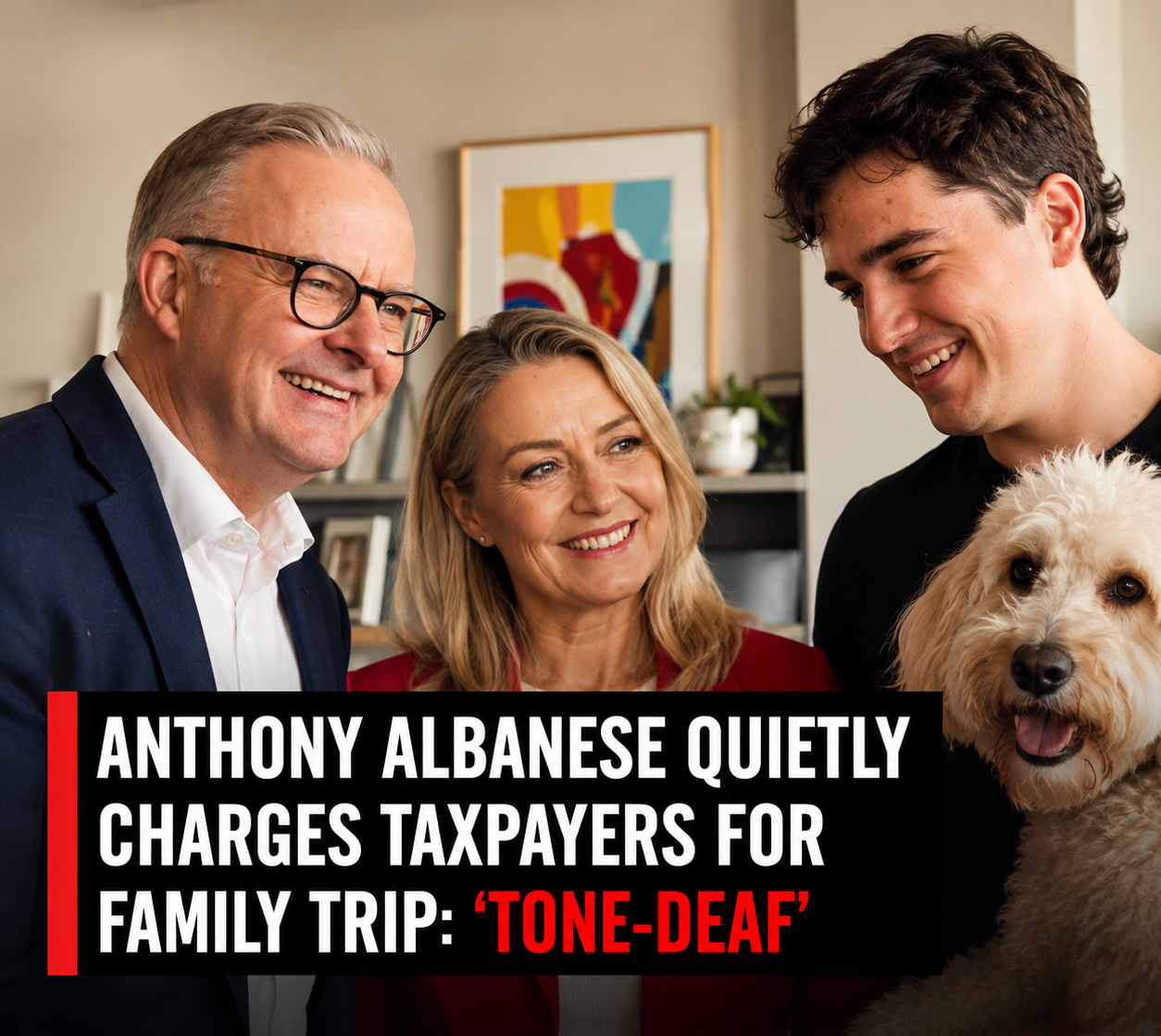
According to published expense records, Mr Albanese claimed taxpayer-funded flights for his wife, Jodie Haydon, and his adult son, Nathan Albanese, to travel from Sydney to Canberra on Budget night under the parliamentary family reunion allowance.
Reports indicate Treasurer Jim Chalmers also used the entitlement for members of his family, while Opposition Leader Angus Taylor did not claim the allowance for his wife, who instead travelled by road to Canberra.
The travel claims have reignited debate over parliamentary expense rules that allow MPs and ministers to use public funds to help maintain family connections while carrying out parliamentary duties.
No allegation has been made that the Prime Minister breached the rules governing the entitlement.
Instead, criticism has centred on whether the expenditure met broader public expectations during a period when many Australian households continue to face higher mortgage repayments, elevated rents and increased living costs.
Political commentator Peter van Onselen described the decision as “tone-deaf”, arguing that although the travel complied with parliamentary rules, taxpayers should not be expected to fund what he characterised as family attendance at a political event.
He argued that Budget night is primarily the Treasurer’s responsibility and suggested the Prime Minister could have chosen not to utilise the entitlement even if it was available.
The controversy comes against the backdrop of broader scrutiny of parliamentary travel entitlements that has affected politicians from multiple parties over the past year.
Communications Minister Anika Wells, Trade Minister Don Farrell and Attorney-General Michelle Rowland have each faced public attention over family travel claims made under existing parliamentary rules, prompting calls for tighter oversight and reforms to restore public confidence.
Those earlier controversies ultimately resulted in significant changes to Australia’s parliamentary travel framework.
Following recommendations from the Independent Parliamentary Expenses Authority (IPEA), the Albanese Government announced tighter restrictions on taxpayer-funded family travel, including limiting many journeys to economy class and narrowing the circumstances in which spouses and family members can travel at public expense.
The parliamentary family reunion allowance was originally introduced to help elected representatives maintain family life while spending extended periods away from home fulfilling parliamentary responsibilities.
The entitlement recognises that MPs, senators and senior officeholders often spend long periods in Canberra or travelling on official business, particularly those representing distant electorates or states.
Supporters argue the allowance helps reduce the personal impact of parliamentary service, while critics contend that some claims have stretched beyond what ordinary taxpayers would regard as reasonable.
Successive governments have maintained that compliance with the rules should remain the primary test for legitimate expenditure.
However, recent political controversies have increasingly shifted attention towards whether expenses also satisfy what commentators frequently describe as the “pub test”—whether the average voter considers the spending appropriate regardless of its technical legality.
The issue has become particularly sensitive because it coincides with continuing pressure on household budgets.
Australia has experienced several years of elevated living costs, with higher housing expenses, insurance premiums, grocery prices and energy bills placing sustained financial pressure on many families.
Against that backdrop, relatively modest parliamentary expense claims have often generated disproportionate political attention because they are viewed through the broader lens of public expectations about government spending.
The Budget itself also attracted significant political debate.
The Albanese Government introduced major tax reforms affecting negative gearing, capital gains taxation and wealth taxation more broadly, arguing the measures were designed to improve housing affordability and create a fairer tax system.
Opponents criticised aspects of those reforms and argued they imposed additional burdens on investors while expanding government intervention in the economy.
The coincidence of those tax measures with taxpayer-funded family travel claims has amplified criticism from some political opponents and commentators.
A spokesperson for the Government has previously maintained that the Prime Minister’s parliamentary expense claims were made in accordance with the rules governing family reunion travel, noting that no finding of wrongdoing has been made by the Independent Parliamentary Expenses Authority.
The Government has also pointed to subsequent reforms tightening travel entitlements as evidence that it has responded to community concerns regarding parliamentary expenses.
Transparency advocates note that Australia’s parliamentary expenses system relies heavily on public disclosure.
Detailed expense reports are regularly published, allowing journalists, political opponents and members of the public to examine how taxpayer-funded entitlements are used.
That transparency has increasingly resulted in political scrutiny even where no formal breach of the rules has occurred.
The debate therefore reflects a broader question confronting governments of all political persuasions: whether public officials should limit their use of lawful entitlements when economic conditions place additional pressure on taxpayers.
For critics, the Albanese family’s Budget night travel has become another example of politicians appearing disconnected from everyday financial realities.
For supporters, the issue highlights the importance of distinguishing between lawful use of parliamentary entitlements and allegations of misconduct.
As Australia continues debating parliamentary accountability and public spending, the episode serves as another reminder that political controversy increasingly turns not only on whether elected representatives follow the rules, but also on whether their decisions align with evolving public expectations about the use of taxpayer funds.