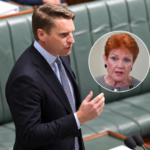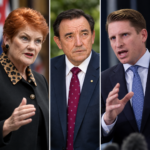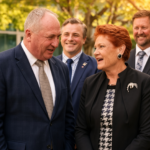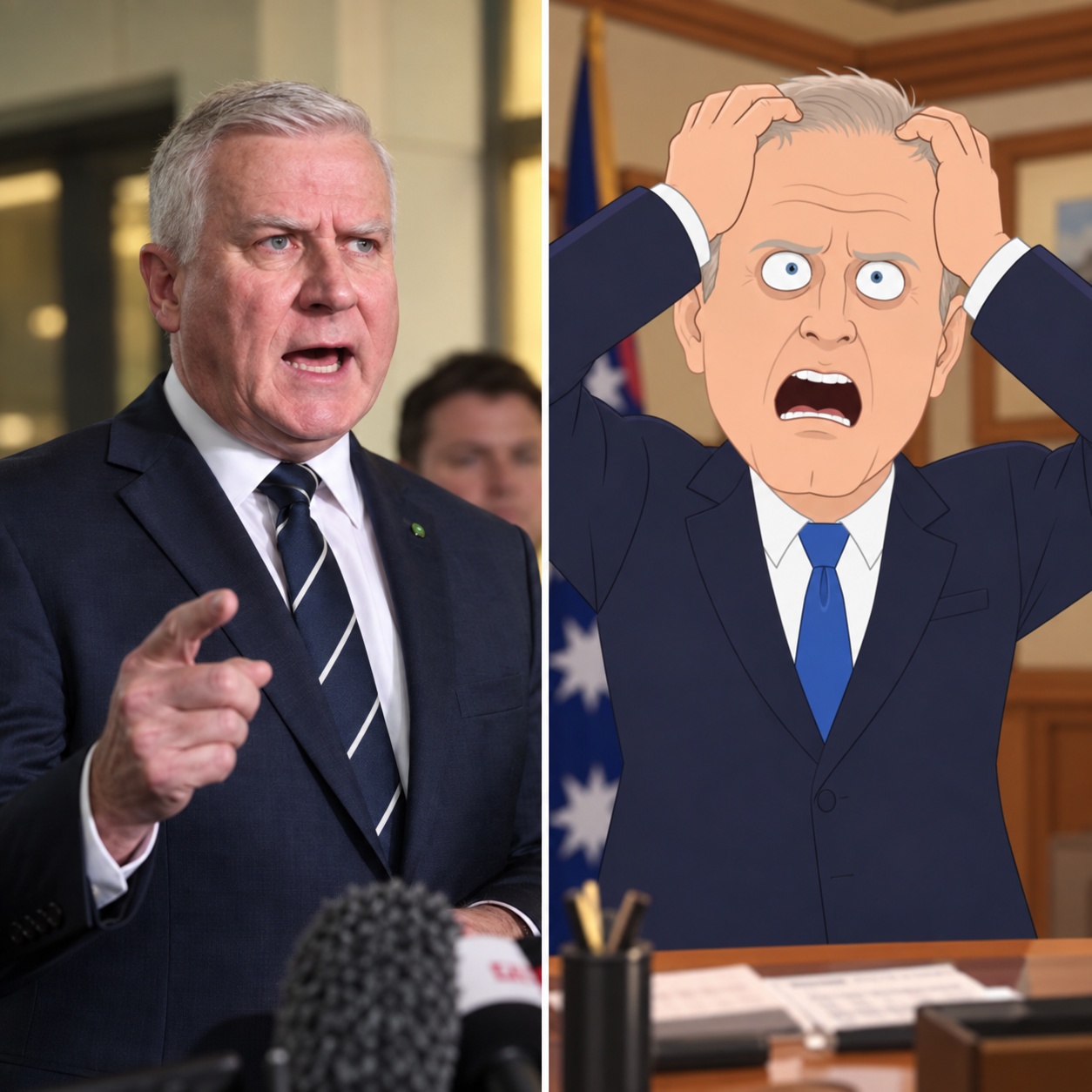
Shadow Veterans’ Affairs Minister Michael McCormack has accused Pauline Hanson of fuelling a political climate in which Andrew Hastie and his family are facing “aggressive and threatening” behaviour, intensifying pressure on the One Nation leader to withdraw a cartoon that repeatedly brands the former SAS captain a “traitor”.
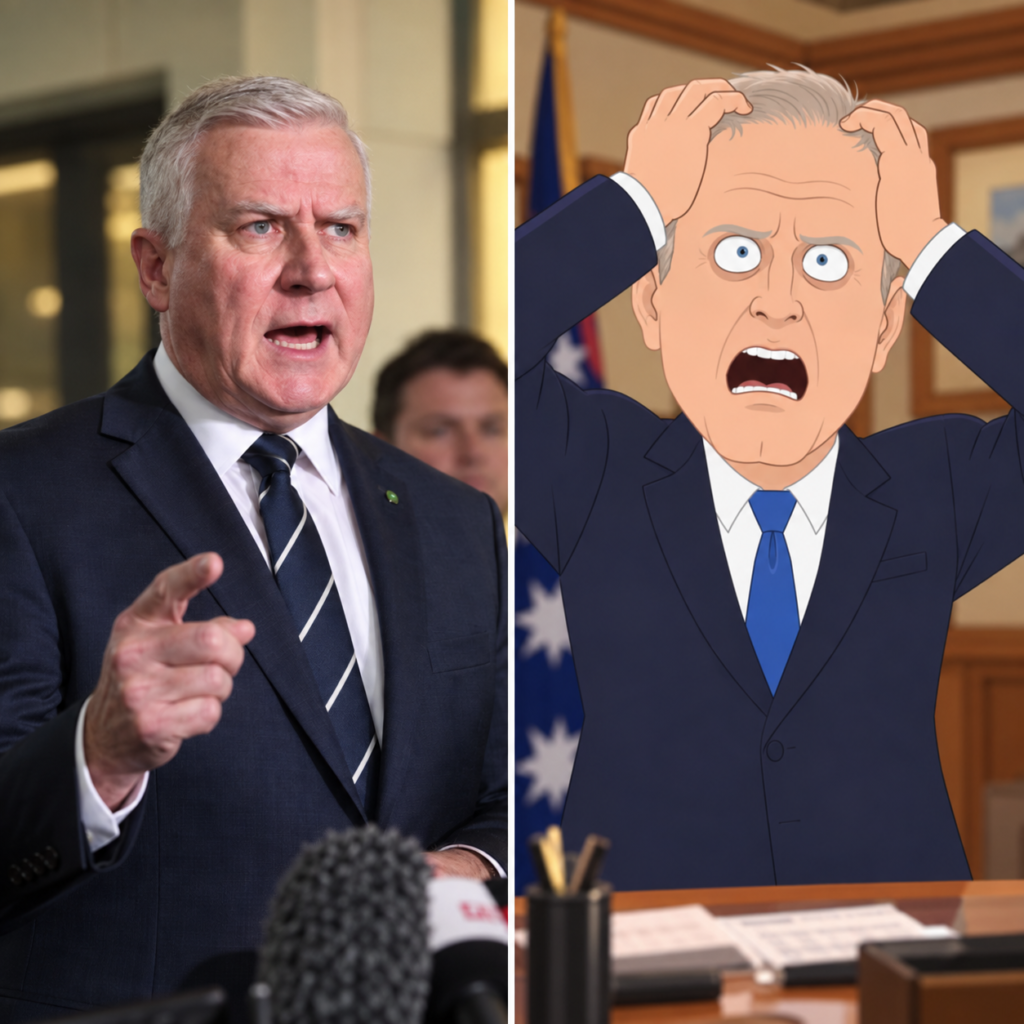
McCormack said Hanson should remove the controversial Please Explain episode and apologise to Hastie, arguing that the dispute had moved beyond ordinary political satire.
“There’s some ugly divisiveness at the moment in Australia and it’s not helped when you’ve got Pauline Hanson whipping this up, refusing to apologise, refusing to just simply take the offensive cartoon down,” McCormack said.
He noted that Hastie had ruled out pursuing Hanson for money through legal action and had instead asked for the video to be removed.
“Surely that’s not too much to ask from the One Nation leader,” McCormack said.
“Surely that’s not too big an ask from somebody who has served this nation with distinction, a former SAS captain, somebody who has also served the parliament with great honour.”
McCormack went further by linking the tone of the cartoons to threats directed at Hastie and his family.
“Pauline Hanson, quite frankly, should know better than to have these cartoons up that just then lead to people, you know, being aggressive, and threatening Andrew Hastie and his family,” he said.
“His family don’t deserve this. None of our families do, but this is where this sort of stuff leads to, unfortunately.”
That is a serious accusation, and an important distinction is required.
There has been no publicly disclosed police finding establishing that a particular threat against Hastie was directly caused by a person watching One Nation’s cartoon.
McCormack is making a political judgement about the consequences of inflammatory rhetoric, rather than citing a proven causal link in a criminal investigation.
There is, however, independently reported evidence that Hastie has faced threats and has required increased security.
In June, Hastie told Liberal colleagues that Home Affairs Minister Tony Burke had advised him security measures would be introduced at his home and electorate office.
The specific intelligence behind that decision was not publicly disclosed.
Hastie said at the time that he believed the heightened risk was connected to a sustained campaign against him by One Nation and supporters of Victoria Cross recipient Ben Roberts-Smith.
More recent reporting has said Hastie has continued to face abuse and threats as the political feud has escalated.
The argument centres on a nine-minute One Nation cartoon titled Don’t Be Hastie.
The animated episode portrays Hastie discussing why people online are calling him a traitor and refers to him as a “traitor” eight times.
It also uses the insult “gutless maggot”.
The cartoon takes aim at Hastie over his evidence in Roberts-Smith’s Federal Court defamation case and over the Liberal MP’s eventual support for amended federal hate-speech laws.
Hastie has said the “gutless maggot” insult does not particularly concern him.
The word “traitor” does.
He argues the label attacks not merely his political record but his military oath and the conduct of other Australian soldiers who complied with legal processes concerning alleged misconduct in Afghanistan.
Hastie joined the Australian Defence Force in 2003, later served with the Special Air Service Regiment and deployed twice to Afghanistan.
He was subpoenaed to give evidence in the defamation proceedings Roberts-Smith brought against Nine newspapers.
That fact is central to the dispute.
Hastie did not simply decide to publicly turn against a former SAS colleague.
He was legally required to attend court and give evidence under oath.
He has repeatedly said refusing to comply would have meant defying a lawful court process.
More than 20 SAS combat veterans also gave evidence during the proceedings.
Hastie has therefore asked One Nation to explain whether it regards those veterans as traitors as well.
He has framed the dispute as a question about the rule of law and the obligations of soldiers when asked to account for what they witnessed during military service.
Federal Court Justice Anthony Besanko described Hastie as a straightforward witness in his 2023 judgment.
Roberts-Smith lost the civil defamation case after the court found several serious imputations published by Nine had been proved to the civil standard of the balance of probabilities.
An appeal was subsequently dismissed.
Those civil findings are distinct from Roberts-Smith’s current criminal case.
He was arrested in April 2026 and charged with five counts of the war crime of murder over alleged killings in Afghanistan between 2009 and 2012.
Roberts-Smith denies wrongdoing.
The criminal charges remain unresolved, and he is entitled to the presumption of innocence.
One Nation and Hanson have been prominent supporters of Roberts-Smith and critics of the way allegations involving Australian special forces have been investigated and prosecuted.
That position forms part of the political context behind the cartoon’s attack on Hastie.
Hanson has repeatedly denied that she personally called Hastie a traitor.
She has characterised the video as satire and rejected demands that she apologise.
Hastie argues that distinction is untenable because the cartoon was produced as One Nation political material, authorised by Hanson and promoted through her social media account.
His demand has remained consistent: either own the accusation or remove the cartoon.
“She’s done neither,” he said last week.
The controversy has created a visible split inside One Nation.
Barnaby Joyce initially defended Hanson’s statement that she had not personally called Hastie a traitor, saying he was unaware of the cartoon at the time.
After seeing the material and speaking with Hastie, Joyce distanced himself from it.
“I don’t believe Mr Hastie is a traitor,” Joyce said.
“That’s an absurdity. He’s not.”
Joyce apologised for the offence caused, and Hastie accepted his explanation after the pair exchanged messages.
Hanson has not followed him.
She has continued to defend the cartoon and has dismissed some of the reaction as excessive.
One Nation senator Sean Bell has similarly said the party has nothing to apologise for and argued people should watch the video for themselves.
The party has also attempted to capitalise on the publicity.
After the controversy pushed Please Explain back into national headlines, One Nation published a lengthy compilation of what it called the creators’ 10 best episodes.
“Thanks to Andrew Hastie, the cartoons have made the news again,” the promotional caption said.
The move made clear that One Nation was not retreating from the animated series as a political weapon.
Supporters responding online praised the party for exploiting the attention and joked about whether Hastie would be offended again.
Those comments represent the views of individual social-media users, not a measure of broader public opinion.
The original Hastie cartoon has also remained available online.
There has been a change, however, since some of the earliest reporting on the dispute.
The video had been pinned prominently to the top of Hanson’s X profile during the height of the confrontation.
Reporting on Sunday said it was quietly unpinned over the weekend, although Hanson had still refused to delete it.
The distinction matters because claims that the cartoon remains pinned are now outdated.
Removing a pin is also not the action Hastie has demanded.
His request is for the cartoon itself to come down.
McCormack is only the latest senior political figure to make that demand.
RSL Australia issued an unusually direct statement condemning the use of “traitor” against Hastie.
It argued that using a veteran’s service as the basis for such a slur went beyond normal political disagreement and risked sending a damaging message to other veterans.
Liberal leader Angus Taylor has said the cartoon should be removed.
Former prime minister and current Liberal federal president Tony Abbott has also said taking it down would be the right course.
Abbott’s position is particularly notable because he has been one of Roberts-Smith’s most prominent public defenders.
Independent senator and Army veteran Jacqui Lambie has attacked Hanson in even stronger language, accusing her of targeting veterans and demanding she withdraw the material.
The cumulative criticism undermines any attempt to portray the controversy solely as a factional Liberal attack on One Nation.
It has drawn objections from politicians with very different views on Roberts-Smith, the Afghanistan war-crimes investigations and the political rise of Hanson’s party.
McCormack’s intervention adds another issue: the effect political language can have outside parliament.
Australian politicians routinely face abuse, and threats against elected representatives have become a growing security concern.
That does not mean politicians must stop using harsh language.
Nor does it mean a party is automatically legally responsible whenever a supporter behaves threateningly after viewing political material.
But political leaders can still be held accountable for the atmosphere they choose to create.
That is McCormack’s argument.
Calling someone who served in the SAS a “traitor” carries a particular weight in a debate already shaped by military loyalty, alleged war crimes and strong emotions surrounding Roberts-Smith.
The dispute is also occurring as One Nation prepares to challenge Hastie electorally.
The party has made clear it sees his Western Australian seat of Canning as a target.
One Nation recently demonstrated electoral strength in the area by winning the state seat of Secret Harbour, which overlaps parts of the federal electorate.
Hastie has responded by promising an aggressive political fight of his own.
He has said he will go “all the way” against One Nation through to the next election and has warned the party that the past week was merely a demonstration of his willingness to fight back.
He has also ruled out seeking damages from Hanson over the cartoon, saying he intends to impose a political rather than financial cost.
That makes McCormack’s demand relatively narrow.
Hastie is not asking for money.
Joyce has apologised.
Much of the veterans’ community and a significant group of Coalition figures say the use of “traitor” crossed a line.
Hanson is being asked to remove one piece of political content.
She has so far chosen not to do it.
For One Nation, refusing to retreat reinforces a central part of Hanson’s political brand: she does not back down when establishment politicians demand an apology.
For Hastie and McCormack, that same refusal demonstrates the problem.
They argue leadership requires accepting responsibility when political rhetoric begins to reach beyond an opponent and into threats against a family.
No public evidence yet proves the cartoon directly caused those threats.
But there is no dispute that Hastie’s security has been increased, that he has reported sustained threats and abuse, and that the rhetoric surrounding his role in the Roberts-Smith case has become increasingly personal.
The political question is now whether Hanson sees that escalation as a reason to pull back — or simply another opportunity to keep fighting.