Australia’s major political forces are competing to promise lower migration, but even the most aggressive proposal currently on the table would leave the country accepting migrants at a comparatively high rate by developed-world standards, according to new cross-country analysis.
Labor, the Coalition and Pauline Hanson’s One Nation have all responded to growing voter concern about population growth, housing affordability and pressure on infrastructure by promising to bring migration down.
The scale of the proposed reductions varies dramatically.
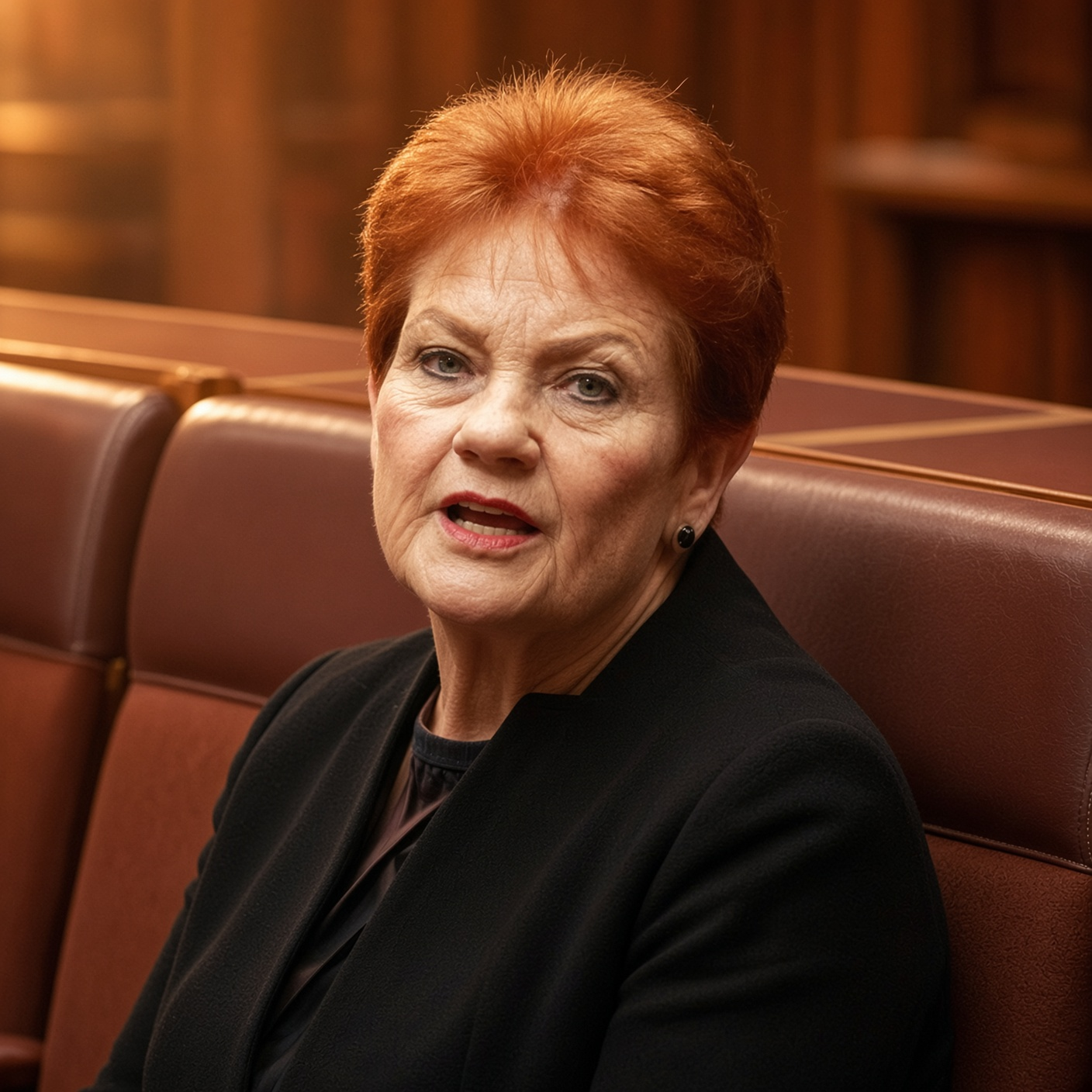
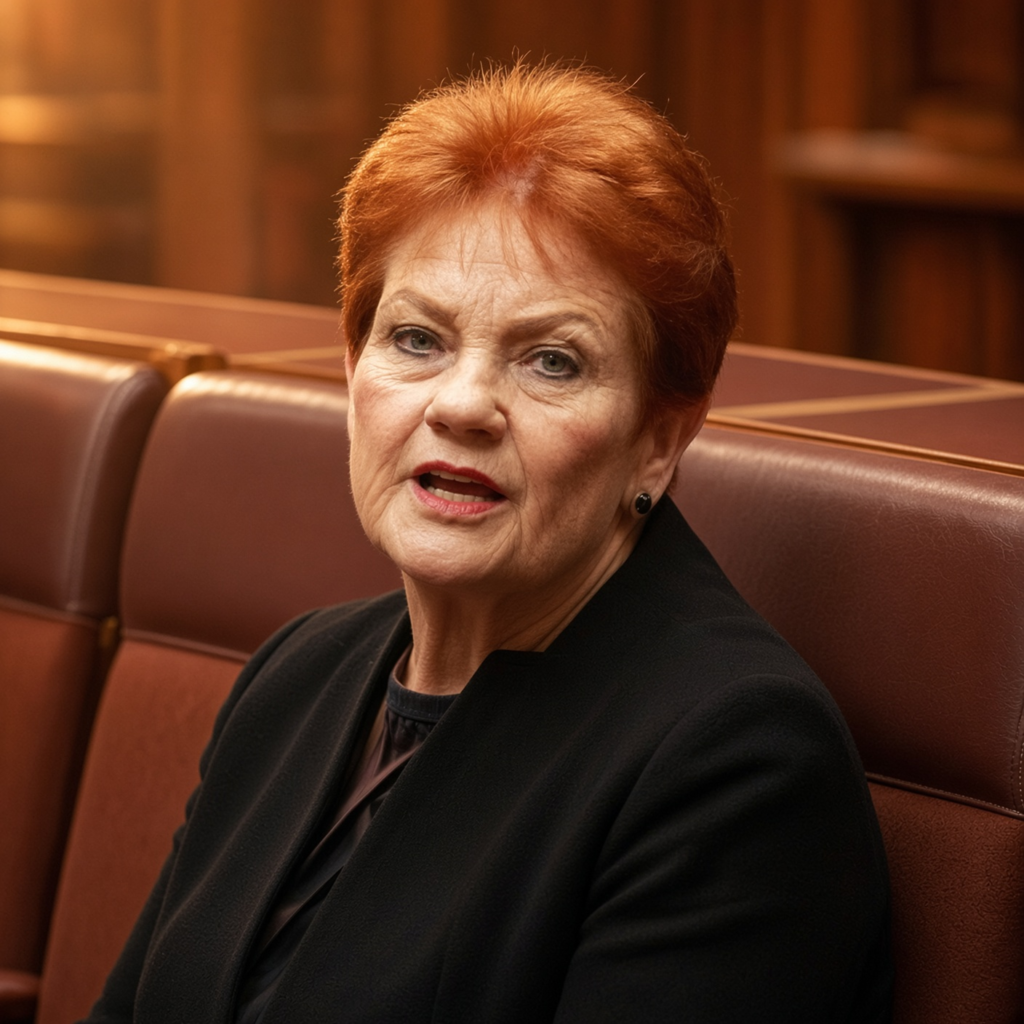
One Nation has now settled on a target of 130,000 net overseas migrants a year.
The Coalition has promised to link migration to the number of new homes Australia completes, a formula that at current construction levels would produce a ceiling of roughly 175,000 to 180,000.
Labor’s federal Budget forecasts net overseas migration falling to 245,000 in 2026–27 and 225,000 from 2027–28.
All three figures are well below Australia’s recent migration intake.
The Australian Bureau of Statistics says net overseas migration contributed 301,000 people to Australia’s population in the year ending December 2025.
That was down by 29,500 from the previous year and far below the extraordinary post-pandemic peak, but migration still accounted for almost three-quarters of Australia’s total population growth during the year.
Australia’s population reached about 27.8 million at the end of 2025.
On that basis, net overseas migration of 301,000 was equivalent to roughly 1.1 per cent of the population in a single year.
A new international comparison published by news.com.au puts that rate at about 1.07 per cent and contrasts it with a developed-world average of approximately 0.26 per cent.
The analysis suggests Australia remains among the highest-migration developed nations on a per-capita basis, particularly when comparing countries with populations greater than five million.
But the comparison requires an important qualification.
There is no universally agreed international “normal” migration rate of 0.26 per cent, and migration statistics are not measured identically across every country.
The Organisation for Economic Co-operation and Development, for example, frequently compares countries using permanent or long-term migration flows.
Australia’s domestic political debate usually revolves around net overseas migration, or NOM.
They are not the same thing.
NOM measures the difference between people added to Australia’s resident population through overseas migration and those removed after leaving.
A person does not have to receive permanent residency to count.
International students, temporary workers and other visa holders can be included if they satisfy the ABS residence rules, while Australians returning from or moving overseas can also affect the number.
The federal Permanent Migration Program is narrower again.
Labor has maintained that program at 185,000 places, but that does not mean Australia’s NOM is 185,000 because temporary migration and movements of existing residents also affect population growth.
That distinction has repeatedly caused confusion in the political debate.
One Nation itself was forced to clarify its position in August after MP David Farley suggested on ABC’s Insiders that the party’s immigration settings could result in a number closer to 230,000 once various worker programs were included.
Hanson quickly intervened and insisted the party’s intended net overseas migration target is 130,000.
Barnaby Joyce subsequently repeated that figure and said the party was sticking to it.
One Nation plans to reach the target through substantial reductions in international student numbers, temporary graduate visas and other forms of migration, while tightening the skilled migration program.
At 130,000, Hanson’s policy would cut Australia’s latest recorded NOM by more than half.
Using today’s population as a simple reference point, 130,000 would amount to about 0.47 per cent of Australia’s population per year.
That would be substantially lower than the current rate but would still sit above the 0.26 per cent developed-country average used in the latest comparative analysis.
The Coalition is taking a different approach.
Opposition Leader Angus Taylor has deliberately resisted locking his party into a permanent numerical migration target.
Instead, he wants Australia’s annual migration ceiling linked to housing construction.
Under the policy announced in his May Budget reply, the number of new homes completed would effectively become the maximum level for net overseas migration in the following period.
Taylor argues Australia’s recent migration intake has run too far ahead of the country’s capacity to build homes, roads, hospitals, schools and other infrastructure.
About 175,000 homes were completed in 2024–25, which gives an indication of where the Coalition’s formula would currently land.
Coalition housing spokesman Andrew Bragg has previously suggested a figure around 180,000, although Taylor later described that as Bragg’s personal interpretation rather than a fixed Coalition target.
The opposition leader has nevertheless said migration should be well below 200,000 while housing supply catches up.
The policy creates an unusual feedback mechanism.
If Australia builds more homes, the migration ceiling could rise.
If housing construction weakens, the ceiling would fall.
The Coalition says this would force governments to consider infrastructure capacity before allowing population growth to accelerate.
Critics have questioned whether a one-migrant-per-home formula makes demographic sense.
New homes generally house more than one person, while migration itself supplies construction workers, nurses, engineers and other employees needed to expand Australia’s housing and infrastructure capacity.
It also does not automatically follow that every additional migrant creates a new household immediately.
Some migrants live with relatives, share accommodation or enter households that already exist.
Taylor has said the migration level should initially sit significantly below the formal housing-linked ceiling so that the accumulated housing shortage can be reduced.
Labor, meanwhile, argues migration is already coming down sharply.
The 2026–27 federal Budget forecasts NOM at 295,000 for 2025–26, falling to 245,000 in 2026–27 and then 225,000 each year from 2027–28 through 2029–30.
The latest ABS population figures provide some support for the downward trend.
Net overseas migration was 301,000 in the year to December 2025, an 8.9 per cent reduction from the previous year.
Migration arrivals fell while departures remained comparatively high.
The government says reforms to international education and temporary visas will continue bringing the figure lower while protecting skilled migration needed by Australian employers.
That argument has not ended the political pressure.
Migration has become closely intertwined with Australia’s housing crisis.
More people increase demand for homes in the short term, particularly when construction has failed to keep pace with population growth.
Rents and house prices are also influenced by interest rates, household size, planning restrictions, building costs, land availability and construction productivity, meaning migration is an important factor but not the only one.
The labour-market effects are equally complicated.
Australia relies heavily on overseas workers in sectors including healthcare, aged care, construction, hospitality, agriculture and technology.
Business and housing groups have warned that cutting migration too aggressively could worsen shortages of workers needed to build the homes migration critics say Australia lacks.
At the same time, critics of the current system argue migration has often been poorly targeted and has brought in large numbers of workers whose skills do not correspond with genuine shortages.
The debate therefore involves two separate questions: how many migrants Australia should accept and which migrants should be selected.
There is also an economic trade-off.
Migration increases Australia’s total workforce, consumer demand and headline gross domestic product.
But rapid population growth does not guarantee higher living standards for each Australian.
If infrastructure, housing and capital investment fail to keep pace with population, the benefits of a larger economy can be diluted by congestion, housing shortages and pressure on services.
That is one reason per-capita measures have become increasingly prominent in the migration debate.
The latest international comparison attempts to make the same adjustment by measuring migration relative to population rather than comparing raw numbers between countries of radically different sizes.
A country of five million taking 100,000 migrants is experiencing a fundamentally different demographic effect from a country of 300 million taking the same number.
On a per-capita basis, Australia has long operated a relatively high-migration model.
That reflects deliberate policy choices stretching across decades.
Successive Labor and Coalition governments have viewed migration as a source of skilled workers, population growth, international education revenue and broader economic expansion.
Australia is also unusual among developed countries because of its geography, relatively low population density and highly managed visa system.
Those factors help explain why simply treating another country’s migration rate as the correct benchmark for Australia can be misleading.
Countries also face very different demographic challenges.
Japan, South Korea and parts of Europe are dealing with ageing or shrinking populations.
Others have large flows generated by free-movement agreements, refugee movements or neighbouring labour markets that do not resemble Australia’s visa system.
Even OECD migration statistics caution against treating every national number as directly comparable.
That means the finding that Australia’s proposed migration levels remain above a developed-world average is useful context, but it does not prove those targets are inherently too high.
Whether 130,000, 175,000 or 225,000 is appropriate depends partly on what Australia is trying to achieve and whether housing, infrastructure and the labour market can absorb the population increase.
What the numbers do demonstrate is how far the political debate has shifted.
Only a few years ago, annual migration figures above 200,000 were commonly defended by both major parties as part of Australia’s economic model.
Now Labor is promising substantial reductions, the Coalition is proposing an infrastructure-linked ceiling and One Nation is campaigning to more than halve the latest recorded intake.
Yet even Hanson — currently advocating the deepest numerical cut of the three — is not proposing the extremely low migration settings found in many other developed economies.
Australia would remain a significant immigration country.
The argument at the next federal election is therefore unlikely to be about whether migration should fall.
All three major political forces now say it should.
The real contest will be over how far it falls, which migrants continue to be admitted and whether Australia can finally align population growth with the homes and infrastructure required to support it.