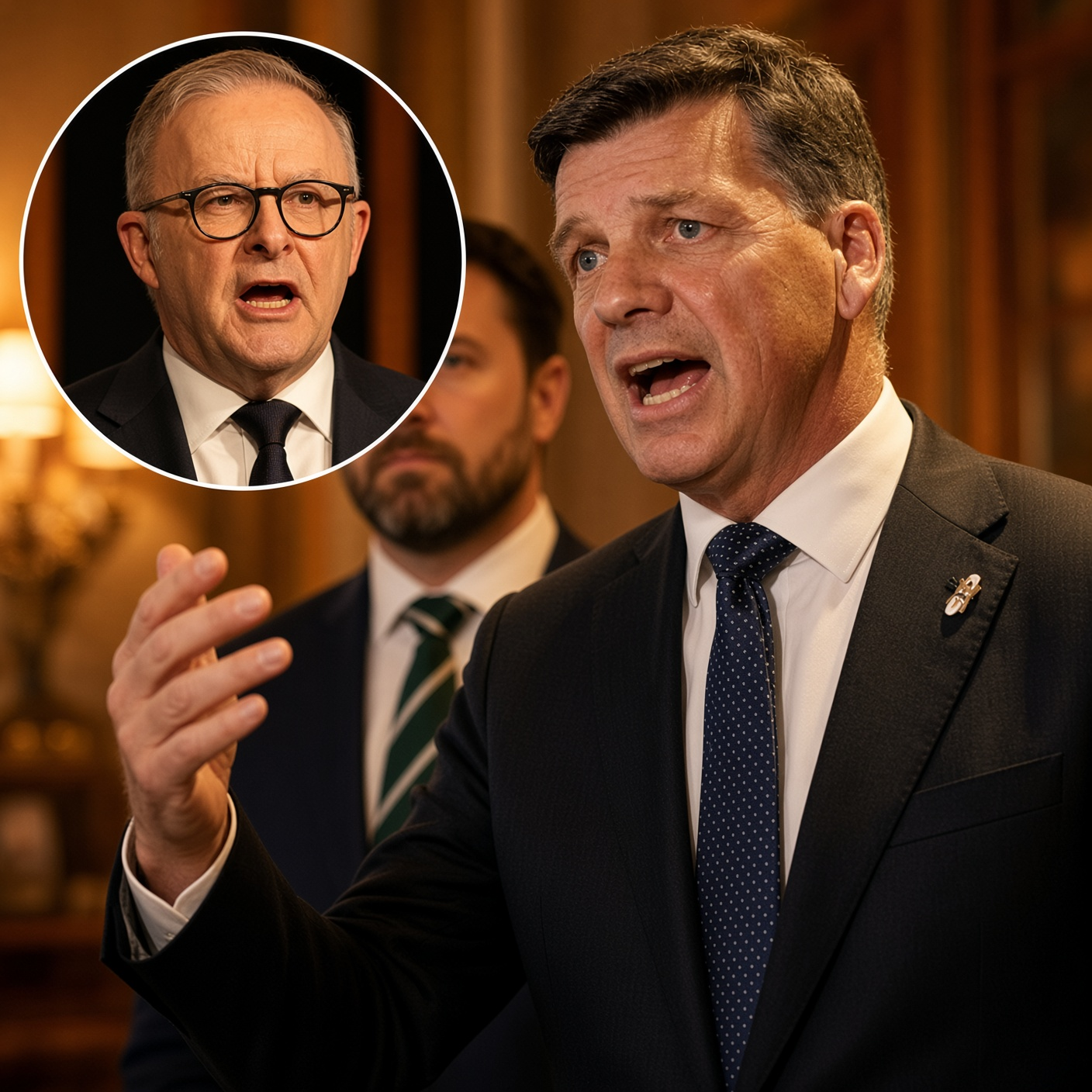
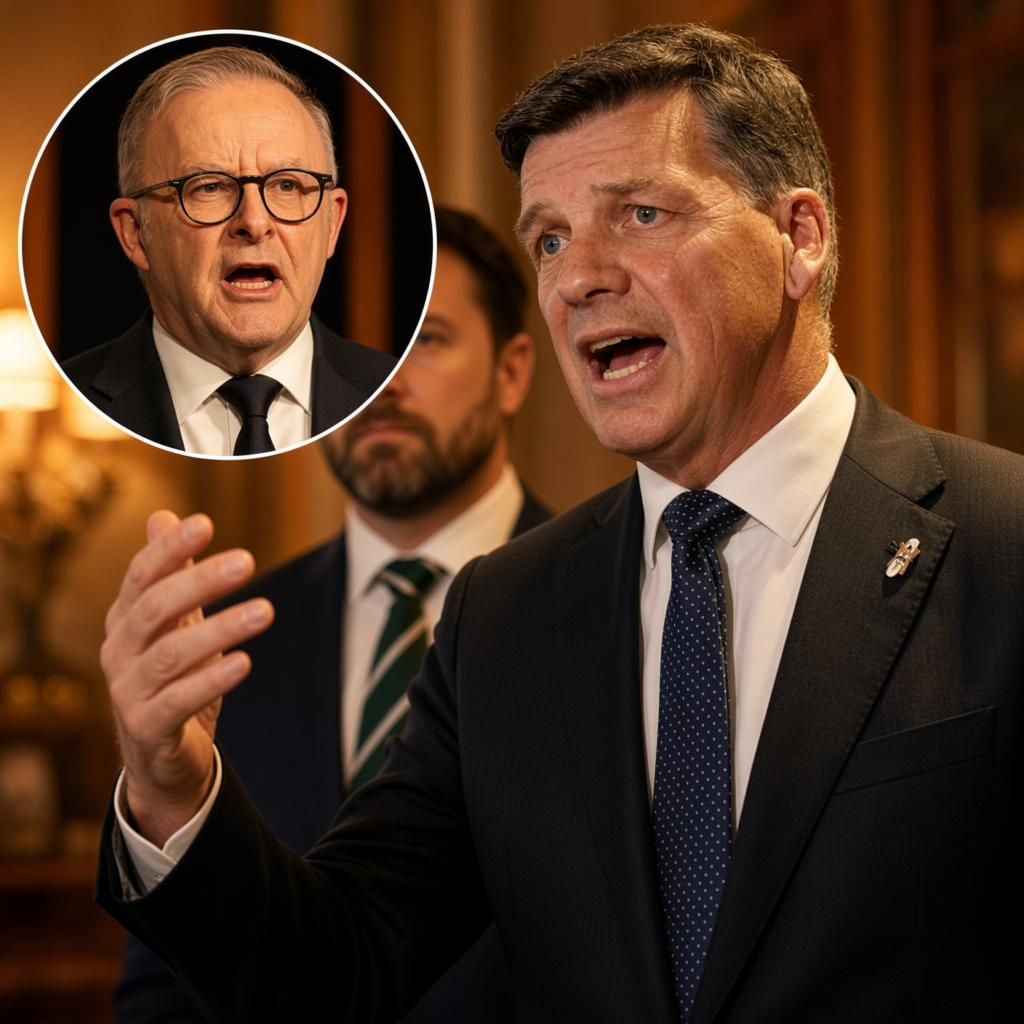
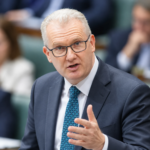
Opposition Leader Angus Taylor has accused Labor’s tobacco tax regime of helping funnel billions of dollars into organised crime as he defended the Coalition’s controversial plan to slash cigarette excise by 80 per cent.
The Coalition argues Australia’s tobacco control system has reached a breaking point, with legal cigarettes priced so far above illicit products that criminal syndicates have been able to capture a huge share of the market.
Taylor says the answer is to dramatically reduce the tax on legal cigarettes, legalise and regulate vapes and nicotine pouches for adults, and combine those changes with a major new law-enforcement effort targeting smugglers, illegal retailers and organised criminal networks.
Speaking on Sunday, Taylor said legal tobacco needed to move much closer to the price consumers were already paying on the black market.
“We need to get the price of legal cigarettes down towards parity with illegal,” he said.
His argument is straightforward: if smokers can legally buy cigarettes for roughly the same amount as illicit packets, criminals lose customers and the enormous profit margins that have made tobacco one of Australia’s most lucrative illegal commodities.
The policy would cut federal tobacco excise by 80 per cent, taking the excise component of a standard packet of 20 cigarettes from around $30 to a little over $6.
The Coalition says a legal pack that now costs around $50 could then compete much more aggressively with illicit packets commonly sold for about $15.
Independent reporting has suggested that, if the full tax reduction were passed through at retail level, a legal pack of 20 could fall into a range of roughly $16 to $26 depending on the product and retailer.
The Coalition would review the excise reduction after two years.
The plan also includes a $200 million national law-enforcement surge aimed at illegal tobacco shops, smugglers and criminal syndicates, alongside a $60 million public education campaign designed to highlight links between illicit tobacco purchases and organised crime.
Vapes and nicotine pouches would also be legalised, regulated and taxed for adults under the Coalition proposal, reversing key elements of the current restrictive approach to nicotine products.
Taylor said the combination of lower legal prices and stronger enforcement was intended to attack both sides of the illicit market.
“It takes the customers away from organised crime and illegal tobacco,” he said, arguing that federal agencies and state police could then focus greater resources on what remained of the illegal trade.
He went further by accusing the Albanese government of effectively allowing criminal organisations to receive billions of dollars through the continued operation of the current system.
“This is funding organised crime,” Taylor said, putting the amount involved at as much as $7 billion.
The wording is politically charged, but the underlying estimate of the size of criminal profits is not without official support.
The federal Illicit Tobacco and E-cigarette Commissioner estimated that Australia’s illicit tobacco market in 2024–25 was worth between $4.1 billion and $6.9 billion.
The same estimates have been publicly cited by the Albanese government itself. Assistant Home Affairs Minister Julian Hill told a national illicit tobacco symposium in March that organised crime groups were estimated to have earned between $4.1 billion and $6.9 billion from the trade, with money capable of being reinvested in drug trafficking, scams and money laundering.
That does not establish Taylor’s broader claim that Labor is literally “funding organised crime”. The government does not provide those groups with funding. Rather, Taylor’s contention is that the price gap created partly by high taxation has produced a commercial opportunity that criminal networks exploit.
What is beyond serious dispute is that Australia’s illicit tobacco problem has expanded dramatically.
The Australian Bureau of Statistics released experimental estimates in June showing that illicit sources accounted for about 80 per cent of tobacco and nicotine consumption in 2025, up from an estimated 12 per cent in 2017.
The ABS also found that total nicotine consumption had increased by almost 40 per cent between 2017 and 2025 despite a steep fall in purchases of legal tobacco.
Its analysis suggested legal tobacco quantities had fallen to less than a third of their 2017 level while rising consumption of illicit cigarettes, e-cigarettes and other nicotine products more than offset that decline.
There is an important qualification to the 80 per cent figure.
The ABS describes its estimate as experimental, and an earlier assessment by the Illicit Tobacco and E-cigarette Commissioner estimated that illicit tobacco represented between 50 and 60 per cent of the market in 2024–25.
The estimates use different methodologies and cover different periods. The scale of the black market is therefore better understood as extremely large and rapidly growing rather than as a single uncontested percentage.
Australian Border Force data provides another measure of the scale of the problem.
During the 2025–26 financial year, the ABF seized more than 2.2 billion illicit cigarette sticks, more than 586 tonnes of loose-leaf tobacco and more than 13.2 million illicit vaping products at the border.
The seized tobacco represented more than $4.7 billion in estimated duty evasion, excluding GST.
Authorities have repeatedly warned that illicit tobacco is no longer simply a tax-evasion issue.
The ABF says serious and organised crime groups use the trade because it offers high profits, with proceeds capable of supporting other criminal activity including drug trafficking and money laundering.
A string of arsons, extortion attempts, violent disputes and alleged criminal networks connected to the tobacco trade has reinforced those concerns, particularly in Victoria.
The Coalition says there have been almost 200 tobacco-related arsons and six homicides linked to the trade in Victoria alone.
Recent federal operations have also targeted suspected transnational networks.
In August, Australian authorities said cooperation with Chinese customs officials had helped dismantle an international tobacco-smuggling operation, with more than 60 people arrested in China and 112 shipping containers bound for Australia referred for inspection.
Another operation targeting 106 service stations across six Australian jurisdictions was carried out as investigators examined alleged sales of illicit tobacco and vapes through legitimate-looking retail businesses.
For Taylor, those developments demonstrate that Australia’s longstanding public-health approach has been overtaken by a law-and-order crisis.
Labor rejects the conclusion that making legal cigarettes substantially cheaper is the answer.
Assistant Minister Matt Thistlethwaite said higher tobacco prices had been part of a suite of public-health policies that helped drive Australian smoking rates lower over several decades.
He argued the government’s priority should remain enforcement against illegal suppliers rather than an excise cut that could encourage more Australians to smoke.
“We don’t believe that that’s appropriate,” Thistlethwaite said when asked whether Labor could consider lowering the excise.
He said reducing tobacco use had improved public health and reduced pressure on the healthcare system.
Labor also disputes the Coalition’s core economic proposition that an excise cut would meaningfully suppress transnational crime.
Thistlethwaite said stronger policing and enforcement were the appropriate tools, pointing to government investment in border detection and cooperation with states and territories.
The public-health data gives Labor a powerful argument.
The 2025 National Drug Strategy Household Survey found daily smoking among Australians aged 14 and over had fallen to a historic low of 5.6 per cent, compared with 8.3 per cent in 2022–23 and 19.5 per cent in 2001.
Among adults aged 18 and over, the daily smoking rate was 5.8 per cent.
Those figures represent one of the central tensions in the tobacco debate.
Australia has achieved an extraordinary long-term decline in daily smoking, yet at the same time authorities are confronting a black market so large that legal tobacco sales and excise revenue have collapsed while total nicotine consumption appears to have risen.
Public-health experts fear the Coalition’s solution could solve one problem by making another worse.
Critics say reducing cigarette prices could make smoking more attractive to young people, make quitting less financially compelling and reverse decades of policy designed specifically to make tobacco less affordable.
The Coalition says that argument ignores what smokers can already buy.
Taylor contends that Australians who want cheap cigarettes can currently walk into illicit retailers and purchase packets for around $10 to $15, meaning the theoretical deterrent effect of a $40 or $50 legal packet has already been undermined.
“The horse has already bolted on this,” he said in a separate interview defending the policy.
But the Coalition has acknowledged an important uncertainty.
Shadow Home Affairs Minister Jonno Duniam told the ABC that the Coalition had not specifically modelled how the proposed 80 per cent excise reduction would affect smoking rates, although it had examined international experiences.
That admission is likely to remain a major line of attack for Labor and health organisations as the proposal is debated.
The politics are further complicated by the history of tobacco tax increases under previous Coalition governments.
Australia implemented annual 12.5 per cent excise increases between 2013 and 2020, with the second four-year series from 2017 to 2020 legislated by the Coalition government.
The excise on a standard cigarette rose from about 35 cents in September 2012 to roughly $1.10 by September 2020, before subsequent increases and indexation pushed taxes higher still.
Taylor, who served as a minister in the former Coalition government, has acknowledged that the earlier approach went too far.
His willingness to reverse a policy strongly supported by previous Coalition governments demonstrates how dramatically the illicit tobacco crisis has shifted the political debate.
Labor itself has also acknowledged that the criminal market requires a tougher response.
The government has increased funding for border and law-enforcement operations and pursued legislation designed to strengthen penalties and proceeds-of-crime measures against people involved in illegal tobacco.
Australian Border Force operations have produced record seizures, while federal agencies increasingly describe illicit tobacco as a serious organised crime threat rather than merely a customs or health issue.
So the dispute between Labor and the Coalition is no longer over whether Australia has a major illicit tobacco problem. Both sides agree that it does.
The fight is over what caused the crisis and how far Australia should be prepared to reverse its traditional tobacco-control policies to destroy the black market.
Taylor believes the price gap between legal and illegal cigarettes has become so large that enforcement alone cannot work. Labor believes maintaining high tobacco prices remains essential to protecting public health and that criminal networks should instead be attacked through stronger policing, border controls and penalties.
Both positions now face a difficult reality.
Australia has one of its lowest recorded daily smoking rates at the same time as official data points to an illicit nicotine economy worth billions of dollars and capable of delivering extraordinary profits to organised crime.
Whether dramatically cheaper legal cigarettes would take those profits away from criminals without creating a new generation of smokers is the central question the Coalition’s policy will ultimately have to answer.