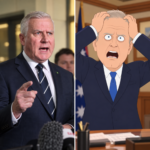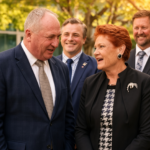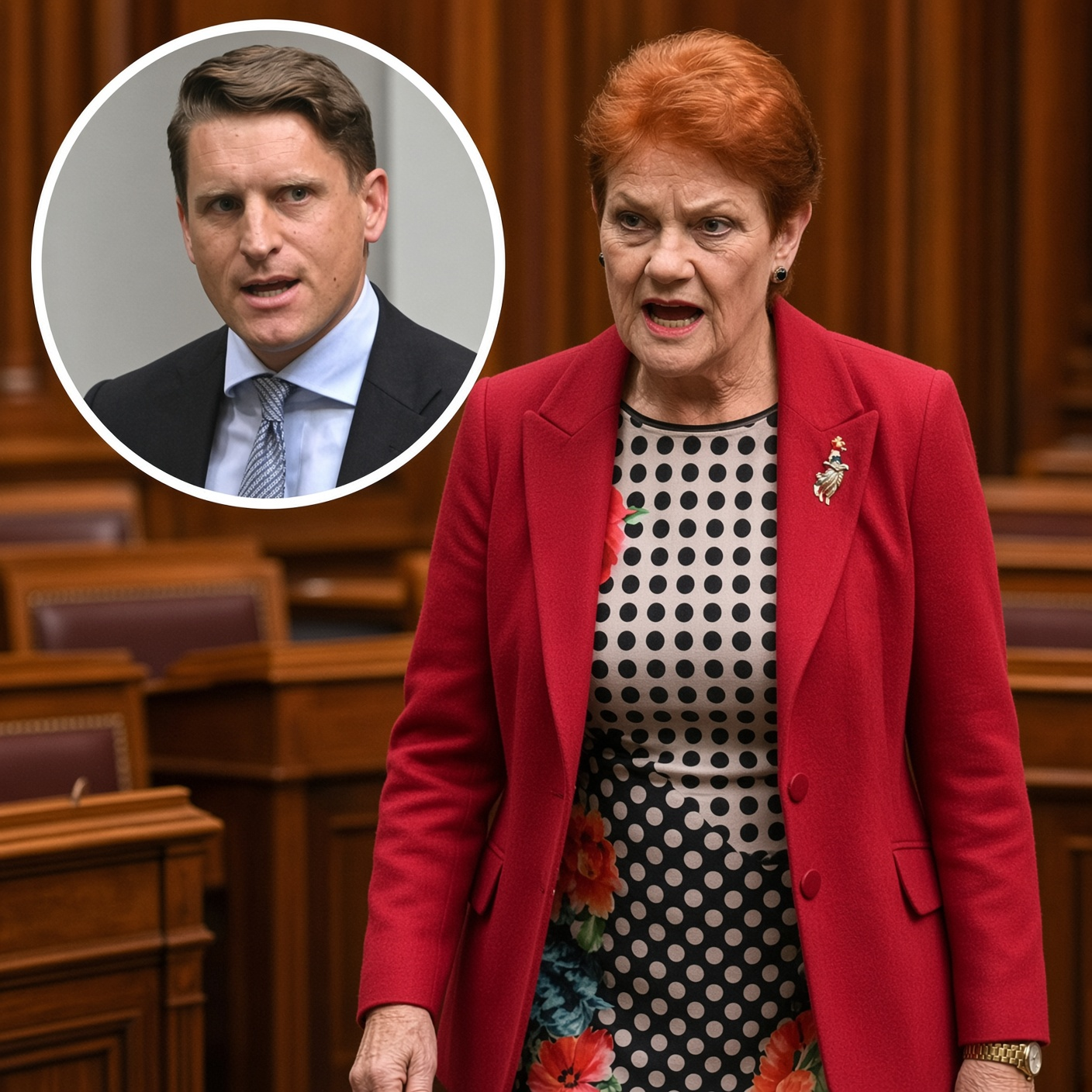
Pauline Hanson has put prominent Liberal MP Andrew Hastie on notice, declaring One Nation will field a candidate against him in Canning as the party seeks to turn its shock Western Australian by-election breakthrough into a much broader federal assault.
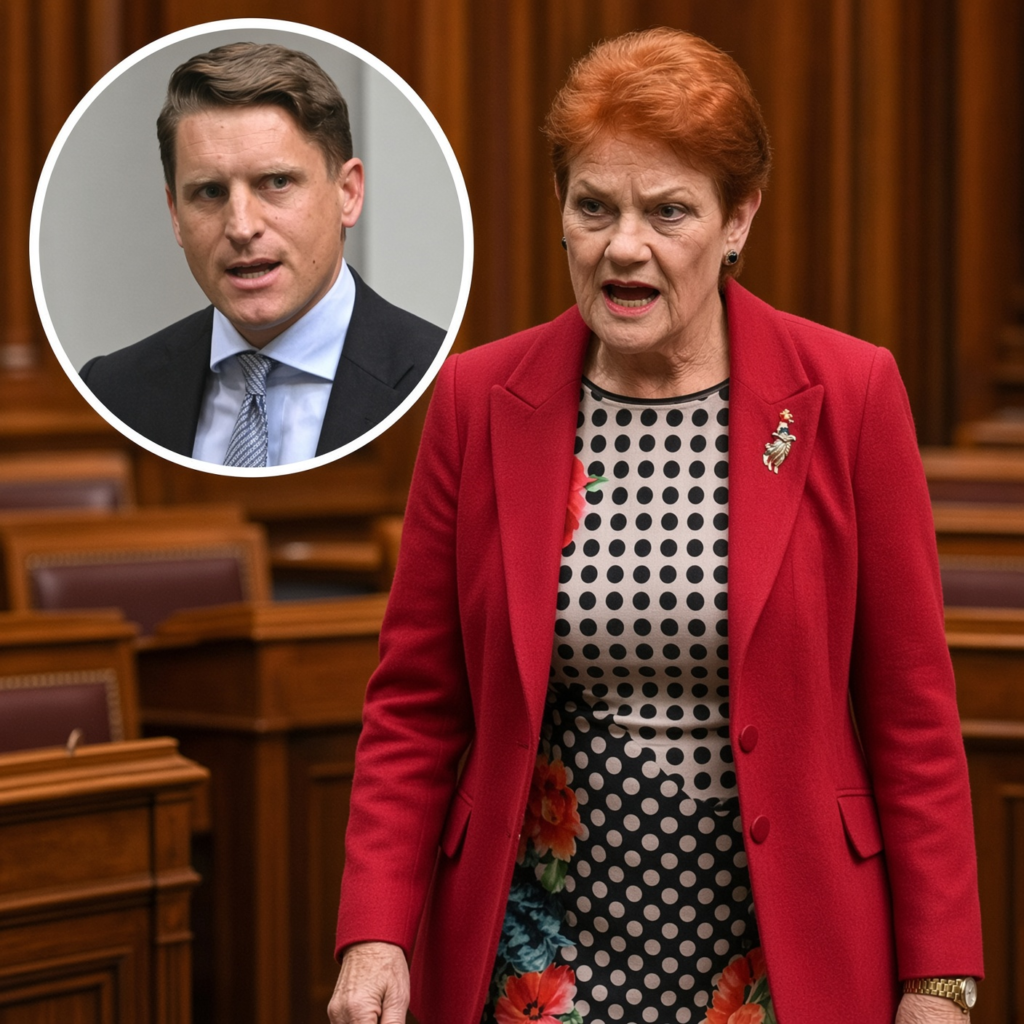
The One Nation leader said Mr Hastie should not expect his seat to be spared when candidates are selected for the next federal election, with the party planning to contest all 16 federal electorates in Western Australia.
Her warning follows One Nation’s historic victory in the state seat of Secret Harbour, where Luke Herdegen overturned what had been a safe Labor electorate and delivered the party its first lower-house seat in Western Australia.
The result has particular significance for Mr Hastie because Secret Harbour overlaps his federal electorate of Canning, placing one of the country’s most prominent conservative MPs directly in the political territory where One Nation has just demonstrated a dramatic increase in support.
Senator Hanson said the by-election had shown voters in parts of Mr Hastie’s electorate were prepared to move away from the major parties.
She said Mr Hastie needed to concentrate on representing his electorate and rejected any suggestion that One Nation might avoid challenging him because of similarities between some of his conservative positions and those promoted by her party.
If Mr Hastie believed One Nation would decide not to nominate in Canning, Senator Hanson said, “he’s wrong”.
The threat is not merely rhetorical. One Nation established a branch in Canning in August and has been building its organisational presence across Western Australia as it prepares candidates for the next federal contest.
Senator Hanson said the party expected to begin preselecting its WA federal candidates early next year and intended to give voters an alternative to both Labor and the Liberals in every electorate in the state.
That strategy places Canning at the centre of a growing struggle on the Australian right.
Mr Hastie, the Shadow Minister for Industry and Sovereign Capability and a former Special Air Service Regiment officer, has represented Canning since winning a by-election in 2015. He has developed a national profile through his positions on defence, national security, energy, immigration and Australian manufacturing and has often been mentioned as a significant figure in the Liberal Party’s future.
But he has also emerged as one of the Coalition MPs least willing to accommodate One Nation’s growing electoral influence.
In June, when asked about Senator Hanson and her chief of staff James Ashby’s plans to challenge him, Mr Hastie made his position unmistakable.
“If they want war, I’m going to give them war,” he said.
He argued at the time that the Coalition should focus on winning outright rather than entering early negotiations over preferences or responding defensively to One Nation’s rise.
Mr Hastie has acknowledged that voters in his electorate are considering Senator Hanson’s party, but he has maintained that the Liberal response should be to offer detailed, costed policies rather than attempt to neutralise One Nation through political deals.
By August, the contest had become even more confrontational. Mr Hastie described the campaign against him as “dirty and nasty” and said he remained determined to hold Canning despite personal attacks and increased security concerns.
Senator Hanson, however, rejects the idea that the Liberal MP has any entitlement to a clear run simply because he holds conservative positions on issues such as immigration and net zero.
She said One Nation was an independent political party and that increasing numbers of voters no longer wanted to support either Labor or the Liberals.
The immediate evidence for her confidence comes from Secret Harbour.
The coastal state electorate had been held by Labor and its predecessor seats for decades and went into the August 29 by-election with an 11.5 per cent Labor margin.
Instead, One Nation candidate Luke Herdegen produced an extraordinary result.
With the count substantially completed, Mr Herdegen had about 39.1 per cent of the primary vote, an increase of roughly 30.7 percentage points compared with One Nation’s previous performance.
Labor’s Georgia Tree recorded about 24.1 per cent of first preferences, while Liberal candidate Ryan Robertson finished on approximately 17.2 per cent.
After preferences, One Nation led Labor by about 57.2 per cent to 42.8 per cent, transforming a previously safe Labor seat into One Nation’s first seat in the Western Australian Legislative Assembly.
The scale of that shift sent an obvious warning to Labor, but it also created an uncomfortable question for the Liberals.
If voters who abandon Labor increasingly move directly to One Nation rather than to the Coalition, the traditional assumption that political dissatisfaction will ultimately benefit the Liberals becomes much less reliable.
That question is especially important in outer-metropolitan seats such as Canning, where cost-of-living pressure, housing, energy, immigration and distrust of established political parties have become prominent campaign themes.
There are, however, major reasons to be cautious about projecting the Secret Harbour result directly onto a future federal election.
By-elections frequently produce much larger swings than general elections. They do not determine who forms government, voters can use them to register dissatisfaction without changing the government, and local candidate and campaign factors can have an unusually large influence.
Canning also has its own electoral history and a sitting member with a substantial personal profile.
At the 2025 federal election, Mr Hastie received 42.52 per cent of first preferences. Labor’s Jarrad Goold received 29.90 per cent, while One Nation candidate Fernando Bove secured 11.41 per cent.
After preferences, Mr Hastie defeated Labor by 56.55 per cent to 43.45 per cent, giving the Liberal MP a margin of about 6.6 percentage points.
The preference flows from One Nation were also revealing.
In the final Liberal-Labor count, about 78.45 per cent of One Nation preferences flowed to Mr Hastie.
That meant One Nation voters helped strengthen the Liberal MP’s final position in 2025. A future contest could become far more complicated if One Nation substantially increases its primary vote and attempts to emerge as a serious contender in its own right rather than simply a minor-party source of preferences.
It is that possibility that makes the battle over Canning more important than an ordinary dispute between neighbouring parties on the conservative side of politics.
One Nation has been enjoying a period of unusually strong national support. Recent polling has placed the party at levels that would have been almost unthinkable only a few years ago, increasing pressure on both Labor and the Coalition to understand where its new voters are coming from.
But translating a national primary vote into House of Representatives seats is considerably more difficult than winning support in opinion polls.
Australia’s preferential voting system means the location of One Nation’s support, the strength of individual candidates, the order in which candidates are eliminated and the direction of preferences can all determine whether a high primary vote produces seats.
Canning could provide one of the clearest tests.
Mr Hastie is a well-known incumbent with an established local organisation. One Nation, meanwhile, can point to a dramatic electoral victory within the same broad area and now has an opportunity to build a local campaign organisation well before the next federal poll.
The relationship between One Nation and the WA Liberals adds another layer of tension.
WA Liberal leader Basil Zempilas directed preferences to One Nation ahead of Labor in the Secret Harbour by-election. Senator Hanson has praised that approach and argued that Liberals need to work with One Nation if they want to defeat Labor.
Mr Hastie has strongly resisted that logic.
During the Secret Harbour campaign he rejected the suggestion that a One Nation victory could simply be counted as a broader win for the Liberal Party. His concern is that allowing One Nation to establish itself as the dominant anti-Labor option could eventually come at the Liberals’ own expense.
The Secret Harbour numbers illustrate why.
The Liberal candidate finished a distant third while One Nation surged into first place on primary votes. For a Liberal MP whose federal electorate contains the same political territory, that is difficult to dismiss as somebody else’s problem.
Senator Hanson is now attempting to capitalise on that momentum.
She has described the WA result as evidence that voters want alternatives to the major parties and says One Nation has the resources to mount substantial campaigns at the next federal election.
Her party has also identified Labor-held seats including Hasluck, Pearce and Bullwinkel as targets, showing that its WA strategy is broader than an attempt to unseat one high-profile Liberal.
For Mr Hastie, however, the challenge is uniquely personal because of the increasingly hostile relationship between him and senior One Nation figures.
The two sides have traded public criticism for months, while their policy positions sometimes overlap on issues including reducing immigration, opposition to net-zero policies and a stronger emphasis on national sovereignty.
That overlap may make the electoral fight more intense rather than less.
Both parties are competing for some of the same conservative and disaffected voters, particularly Australians who believe the major parties have failed to respond adequately to economic pressure, migration, energy costs and declining trust in political institutions.
Senator Hanson’s message is that those voters no longer need to return to the Liberal Party to remove Labor.
Mr Hastie’s counterargument is that voters frustrated with the status quo should back a Coalition capable of forming a stable national government and implementing fully developed policies.
Neither side can yet know how that argument will be resolved in Canning.
No federal election is being held now, One Nation has not yet announced its Canning candidate, and a state by-election result cannot establish what voters will do when choosing a federal government.
What has changed is the credibility of the threat.
Before the Secret Harbour result, talk of an One Nation challenge to a prominent Liberal such as Andrew Hastie could be treated largely as political theatre.
After One Nation lifted its primary vote by more than 30 percentage points and won a lower-house seat inside the same part of metropolitan Western Australia, the contest has become harder for either side to dismiss.
Hanson has now made her intention clear: Canning will be contested, Hastie will not receive a free pass and One Nation intends to test whether its “orange” surge can travel from a state by-election into federal Liberal territory.
Hastie’s answer has been equally clear.
He intends to fight for the seat he has held for more than a decade.
That sets up Canning as one of the most closely watched potential contests of the next federal election — not merely as Liberal versus One Nation, but as a test of which party can become the dominant political home for Australia’s increasingly fragmented conservative vote.