The federal Coalition has unveiled plans for sweeping new laws protecting the Australian flag, war memorials and other nationally significant monuments, while also seeking to make any future attempt to move Australia Day from January 26 subject to a national vote.
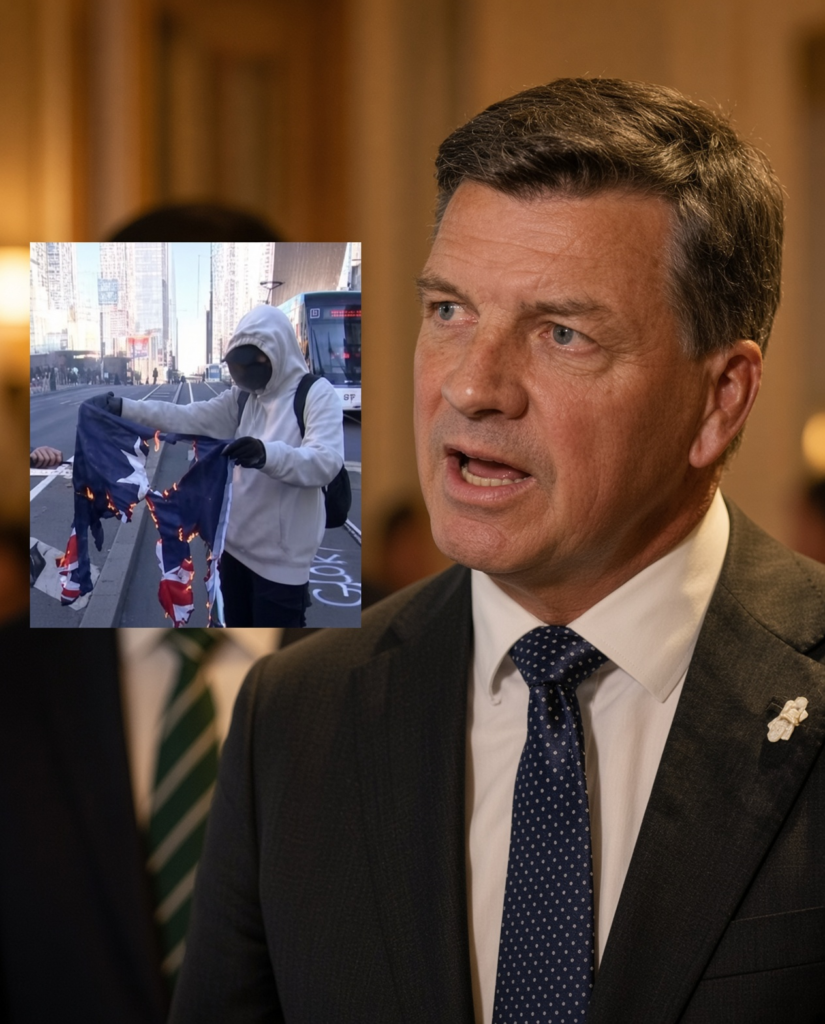
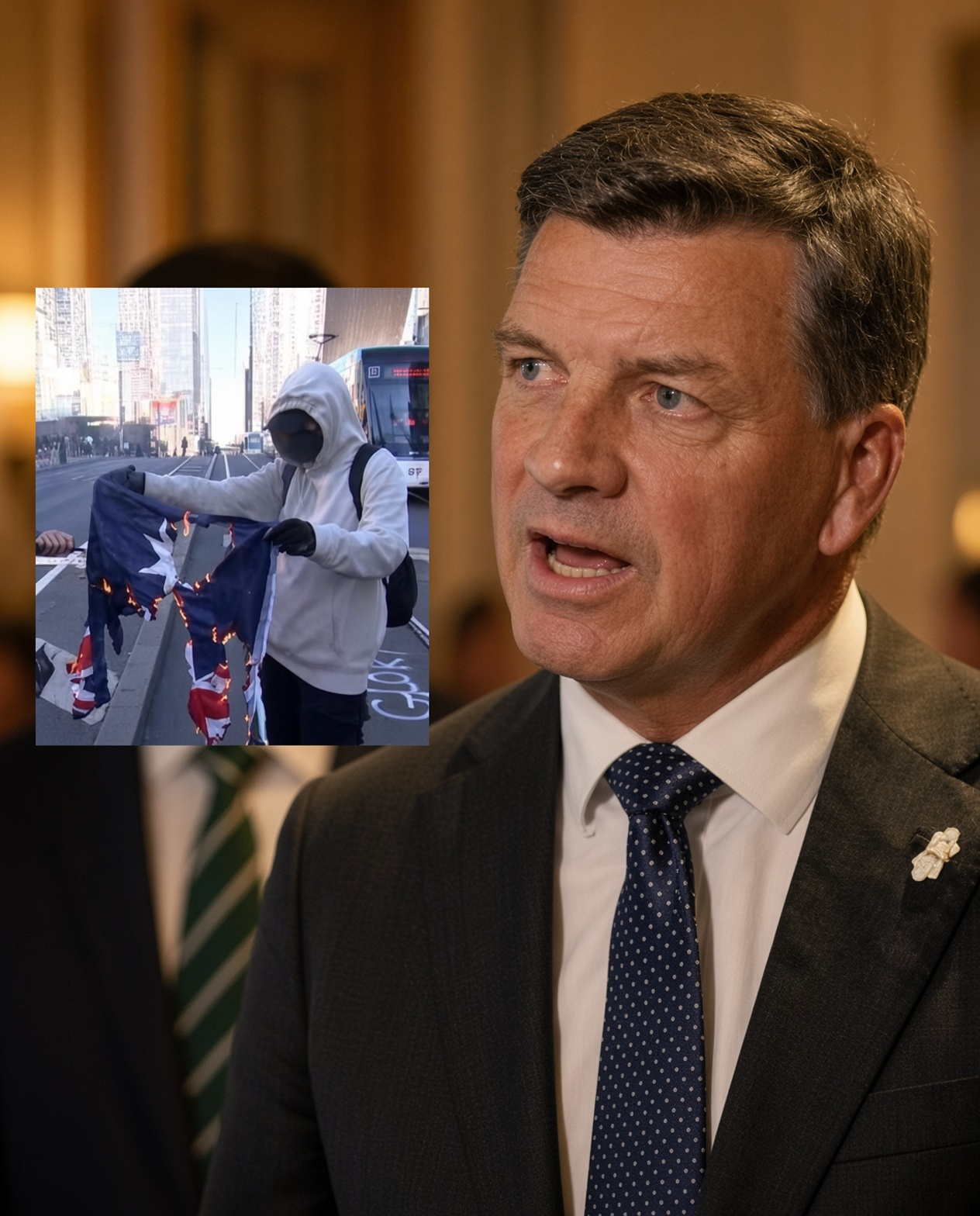
Opposition Leader Angus Taylor announced the proposed Australian National Symbols and Heritage Protection Bill as part of what the Coalition says will be a tougher federal response to the desecration of national symbols and repeated vandalism of memorials.
The proposal would introduce a new Commonwealth criminal offence covering serious public desecration of the Australian National Flag in circumstances where a person is reckless about whether their conduct could incite hatred or violence, threaten public order or cause a public disturbance.
Reports on the proposal indicate that offence could carry a maximum penalty of 12 months in prison.
A separate and considerably tougher regime is proposed for people who deliberately damage, deface, desecrate or destroy protected war memorials and other significant monuments. The maximum penalty for the most serious conduct under that part of the plan is expected to reach 10 years’ imprisonment.
That distinction is important. The Coalition is not proposing that every person who burns an Australian flag automatically face 10 years in prison. The proposed one-year maximum relates to serious public flag desecration meeting additional public-order conditions, while the headline 10-year penalty is directed at serious deliberate attacks on protected memorials and monuments.
The plan has not yet become law. The Coalition says it intends to introduce the legislation to federal Parliament, where its precise wording, penalties and constitutional implications would be subject to parliamentary scrutiny and debate.
Taylor said Australians should remain free to criticise their government and their country but argued that deliberately destroying symbols such as the national flag went beyond ordinary political criticism.
He said the Coalition regarded the flag, war memorials and Australia Day as symbols belonging to Australians collectively and deserving stronger national protection.
Shadow Attorney-General Michaelia Cash has made a similar argument, saying freedom of speech remained fundamental but should not be confused with a freedom to destroy memorials or national heritage.
The proposal follows a series of high-profile vandalism incidents that have intensified political debate over the protection of historic sites.
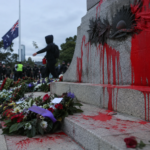
In January, Melbourne’s 155-year-old Pioneer Monument in Flagstaff Gardens was pulled down and badly damaged. The words “death to ‘Australia’” were sprayed on the monument’s base, while the nearby Separation Memorial was also defaced.
Victoria Police said at the time that machinery was believed to have been used to bring down the Pioneer Monument. Victorian Premier Jacinta Allan condemned the destruction, while Melbourne Lord Mayor Nicholas Reece said vandalising historic monuments was unacceptable regardless of the political views people held about them.
The Coalition has also pointed to more recent attacks on war memorials in western Victoria. It said a memorial at Dobie had been vandalised, a plaque honouring local veterans stolen and political graffiti left at the site. Another century-old memorial at Beaufort was targeted with slogans including “death to Australia” and “death to the ADF”.
Those incidents have become central to the Coalition’s argument that existing state and territory offences do not provide a sufficiently consistent national response to attacks on places commemorating Australia’s military personnel and history.
Under the proposed framework, protection would extend beyond conventional war memorials. The Coalition says significant statues, plaques, monuments and commemorative structures recognising people, institutions and events forming part of Australia’s national story could also fall within the new federal regime.
Exactly which monuments would qualify, and what threshold would have to be met before the toughest penalties applied, will be among the details requiring close scrutiny when legislation is formally introduced.
The flag provisions are also narrower than a blanket prohibition on any mistreatment of an Australian flag.
According to the Coalition’s policy announcement, the proposed federal offence would target serious public desecration where the person responsible was reckless as to whether the conduct would incite hatred or violence, threaten public order or cause a public disturbance.
That wording is likely to become central to the legal debate because flag burning can occur as an act of political protest, bringing the proposal into contact with Australia’s constitutionally implied freedom of political communication.
Australia does not have a broad constitutional free-speech right equivalent to the First Amendment in the United States. However, the High Court has recognised an implied freedom of political communication arising from Australia’s system of representative and responsible government.
That does not mean every law restricting political expression is automatically invalid. Courts can consider whether a law serves a legitimate purpose and whether the burden it places on political communication is proportionate to that purpose.
Attempts to legislate against flag desecration have emerged repeatedly in federal politics.
In 2006, Liberal MP Bronwyn Bishop introduced a private member’s bill seeking to create offences for unlawful desecration or destruction of the Australian National Flag. Parliamentary records show the bill did not proceed.
The issue had already returned to Parliament before Taylor’s latest announcement. In February 2026, Nationals MP Pat Conaghan introduced the Flags Amendment (Protection of Australian National Flags) Bill 2026, proposing to prohibit the burning, destruction, desecration or serious dishonouring of the Australian National Flag or Australian Red Ensign.
Independent MP Rebekha Sharkie also introduced a separate Criminal Code Amendment (Flag Protection) Bill 2026. That proposal seeks to create an offence covering intentional or reckless burning or desecration of the Australian National Flag, Aboriginal Flag or Torres Strait Islander Flag.
Both were listed by Parliament as being before the House of Representatives, meaning the Coalition’s new policy arrives during an already active debate over whether national flags should receive specific federal criminal protection.
Labor has signalled opposition to Taylor’s flag-burning push.
Assistant Foreign Affairs and Immigration Minister Matt Thistlethwaite said existing criminal laws could already deal with conduct that incited violence or placed people in danger and argued a new flag-specific offence was unnecessary.
He also raised concerns about freedom of expression and pointed to the position taken by former Liberal prime minister John Howard, who opposed criminalising flag burning when the issue was debated during his government.
The Coalition’s proposal therefore sets up a broader contest over where the line should be drawn between offensive political expression and conduct that governments are justified in criminalising to protect public order and national heritage.
The third part of the plan deals with Australia Day.
The Coalition wants January 26 protected as Australia’s national day under Commonwealth law and says any future attempt to change the national day should require approval from Australians through a national plebiscite.
January 26 is already expressly identified as Australia Day in existing federal workplace legislation. Section 115 of the Fair Work Act 2009 lists “26 January (Australia Day)” among Australia’s public holidays under the National Employment Standards.
The new proposal would therefore go further than simply putting the words “Australia Day” and “26 January” into Commonwealth legislation. Its significant change would be the intended requirement for a national popular vote before the national day could be shifted.
That part of the proposal is certain to intersect with Australia’s long-running argument over January 26.
For supporters of the current date, Australia Day is a national celebration of the country, citizenship and Australian identity. For many Aboriginal and Torres Strait Islander people and their supporters, January 26 marks the beginning of British colonisation and is observed as Invasion Day, Survival Day or a Day of Mourning.
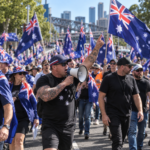
Large gatherings representing both perspectives were again held around Australia on January 26 this year, underlining how politically and culturally contested the date remains.
The Coalition says decisions about the future of the national day should ultimately belong to voters rather than governments or administrative bodies.
Federal MP Henry Pike, who joined Taylor, Cash and veteran MP Phillip Thompson in announcing the policy, said any future change should be made by Australians themselves.
The political context is also difficult to separate from the Coalition’s continuing competition with Pauline Hanson’s One Nation, which has advocated tougher protection of the Australian flag.
Taylor has rejected suggestions that the latest policy is designed simply to chase One Nation voters, saying it reflects the Coalition’s own approach to national pride and Australian institutions.
Labor has taken the opposite view, with Thistlethwaite accusing the opposition of moving further to the right and describing the proposal as unnecessary.
Whatever the political motivation attributed to it, the policy now presents Parliament with several distinct questions: whether serious flag desecration should become a specific Commonwealth offence, whether attacks on nationally significant memorials warrant much heavier federal penalties, and whether future governments should be prevented from changing the date of Australia Day without first consulting voters nationally.
Those questions will not be settled by the announcement alone.
Until legislation passes both houses of Parliament and receives assent, the proposed offences and penalties remain Coalition policy rather than Australian law. The eventual wording of the bill will also determine how broadly the new offences apply, which monuments receive protection, what conduct qualifies as “serious” desecration and whether the restrictions survive any constitutional challenge.
For now, the Coalition has placed the Australian flag, war memorials and January 26 squarely at the centre of the next federal political fight over national identity, protest and the limits of free political expression.