Labor has defended the upcoming Pacific climate summit against criticism over its modest list of confirmed world leaders, arguing the success of the taxpayer-backed event should be judged on whether it advances the priorities of Australia’s Pacific neighbours rather than the number of presidents and prime ministers in attendance.
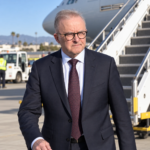
Assistant Minister for Foreign Affairs and Trade Matt Thistlethwaite said the October Pre-COP meetings in Fiji and special leaders’ event in Tuvalu would not be considered a failure simply because major global powers had yet to confirm their leaders would attend.
Asked directly whether the event would fail if it could not attract representatives from more influential countries, Mr Thistlethwaite replied: “No, it won’t.”
He said the government’s case for proceeding rested on the priorities repeatedly raised by Pacific island nations, telling News24 Sunday Agenda: “We’re listening to what our Pacific neighbours are telling us.”
The defence comes with four weeks remaining before the Pacific Pre-COP program begins on October 5, as questions intensify in Canberra over both attendance and the public money committed to Australia’s expanded role in this year’s United Nations climate negotiations.
Fiji will host the main Pre-COP preparatory meeting, while Tuvalu will host a special leaders’ component designed to give visiting politicians a first-hand view of the climate pressures confronting low-lying Pacific island states.
The events will run from October 5 to 8 before COP31 is held in Antalya, Türkiye, from November 9 to 20.
Australia will not host COP31 itself but will serve as President of Negotiations, giving Climate Change and Energy Minister Chris Bowen a central role in steering negotiations between participating countries. Türkiye will host the formal conference and its World Leaders’ Summit.
The unusual arrangement emerged from the deal that settled competing plans for the 2026 climate conference and gave Australia and the Pacific a prominent role in the negotiations and preparatory process even though the main summit will take place in Türkiye.
Australian government material describes the Pacific events as an opportunity to put the region’s climate priorities directly before international decision-makers, with a focus on climate finance, the ocean, adaptation and keeping the Paris Agreement’s 1.5C temperature goal within reach.
But the attendance list disclosed so far has become a political vulnerability for the Albanese government.
Fiji Foreign Minister Sakiasi Ditoka said at the Pacific Islands Forum meeting in Palau that leaders from Antigua and Barbuda, Cabo Verde, Thailand, the Maldives and Timor-Leste had confirmed they would attend.
An unspecified number of Pacific leaders are also expected.
Germany, Mexico and South Korea are among countries expected to send ministerial-level representatives rather than heads of government.
The list remains provisional and Fiji has said it expects more confirmations before the meetings begin.
The distinction matters because some criticism of the summit has described the five confirmed leaders as being from outside the Indo-Pacific. That is not accurate: Thailand and Timor-Leste are themselves Indo-Pacific countries. The more precise description is that five leaders from outside the Pacific island region had been publicly confirmed when Fiji released its initial attendance list.
Mr Thistlethwaite said it was still early in the process and argued that participation by ministers and senior officials could also make a meaningful contribution even where a national leader did not attend.
He said Pacific leaders consistently identified climate change as their leading concern in discussions with Australia, citing damage to crops and infrastructure, saltwater entering freshwater supplies and other effects already being experienced across the region.
The government’s argument is that bringing international representatives to the Pacific could give them a clearer understanding of those problems than discussing the same issues solely in conference rooms thousands of kilometres away.
Tuvalu is central to that strategy.
The small Pacific nation consists of low-lying reef islands and atolls and has become one of the most prominent international voices on sea-level rise and climate vulnerability.
Tuvalu Prime Minister Feleti Teo has welcomed the opportunity to host visiting leaders, saying his country had spent years attempting to explain its vulnerability to the international community and that the October event would allow decision-makers to see conditions for themselves.
Fiji has similarly argued that the event should ultimately be assessed on whether it produces substantive progress ahead of COP31 rather than simply on the number of leaders who arrive in person.
That position has not ended debate over the cost.
One frequently cited figure is about $20 million. Reporting based on government procurement arrangements has put event-management and broadcasting contracts for the four-day Pacific gathering at more than $19.2 million.
That figure, however, is different from the much larger $147.8 million allocation that has also been used in political attacks on the government’s climate diplomacy.
The federal government’s 2026–27 Budget states that $147.8 million will be provided over three years under a measure titled Standing with our partners in the Pacific.
According to the Budget papers, that funding is intended to support Australia’s relationships with Pacific and international trade partners through the country’s role in COP31 as well as delivery of the Pacific Pre-COP and Leaders’ Event.
In other words, the full $147.8 million is not described in the Budget as the price tag for the four-day Fiji conference alone.
The distinction has become important as Coalition MPs accuse the government of spending excessively on an overseas climate meeting while households remain under cost-of-living pressure.
Opposition energy spokesman Dan Tehan has labelled the event an overseas “talkfest” and repeatedly pressed the government to disclose more information about invitations and confirmed attendees.
Government agencies have faced criticism over their handling of requests for the guest list, while the Coalition has argued taxpayers should be able to judge the return from the money being committed.
The Albanese government and Pacific leaders have pushed back on the premise that the summit’s value can be measured primarily by a headcount.
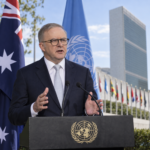
Prime Minister Anthony Albanese made that position clear during the Pacific Islands Forum in Palau after being questioned about whether taxpayers were receiving value for money given the limited number of non-Pacific leaders confirmed at that stage.
Mr Albanese argued that dismissing the event on attendance grounds failed to recognise the importance Pacific leaders placed on having international partners witness climate impacts in their region.
For Labor, the summit is also part of a wider diplomatic strategy in a region where climate policy, development assistance and national security have become increasingly intertwined.
Australia has repeatedly said climate change is among the Pacific’s central security concerns and has sought to strengthen its regional standing through climate finance, resilient infrastructure and renewable energy investment.
The October meetings are expected to place significant emphasis on the Pacific Resilience Facility, a Pacific-led financing mechanism intended to support community-level adaptation, disaster preparedness and responses to climate-related loss and damage.
Australia and Fiji ratified the treaty establishing the facility earlier this year, and governments are seeking additional international pledges as the region works towards its funding targets.
That gives the Pre-COP a practical agenda beyond the appearance of visiting leaders: negotiators will be attempting to build support around climate finance and other Pacific priorities before the formal COP31 bargaining begins in Türkiye.
At the same time, the government has set its own expectations high by promoting the events as an opportunity to bring global leaders to the Pacific.
Official Australian material says the leaders’ program is intended to draw international attention to the experiences of Small Island Developing States and allow leaders to witness climate impacts and Pacific-led adaptation solutions first-hand.
That makes attendance from major economies politically significant even if the government argues it is not the sole measure of success.
The United States, China and other major emitters wield far greater influence over global emissions and climate finance than most small states. Their level of engagement therefore matters to the practical outcomes Pacific countries are seeking, regardless of whether their leaders personally make the journey to Fiji or Tuvalu.
There is also an important distinction between a Pre-COP and the main United Nations climate conference.
Pre-COP meetings are designed to narrow differences, identify priorities and prepare the ground for the formal negotiations that follow. They do not themselves replace COP31, where countries will negotiate the decisions governing international climate action.
That means senior ministers, negotiators and officials can still play substantial roles at the October meeting even when presidents or prime ministers stay home.
But political optics remain difficult for Canberra because of the amount of attention placed on the leaders’ component and the government’s effort to make the Pacific experience central to this year’s climate diplomacy.
With the summit beginning on October 5, the final attendance list will now become one of the clearest tests of how much international interest Australia and its Pacific partners can generate.
Mr Thistlethwaite has left open the possibility that additional countries will confirm higher-level representation before then.
Labor’s position is that, regardless of who ultimately attends at leader level, Australia is fulfilling a commitment to hear Pacific governments and use its COP31 negotiating role to elevate their concerns.
Critics will judge the event differently, focusing on the millions of dollars committed to its delivery, the absence so far of leaders from the world’s biggest powers and whether the meetings produce measurable outcomes that justify the expense.
The argument over whether the Pacific Pre-COP is a diplomatic success or an expensive disappointment is therefore unlikely to be settled by the guest list alone.
The more consequential test will come after October: whether the Fiji and Tuvalu meetings translate Pacific priorities into commitments, finance or negotiating outcomes at COP31 in Türkiye.