The Albanese government is facing growing scrutiny over the cost and attendance of next month’s Pacific climate meetings after millions of dollars in contracts were revealed and opposition attempts to obtain the full RSVP list were blocked.
Climate Change and Energy Minister Chris Bowen has defended the October Pre-COP in Fiji and associated leaders’ event in Tuvalu as an important opportunity to put Pacific climate priorities before international decision-makers ahead of COP31 in Türkiye.
But the scale of Australian government spending, combined with relatively modest publicly confirmed attendance from major economies, has turned what was intended to be a diplomatic showcase into a significant domestic political argument.
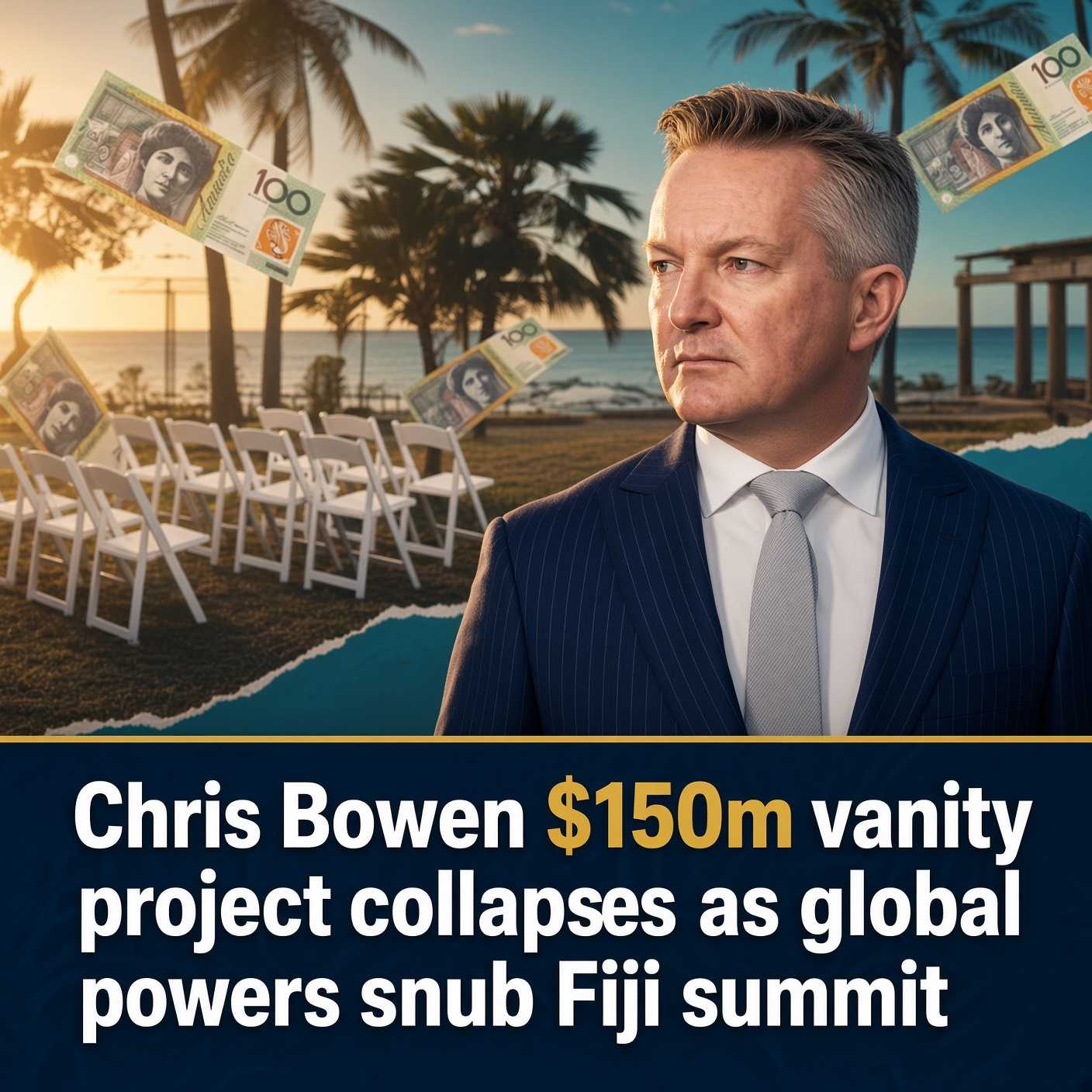
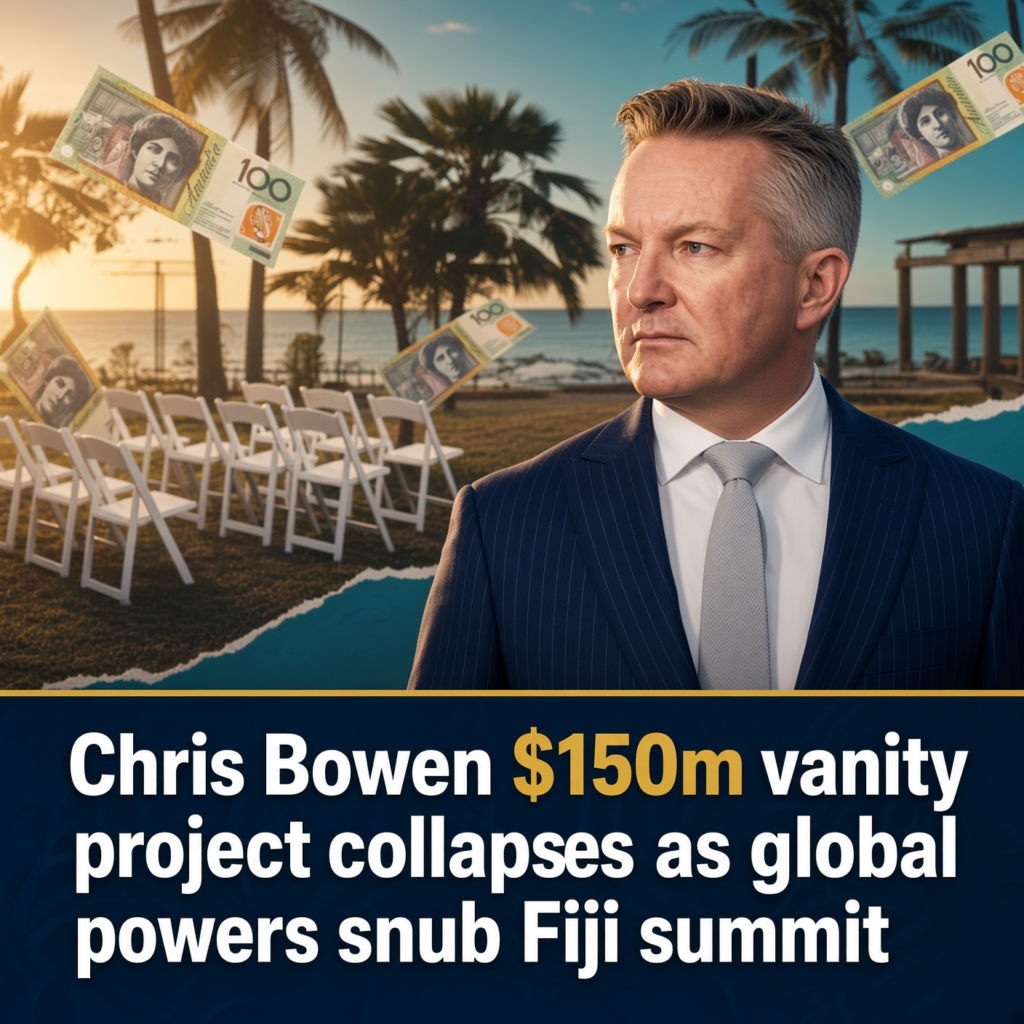
At the centre of that argument is the widely quoted figure of about $150 million.
The Commonwealth’s 2026–27 Budget does provide $147.8 million over three years under a measure titled Standing with our partners in the Pacific.
However, that amount is broader than the four-day Fiji meeting itself.
The official Budget papers say the funding supports Australia’s relationships with Pacific and international trade partners, its role in COP31, and delivery of the Pacific Pre-COP and Leaders’ Event.
It is therefore misleading to describe the entire $147.8 million as the price of Bowen’s October summit alone.
There are, nevertheless, substantial contracts directly associated with organising the event.
Information published from Commonwealth procurement records shows an event-planning contract worth approximately $17.2 million has been awarded to The Event Planning Group, while Pacific Broadcast has received a contract worth just over $2 million for broadcasting services.
Accommodation commitments have also grown.
Earlier contracts reserved rooms and facilities at the Sheraton Fiji Golf & Beach Resort, Sofitel Fiji Resort & Spa and Radisson Blu Resort Fiji for a combined value of about $4.2 million.
Further contracts subsequently emerged involving Wailoaloa Hotel, Wyndham Garden Wailoaloa Beach, Novotel Nadi, Tanoa International Hotel and Tokatoka Resort.
Taken together, the publicly reported accommodation contracts are worth roughly $5.6 million across eight hotels and resorts.
The government has rejected suggestions that this amount will necessarily become a permanent cost to taxpayers.
Pacific Island Affairs Minister Pat Conroy has said Australia has had to reserve enough rooms for a major international event but expects much of the accommodation expenditure to be recovered when foreign delegations pay for the rooms they use.
The department has also said unused accommodation can in some circumstances be cancelled and costs minimised.
The political controversy has intensified because Australia initially promoted the Pacific program as an unusual opportunity to bring senior international leaders directly to countries experiencing some of the world’s most acute climate risks.
When Fiji and Tuvalu were confirmed as hosts in February, the government described the arrangement as an “unprecedented opportunity to bring the world to the Pacific”.
Fiji is scheduled to host the formal Pre-COP negotiations from 5 to 8 October, while Tuvalu will host a smaller leaders’ component designed to allow invited heads of government and other senior figures to witness the effects of sea-level rise and climate adaptation firsthand.
Türkiye will then host COP31 in Antalya from 9 to 20 November, including the formal World Leaders’ Summit.
Australia will not host COP31 itself but will serve as President of Negotiations, giving Bowen a central role in guiding the negotiating process.
The arrangement emerged after Australia and Türkiye competed for the right to host COP31 before striking a compromise that gave Türkiye the physical summit and Australia the negotiations presidency, with the Pacific receiving prominent preparatory events.
Attendance at the leaders’ component has consequently become a measure of whether the compromise is delivering the international attention Canberra and Pacific governments hoped to generate.
Fiji Foreign Minister Sakiasi Ditoka revealed on 2 September that leaders from Antigua and Barbuda, Cabo Verde, Thailand, the Maldives and Timor-Leste had agreed to attend.
Germany, Mexico and South Korea were expected to send ministerial representatives rather than their heads of government.
Those confirmations attracted criticism because no leader from the United States, China, India or a G7 nation had been publicly confirmed at that point.
The picture, however, continues to move.
Tuvalu Climate Change Minister Dr Maina Talia said on 3 September that all Pacific Island countries had confirmed participation and six global leaders had now agreed to attend, exceeding Tuvalu’s original expectation of between three and five.
The sixth international leader was not publicly identified.
That means claims that only five leaders will attend are already slightly outdated, although only five have so far been publicly named.
It is also important to distinguish the small leaders’ visit to Tuvalu from the much larger Pre-COP gathering in Fiji.
Bowen said this week that between 3,000 and 4,000 people were expected at Pre-COP and that more than 120 international journalists had already registered.
The Fiji meeting will include government negotiators, ministers, international institutions, civil society organisations, businesses and other stakeholders rather than being restricted to presidents and prime ministers.
That distinction has become central to the government’s defence.
Bowen has repeatedly pointed out that traditional Pre-COP meetings are not normally gatherings of heads of state.
He said recent Pre-COPs before conferences hosted by Brazil, the United Arab Emirates, Egypt and Azerbaijan did not attract leaders in the way a full COP leaders’ summit does.
The Pacific event is different because organisers deliberately added a special leaders’ component in Tuvalu to increase international attention on vulnerable island states.
Critics say that explanation sits awkwardly beside the government’s earlier rhetoric about bringing world leaders to the Pacific.
At the National Press Club in August, Bowen acknowledged Australia had wanted to “lift the profile” and attract more senior participants, while maintaining that Pre-COP was generally not a world-leader event.
The attendance issue has also become entangled with a separate dispute over transparency.
In August, the Senate considered a proposed order for the production of documents covering Pre-COP attendance and participation.
The proposal was not agreed to.
Shadow energy minister Dan Tehan subsequently accused Labor and the Greens of combining to prevent release of documents that would have shown which leaders intended to attend the Tuvalu component.
The Coalition then pursued the information through Freedom of Information requests.
According to Tehan, the Department of the Prime Minister and Cabinet, Department of Foreign Affairs and Trade and Department of Climate Change, Energy, the Environment and Water all refused requests seeking details of the RSVP list.
PM&C acknowledged holding relevant information but cited the risk of revealing sensitive diplomatic considerations surrounding participation.
The government’s position is that Australia generally does not publicly announce another country’s travel plans before that government chooses to do so.
That position became more difficult politically after Prime Minister Anthony Albanese told Parliament that Thailand’s prime minister would attend, effectively confirming at least one RSVP himself.
The subsequent release of five names by Fiji’s foreign minister has reduced some of the secrecy surrounding the event, but the complete list of invitations, acceptances and refusals has still not been publicly released.
Another criticism circulating around the summit concerns Bowen’s invitation to Public Services International, a global federation representing public-sector unions.
The invitation itself is genuine.
Public Services International said Bowen invited it during an Oceania regional meeting in Sydney so Pacific public-service workers could contribute to discussions around climate impacts and a just transition.
There is no public evidence, however, that the organisation was invited simply to fill seats left empty by absent world leaders.
Official Pre-COP planning explicitly includes a stakeholder program for civil society, business and other organisations alongside formal government negotiations.
The presence of a union federation is therefore not unusual in the context of a UN climate process, even if the timing of the invitation has provided critics with another political line of attack.
Fijian Prime Minister Sitiveni Rabuka has also expressed more nuanced views than some Australian commentary suggests.
In August, when reports first emerged that Australia was struggling to secure leaders, Rabuka said a poor turnout would be “a sad thing” and said Fiji had hoped more leaders would come to see the effects of climate change firsthand.
But by 2 September, he was publicly playing down concern over the guest list, saying governments would participate if they believed they had something to contribute to or gain from the discussions.
Other Pacific representatives have strongly defended the value of holding the meetings in the region regardless of attendance by the world’s largest economies.
Fiji and Tuvalu argue that putting officials physically in the Pacific gives small island states an opportunity to demonstrate climate impacts that can be abstract in negotiating rooms thousands of kilometres away.
The Australian government has made a similar case.
Albanese reacted sharply this week when questioned in Palau about whether taxpayers were receiving value for money from the exercise, accusing the journalist raising the issue of being disrespectful towards Pacific leaders.
He argued that Australia has a direct strategic interest in taking Pacific priorities seriously and said credible engagement with the region requires more than measuring events by the presence or absence of major powers.
That does not eliminate legitimate questions about cost.
The specific event, broadcast and hotel contracts already run into tens of millions of dollars, while the broader three-year COP31 and Pacific measure reaches $147.8 million.
Nor does the strategic argument remove questions about why taxpayers have been unable to see a complete list of who was invited and who declined.
But neither is the event accurately described as a $150 million four-day photo opportunity attended by only five people of consequence.
The Fiji meeting is expected to involve thousands of delegates and stakeholders, the accommodation expenditure is partly recoverable, and the $147.8 million budget measure funds a much broader three-year international program.
The political vulnerability for Bowen lies somewhere between those competing narratives.
His government deliberately raised expectations that the Pacific events would attract international leaders and give vulnerable island nations unprecedented exposure. As of early September, the publicly identified heads of government outside the region are still predominantly from smaller states rather than the major economies whose emissions decisions will have the greatest influence on global warming.
Whether that changes before 5 October will largely determine how the event is judged.
If additional leaders from major economies confirm attendance, the government will argue its diplomatic effort was simply being assessed too early.
If they do not, the Coalition will have a potent argument that Canberra spent heavily on a high-profile leaders’ initiative without securing the level of political participation originally envisaged.
Either way, the controversy has already transformed an obscure preparatory climate meeting into a test of Australian diplomatic influence, public spending and government transparency.