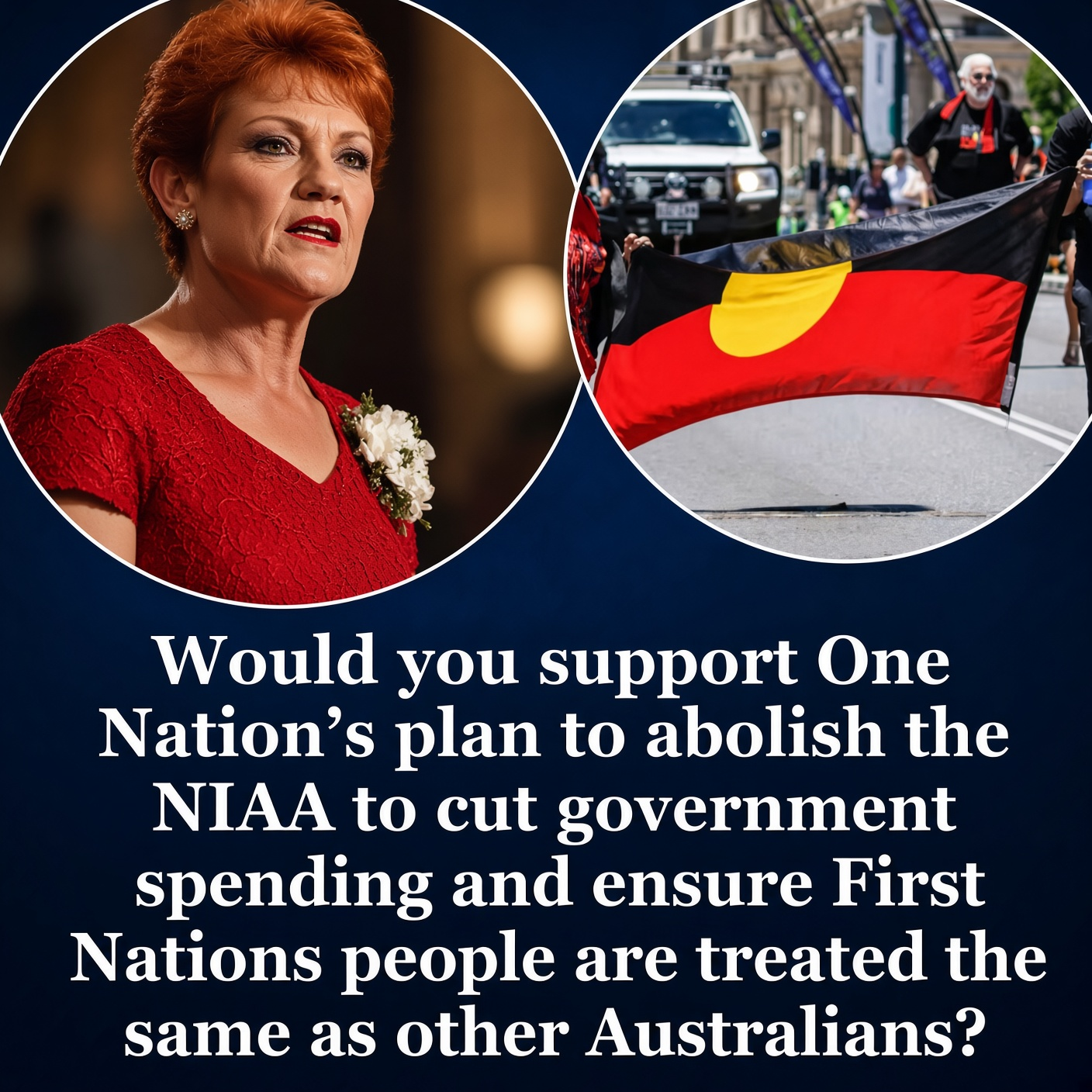
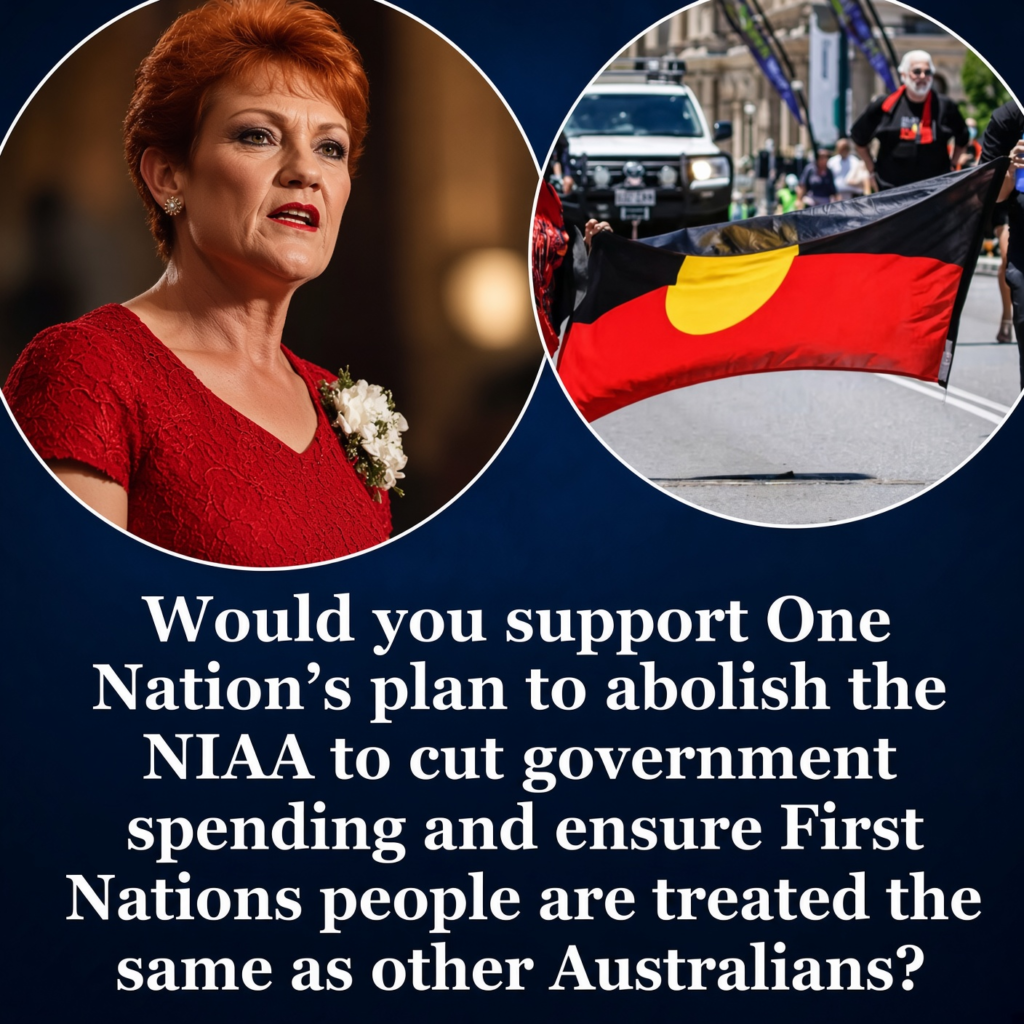
Pauline Hanson has vowed to abolish the National Indigenous Australians Agency if One Nation forms government, arguing Australians should receive government assistance according to need rather than race and promising to redirect Indigenous-specific funding into consolidated revenue.
The One Nation leader used a combative National Press Club appearance in Canberra to defend her party’s approach to Indigenous affairs, declaring that Aboriginal and Torres Strait Islander Australians should be treated under the same government systems as every other citizen.
“We’re all Australians, regardless of race,” Hanson said.
Her proposal represents far more than an administrative restructure.
The NIAA currently helps coordinate Commonwealth policy for Aboriginal and Torres Strait Islander Australians, administers major grant programs and supports the federal government’s commitments under the National Agreement on Closing the Gap.
Abolishing the agency and returning its program funding to consolidated revenue would therefore challenge a central principle underpinning decades of Australian Indigenous policy: that some services and programs should be specifically designed to address the distinctive disadvantage experienced by First Nations communities.
Hanson rejects that principle.
During questioning at the Press Club, she was asked why an Indigenous child should receive greater educational support than another Australian child facing disadvantage.
Her answer reflected One Nation’s longstanding preference for universal rather than race-specific government assistance.
Under that model, poverty, disability, educational disadvantage, poor health or geographical isolation could still justify additional government support, but Indigenous identity itself would not.
Asked what would happen to funding currently administered through the NIAA — including assistance reaching Aboriginal and Torres Strait Islander Australians in remote communities — Hanson said the money would be returned to the Commonwealth’s general pool of revenue.
“That money will go into consolidated revenue, where any Australian can get that help if they need help,” she said.
The policy immediately raises a fundamental question about what would replace the agency’s existing functions.
The NIAA does not simply distribute a single pool of welfare payments to Indigenous Australians.
Its responsibilities include advising the Prime Minister and Minister for Indigenous Australians, coordinating policy across government, designing and implementing programs, administering grants and working with Indigenous organisations and communities.
Its activities cover areas including employment and economic development, early childhood and education, community safety, culture, remote services and Closing the Gap.
That makes the distinction between abolishing the agency and abolishing every service currently administered through it particularly important.
Hanson’s National Press Club comments suggest One Nation wants Indigenous-specific programs substantially dismantled rather than merely transferring the NIAA’s administrative functions to another department.
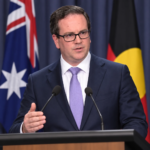
Indigenous Australians Minister Malarndirri McCarthy has interpreted the policy in those terms, warning it could eliminate programs including remote food security initiatives, employment programs and Indigenous ranger projects.
McCarthy described Hanson’s approach as “divisive” and argued targeted programs exist because Aboriginal and Torres Strait Islander communities continue to experience disadvantages not shared equally across the Australian population.
That is the core disagreement.
Hanson’s equality argument begins with the proposition that government should not distinguish between citizens according to race.
Supporters of targeted Indigenous policy begin with a different proposition: treating people identically does not necessarily produce equal outcomes when their starting circumstances are dramatically different.
Australia’s Closing the Gap framework is built largely around the second view.
The National Agreement on Closing the Gap recognises substantial disparities between Indigenous and non-Indigenous Australians across health, education, employment, incarceration, child development and other measures.
Governments have committed to specific targets intended to reduce those disparities.
Progress has been mixed.
Some indicators have improved, while others remain off track or have deteriorated, contributing to frustration across the political spectrum about the effectiveness of decades of Indigenous policy.
Hanson seized on that frustration at the Press Club.
“Where is the accountability?” she asked. “Where has the gap been closed?”
Those questions have political force because governments have spent substantial amounts over many years while serious inequalities remain.
But accurately measuring that spending is more complicated than headline figures can suggest.
Hanson referred to “probably about $30 billion plus a year” being spent, although she did not identify a source for the figure during her Press Club appearance.
Similar claims have circulated in Australian political debate for years.
A widely cited $30 billion figure was publicly discussed by Indigenous businessman Warren Mundine in 2016 and subsequently examined by researchers at the Australian National University.
That analysis found only about $5.6 billion, or 18.6 per cent of the expenditure being counted at the time, related to Indigenous-specific programs.
Most of the remainder represented mainstream government services such as health and education used by Aboriginal and Torres Strait Islander Australians just as those systems serve other Australians.
The distinction is critical.
If an Indigenous Australian receives treatment in a public hospital, attends a government school or receives an ordinary Commonwealth payment for which they qualify, counting that expenditure as “Indigenous spending” does not mean the money represents a special benefit unavailable to other Australians.
Nor is a figure describing government expenditure associated with Indigenous Australians the same thing as the NIAA’s budget.
Australian National Audit Office material shows the NIAA’s total budgeted expenses for 2024–25 were approximately $3.1 billion.
About 70 per cent of those expenses were attributable to grants, and the agency manages approximately $1.7 billion in administered grant expenses each year across Australia, including in geographically dispersed and remote locations.
Those figures are substantial, but they are very different from a claim that the NIAA itself controls more than $30 billion annually.
The agency is also subject to Commonwealth financial auditing and accountability requirements.
The ANAO has identified risks associated with the scale and decentralised nature of NIAA grant administration, including its reliance on multiple delivery partners, government systems and payment arrangements.
That provides legitimate grounds for scrutiny of whether programs are well administered and whether taxpayers receive value for money.
It does not establish that the agency’s expenditure is unaccounted for.
The current federal budget also provides a more concrete picture of the programs at stake.
The 2026–27 Budget includes $1.2 billion over five years from 2025–26 for initiatives intended to improve outcomes for First Nations Australians.
Among those measures is an additional $299 million for the Remote Jobs and Economic Development program, designed to double the number of new jobs supported by the scheme from 3,000 to 6,000 by 2030.
The budget also includes additional funding for food security and remote stores, short-term accommodation through Aboriginal Hostels Limited and education support for First Nations students attending boarding schools away from home.
These examples demonstrate what the debate over “Indigenous spending” means in practice.
A decision to remove targeted funding would not simply reduce an administrative budget in Canberra. Depending on how One Nation implemented its policy, it could affect programs delivering jobs, food subsidies, accommodation and other services in communities where conventional service markets can be weak or absent.
Hanson’s counterargument is that disadvantage should still be addressed — just without using race as the eligibility criterion.
Someone living in poverty in a remote community could therefore receive assistance because they were poor, isolated or unable to access services, rather than because they were Aboriginal or Torres Strait Islander.
That model has an intuitive appeal to Australians who believe government should be colour-blind.
But implementing it would create difficult practical questions.
Remote Indigenous communities can face circumstances that are not easily replicated through ordinary means-tested welfare programs.
Geographical isolation can make food, housing, health care and employment substantially more difficult and expensive to provide.
Some programs also deal with matters that are inherently connected to Indigenous status, including land, native title, cultural heritage and support for Aboriginal community-controlled organisations.
It is not clear how all of those responsibilities could be converted into a purely race-neutral service model.
There is also the question of Closing the Gap itself.
The latest Commonwealth reporting points to some areas of progress.
The government says its Remote Jobs and Economic Development program had supported more than 1,450 jobs by the time of its 2025 annual report, putting the program more than halfway towards its initial target of 3,000 jobs by 2027.
A remote food initiative had also subsidised 30 essential products across 117 stores.
Those results do not establish that every program is effective, nor do they answer Hanson’s broader criticism about decades of spending.
But they demonstrate why judging Indigenous policy solely by whether every Closing the Gap target has been achieved can be misleading.
Closing the Gap covers multiple outcomes affected by Commonwealth, state and territory governments, local services, economic conditions and complex social factors.
The NIAA cannot independently determine life expectancy, incarceration rates, educational attainment or employment outcomes.
It coordinates and administers parts of the Commonwealth response.
The Productivity Commission maintains an independent Closing the Gap information repository precisely because progress needs to be assessed against individual targets rather than a single binary measure of success or failure.
That evidence has repeatedly shown Australia remains a long way from eliminating disparities between Indigenous and non-Indigenous people.
The failure to close many gaps can support two very different political conclusions.
For Hanson, it is evidence that Indigenous-specific bureaucracies and spending have failed and should be replaced with a universal model.
For supporters of the existing framework, persistent disadvantage is evidence that withdrawing targeted assistance would be premature and could widen the very gaps governments have committed to closing.
There is a third position between those poles: retaining targeted support while demanding much stronger evidence that individual programs work.
That approach would focus on program evaluation, measurable outcomes, administrative costs and the transfer of resources towards interventions that demonstrate results.
Questions about accountability are not unique to One Nation.
Indigenous leaders, auditors, policy experts and successive governments have themselves criticised programs that failed to deliver durable improvements despite substantial expenditure.
The National Agreement on Closing the Gap was redesigned partly in response to those failures, placing greater emphasis on partnership with Aboriginal and Torres Strait Islander organisations and shared decision-making.
The underlying theory is that policies imposed from Canberra without sufficient involvement from the communities affected have often produced poor results.
Hanson challenges that framework more fundamentally.
Her proposal is not primarily about finding a different Indigenous organisation to administer existing programs. It questions whether government should maintain an Indigenous-specific policy architecture at all.
That position fits One Nation’s wider political philosophy.
Hanson used the same National Press Club appearance to criticise multiculturalism and defend a vision of Australia in which citizens from different racial backgrounds operate under a common national identity rather than separate government recognition based on ethnicity.
She has also proposed abolishing other Commonwealth bodies, including the Therapeutic Goods Administration, as part of a wider campaign to reduce government expenditure and debt.
One Nation’s rising support in opinion polling has brought greater scrutiny to whether such proposals could function as practical government policy rather than political slogans.
Abolishing the NIAA would require answers to detailed administrative questions.
Who would advise the Indigenous Australians minister?
Which department would assume statutory and policy responsibilities that cannot simply disappear?
What would happen to existing grants and contracts?
Would Aboriginal community-controlled organisations remain eligible for funding if eligibility were rewritten around disadvantage rather than Indigenous status?
How would the Commonwealth meet its commitments under the National Agreement on Closing the Gap?
And what would happen to programs whose purpose is specifically connected to Indigenous culture, land or community governance rather than ordinary welfare?
Hanson’s Press Club answer provides a clear principle — return the money to consolidated revenue and allow Australians in need to seek assistance on equal terms — but not yet a complete administrative blueprint for resolving those questions.
The government’s alternative also faces a demanding test.
Defending targeted programs requires more than pointing to historical disadvantage.
If taxpayers are being asked to fund programs specifically intended to improve Indigenous outcomes, governments must demonstrate that those programs are properly designed, transparently administered and capable of producing measurable results.
The continued failure of many Closing the Gap measures means demands for accountability cannot simply be dismissed as opposition to Indigenous Australians.
Equally, persistent disadvantage cannot by itself prove that targeted programs are the cause of the failure.
The central policy question is whether those programs are ineffective, inadequately funded, poorly designed, undermined by other factors or achieving improvements that take time to appear in national headline indicators.
That is a much harder question than either “abolish it” or “spend more”.
Hanson has nevertheless drawn a clear dividing line.
One Nation wants government support determined by individual need and rejects Indigenous identity as a basis for additional public assistance.
Labor maintains that targeted programs remain necessary because Aboriginal and Torres Strait Islander Australians continue to experience distinctive and measurable disadvantage and because effective solutions require partnership with First Nations communities.
The debate will become increasingly significant if One Nation continues to strengthen its electoral position.
For decades, arguments about Indigenous affairs have focused largely on how targeted policy should operate, how much governments should spend and how Indigenous Australians should participate in decision-making.
Hanson is asking a more fundamental question: whether the Commonwealth should continue operating a distinct Indigenous policy system at all.
Her answer is no.
Whether voters agree may depend not only on the principle that Australians should be treated equally, but on a more practical test: whether universal government services could realistically address the profound differences in health, education, employment, safety and access to services that still exist between many Indigenous communities and the rest of the country.