The political fallout surrounding the ABC’s controversial Race Around The World segment targeting mining executive Gina Rinehart has intensified, with Health Minister Mark Butler becoming the latest senior Labor figure to publicly condemn the broadcast while legal action against the national broadcaster continues to escalate.
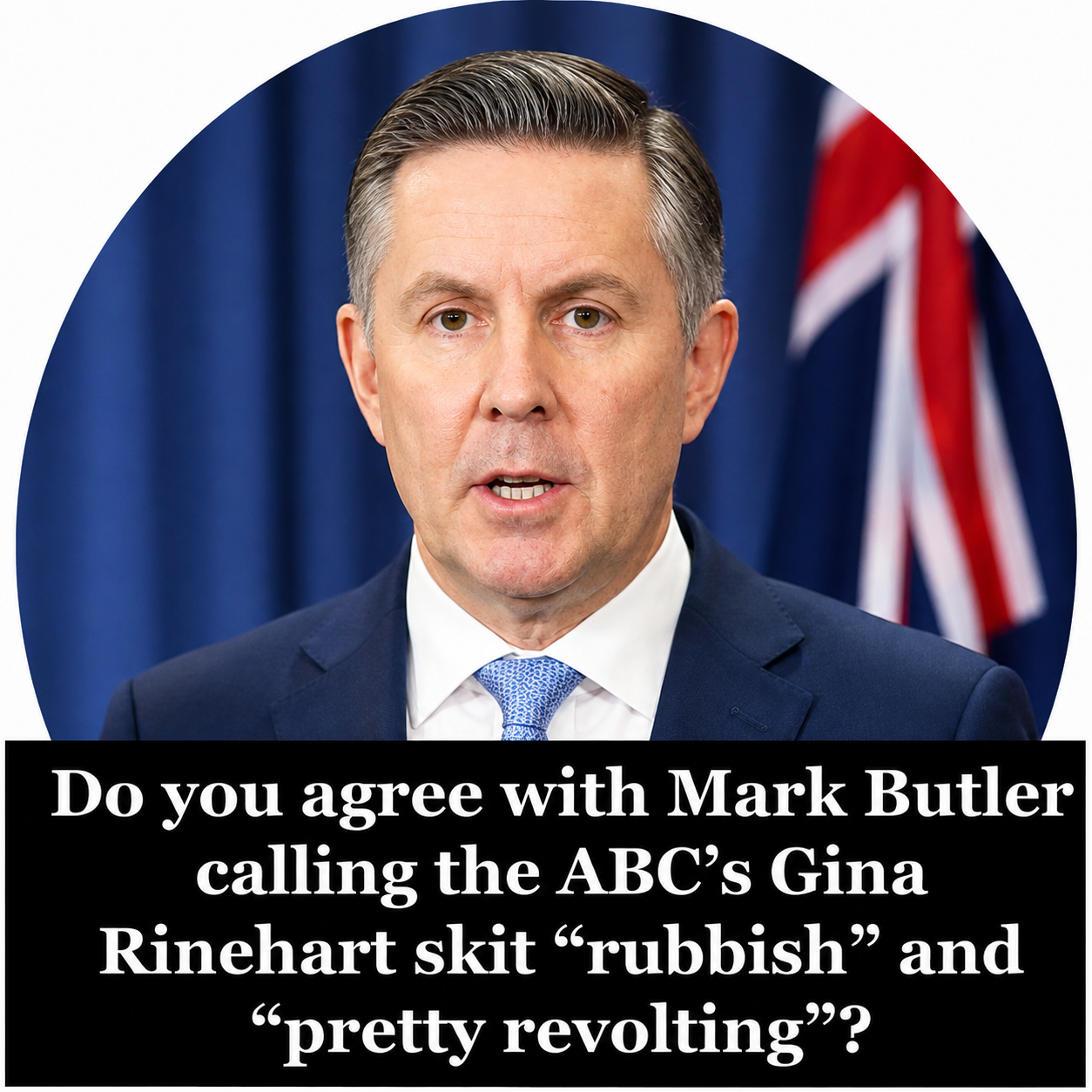
Speaking to News24, Butler described the four-minute segment as “pretty revolting” and questioned why Australians should be exposed to such material on television, regardless of the intended target.
“It’s pretty revolting and it’s not the sort of thing I think we should see on TV,” Butler said. “Why do we have to see rubbish like this on our TVs – regardless of who it’s about?” He acknowledged that he had not watched the full segment but said he had seen extensive reporting about it and understood that its creator had apologised.
Butler also expressed support for the ABC Ombudsman’s decision to investigate audience complaints, describing the internal review as an appropriate process for an independent public broadcaster. At the same time, he argued that the controversy raised broader questions about editorial standards and what should be broadcast on Australian television.
The comments make Butler the latest member of the Albanese Government to criticise the program.
Communications Minister Anika Wells had earlier labelled the segment “unacceptable” while emphasising that the government respects the ABC’s editorial independence. Rather than directing the broadcaster’s editorial decisions, Wells noted that the matter had appropriately been referred to the ABC Ombudsman for independent examination.
The controversy stems from an episode of Race Around The World broadcast on 12 July, which included a short satirical film created by contestant and filmmaker Kate McGuinness.
The segment concluded with graphic and violent language directed at Gina Rinehart, Executive Chair of Hancock Prospecting. Critics argued the closing narration crossed the line between satire and material that appeared to normalise violence against a prominent public figure.
Following growing public criticism, McGuinness issued a public apology through the ABC.
She said the film was intended to be “cartoonish” and “always satirical”, insisting that she never intended to encourage violence.
“Its purpose was never to be taken literally,” McGuinness said. “I apologise to anyone I’ve offended.”
The apology, however, has not brought the dispute to an end.
Hancock Prospecting has formally commenced legal action against the ABC and senior executives after alleging the broadcaster failed to remove the segment or issue a public apology despite repeated requests.
The company says it first wrote to the ABC Board requesting that the material be removed from all ABC platforms, that a public apology be issued to Rinehart, and that a full investigation examine how the content was commissioned, approved and broadcast.
After receiving no substantive response, Hancock Prospecting placed ABC Chair Kim Williams, Deputy Chair Lisa Caffery and Managing Director Hugh Marks on legal notice, alleging multiple potential civil and criminal breaches arising from the continued publication of the material.
The ABC has confirmed it received correspondence from lawyers acting for Rinehart and has said it will respond through the appropriate legal process.
The broadcaster has also referred complaints concerning the episode to its independent Ombudsman. While the ABC initially defended the film as “editorially justifiable” within the context of the program, it has declined to comment further while the Ombudsman’s review remains underway.
The dispute has attracted criticism from across Australia’s political spectrum.
Acting Prime Minister Richard Marles previously described the material, as it had been reported to him, as “entirely unacceptable”, while Western Australian Premier Roger Cook also said the language used in the segment was “unacceptable”, although both noted they had not viewed the full program before commenting publicly.
Outside politics, the controversy has generated responses from business leaders, sporting figures and media commentators.
Mining industry representatives have questioned whether the ABC applied its own editorial standards consistently when assessing material containing graphic references to violence against an individual.
Some commentators have argued the broadcaster would likely have responded differently had similar language been directed at another public figure, particularly someone outside the political or corporate spheres. Others have defended the principle of satirical expression while acknowledging that opinions differ on where the appropriate editorial boundary should be drawn.
The dispute has also renewed debate about the responsibilities of publicly funded broadcasters.
Under the ABC’s Editorial Policies and Code of Practice, content likely to cause significant harm or offence must be justified by its editorial context, with appropriate consideration given to audience expectations and classification requirements. Whether those standards were met in this case is expected to form part of the Ombudsman’s review.
Media law experts note that the Ombudsman’s investigation is separate from the legal proceedings initiated by Hancock Prospecting.
The internal review will examine whether the broadcast complied with the ABC’s own editorial standards, while any court proceedings would consider the legal claims advanced by Hancock Prospecting, including the allegations outlined in its correspondence to ABC executives.
No court has yet ruled on those allegations, and the ABC has not admitted any legal wrongdoing.
For the Albanese Government, the issue has become politically sensitive because criticism has now come from several ministers despite the ABC’s statutory editorial independence.
Government ministers have generally avoided directing the broadcaster’s editorial decisions, instead focusing their criticism on the content itself while expressing support for the Ombudsman’s independent complaints process.
That distinction has allowed ministers to publicly distance themselves from the segment without suggesting political interference in the ABC’s operations.
The outcome of the Ombudsman’s investigation—and any subsequent legal proceedings—may have broader implications for how Australia’s public broadcaster balances satire, freedom of expression and editorial responsibility when controversial content involves identifiable individuals.
Until those processes conclude, the ABC continues to face sustained scrutiny over one of its most controversial entertainment broadcasts in recent years, with pressure mounting from political leaders, industry groups and Hancock Prospecting for greater accountability over how the segment came to air.