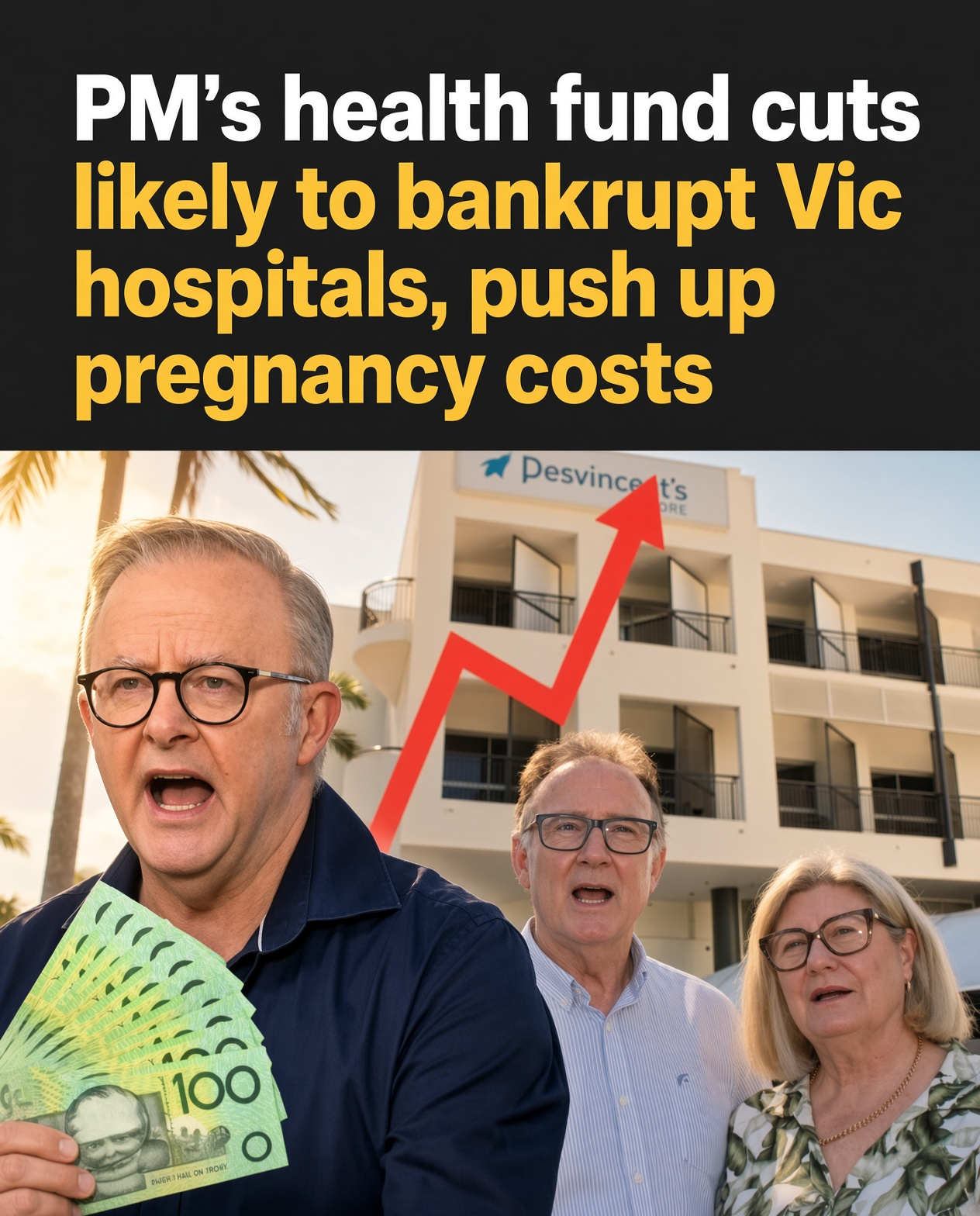
A federal plan to redirect about $3 billion from private health insurance subsidies into aged care has triggered warnings that it could produce the opposite of what the Albanese government intends — pushing more older Australians towards the public system, weakening regional private hospitals and adding further pressure to already expensive maternity cover.
The dispute centres on Labor’s proposed removal of the additional private health insurance rebate currently available to Australians aged 65 and over.
If Parliament approves the legislation, the age-based uplift will disappear from April 1, 2027. Government assistance will instead be determined by income alone, meaning two households on the same income will receive the same rebate regardless of their age.
Health Minister Mark Butler argues the existing system is difficult to justify when Australia is confronting an unprecedented increase in demand for aged care.
But private hospitals, insurers and several state governments fear the saving could simply transfer healthcare costs from Canberra to other parts of the system.
The current rebate illustrates why the change matters.
For eligible Australians in the base income tier, those under 65 currently receive a rebate of about 24.1 per cent. People aged 65 to 69 receive about 28.1 per cent, while those aged 70 and above receive approximately 32.2 per cent.
Labor wants to remove those age-based increases.
According to the Parliamentary Library, about 3.2 million Australians aged 65 and over with incomes below the rebate cut-off would be affected. The government expects their private health insurance premiums to increase by about $250 a year on average.
For people with more expensive policies, particularly comprehensive Gold cover, the increase can be substantially higher.
Private Healthcare Australia has estimated that the direct effect of the rebate change could add around $151 annually to Gold cover for a person aged 65 to 69 and about $302 for somebody aged 70 or older, before any ordinary annual premium increase is added.
When expected medical-cost inflation is included, the industry body estimates some couples over 70 maintaining Gold cover could face total annual premium increases exceeding $1,600.
Those figures are industry modelling rather than government forecasts, but they explain why the proposal has generated such intense resistance among retirees.
The central disagreement is over what people will do when the higher bills arrive.
Canberra’s modelling predicts approximately 44,000 fewer older Australians will have private health insurance by 2028–29 than would otherwise have been expected if the rebate remained unchanged.
That would represent only a small proportion of the millions affected.
Butler has repeatedly argued that private health insurance membership is still expected to grow overall and that industry predictions of a mass exodus exaggerate the likely effect.
He received significant support for that position from recently published independent research based on a decade of Australian tax data.
The researchers estimated between 14,821 and 42,498 older Australians would drop their insurance because of the policy, with the upper end of the range broadly consistent with the Commonwealth’s 44,000 estimate.
The researchers concluded that the higher age-based rebate has relatively little effect on whether most older Australians remain insured.
That is not the scenario being presented by parts of the private healthcare industry.
Catholic Health Australia, which represents providers responsible for about 30 per cent of Australian private hospital care, has warned the legislation could have much wider consequences than the government modelling captures.
Its submission to the Senate inquiry says the change could disproportionately affect lower-income retirees, frail older Australians, aged care residents and people living outside major cities.
Reporting on its analysis indicates CHA believes as many as 665,000 older Australians could either abandon their insurance or downgrade to cheaper policies.
The distinction between dropping insurance and downgrading it is crucial.
An older Australian does not have to abandon private health entirely to shift future treatment onto a public hospital.
If someone moves from comprehensive Gold cover to a cheaper policy excluding joint replacements or cataract surgery, they can remain counted as privately insured while no longer having private cover for procedures they are increasingly likely to need.
Those patients do not disappear from the healthcare system.
If they later need an excluded treatment, they can join a public hospital waiting list or pay the private cost themselves.
That is why state governments are paying close attention.
Health ministers from New South Wales, South Australia, Victoria and the Northern Territory have raised concerns about the proposed rebate change, while Queensland and Tasmania have called for it to be abandoned.
Their anxiety comes as public hospitals are already struggling with another problem involving older Australians.
More than 3,700 people who are medically ready to leave public hospitals are currently unable to do so because an appropriate aged care placement or service is not available.
These patients occupy beds required for emergency admissions, surgery and other acute care.
States are demanding that Canberra accelerate aged care capacity precisely so those beds can be released.
Butler’s response is that this is exactly why the $3 billion matters.
After meeting state and territory health ministers in Sydney on Friday, he challenged governments opposing the rebate measure to explain where else the Commonwealth should find the money.
The savings, he said, would be reinvested in “more beds, more packages, better care”.
The scale of the demographic challenge is immense.
Butler says Australia will ultimately need approximately 10,500 additional residential aged care beds every year for roughly two decades — equivalent to opening a new aged care facility about every three days.
The government’s aged care package announced earlier this year is intended to support about 5,000 additional beds each year, alongside expanded home-care support, specialist dementia facilities and measures designed to move appropriate patients out of hospitals and into aged care more quickly.
That leaves a difficult policy circle.
The Commonwealth argues reducing the insurance rebate will generate money needed to relieve hospital pressure by increasing aged care capacity.
Critics argue the same rebate reduction could simultaneously increase hospital pressure by encouraging older Australians to drop or downgrade private insurance.
Which effect proves larger depends heavily on the behavioural modelling — and that is where the government and its critics disagree most sharply.
Private hospitals have another concern: viability.
Many private facilities are already operating under financial strain following years of rising wages, medical costs and insurance contracting disputes.
Australia has lost numerous day hospitals and individual private hospital services in recent years, while several maternity units have closed.
Catholic Health Australia warns that reducing private demand from older patients could place vulnerable regional hospitals in an even more difficult financial position.
Its concerns include St Vincent’s Private Hospital in Lismore, an 88-bed hospital servicing the NSW Northern Rivers.
Industry analysis reported this week estimates the rebate changes could impose a financial impact of about $3.9 million on the facility.
That does not mean St Vincent’s Lismore has announced it will close because of the legislation.
Indeed, the hospital previously said it was investing in its future after shelving earlier plans for a possible sale.
Rather, CHA is using hospitals such as Lismore to argue that even relatively modest shifts in patient volumes can become significant in regional markets where private providers operate with smaller populations and fewer alternative revenue sources.
That brings the debate to a seemingly unrelated group: Australians planning to have children.
Under Australia’s private health insurance tier system, Gold policies must cover pregnancy and birth.
They must also cover a broad range of expensive services disproportionately used by older Australians, including cataracts, joint replacements, rehabilitation and dialysis.
The result is an unusual insurance pool in which seniors seeking comprehensive cover and younger people seeking maternity cover can be members of the same high-cost product tier.
If large numbers of older Australians downgrade because the rebate is reduced, critics argue Gold membership could shrink further.
That potentially leaves a smaller pool containing people with comparatively expensive claims, including maternity and mental health patients, putting additional upward pressure on Gold premiums.
This is a risk forecast rather than an established consequence of Labor’s bill.
Gold cover was already becoming significantly more expensive well before the proposed rebate change.
CHOICE found that Gold policies offered by Australia’s five largest insurers rose by an average 13.3 per cent in April this year, roughly three times the overall average private health insurance increase of 4.41 per cent.
Its broader analysis found top-level cover has risen dramatically over recent years while the proportion of insured Australians holding Gold policies has fallen.
Industry submissions have warned that the pool is increasingly concentrated among people with complex and expensive healthcare needs.
Maternity services are particularly exposed because private obstetric care is already struggling with high out-of-pocket costs and declining viability in some locations.
Catholic Health Australia has previously warned that private maternity wards are closing as hospital funding pressures, specialist shortages and declining numbers of privately insured births collide.
The organisation says weakening Gold membership further could make that problem worse.
Again, it does not follow that removing the seniors rebate will automatically increase every family’s pregnancy premium.
Premiums are determined by numerous factors, including insurer pricing, medical inflation, claims patterns, government approval and risk equalisation arrangements.
But the warning demonstrates how changing one part of Australia’s private health system can have effects beyond the age group directly targeted.
The legislation itself has not yet become law.
The Private Health Insurance Amendment (Modernising the Private Health Insurance Rebate) Bill was introduced into the House of Representatives on June 25 and remains before Parliament.
A Senate Community Affairs Legislation Committee inquiry is currently examining the proposal, with hearings held on the Gold Coast and in Sydney this week and further hearings scheduled for Canberra and Perth.
The committee is due to report on October 7.
That process will be important because the competing forecasts are so far apart.
If the government and independent academic modelling are right, only a relatively small number of older Australians will leave private health insurance and Canberra will redirect billions of dollars into an aged care system desperately short of capacity.
If industry warnings are closer to reality, many more people could downgrade, private hospitals could lose substantial activity and state-run services could inherit a significant share of the cost.
Butler has acknowledged the change will hurt some older Australians and says it was not a decision he wanted to make.
His argument is ultimately one about priorities: with the baby boomer generation now moving into its 80s, the Commonwealth needs to redirect public money towards the services older Australians increasingly require rather than maintain a larger insurance subsidy based solely on age.
The states and private hospital sector are asking a different question.
If saving $3 billion in one part of the health system simply creates billions of dollars in new pressure elsewhere, will Australia have saved anything at all?