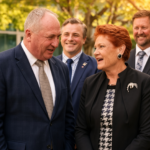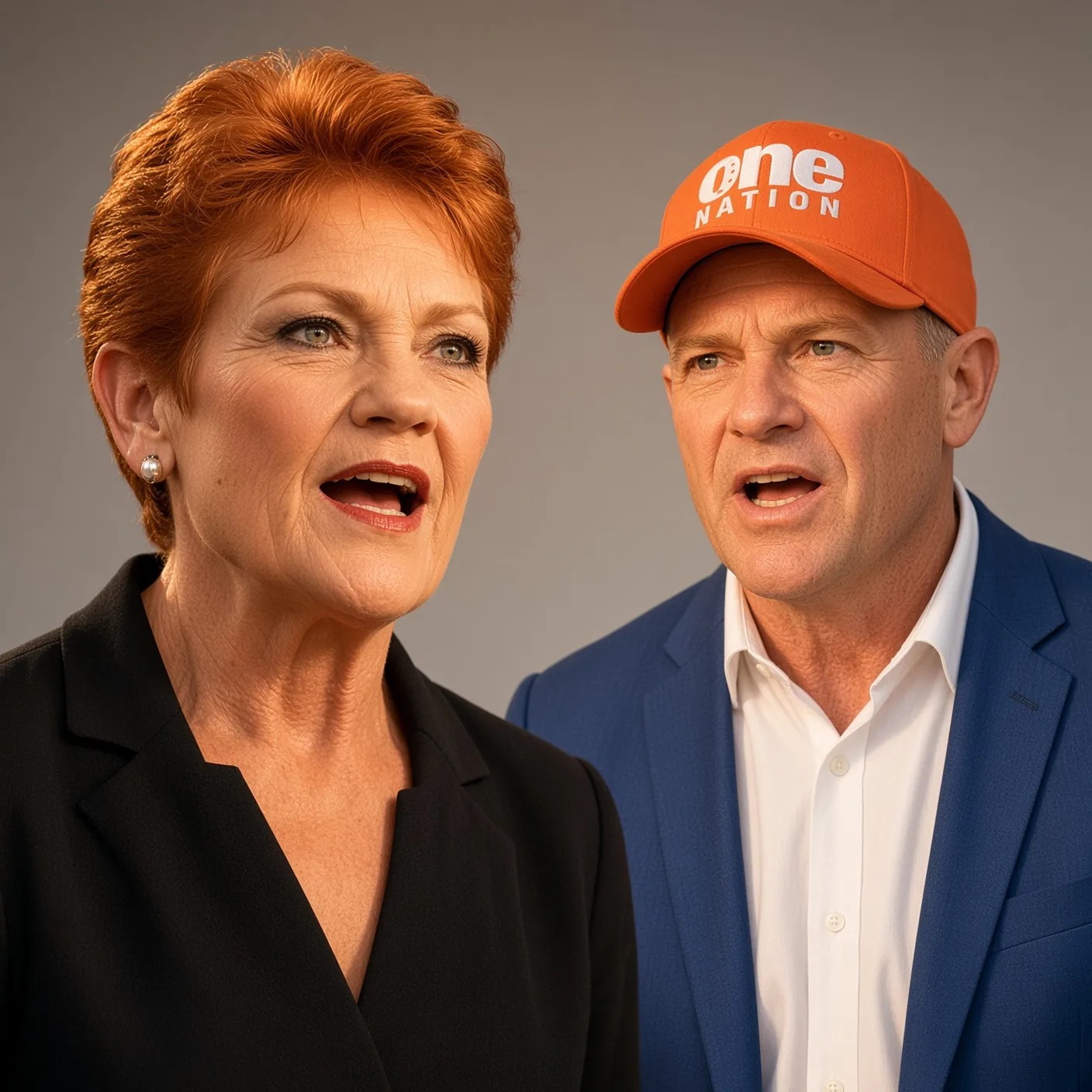
Pauline Hanson is using One Nation’s historic Secret Harbour victory to make a second political argument beyond the election result itself: that her party can win seats while spending a fraction of what the major parties pour into campaigns.
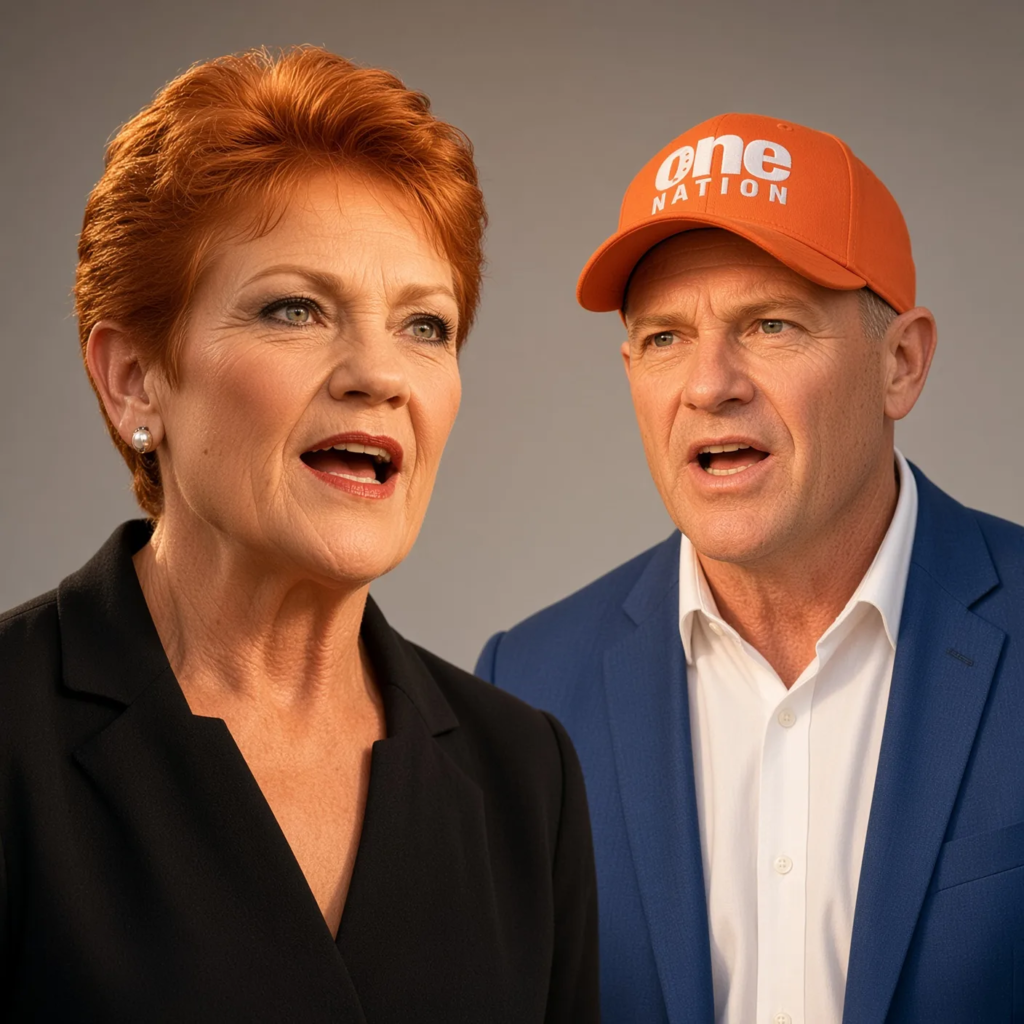
Hanson has highlighted reports that Western Australian Labor spent about $400,000 trying to defend what had long been regarded as one of its safer seats, only to lose to One Nation candidate Luke Herdegen.
One Nation says Herdegen’s own campaign operated on a budget of less than $65,000.
On those figures, One Nation spent roughly 84 per cent less than Labor and still emerged with the seat, allowing Hanson to claim her party achieved considerably more electoral impact for every campaign dollar.
The contrast is politically potent, but the two spending figures do not yet carry exactly the same evidentiary weight.
ABC reporting after the by-election cited a senior Labor figure who put the party’s campaign cost at somewhere around $400,000. Labor has separately acknowledged that its Secret Harbour operation cost hundreds of thousands of dollars.
The campaign itself was extensive.
Premier Roger Cook said Labor volunteers knocked on approximately 19,000 doors, had conversations with about 8,000 voters, distributed more than 210,000 pieces of mail and erected about 1,000 campaign signs.
The party also ran a heavy digital campaign aimed at persuading voters not to shift towards One Nation.
None of it was enough.
One Nation’s figure of less than $65,000, by contrast, comes directly from the party and Hanson rather than from a final public election-expenditure return.
Hanson has promoted the number through One Nation fundraising material, arguing the Secret Harbour result showed the party delivered better “bang for your buck”.
Western Australian electoral law requires parties and candidates to disclose election expenditure, but those returns are lodged after polling day and are not immediately available as audited final records.
That means the eventual Western Australian Electoral Commission disclosures will provide a more authoritative basis for comparing the two campaigns dollar for dollar.
For now, Labor’s roughly $400,000 figure is supported by internal party reporting cited by the ABC, while the sub-$65,000 figure should be treated as One Nation’s own account of its campaign budget.
If the figures ultimately hold, however, the arithmetic behind Hanson’s 84 per cent claim is sound.
A $65,000 campaign is 83.75 per cent cheaper than a $400,000 campaign. Because One Nation says its expenditure was below $65,000, the actual difference could be slightly greater.
The electoral result makes that spending contrast particularly striking.
Secret Harbour went into the by-election as a Labor-held electorate with a margin of about 11.5 percentage points.
The seat and its predecessor electorates had been represented by Labor for decades, most recently by former minister Paul Papalia.
At the by-election, Herdegen secured about 39.1 per cent of first preferences, a rise of 30.7 percentage points on One Nation’s previous performance.
Labor candidate Georgia Tree finished on about 24.1 per cent, a fall of more than 22 points, while Liberal candidate Ryan Robertson received approximately 17.2 per cent.
After preferences, One Nation led Labor by about 57.2 per cent to 42.8 per cent.
The result delivered One Nation its first lower-house seat in Western Australia and turned a Labor stronghold into a case study being examined by political parties across the country.
Labor had known the seat was in serious danger before polling day.
Internal polling reportedly showed One Nation was capable of winning weeks before Papalia’s retirement formally produced the by-election contest.
Cook repeatedly described the campaign as a “fight for our lives”, and Labor responded with the sort of organisational effort usually associated with a highly competitive marginal seat.
Its spending also came alongside a series of government announcements affecting the area.
During the campaign, Labor highlighted funding for local schools, the expansion of Rockingham TAFE, improvements to youth facilities and renewed progress on the long-delayed Karnup Station.
That prompted accusations from opponents that Labor was using the advantages of incumbency aggressively during a by-election.
The government defended the announcements as legitimate investments in a community whose infrastructure needs were growing.
The problem for Labor was that the underlying voter mood proved stronger than the campaign machinery deployed against it.
ABC reporting before and after polling day repeatedly found concerns about housing affordability, cost of living, migration, rapid population growth and dissatisfaction with established political parties.
Secret Harbour contains many young families and homeowners on Perth’s outer metropolitan fringe — precisely the type of voters One Nation has increasingly targeted nationally.
Herdegen’s campaign also adopted a markedly different style from Labor’s.
He presented himself as a local small-business operator and ran heavily on direct community contact, social media and dissatisfaction with major-party politics.
His campaign covered issues ranging from rubbish collection and local services to housing pressure and migration.
One Nation WA also entered the contest with far fewer financial resources than Labor.
During the campaign, the party disclosed a $25,000 donation from Grower Connect Pty Ltd, owned by farmer Paul Da Silva, which was described in reporting at the time as the state branch’s only significant donation since the by-election writ was issued.
The same donor had previously given $50,000 in April.
One Nation officials portrayed the operation as a lean grassroots campaign rather than one powered by the large donor networks and institutional fundraising available to the major parties.
That difference now forms part of Hanson’s wider pitch to supporters.
Her argument is that a political party that can defeat Labor while spending less money is capable of expanding if it receives more donations and volunteers ahead of future state and federal elections.
The Secret Harbour spending comparison has therefore been incorporated into One Nation’s own fundraising campaign rather than being treated solely as an interesting post-election statistic.
But Hanson’s comparison with federal campaign spending requires more caution.
One Nation material has also claimed that Labor spent just under $116 million and the Coalition about $131 million at the “last federal election”, before dividing those figures by the number of lower-house seats to suggest spending of roughly $773,000 and $873,000 per electorate respectively.
The numbers themselves are familiar, but the timing is wrong.
The approximately $116 million Labor figure and $131 million Coalition figure are associated with party expenditure around the 2022 federal election, not verified expenditure totals from the 2025 campaign.
They have appeared in research and parliamentary material analysing the earlier election cycle.
The Australian Electoral Commission has released 2025 election disclosures, but the way major-party finances are reported means simple comparisons with the Secret Harbour campaign are difficult.
Party expenditure is generally disclosed in aggregate rather than as a clean seat-by-seat campaign cost.
A national political party spends money on television advertising, digital campaigns, staff, research, administration, Senate campaigns, leadership travel and material that affects dozens or all electorates simultaneously.
Dividing a national total by the number of House candidates therefore produces an average, not a documented expenditure figure for each electorate.
It would be misleading, for example, to conclude that Labor necessarily spent $773,000 in every seat at a federal election simply because a national party total divided by the number of candidates produces that number.
Marginal seats can attract substantially more resources than safe seats, while national advertising cannot always be allocated meaningfully to one electorate.
The Secret Harbour comparison is much narrower.
Labor focused an unusually large campaign on a single by-election at a moment when control of government was not at stake but the political symbolism of losing a safe seat was enormous.
One Nation concentrated its more limited resources on the same seat and won.
That does not establish a universal rule that spending less produces better election outcomes.
Political campaigns cannot purchase support if voters are fundamentally dissatisfied, but money still matters for staffing, advertising, research, voter contact and getting supporters to the polls.
A poorly funded campaign without an underlying constituency can disappear regardless of how efficiently its money is spent.
Secret Harbour instead shows the limits of financial advantage.
Labor had more money, more volunteers, an incumbent state government, a sophisticated campaign organisation and a long history of success in the area.
One Nation had a significantly smaller operation but was campaigning into a powerful anti-major-party mood.
The latter proved more important.
Notre Dame University political scientist Martin Drum said after the result that campaigns could not necessarily overcome broad conditions such as housing costs and household financial pressure.
A party can knock on more doors and distribute more advertising, but it cannot make mortgages cheaper or solve a housing shortage during a five-week campaign.
Labor’s own post-election review is now expected to examine why such an intensive operation failed.
Candidate selection is likely to be part of that discussion.
Tree had previously worked as a political adviser and later in government relations at Woodside Energy and lived outside the electorate, issues opponents repeatedly used against Labor.
The party also faced criticism after its candidate was not made available to answer questions at some campaign events.
Labor figures have meanwhile pointed to the scale and aggressiveness of One Nation’s social-media campaign and raised concerns about misinformation and suspicious online amplification.
Critics of that explanation say Labor risks blaming campaign tactics when the deeper problem was voter dissatisfaction.
The result almost certainly reflects several factors rather than one.
What cannot be disputed is that Labor devoted a large amount of money and manpower to Secret Harbour and lost decisively.
One Nation spent substantially less by its own account and secured a historic breakthrough.
For Hanson, that has become a powerful fundraising story: major-party resources no longer guarantee major-party loyalty.
The more important lesson for Labor may be that campaign spending is most effective when voters are still open to persuasion.
Secret Harbour suggests a significant number had already decided they wanted change before the final mailout, advertisement or doorstep conversation arrived.
Whether One Nation can repeat that formula across multiple electorates is a different question.
A single concentrated by-election campaign is much easier to resource than a statewide or national election involving dozens or hundreds of candidates.
Candidate quality, volunteer numbers, fundraising, preference flows and organisational discipline become more difficult as a party expands.
Secret Harbour nevertheless gave Hanson something much more valuable than an abstract opinion poll.
It gave One Nation a real seat, a real electoral swing and a result achieved with a campaign the party says cost less than one-sixth of Labor’s.
Until official expenditure returns are available, the exact dollar comparison should remain qualified.
The political comparison does not need one.
Labor spent heavily to defend Secret Harbour.
One Nation won it anyway.