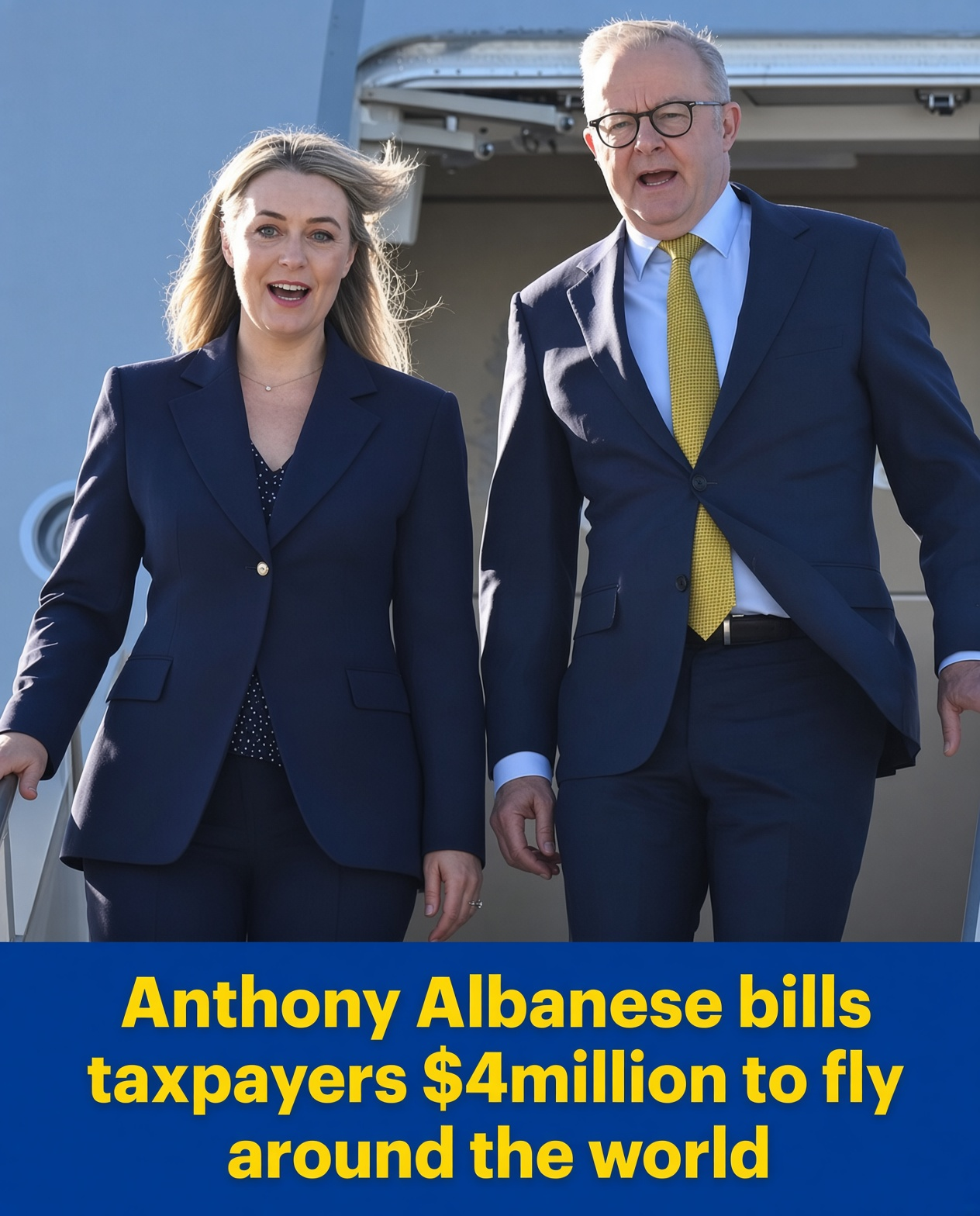
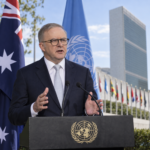
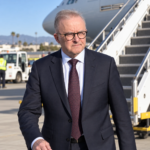
Anthony Albanese’s taxpayer-funded travel expenses have come under fresh scrutiny after parliamentary expenditure records showed millions of dollars flowing through the Prime Minister’s office for travel over the past financial year, including international missions, domestic flights and the substantial cost of moving staff around Australia and overseas.
Figures published by the Independent Parliamentary Expenses Authority have reignited debate over the cost of ministerial travel at a time when Australian households are under intense pressure from mortgages, rents and everyday living expenses.
Reporting based on the disclosures puts travel associated with Albanese at more than $4 million across the financial year.
But the figure requires an important qualification.
It should not be interpreted as Anthony Albanese personally spending $4 million on international airline tickets.
What the IPEA figures actually measure
IPEA publishes detailed expenditure records for federal parliamentarians and their offices.
The records divide expenditure into categories including travel allowance, international travel, scheduled commercial transport, unscheduled transport, car costs, family travel and employee travel.
That last category can be particularly significant for the Prime Minister.
Albanese travels with staff required to support the work of the nation’s head of government, and their transport expenses can produce much larger totals than the Prime Minister’s individual airfare.
That distinction matters when assessing a headline figure running into millions of dollars.
Albanese’s quarterly expenditure has been enormous
Official IPEA data shows the scale of expenditure attached to the Prime Minister’s parliamentary office.
For January to March 2025, Albanese’s total reported expenditure was approximately $1.07 million.
During April to June 2025, it climbed to approximately $1.67 million.
For July to September 2025, the total was about $941,079.
And in the first quarter of 2026, IPEA recorded approximately $924,716 in total expenditure.
Those numbers demonstrate why the annual bill can rapidly reach several million dollars even before individual overseas missions are examined.
Staff travel accounts for a huge share
One of the most striking features of the Prime Minister’s expenditure is the amount attributed to employee travel.
IPEA records show employee travel of more than $660,000 during the first three months of 2025.
For April to June 2025, that category exceeded $1.2 million.
From July to September, employee travel was approximately $584,000.
In January to March 2026, it was approximately $669,000.
The figures underline why simply describing the entire bill as Albanese’s personal “flights” can give a misleading impression of where the money went.
International travel is another major component
International travel nevertheless represents a substantial cost.
IPEA recorded approximately $226,060 in international travel for Albanese’s office during January to March 2025.
The following quarter recorded approximately $188,108.
From July to September 2025, the figure was approximately $169,049.
For January to March 2026, international travel was approximately $103,861.
For a Prime Minister, overseas travel is an unavoidable part of the job — but the scale and purpose of each trip remain legitimate matters for public scrutiny because taxpayers ultimately meet the cost.
A six-day Singapore visit cost more than $31,000
Among the latest trips attracting attention was Albanese’s six-day visit to Singapore from April 6 to April 11.
The reported cost was $31,459.61.
According to the disclosed breakdown, that included $5,878.39 in employee travel costs.
Accommodation and meals accounted for $9,958.94.
Ground transport cost $5,533.62.
Almost another $10,000 was attributed to incidentals.
The Singapore trip was connected with official regional meetings and government engagements rather than private travel.
Brunei and Malaysia added another $44,616
Albanese then travelled to Brunei and Malaysia between April 11 and April 17.
That leg produced another reported bill of $44,616.17.
Employee travel accounted for $14,777.57.
Accommodation and meals totalled $13,821.74.
Ground transport added $6,039.46.
Incidentals came to $9,725.40.
Together, the Singapore, Brunei and Malaysia visits generated more than $76,000 in disclosed costs.
Prime ministers cannot conduct diplomacy from Canberra
There is an obvious reason prime ministers incur higher travel bills than ordinary parliamentarians.
Australia’s head of government is required to attend bilateral meetings, regional summits, security discussions and multilateral gatherings.
Australia’s diplomatic and economic interests stretch from the Pacific and South-East Asia to Washington, Europe and major international institutions.
Meetings with foreign leaders are not optional extras in the modern prime ministership.
The relevant debate is therefore not whether a prime minister should travel, but whether each trip is necessary, efficiently organised and delivers sufficient value for taxpayers.
Special-purpose aircraft make the numbers more complicated
Another source of confusion is the use of Australian Defence Force special-purpose aircraft.
Prime ministers and other senior officeholders can use Defence aircraft for official travel where required.
These flights are fundamentally different from buying a business-class seat on a scheduled commercial service.
They involve aircraft operations, Defence personnel, security and logistical requirements associated with transporting senior government officials.
That means the apparent cost of prime ministerial travel cannot always be compared directly with what an ordinary traveller would pay to fly between the same cities.
Security adds costs ordinary travellers never face
A serving Australian prime minister cannot travel overseas like a private citizen.
Security personnel, government staff, secure communications and ground arrangements must accompany official visits.
Meetings can also require movements between airports, hotels, government buildings, diplomatic facilities and summit venues.
Those requirements explain why accommodation and transport costs can become substantial even on relatively short trips.
They explain the expense, but they do not remove the government’s responsibility to demonstrate that public money is being used efficiently.
The timing makes the spending politically sensitive
The release of large parliamentary expenditure figures comes as Australians continue to scrutinise government spending more broadly.
Households have endured sustained pressure from higher housing costs, electricity bills, insurance, groceries and other essential expenses.
Australia’s gross federal debt has also crossed the $1 trillion threshold.
Against that backdrop, any report involving millions of dollars of taxpayer-funded ministerial travel is likely to attract attention.
For families cutting discretionary spending at home, the government faces a higher political burden to explain why each dollar spent on ministers and their staff is necessary.
But the $4 million headline needs context
The strongest criticism of Albanese should be based on what the records actually show.
IPEA does not publish a single category called “Anthony Albanese flying around the world”.
Instead, its expenditure system records numerous categories connected with the parliamentary and official duties of parliamentarians and their staff.
Domestic travel can be included.
International travel can be included.
Employee travel can be included.
Travel allowances and ground transport can also contribute.
Presenting all of those costs as though the Prime Minister personally purchased $4 million worth of overseas airline tickets would overstate what the data establishes.
IPEA makes the underlying records public
The Independent Parliamentary Expenses Authority exists partly to bring greater transparency to the use of parliamentary work expenses.
Its online database allows expenditure to be examined by parliamentarian, reporting period and category.
The authority says its transaction data represents expenses paid, invoices raised and repayments made.
Amounts are reported excluding GST and PAYG withholding tax.
That transparency allows Australians to move beyond political claims and examine where parliamentary expenditure actually goes.
Albanese’s first quarter of 2026 cost nearly $925,000 overall
The January-to-March 2026 quarter provides a useful example.
IPEA reports total expenditure of $924,716 for Albanese.
That included $8,333 in travel allowance and $103,861.11 in international travel.
Scheduled commercial transport accounted for approximately $27,113.
Unscheduled transport was approximately $75,942.
Car costs were approximately $38,073.
Employee travel dominated the account at approximately $668,978.
The breakdown makes clear that the overall figure is substantially broader than the Prime Minister’s own airfare.
The previous year showed the same pattern
The pattern is not unique to one reporting period.
From April to June 2025, IPEA reported $1,668,541.06 in total expenditure for Albanese.
International travel was approximately $188,108.
Employee travel alone exceeded $1.218 million.
From January to March 2025, total expenditure reached $1,070,241.90, with employee travel of approximately $660,730.
The cost of supporting the Prime Minister’s work therefore extends far beyond his individual movements.
Ministerial travel is not automatically waste
High expenditure does not, by itself, demonstrate misuse.
A foreign trip can produce diplomatic, trade or security outcomes whose economic value greatly exceeds its travel cost.
Government leaders are expected to maintain relationships with Australia’s neighbours and strategic partners.
Australia also competes for investment, negotiates trade arrangements and participates in international security architecture.
Judging a trip purely by its dollar figure without considering its purpose can therefore be as misleading as ignoring the cost altogether.
Nor should ‘official business’ end the discussion
The opposite argument is equally important.
Labelling travel “official” does not automatically establish value for money.
Taxpayers are entitled to know why ministers travelled, who accompanied them, what was achieved and whether the same objectives could have been accomplished more efficiently.
Accommodation, staffing, ground transport and incidental expenses deserve scrutiny just as airfares do.
Public office carries a legitimate expectation that necessary expenditure will also be economical expenditure.
Who are Labor’s biggest travellers?
The broader release of ministerial expense records has prompted scrutiny of spending throughout the Albanese ministry rather than the Prime Minister alone.
However, direct comparisons between ministers need care.
A Western Australian minister who regularly flies thousands of kilometres between Perth and Canberra will naturally face different costs from a Sydney-based MP.
A minister with an international trade or foreign affairs portfolio may also travel overseas more frequently than a colleague whose responsibilities are predominantly domestic.
Ranking ministers solely by total dollars without considering geography and portfolio responsibilities can obscure more than it reveals.
Australia’s geography makes parliamentary travel expensive
Canberra’s location means federal parliamentarians regularly travel considerable distances simply to attend Parliament.
For MPs and senators from Western Australia, Queensland, Tasmania and remote electorates, those distances can be enormous.
Ministers also travel around the country to undertake portfolio responsibilities.
That structural reality guarantees the Commonwealth will always carry a significant parliamentary travel bill.
The challenge is distinguishing unavoidable costs of governing a continent from expenditure that could reasonably have been avoided.
Staff numbers matter too
The enormous employee travel component attached to Albanese’s office demonstrates another important factor.
A prime minister does not travel alone.
Advisers, communications staff and officials can be required to support major engagements.
The larger the travelling delegation, the more quickly airfares, accommodation, meals and ground transport accumulate.
That makes delegation size an important measure of efficiency.
Even when a Prime Minister’s attendance is unquestionably necessary, taxpayers can still ask whether everyone travelling with him also needed to be there.
South-East Asia is strategically important to Australia
The destinations highlighted in the latest expenditure controversy are not random holiday locations.
Singapore and Malaysia are major economic and strategic partners for Australia.
Brunei is also part of the regional diplomatic architecture in Australia’s immediate neighbourhood.
Successive Australian governments of both major political persuasions have placed considerable emphasis on engagement with South-East Asia.
That context makes it difficult to argue that visiting the region is inherently inappropriate for an Australian prime minister.
The question is what Australians received for the money
The more useful accountability test is what an official mission accomplished.
Were bilateral relationships advanced?
Were trade or investment opportunities secured?
Were security arrangements strengthened?
Did meetings require the Prime Minister’s physical presence?
And were the size and expense of the delegation proportionate to those objectives?
Those questions provide a more meaningful assessment than simply expressing shock at the headline total.
Transparency makes scrutiny possible
Australians now have far greater access to parliamentary expenditure information than existed in earlier political eras.
IPEA’s database exposes quarterly spending across hundreds of parliamentarians and numerous categories.
Individual transactions can be examined rather than relying entirely on political claims about what was spent.
That creates uncomfortable headlines for governments and oppositions alike.
But discomfort is part of the purpose of transparency when public money is involved.
Albanese faces a simple political problem
The Prime Minister can legitimately argue that international diplomacy is part of his job.
He can point to the security and staffing requirements surrounding official travel.
He can also demonstrate that much of the multimillion-dollar expenditure attributed to his office consists of employee and domestic travel rather than personal overseas flights.
None of those explanations changes the political reality.
When taxpayers see a travel bill measured in millions of dollars, they will expect a clear account of what they received in return.
The records tell a more complicated story than the headline
The latest figures reveal a costly operation surrounding Australia’s Prime Minister.
They show substantial spending on international travel.
They show significant accommodation, ground transport and incidental costs attached to individual overseas missions.
And, most strikingly, they show hundreds of thousands of dollars — sometimes more than $1 million in a quarter — associated with employee travel.
What they do not show is Anthony Albanese personally buying $4 million of airline tickets to travel around the world.
That distinction does not make the spending irrelevant.
It makes scrutiny of the spending more important.
Australians are entitled to demand that prime ministers conduct the diplomacy necessary to protect the country’s economic and strategic interests.
They are equally entitled to demand that ministers remember who pays the bill.
With millions of taxpayer dollars involved, the standard should be straightforward: necessary travel, transparent costs and demonstrable value for money.