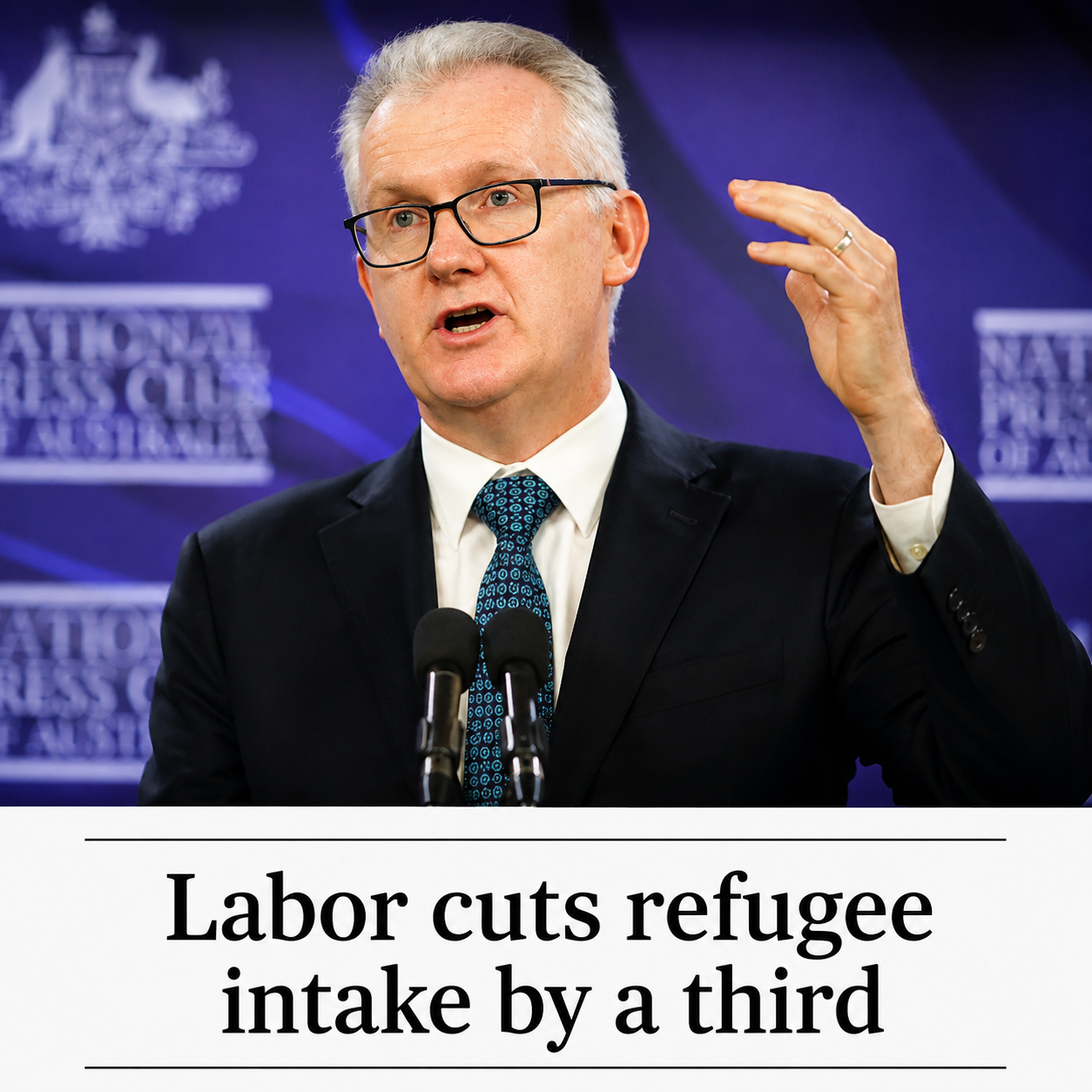
Prime Minister Anthony Albanese has intervened to keep Australia’s refugee and humanitarian intake at 20,000 places after his own government initially confirmed plans to slash the program to 13,750 from next financial year, triggering anger inside Labor and confusion over the government’s migration strategy.
The dramatic reversal unfolded within hours on Thursday after reports emerged that the Albanese government intended to cut 6,250 places from Australia’s annual Humanitarian Program from 2027–28.
A spokesperson for Home Affairs Minister Tony Burke initially confirmed the planned reduction, which would have taken the program from its current 20,000 places back to the long-running base figure of 13,750.
But following a backlash from Labor MPs and refugee advocates, Albanese stepped in and declared that the 20,000-place intake would continue.
“The refugee intake needs to be renewed in the coming budget as the 20,000 places was available for four years,” the Prime Minister told the ABC.
He said 20,000 remained government policy and would continue in future years alongside Australia’s border-security regime.
Government initially confirmed major refugee cut
The controversy began with reports that Labor intended to reduce the Humanitarian Program by almost one-third, from 20,000 places to 13,750.
The reduction amounted to 6,250 places annually, or 31.25 per cent of the current program.
Crucially, the proposed change was separate from the broader package of migration restrictions being considered by cabinet, although it was being discussed against the backdrop of the government’s effort to bring net overseas migration down.
The government has been under mounting political pressure over migration as housing affordability, rental availability and infrastructure capacity become increasingly important electoral issues.
But cutting humanitarian places was always likely to be considerably more politically sensitive inside Labor than tightening other migration categories.
The party has historically supported a larger humanitarian program and previously set an ambition to progressively increase the intake rather than reduce it.
Tony Burke’s office confirmed 13,750 figure
The significance of Thursday’s reversal is that the original report was not merely based on speculation from outside government.
The ABC reported that a spokesperson for Home Affairs Minister Tony Burke had confirmed plans to reduce the humanitarian intake by 6,250 places next financial year.
That would have restored the annual ceiling to 13,750 — a level used for years under previous governments and significantly below Labor’s more recent settings.
The government currently maintains 20,000 places in the Humanitarian Program.
Home Affairs documentation states that the 2025–26 program contains 20,000 places, providing permanent resettlement and protection to people in humanitarian need.
The department had also previously indicated that the 20,000-place level would continue through 2026–27.
The proposed reduction therefore concerned the following program year, 2027–28.
Labor MPs blindsided by proposed reduction
The proposed cut quickly created problems inside the government.
According to the ABC, several Labor MPs were shocked by the announcement and said the reduction had not been discussed through caucus forums.
That internal reaction placed Albanese in the politically uncomfortable position of facing opposition to the proposal from within his own ranks while simultaneously trying to demonstrate to voters concerned about migration that the government was bringing population growth under greater control.
The humanitarian intake has also long occupied a different political and policy category from skilled migration, international students and other temporary visa programs.
Australia’s Humanitarian Program provides pathways for refugees and others facing persecution, severe human-rights abuses or other humanitarian circumstances.
Home Affairs says the offshore program prioritises people including refugees referred by the United Nations High Commissioner for Refugees, while the broader program also provides protection pathways for eligible people already in Australia.
Albanese casts doubt on report before stepping in
The Prime Minister was questioned about the reported reduction during the National Bush Summit in Dubbo on Thursday.
Initially, Albanese appeared to cast doubt on the reporting.
“Don’t necessarily believe everything you read in The Fin,” he said when asked about the Australian Financial Review report.
He then linked the government’s broader approach to migration to economic and population pressures.
Albanese acknowledged the political rise of One Nation but argued Labor had begun lowering migration before the party’s recent increase in support.
“There is a current spike in the support for One Nation, quite clearly,” he said.
“But we’ve responded. We started lowering the numbers well before that occurred because we recognise that we want to get that right to assist the Australian economy.”
Within hours, however, the issue had developed beyond a dispute over media reporting.
Prime Minister intervenes: 20,000 places will remain
Albanese subsequently provided a direct guarantee that the refugee intake would not fall to 13,750.
He confirmed that the 20,000-place program would be renewed rather than allowed to revert to the lower level.
“This intake number remains government policy and will be continued in future years, consistent with Australia’s humanitarian commitments and sits beside our strong border security measures,” Albanese said.
The statement effectively overrode the position that had been confirmed earlier through Burke’s office.
It also transformed the political story from a straightforward reduction in the refugee intake into an extraordinary episode of conflicting government messages followed by prime-ministerial intervention.
Australia currently offers 20,000 humanitarian places
Australia’s Humanitarian Program is separate from the standard permanent Migration Program and is designed specifically for refugees and people facing humanitarian need.
The Department of Home Affairs says the program provides resettlement for people overseas as well as protection for eligible people already in Australia who engage Australia’s protection obligations.
The offshore component includes several pathways, including Refugee visas and the Global Special Humanitarian visa.
Applicants can include people referred by the UNHCR, people facing persecution and others experiencing serious human-rights abuses.
Demand considerably exceeds the number of available places, meaning only a proportion of people seeking resettlement are ultimately accepted.
Home Affairs says Australia has resettled more than 950,000 refugees and other people in humanitarian need since the end of the Second World War.
13,750 would have unwound Labor-era increases
The proposed 13,750 figure was significant because it represented a return to a longstanding baseline rather than an entirely new number.
Australia operated with a humanitarian program ceiling of 13,750 during a number of previous years.
Labor subsequently increased the program, with the current setting reaching 20,000 places.
The government’s decision to maintain that number for 2026–27 had already been publicly documented before Thursday’s controversy.
A reduction to 13,750 in 2027–28 would therefore have unwound much of that expansion and marked a substantial shift in direction for Labor.
Labor previously backed an eventual 27,000 places
The controversy is even more striking when compared with Labor’s previous ambitions for the humanitarian intake.
The party’s 2023 national platform committed to progressively increasing the Humanitarian Program to 27,000 places annually.
Policy organisations and refugee advocates have continued to point to that commitment when arguing for a larger program.
Earlier this year, the Centre for Policy Development recommended progressively increasing the intake to 27,000, noting that the government had already confirmed the 20,000-place setting for 2026–27.
That means a reduction to 13,750 would not merely have frozen Labor’s previous expansion plans. It would have moved the program sharply in the opposite direction.
Refugee advocates push back against migration link
The proposed cut also generated criticism because of the suggestion that refugee numbers were being considered as part of the broader effort to reduce migration.
Refugee advocates argue that humanitarian resettlement should not be treated in the same way as other migration streams because its central purpose is protection rather than meeting labour-market, education or population objectives.
The Refugee Council of Australia and other advocates opposed the reported reduction, while Greens senator David Shoebridge also criticised the proposal.
Supporters of a larger intake point to the scale of global displacement and Australia’s longstanding role in international refugee resettlement.
UNHCR said in June that global displacement remained near record levels while announcing an extension of its strategic partnership with Australia.
Migration pressure is intensifying politically
The dispute nevertheless comes at a time when the Albanese government is under intense pressure to demonstrate that it can control overall migration.
Housing shortages and rental affordability have transformed migration from a largely economic debate into a major political argument over Australia’s capacity to accommodate rapid population growth.
The government has been seeking to bring net overseas migration down while defending migration streams it considers economically or socially important.
At the Bush Summit, Albanese explicitly acknowledged the recent rise in support for One Nation while denying that Labor’s migration response had been created because of that surge.
One Nation has made substantially lower migration one of the central pillars of its political campaign, increasing pressure on both Labor and the Coalition to explain how their population policies interact with housing supply and infrastructure.
Refugees make up only one component of migration
The debate also requires a distinction between humanitarian places and net overseas migration.
Net overseas migration measures the difference between people arriving in Australia and leaving Australia who meet the relevant residency-duration criteria.
It includes movements involving temporary visa holders, international students, skilled workers and other categories, meaning the annual humanitarian intake represents only one part of a much larger population equation.
That distinction helps explain why refugee advocates reacted strongly to the prospect of reducing humanitarian places as part of a broader migration-reduction strategy.
They argue substantially larger changes to net overseas migration can be achieved through other visa categories without cutting the number of refugees Australia permanently resettles.
Conflicting messages leave questions for Burke and Albanese
Thursday’s events now leave the government facing questions not only about refugee policy but about how such dramatically different positions emerged on the same day.
Burke’s office had confirmed that the intake would fall by 6,250 places.
Albanese subsequently said the 20,000 figure remained government policy and would continue.
The Prime Minister’s intervention settles the headline number for now, but the sequence raises questions about whether the reduction had been formally agreed, how widely it had been discussed inside government and why Labor MPs were apparently unaware of it.
It also leaves the government balancing two politically difficult objectives.
Labor wants to demonstrate that overall migration is falling in response to housing and infrastructure constraints, while simultaneously maintaining a humanitarian program significantly larger than the 13,750-place level that existed before its recent expansion.
A rapid reversal on one of Labor’s most sensitive migration issues
What began Thursday morning as an apparent major change to Australia’s refugee policy ended hours later with the Prime Minister publicly guaranteeing the opposite.
The proposed reduction would have taken the Humanitarian Program from 20,000 to 13,750 places — a cut of 31.25 per cent — and reversed years of expansion under Labor.
Instead, after internal and external backlash, Albanese has committed to renewing the 20,000-place intake in future years.
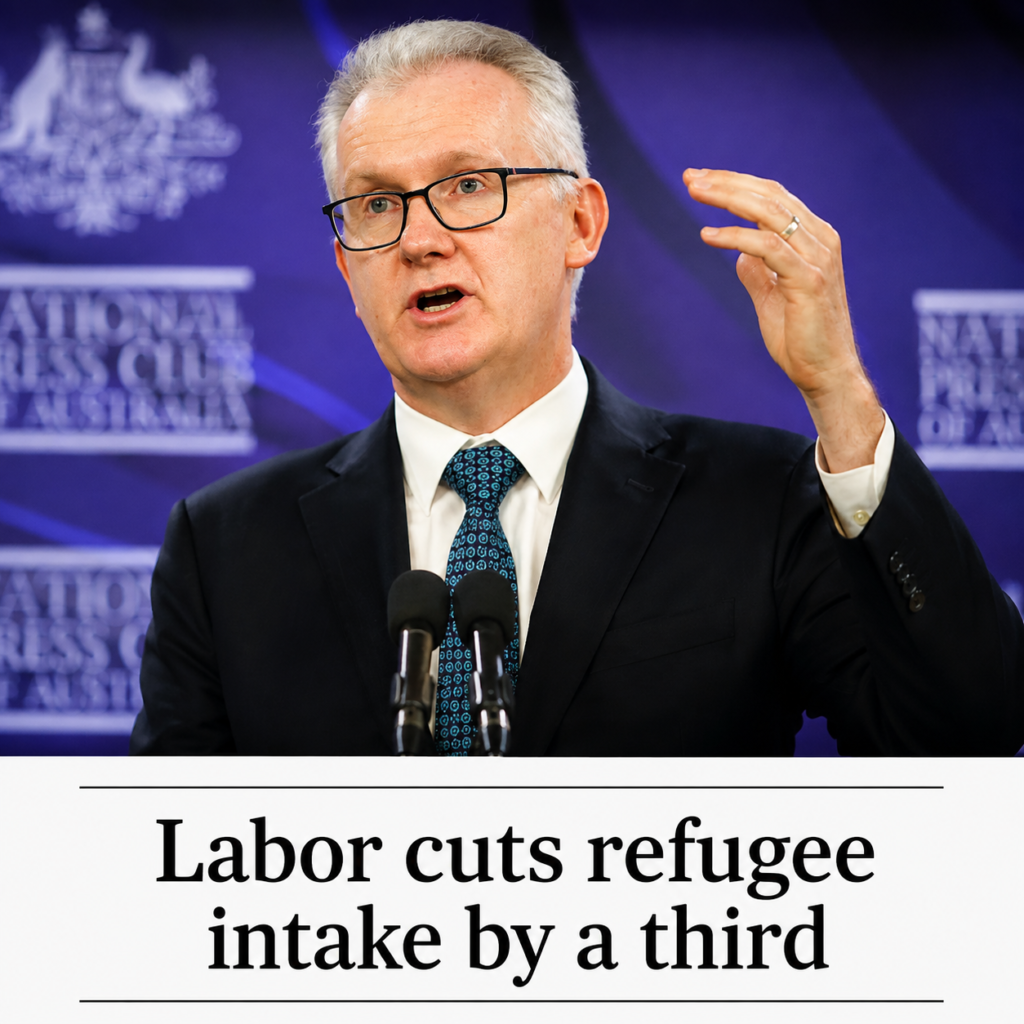
The result is that Australia’s refugee intake will not, according to the Prime Minister’s latest commitment, be cut by a third. But the extraordinary sequence — a reduction confirmed by the Home Affairs Minister’s office followed within hours by a Prime Ministerial reversal — has exposed the political difficulty Labor faces as it tries to cut overall migration without retreating from its humanitarian commitments.