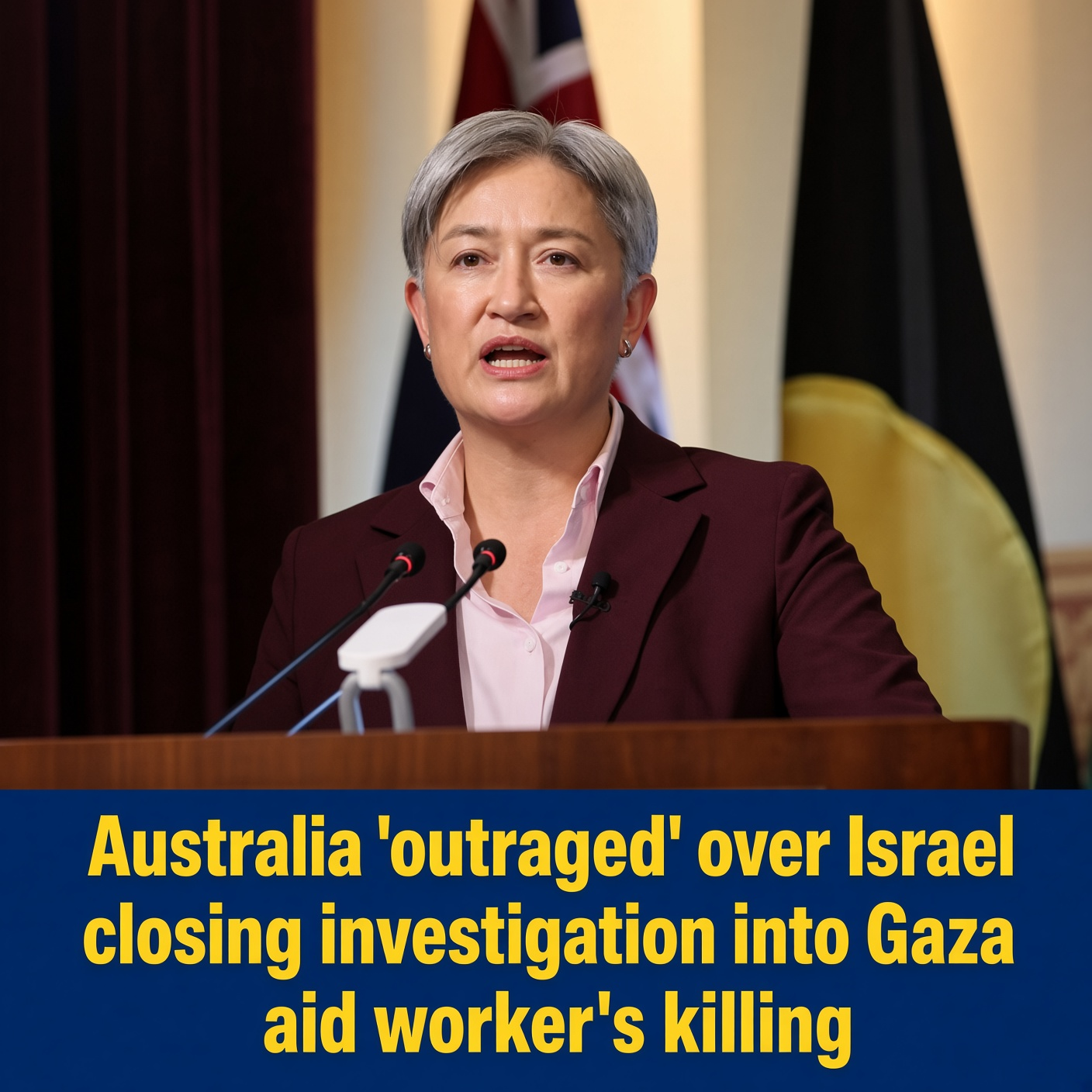
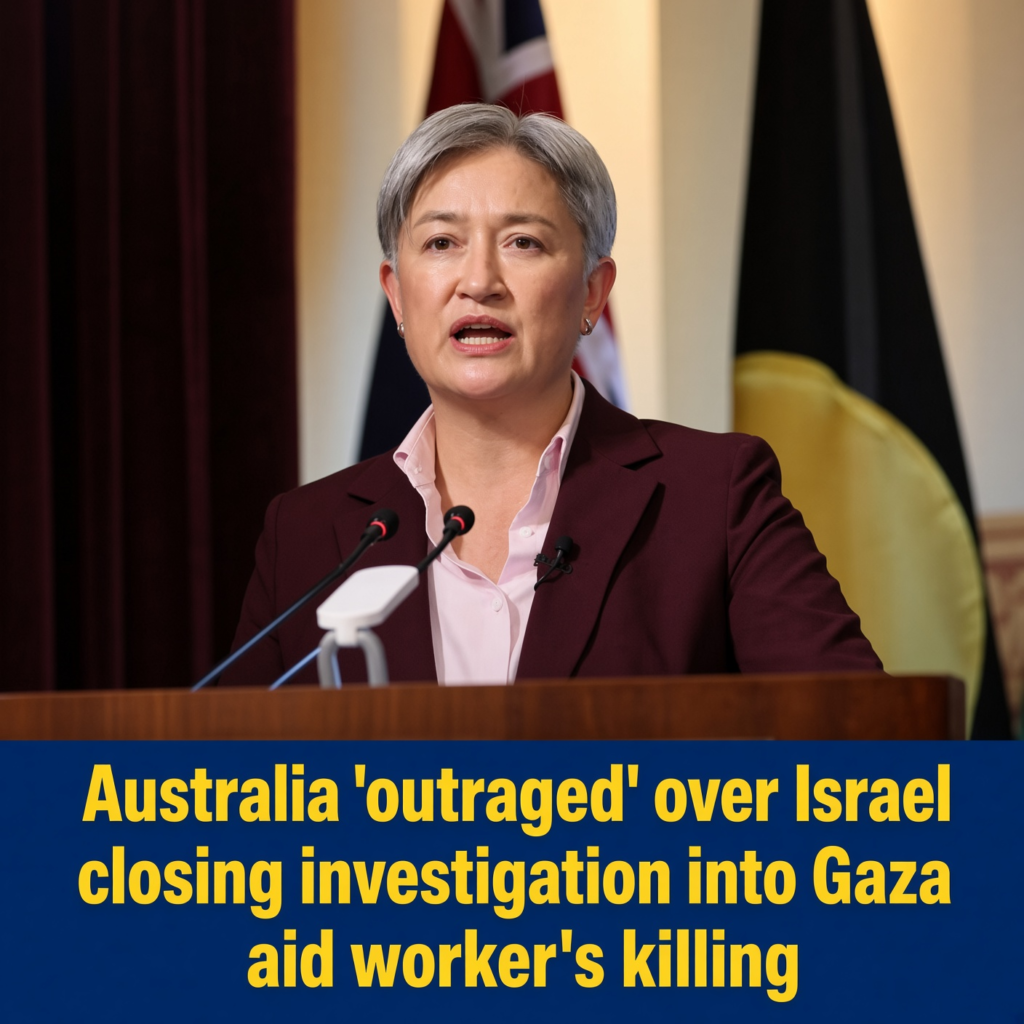
Foreign Minister Penny Wong has declared Australia “outraged” after Israel decided not to pursue criminal proceedings over the military strikes that killed Australian humanitarian worker Zomi Frankcom and six of her World Central Kitchen colleagues in Gaza.
The Albanese government has responded with a significant diplomatic escalation, summoning Israel’s ambassador in Canberra and directing Australia’s ambassador in Israel to formally convey the government’s objections.
Wong says Israel’s decision falls far short of the accountability Australia has demanded since the deadly April 2024 attack.
But the dispute requires an important distinction: Israel has not concluded that nothing went wrong. Its military previously admitted serious failures, mistaken identification and errors in decision-making. The latest decision is that those failures did not establish sufficient grounds for criminal proceedings.
Wong says Australia is ‘outraged’
Wong issued an unusually forceful statement after Canberra learned that Israel would not pursue criminal proceedings over the World Central Kitchen strikes.
“Australia is outraged the Israeli Government has decided not to pursue criminal proceedings against those responsible for killing Zomi Frankcom and her World Central Kitchen colleagues,” she said.
The Foreign Minister said the government had been informed of Israel’s decision only moments before it was announced.
The timing further angered Canberra.
Israel announced the decision on World Humanitarian Day — the international day commemorating humanitarian workers killed and injured while helping others.
Wong described that timing as especially insulting to Frankcom’s loved ones, humanitarian workers and Australians.
Zomi Frankcom was one of seven aid workers killed
Lalzawmi “Zomi” Frankcom was working with World Central Kitchen when she was killed in Gaza on 1 April 2024.
Frankcom and six colleagues were travelling in a humanitarian convoy after helping deliver food to civilians.
The convoy was struck repeatedly by Israeli drones.
The seven people killed included citizens of Australia, the United Kingdom, Poland and Palestine, as well as a dual Canada-US national.
World Central Kitchen had coordinated the movement of its vehicles with the Israeli military.
The organisation has consistently maintained that its team was unarmed and that its clearly marked vehicles and movements were known to Israeli authorities.
Israel acknowledges that serious failures occurred
Australia’s criticism should not be interpreted as a dispute over whether mistakes occurred.
The IDF itself acknowledged serious failures following the attack.
Its earlier examination identified failures to follow procedures, mistaken identification and errors in decision-making.
Those findings were subsequently examined by Australia’s special adviser, former Chief of the Defence Force Air Chief Marshal Mark Binskin.
Two Israeli officers were removed from their positions following the original examination and three others were reprimanded.
But Israel ultimately determined that the commanders’ decisions did not raise a reasonable suspicion of criminal misconduct.
The distinction between a military failure and a crime is at the heart of the dispute
That distinction is crucial.
A military operation can involve catastrophic errors without those errors automatically establishing criminal liability.
Israel’s position is that its personnel mistakenly believed Hamas operatives were associated with the convoy and that the strikes resulted from operational and identification failures rather than criminal intent.
Israeli ambassador Hillel Newman has defended that conclusion, arguing that procedural failures do not themselves prove criminal responsibility.
Australia’s position is that the admitted failures and the deaths of seven humanitarian workers demand a substantially higher level of accountability and transparency.
Wong summoned Israel’s ambassador
Canberra did not limit its response to a media statement.
Wong summoned Israeli ambassador Hillel Newman to Parliament House for formal discussions.
She also instructed Australia’s ambassador to Israel to convey Canberra’s position directly as the government considered further action.
Wong said democracies should accept higher standards of accountability.
She made clear Australia did not regard the matter as closed merely because Israel had completed its internal legal process.
The ambassador defended Israel’s investigation
Newman emerged from the meeting continuing to defend the Israeli process.
He said investigators had concluded there was no criminal liability for the soldiers involved.
The ambassador maintained there had been no intention to attack humanitarian workers and said Israeli personnel believed Hamas had taken control of the convoy.
He acknowledged mistakes by Israel but also alleged there had been failures associated with the convoy’s movements and communication.
World Central Kitchen strongly disputes that account.
World Central Kitchen rejects Israel’s explanation
The aid organisation has said there was no justification for the strikes and strongly disagrees with both Israel’s account and the decision not to pursue a criminal investigation.
World Central Kitchen says Israeli forces knew its team was unarmed, could see the organisation’s markings on the vehicles and had advance knowledge of the team’s identities and activities.
The organisation argues that the latest Israeli account does not adequately explain why its workers were repeatedly attacked.
That disagreement leaves fundamental factual questions contested more than two years after the deaths.
The convoy was struck more than once
One of the most troubling elements for Frankcom’s family is that the incident was not a single instantaneous strike.
According to the family’s statement, three clearly marked humanitarian vehicles were struck successively as survivors attempted to move between vehicles.
The family argues that this sequence demands greater scrutiny of what Israeli personnel could see and what information was available as the operation unfolded.
They have rejected an internal process ending without criminal proceedings as inadequate.
Frankcom’s family wants an independent investigation
Frankcom’s relatives have described the outcome as deeply disappointing and called on the Australian government to pursue all available legal avenues for an independent and credible investigation.
They have also demanded disclosure of the evidence used by Israeli authorities to reach their conclusion.
The family’s position substantially raises the stakes for Canberra.
This is no longer simply a question of whether the Australian government formally accepts Israel’s explanation.
It must now determine how far it is prepared to go in seeking an alternative process.
Israel has not released all the evidence Australia sought
One unresolved issue concerns audio associated with the drone attack.
Israel has not released audio from the drone footage, including material sought to assist Binskin’s Australian examination.
That matters because communications during the attack could provide further information about what personnel believed they were seeing and how decisions to continue striking the convoy were made.
For Frankcom’s family, transparency around such evidence has become central to establishing confidence in any final conclusion.
Australia’s own review did not find deliberate targeting
There is nevertheless an important limit to what has been established.
Binskin’s Australian review did not find evidence that the IDF knowingly or deliberately attacked World Central Kitchen personnel.
That means claims that Israeli forces intentionally set out to kill Frankcom and her colleagues should not be presented as established fact.
The Australian examination instead confirmed serious operational problems, including misidentification and communication failures.
The argument now is whether those failures could still justify criminal scrutiny even if the humanitarian workers were not deliberately targeted.
Operational error does not automatically mean criminal conduct
This is also why the controversy cannot fairly be reduced to a simple choice between saying Israel did nothing wrong and accusing Israeli soldiers of deliberately killing aid workers.
Neither position accurately captures the evidence currently available.
Israel acknowledges serious failures.
Australia’s own adviser found no evidence of deliberate targeting.
The contested issue is whether the process used to assess possible criminal responsibility was sufficiently independent, transparent and rigorous.
That is the accountability gap Wong says remains unresolved.
Albanese has joined Wong in condemning the decision
Prime Minister Anthony Albanese has backed his Foreign Minister’s position and described Israel’s decision as an outrage.
He said Australia had consistently sought transparency and full accountability and promised the government would continue pressing Israel for justice for Frankcom and her colleagues.
Albanese has also raised the possibility of pursuing an independent investigation.
He said the government would consult Frankcom’s family before announcing its next steps.
Australia, Britain and Canada are now acting together
The dispute has since expanded beyond Australia’s bilateral relationship with Israel.
On 21 August, Australia joined Canada and the United Kingdom in issuing a joint statement condemning Israel’s decision.
The three governments called the announcement “shameful” and said it was both too little and too late.
They said the victims and their families deserved justice and accountability and promised to continue seeking answers.
The statement is significant because nationals of all three countries were among those killed.
The three governments also raised the wider safety of aid workers
The joint statement went beyond the Frankcom case.
Australia, Canada and Britain argued that the World Central Kitchen attack was among numerous incidents in Gaza where accountability remained inadequate.
They said humanitarian workers continued operating in exceptionally dangerous conditions and called on Israel to comply with its obligations under international humanitarian law and do more to protect aid personnel.
The Frankcom case has therefore become part of a much wider diplomatic argument over the protection of humanitarian operations during the Gaza conflict.
Wong says this is a difficult moment in the relationship
The confrontation comes during an already difficult period in Australia-Israel relations.
Wong acknowledged that reality while speaking after summoning the ambassador.
But the government has not indicated it intends to abandon diplomatic engagement with Israel.
Instead, Canberra is attempting to use that relationship to press for greater disclosure and accountability.
That approach will now be tested by whether Israel is prepared to revisit any aspect of its decision or cooperate with further scrutiny.
The timing made Israel’s announcement even more explosive
Israel’s decision was announced on World Humanitarian Day.
Only hours earlier, Frankcom’s family had participated in an event with Wong where a humanitarian award bearing Zomi’s name was announced.
Her family described the timing as an insult to her memory.
Wong echoed that criticism in her official statement.
For Canberra, the timing transformed an already contentious legal decision into an additional diplomatic grievance.
The government’s next step remains unresolved
Australia has made its dissatisfaction unmistakable.
The Israeli ambassador has been summoned.
Australia’s ambassador has been instructed to deliver Canberra’s concerns.
The Prime Minister has raised an independent investigation.
Frankcom’s family has called for further legal avenues to be explored.
And Australia is now coordinating publicly with Britain and Canada.
What remains unclear is exactly what mechanism Canberra will pursue if Israel refuses to reopen the matter.
The question is accountability, not simply blame
The death of Zomi Frankcom has generated intense emotion in Australia for understandable reasons.
She was an Australian humanitarian worker helping deliver food to civilians in a war zone.
She and six colleagues were killed by the military of a democratic country with which Australia maintains diplomatic relations.
Israel has acknowledged that its operation involved serious failures.
It has disciplined personnel.
But it has now concluded that the commanders’ actions did not raise reasonable suspicion of criminal misconduct requiring criminal proceedings.
Australia does not accept that as a satisfactory endpoint.
Wong has drawn Canberra’s line
The Foreign Minister’s response leaves little ambiguity about the government’s position.
Canberra is not alleging, as an established fact, that Israeli personnel deliberately targeted Frankcom.
Nor is it denying that Israel conducted internal reviews and imposed disciplinary consequences.
Instead, Australia is saying the outcome does not provide the level of accountability expected when acknowledged military failures result in seven humanitarian workers being killed.
That distinction is now at the centre of one of the most difficult disputes in the Australia-Israel relationship.
For Israel, the military legal process has found insufficient grounds for criminal action.
For Frankcom’s family, World Central Kitchen and the Australian government, too many questions remain unanswered.
And with Australia, Britain and Canada now publicly demanding further accountability, the April 2024 attack is no longer a case Israel can expect Canberra simply to regard as closed.