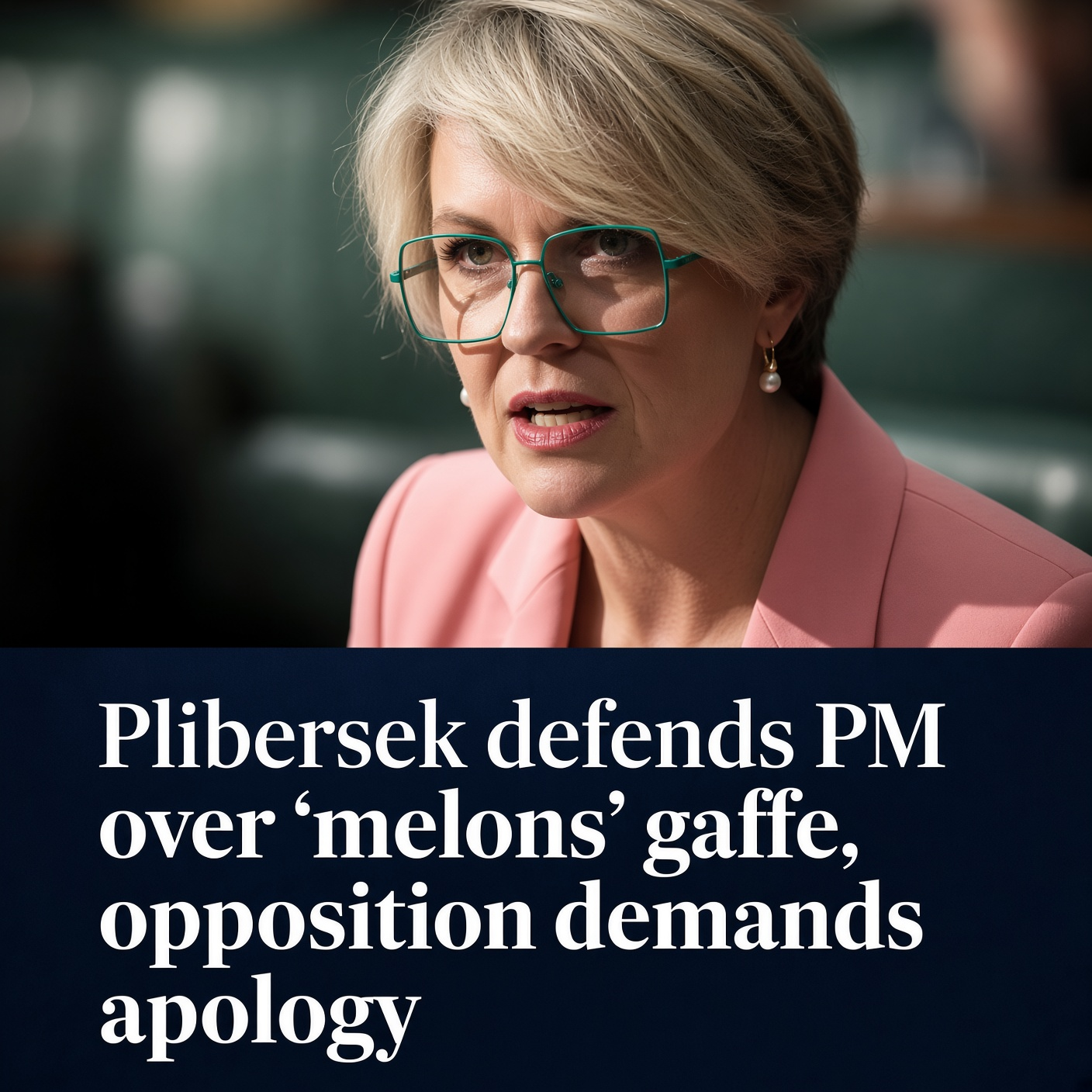
Tanya Plibersek has again defended Anthony Albanese over his controversial comments about Japanese Prime Minister Sanae Takaichi’s “melons”, rejecting a former ambassador’s interpretation of the episode as the Coalition intensifies demands for a personal apology.
The Social Services Minister has pushed back against former Japanese ambassador to Australia Shingo Yamagami, who has argued Albanese’s words and accompanying hand gesture during a comedy podcast amounted to an insulting sexual reference to Takaichi.
Plibersek insists that interpretation is wrong.
Speaking on Sunrise, the senior Labor minister said Yamagami had “completely misinterpreted” what Albanese was doing and rejected suggestions the episode reflected a deterioration in relations between Australia and Japan.
Her intervention puts one of Labor’s most senior female ministers firmly behind the Prime Minister as an initially obscure segment from a podcast recorded weeks ago continues to dominate federal politics.
Plibersek says the melon gesture has been misinterpreted
The controversy concerns Albanese’s appearance on comedian Nikki Osborne’s Bush Deep podcast.
During a discussion about gifts he had received as Prime Minister, Albanese referred to melons given to him by Takaichi and made a gesture with his hands.
Critics interpreted the combination of the word “melons” and the gesture as an obvious reference to breasts.
Albanese says that was not what he meant.
His office has similarly maintained that the interpretation being promoted by his political opponents is incorrect.
Plibersek has now placed herself squarely behind that explanation, arguing the former ambassador was wrong to read the exchange as a sexual reference.
Former ambassador sees it very differently
Yamagami, who served as Japan’s ambassador in Canberra from 2020 to 2023, has emerged as one of the strongest critics of the Prime Minister’s conduct.
He described the comments as insulting and argued Albanese should apologise to Takaichi.
His criticism has given the Coalition additional ammunition because it allows the Opposition to argue that objections to the podcast are not confined to Australian domestic politics.
However, Yamagami is a former ambassador and does not speak for the current Japanese government.
That distinction is important when assessing claims that the podcast episode has created an official diplomatic dispute.
The current Japanese government has adopted markedly more restrained language than Yamagami.
Coalition demands Albanese apologise
The federal Opposition has nevertheless concluded that Albanese should personally apologise to his Japanese counterpart.
Opposition Leader Angus Taylor has accused the Prime Minister of behaving disrespectfully and argued the issue could be resolved by simply acknowledging that the comments were inappropriate.
The Coalition has also questioned why Albanese was willing to apologise for another controversial exchange during the same podcast but refuses to do so over Takaichi.
Albanese has rejected that demand.
He maintains the central premise behind calls for an apology — that he made a sexual joke about Takaichi — is false.
Albanese did apologise over Kylie Minogue
The distinction between the two controversies is central to the Prime Minister’s defence.
During the same Bush Deep appearance, Albanese participated in a “shag, marry, date” game involving Australian female celebrities.
He nominated Kylie Minogue for all three categories.
That remark attracted immediate criticism after the podcast became public, including concern about a sitting prime minister discussing prominent women in explicitly sexual terms.
Albanese responded by issuing what he described as an “unequivocal” apology.
He acknowledged that his participation in the segment had been a mistake.
The melon controversy is different because Albanese disputes the interpretation itself.
He is not arguing that a sexual joke about Takaichi was acceptable.
He is arguing that he never made one.
Plibersek previously defended the Kylie exchange
Plibersek’s latest intervention has attracted particular attention because she was also among Labor figures who initially sought to play down Albanese’s comments about Minogue.
She suggested at the time that the Prime Minister’s remarks reflected his admiration for the singer rather than hostility or disrespect towards women.
Albanese subsequently went further than that defence by apologising for his own participation in the game.
Critics now accuse Plibersek of applying a different standard to the Prime Minister than Labor would apply to a political opponent accused of making comparable remarks about a woman.
That is a political argument rather than an established fact, but it explains why the response of senior Labor women has become a significant part of the controversy.
What exactly happened on the podcast?
The melon segment involved a genuine diplomatic gift.
Takaichi had given Albanese premium Japanese melons, and the Prime Minister later discussed receiving them during the informal podcast conversation.
The dispute is over what happened next.
Video of the exchange shows Albanese speaking about the melons while moving his hands in front of him.
Opponents say the visual context makes the sexual interpretation obvious.
Albanese and his defenders say viewers are assigning an intention to the gesture that was not there.
Because intent is disputed, it is more accurate to describe the episode as an apparent or alleged sexual innuendo rather than state as fact that Albanese deliberately made a joke about Takaichi’s breasts.
Japan’s official response has been cautious
The domestic Australian debate has at times characterised the controversy as a serious diplomatic embarrassment.
The available evidence from Japan is more nuanced.
The Japanese government has been careful in its public comments and has not adopted the highly critical language used by Yamagami.
Reporting from Tokyo has indicated officials were reluctant to inflate the episode into a major bilateral dispute.
That matters because Australia and Japan have an increasingly important strategic relationship encompassing defence, economic security, critical minerals and regional security.
A disagreement involving the two prime ministers would therefore be significant if it developed into an official diplomatic confrontation.
So far, the political controversy in Australia has been considerably louder than the formal response from Tokyo.
But the story is now reaching a Japanese audience
That does not mean the controversy is completely invisible in Japan.
Fresh reporting from Tokyo indicates the episode has begun circulating on Japanese social media, where some users have criticised Albanese while others have pushed back against attacks on Takaichi herself.
The Australian Financial Review reported on Wednesday that the Japanese government continued to use cautious language even as the argument gained more attention online.
The distinction between government reaction and public reaction is important.
Japanese officials may have little interest in escalating an awkward joke into a diplomatic dispute, while ordinary social media users have no such constraint.
That means an episode initially dominated by Australian politics can still acquire a wider audience as translated clips and reporting circulate internationally.
The podcast strategy itself is under scrutiny
The controversy has also revived questions about why senior politicians appear on deliberately irreverent entertainment podcasts.
Political leaders increasingly use non-traditional media to reach audiences who rarely watch press conferences, parliamentary debates or nightly television news.
The advantage is informality.
The risk is also informality.
A politician attempting to participate naturally in a comedy format can abandon the disciplined language normally associated with high office, while every remark remains capable of being clipped, replayed and scrutinised later.
Albanese discovered that problem immediately after his comments about Minogue emerged in July.
The melon episode has extended that communications problem from celebrity commentary into foreign affairs.
A small moment has become a major political distraction
The original exchange lasted only moments.
Yet the political consequences have continued for weeks because several separate questions have become attached to it.
Was the gesture sexual?
Should Albanese apologise even if he says it was misunderstood?
Has Japan actually been offended?
Are senior Labor women defending conduct they would condemn from an opponent?
And should a prime minister participate in entertainment formats where this kind of controversy becomes more likely?
Those questions have allowed the story to survive well beyond the normal life of a political gaffe.
Labor says opponents are manufacturing a diplomatic crisis
Labor’s broader defence has increasingly focused on the gap between political outrage in Canberra and the response of the Japanese government.
Senior government figures argue the Opposition is attempting to turn an ambiguous gesture into a diplomatic incident despite the absence of evidence that Tokyo wants such a confrontation.
Foreign Minister Penny Wong has accused opponents of attempting to “confect a diplomatic issue”, while Albanese has continued to emphasise the strength of Australia’s relationship with Japan.
That argument does not resolve whether the podcast exchange was appropriate.
A remark can be ill-judged without producing a diplomatic crisis.
Likewise, the absence of a formal Japanese protest does not determine what Albanese intended when he made the gesture.
Those are separate questions that have frequently become blurred together during the political fight.
Opposition sees an issue of standards
The Coalition’s case is ultimately less dependent on proving lasting damage to Australia-Japan relations.
Its broader argument is that a prime minister should maintain a higher standard when discussing another national leader, particularly in circumstances where the comments can reasonably be interpreted as sexual.
From that perspective, an apology would not require Albanese to concede that he intentionally insulted Takaichi.
He could instead acknowledge that the combination of his words and gesture created an unintended impression.
The Prime Minister has so far declined to take that route.
His position remains that apologising for a sexual reference he says he did not make would effectively validate a false interpretation of the exchange.
Plibersek has put her reputation behind the PM’s explanation
That leaves Plibersek playing an increasingly prominent role in Labor’s defence.
As a former minister for women and one of the government’s most senior female figures, her response carries political significance beyond an ordinary frontbencher defending the Prime Minister.
She has not merely argued that the controversy is overblown.
She has challenged the underlying interpretation advanced by Yamagami and other critics.
In Plibersek’s account, Albanese was not making a lewd reference to Japan’s first female prime minister and the former ambassador has read meaning into the exchange that was never intended.
The Opposition rejects that explanation and continues to demand an apology.
That leaves the dispute resting on something neither side can easily prove: what Albanese intended when he made the gesture.
What can be established is that he apologised for the Kylie Minogue comments, has refused to apologise for the melon episode, and is being publicly defended by senior Labor ministers including Plibersek.
And despite the extraordinary attention the story has attracted in Canberra, the evidence still points to a far more restrained official reaction from Tokyo than Australia’s political debate might suggest.