Independent Senator Lidia Thorpe has become embroiled in a fierce dispute with former academic and business executive Peter Balan after challenging him over “stolen land”, whether he “pays the rent” and his opposition to race-based Indigenous policies during a federal parliamentary inquiry into racism.
The heated exchange occurred during a Brisbane hearing of the Joint Standing Committee on Aboriginal and Torres Strait Islander Affairs on July 28, as the committee gathered evidence for its inquiry into racism, hate and violence directed at Aboriginal and Torres Strait Islander people.
Parliamentary records confirm the inquiry was established in March and is examining the prevalence, impacts and drivers of racism as well as existing responses and potential reforms. Brisbane was one of a series of public hearings held around Australia.
Balan appeared before the committee after making a submission that challenged race-specific approaches to Indigenous affairs.
The former University of South Australia academic and former chief executive of Tyronsea Plastics argued Aboriginal Australians should be able to “enjoy life as other Australian citizens” and advocated an approach based on equal citizenship rather than policies differentiating Australians according to race.
His evidence put him on a direct collision course with Thorpe, whose politics centre heavily on Indigenous sovereignty, colonial dispossession and the continuing consequences of colonisation.
Thorpe presses Balan on First Peoples
Thorpe began by pressing Balan on whether he recognised Aboriginal and Torres Strait Islander people as the First Peoples of Australia.
She demanded a direct answer.
“Do you acknowledge that we are the First Peoples of this land in this country? Yes or no?” Thorpe asked.
Balan declined to answer in the terms she requested.
“I think it doesn’t matter,” he replied.
Thorpe seized on the response.
“Okay. It doesn’t matter. All right. That’s your answer,” she said.
The disagreement was more than semantic.
Balan’s position was based on the principle that contemporary Australian public policy should treat citizens as individuals rather than differentiate between them according to ancestry.
Thorpe’s questions proceeded from a fundamentally different premise: that understanding present-day inequality requires recognition of Aboriginal and Torres Strait Islander peoples’ status as the original peoples of the continent and of the dispossession that followed European colonisation.
The two positions left little common ground.
‘Do you pay the rent?’
The exchange became more confrontational when Thorpe turned from recognition of First Peoples to ownership and dispossession.
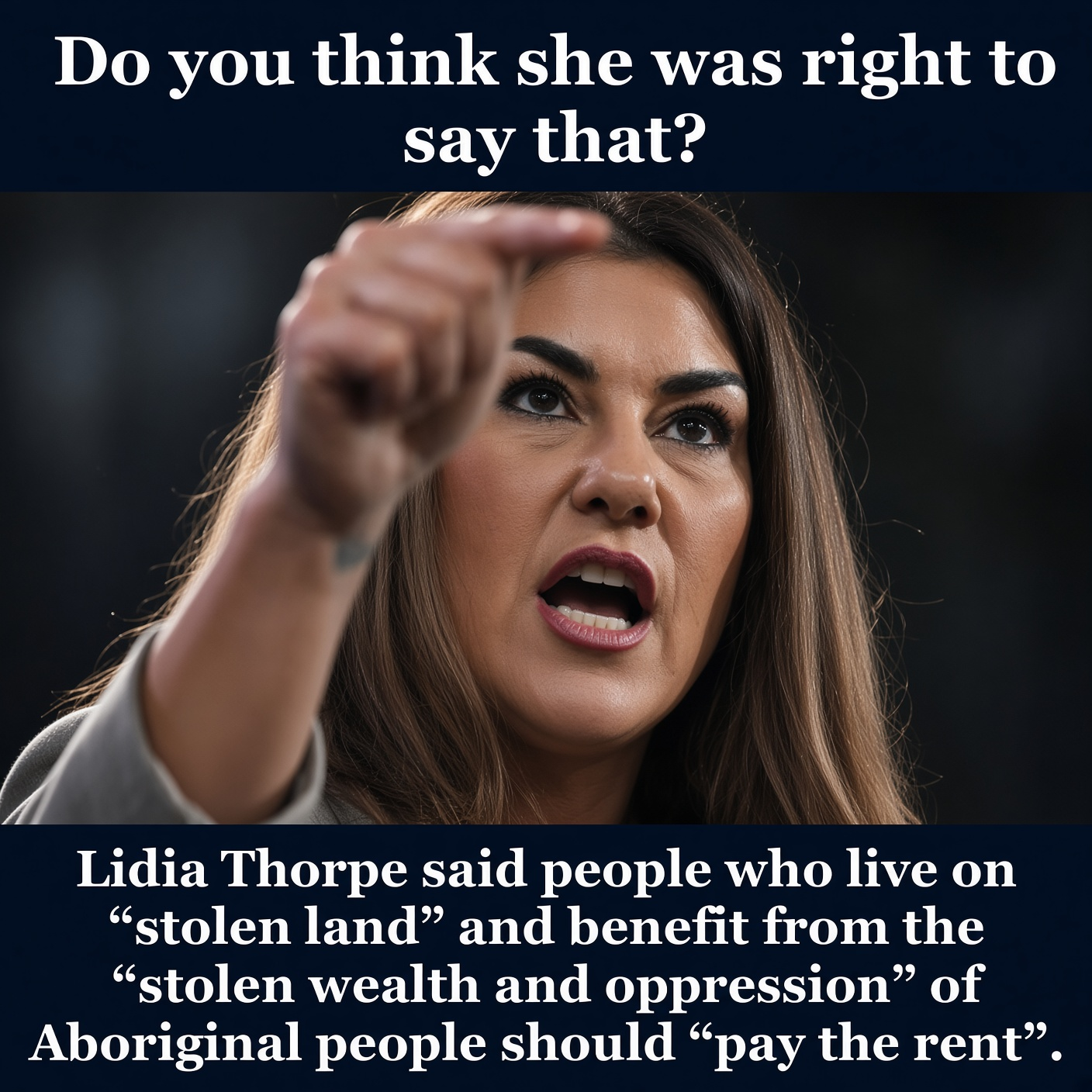
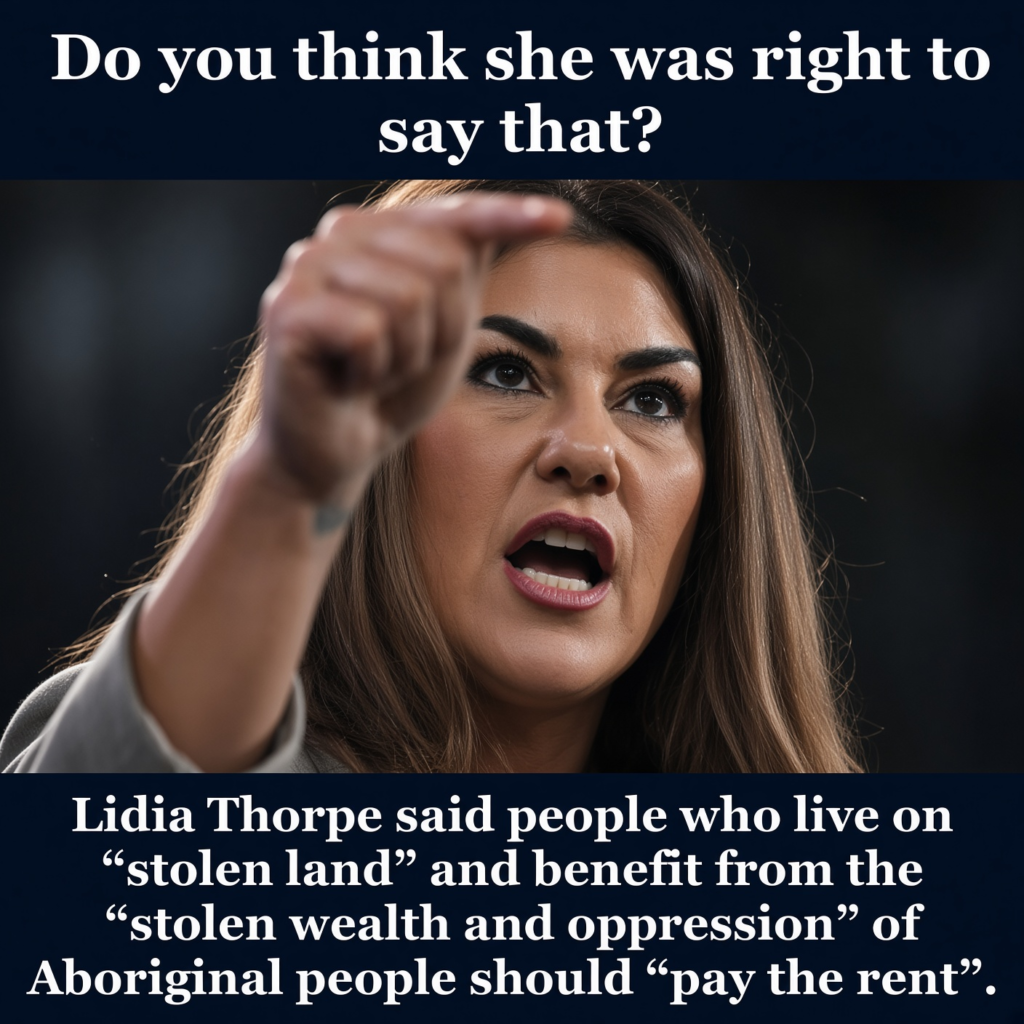
She asked Balan whether he accepted that he was living on “stolen land”.
“No,” he responded.
Thorpe then asked whether he paid “the rent” to traditional owners.
Balan replied that he paid taxes.
Thorpe pursued the point, asking whether, as someone “not from this land”, he paid rent for benefiting from what she described as stolen wealth and the oppression of Aboriginal people.
“All I do is pay my taxes, or have paid taxes, as an Australian citizen,” Balan replied, adding that he did not understand what Thorpe meant by “paying rent”.
When she asked him directly whether he paid rent “for the privilege of being on their land”, he answered: “No.”
“Maybe that’s something you should consider,” Thorpe responded.
“Pay the Rent” is an established concept within parts of the Indigenous sovereignty movement rather than an ordinary government tax or legally mandated rent payment.
Advocates generally use the term for voluntary transfers of money or resources from non-Indigenous people or organisations to First Nations groups in recognition of Indigenous sovereignty and the historical acquisition of land.
Balan’s answer reflected his rejection of the underlying proposition that contemporary Australians should have different obligations according to ancestry.
Welcome to Country becomes another flashpoint
The questioning moved to Balan’s opposition to Welcome to Country ceremonies and other forms of official Indigenous recognition.
Balan has argued such practices should be removed as part of a broader shift towards treating Australians without racial distinction.
Thorpe interpreted that proposal very differently.
“Can I just confirm that you are in fact calling for cultural genocide?” she asked.
Balan rejected the characterisation.
“Senator, you’re exaggerating,” he replied, saying the changes he advocated were intended to bring “fairness and dignity” to Australian society.
Describing opposition to Welcome to Country as “cultural genocide” is Thorpe’s characterisation of Balan’s position, not an established finding about his proposal.
Likewise, Balan’s argument that eliminating race-specific policies would create greater fairness represents his political and policy assessment rather than an established consequence of such reforms.
The distinction is important because the inquiry itself is intended to gather competing evidence and ultimately report to Parliament. It has not issued a finding that Balan’s submission constitutes racism or cultural genocide.
‘The racism that this person represents’
Thorpe eventually delivered a severe assessment of the witness and his evidence.
She said she considered him “totally inappropriate” and argued his views were causing harm and could cause further harm.
She then said “the racism that this person represents is the very racism that we’re trying to eradicate”.
The remarks have subsequently become a controversy in their own right.
Critics have argued that a parliamentary inquiry seeking evidence about racism should permit witnesses to present unpopular or dissenting views without senators appearing to characterise the witness personally as something that needs to be “eradicated”.
Supporters of Thorpe’s approach can counter that parliamentary witnesses are not immune from robust questioning, particularly where their submissions recommend dismantling practices or policies intended to recognise a group whose experiences of racism are precisely what the inquiry was established to examine.
Those are different questions from whether Thorpe’s description of Balan’s views was accurate.
Parliament’s published description of the inquiry says it is examining racism, hatred and violence directed at Aboriginal and Torres Strait Islander people and seeking practical measures capable of reducing individual and collective harm.
Why Balan was appearing before the inquiry
Balan was not simply an observer attending a political event.
He appeared as a witness to put forward a competing view about the causes of racial division and the policies governments should adopt in response.
His central argument is that Australia should move away from public policies based on racial categories.
That includes opposition to Indigenous-specific programs and symbolic practices such as Welcome to Country.
He argues Aboriginal Australians should enjoy the same rights and opportunities as every other citizen but disputes the proposition that achieving equality requires governments to maintain separate treatment based on Indigenous identity.
Thorpe’s political position is close to the inverse.
She argues formal equality is insufficient when Indigenous Australians continue to experience the consequences of dispossession, discrimination and institutional racism.
From that perspective, eliminating Indigenous recognition or targeted measures in the name of equal treatment could entrench rather than remove inequality.
This ideological divide explains why the hearing escalated so quickly.
The participants were not merely disagreeing over whether a particular government program works.
They were arguing about the foundational framework through which modern Australia should understand colonisation and Indigenous rights.
Inquiry is examining racism across Australia
The federal inquiry was adopted by the committee on March 4 following a referral from Indigenous Australians Minister Malarndirri McCarthy.
It has attracted extensive public participation, with the committee extending its original submission deadline because of significant community interest.
The committee has held hearings in multiple cities and regional centres to hear evidence about racism experienced by Aboriginal and Torres Strait Islander Australians.
Its remit includes the prevalence and impact of racism, hatred and violence, their underlying drivers, the effectiveness of current responses and possible reforms.
Committee chair Senator Jana Stewart said when the inquiry was announced that it was intended to understand the nature and impact of racism and identify practical actions for combating it.
The Brisbane hearing at which Balan appeared was officially scheduled from 9am to 5.30pm on July 28. Further Queensland hearings followed in Cairns.
Thorpe broadens her criticism to Queensland institutions
Thorpe subsequently used social media to describe what she said the inquiry had heard while travelling through Queensland.
Speaking from what she called “so-called Cairns”, she claimed witnesses had provided extensive evidence of institutional racism.
“The cops are racist, the hospitals are racist, the education system’s racist,” she said, adding that the inquiry had accumulated “mountains and mountains of evidence”.
Those broad statements are Thorpe’s characterisation of the evidence heard by the committee.
The inquiry has not yet produced a final report establishing that Queensland Police, hospitals or the state’s education system as a whole are racist institutions.
That distinction matters because parliamentary inquiries gather allegations, testimony, research and competing submissions before a committee reaches its conclusions.
Evidence given to an inquiry should not automatically be presented as a finding of the inquiry itself.
Thorpe says another report is not enough
Thorpe has also argued the country does not simply need another investigation followed by recommendations that governments fail to implement.
She has pointed to the history of the Royal Commission into Aboriginal Deaths in Custody and argued many recommendations arising from previous processes have not been adequately acted upon.
“We want recommendations to be actioned,” she wrote this week.
Thorpe said equality for First Nations people could not be achieved while discrimination and oppression continued, adding that racism harms the broader Australian community as well as Indigenous people.
Her position creates another question for the current parliamentary inquiry: whether its eventual recommendations will translate into government action.
The committee’s official page currently lists the inquiry as having closed submissions while its evidence-gathering process continues; no government response is available because the process has not yet reached that stage.
A dispute about equality itself
The confrontation between Thorpe and Balan illustrates a deeper disagreement running through contemporary Indigenous policy.
Both sides can use the language of equality while advocating very different outcomes.
Balan’s model emphasises equal treatment: government should not distinguish between Australians according to race, and assistance should be based on individual circumstances rather than Indigenous identity.
Thorpe’s approach emphasises substantive equality: historical dispossession and continuing institutional disadvantage mean identical treatment can perpetuate unequal outcomes.
Welcome to Country provides a particularly visible example of that conflict.
For supporters, the ceremony recognises the continuing cultural relationship of traditional custodians with Country and represents respect for the world’s oldest continuing cultures.
For opponents such as Balan, routinely dividing Australians between those who welcome and those who are welcomed reinforces racial distinctions that a modern nation should seek to overcome.
Those arguments cannot be resolved merely by agreeing that racism is undesirable because the two positions disagree about what racial equality requires in the first place.
Parliamentary scrutiny or an attack on a witness?
The manner of the exchange has consequently become almost as significant as its substance.
Witnesses appearing before parliamentary committees should expect their evidence to be tested.
Committee members are entitled to challenge assumptions, identify contradictions and ask difficult questions relevant to an inquiry’s terms of reference.
At the same time, committees depend on members of the public, experts and organisations being willing to provide evidence.
That creates a broader institutional interest in ensuring witnesses can present controversial arguments and be challenged on them without the hearing ceasing to function as an evidence-gathering exercise.
Commentators critical of Thorpe have portrayed her treatment of Balan as an example of ideological intolerance.
Andrew Bolt, writing this week, used the confrontation to argue that a vision of reconciliation intolerant of dissent risks becoming divisive itself. That is Bolt’s political interpretation of the episode rather than a neutral account of the inquiry.
Thorpe’s own position is that views such as those advanced by Balan are not harmless intellectual disagreements but contribute to the structures and attitudes the inquiry is supposed to confront.
The clash therefore exposes a difficult boundary.
When does rigorous questioning of potentially discriminatory ideas become hostility towards the person presenting them?
And when does an appeal to open debate become a way of insulating potentially harmful claims from appropriate scrutiny?
The parliamentary inquiry will ultimately need to navigate that tension itself.
What the hearing does — and does not — establish
The exchange establishes that Balan advocated a strongly universalist approach to Australian citizenship and opposed several forms of Indigenous-specific recognition.
It establishes that Thorpe regarded those positions as harmful and connected them to racism and what she described as cultural genocide.
It also establishes the extraordinary distance between their respective interpretations of Australian history, land and equality.
What it does not establish is that the parliamentary committee has found Balan to be racist.
Nor has the inquiry concluded that the institutions Thorpe criticised are collectively racist, or that Balan’s preferred policies would produce either equality or discrimination.
Those remain arguments and allegations being advanced while the inquiry gathers evidence.
That distinction is especially important given the purpose of the process.
The committee was established to investigate racism, hate and violence towards Aboriginal and Torres Strait Islander people and eventually recommend what governments should do about them.
Balan believes race-based public policy contributes to division and should be dismantled.
Thorpe believes dismantling Indigenous recognition without addressing colonisation and continuing disadvantage would perpetuate the very racism the inquiry is trying to eliminate.
Their confrontation was unusually heated, but the disagreement beneath it is central to the national debate.
Australia is still wrestling not only with how to combat racism, but with what racial equality should mean in a country where Indigenous sovereignty, colonial dispossession, common citizenship and contemporary disadvantage remain profoundly contested.