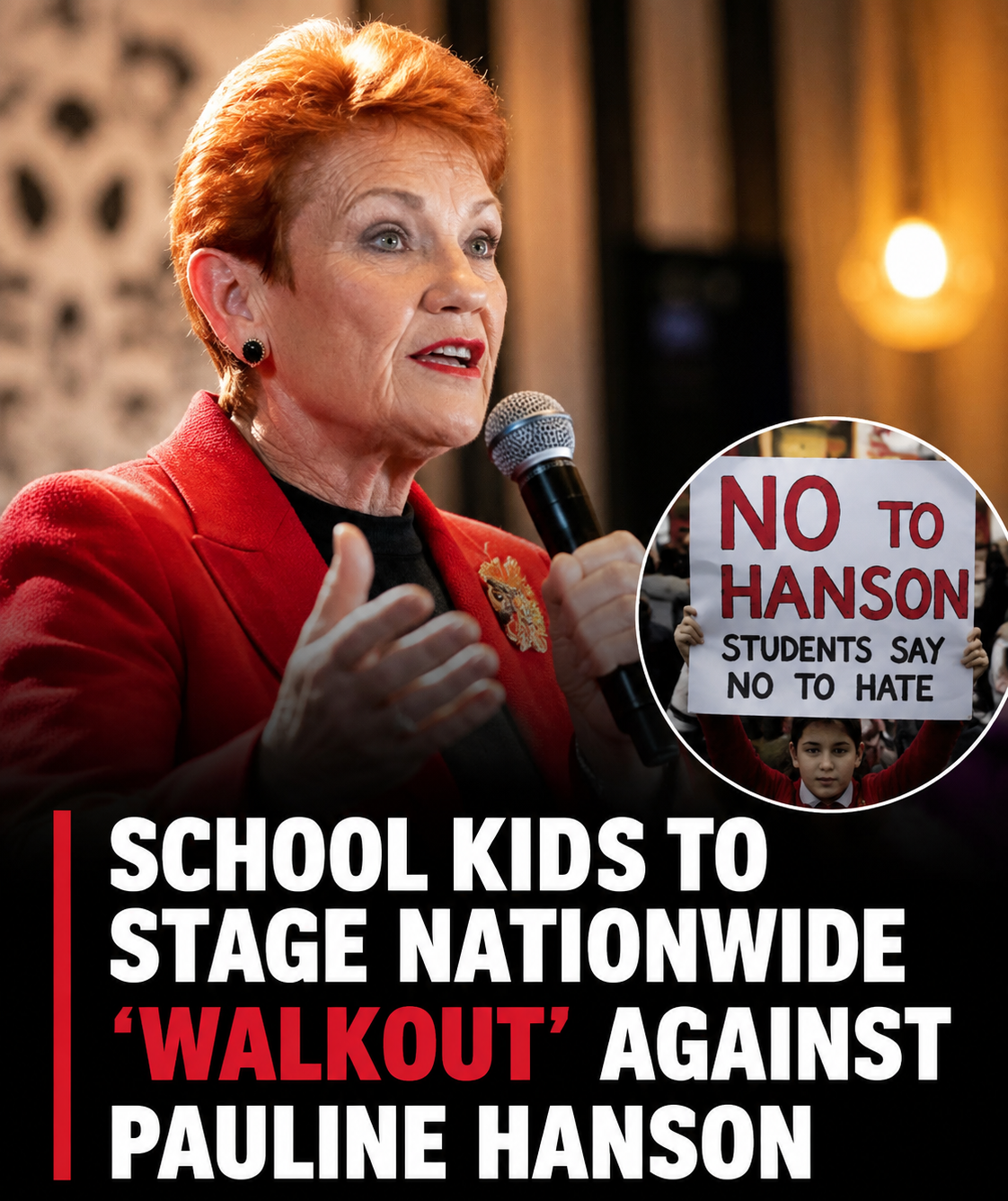
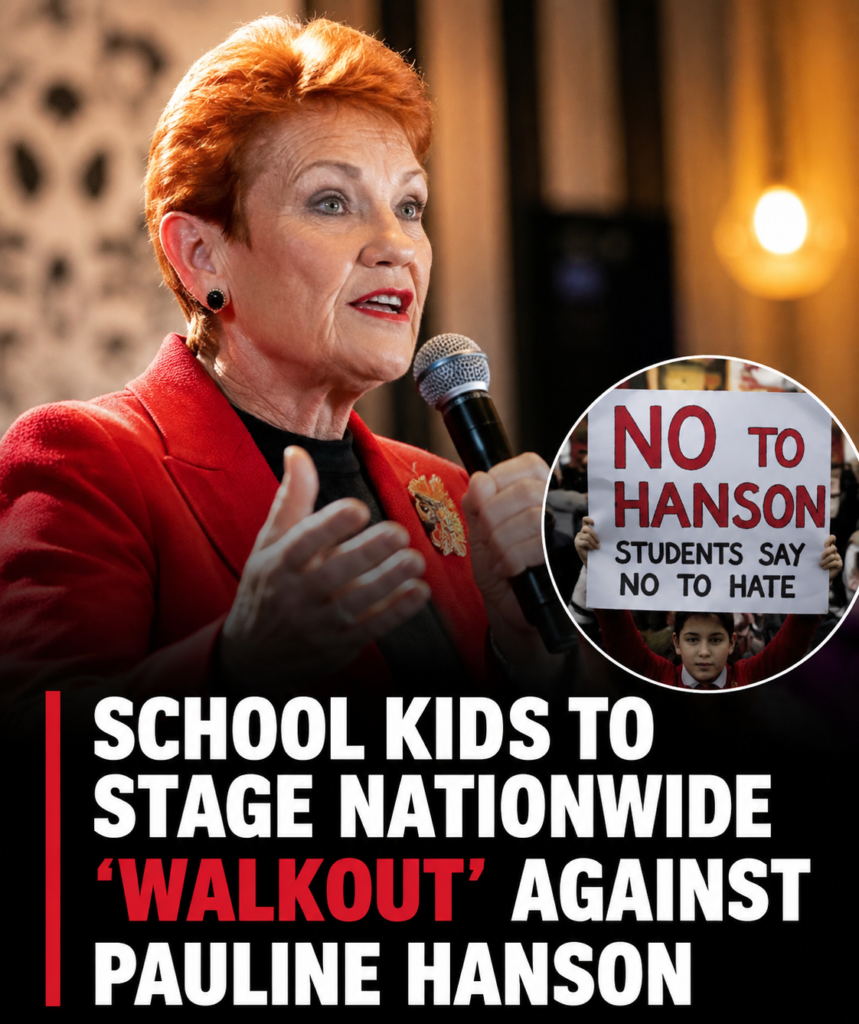
Thousands of high school students across Australia are expected to walk out of classrooms next week as part of a coordinated nationwide protest targeting Pauline Hanson and her political party, One Nation, in one of the largest student-led political demonstrations planned this year.
The demonstrations, scheduled for August 13, have been organised under the banner “Students Say No to Hanson” and are being coordinated by the High School Anti-Capitalists, a left-wing student activist group that says it wants to challenge what it describes as the growing influence of One Nation and far-right politics in Australia.
Organisers are calling on secondary school students to leave class during the school day and attend rallies in capital cities and major regional centres across the country. Events have been announced for Melbourne, Sydney, Brisbane, Adelaide, Canberra and several other locations, with organisers encouraging participants to recruit classmates, distribute posters and share campaign material through social media.
A protest guide circulated by the organisers includes suggested talking points for convincing fellow students to participate, advice on creating group chats and instructions for promoting the demonstrations inside schools. The campaign has also attracted support from sections of the National Union of Students and other left-leaning university organisations.
The High School Anti-Capitalists argue that One Nation promotes policies they consider racist, homophobic and anti-worker. Campaign material released ahead of the protests claims the party’s message has become increasingly normalised within Australian politics and says students have a responsibility to publicly oppose those ideas.
The group has also criticised Australia’s major political parties. Its campaign material argues Labor has adopted tougher national security policies, accuses the Coalition of embracing migration policies similar to those promoted by One Nation and claims the Greens have failed to provide a genuine alternative because they continue to operate within Australia’s existing political and economic system. >
The demonstrations come at a politically significant time.
One Nation has recently intensified its campaign ahead of the Victorian state election, announcing a new leadership team and a slate of upper house candidates while arguing the party offers voters an alternative on issues including crime, cost of living, education and government accountability. Recent polling has suggested the party is experiencing growing support in several parts of Australia, particularly in regional and outer suburban electorates.
The planned student walkout follows protests earlier this week outside a One Nation function in Melbourne, where demonstrators gathered as Pauline Hanson attended a campaign event. The protest prompted a significant police presence around the venue while supporters and opponents of the party gathered nearby.
One Nation figures have strongly criticised the planned school walkout.
South Australian One Nation leader Sarah Game argued that encouraging students to leave school for political demonstrations was inappropriate and suggested those involved should focus on their education rather than partisan activism. She also claimed many of the organisers opposed Australian values and were attempting to politicise school-aged children.
The party has maintained that Australians have the right to peaceful protest but has questioned whether schools should become venues for organised political campaigns during teaching hours.
Education authorities have likewise emphasised that normal attendance expectations remain in place.
Victorian education officials have reminded families that students are expected to attend school unless they have an approved absence, while South Australia’s Education Minister Lucy Hood said parents ultimately decide whether their children participate but stressed the importance of regular school attendance.
The walkout reflects a broader trend of youth-led political activism in Australia over the past decade.
Student strikes have previously been organised around climate change, Indigenous recognition, education funding, gender equality and international conflicts. Supporters argue such actions provide young Australians with an opportunity to participate in democratic debate before they reach voting age, while critics contend students should remain in classrooms and engage in politics through established democratic processes once eligible to vote.
Although many participants in next week’s demonstrations will be below the voting age of 18, organisers argue decisions made by governments today will directly affect their future, making student participation both legitimate and necessary.
The protest also highlights Australia’s increasingly polarised political environment as newer parties continue challenging the dominance of Labor and the Coalition.
One Nation, founded by Pauline Hanson in 1997, has historically campaigned on issues including immigration, national identity, crime, energy policy and cost-of-living pressures. While the party remains controversial, recent opinion polling has indicated growing voter interest in alternative political movements amid ongoing economic uncertainty.
Whether the planned walkout attracts the numbers organisers anticipate remains to be seen, but it is already shaping up as one of the largest coordinated school-based political protests in Australia this year.
With competing claims from organisers and One Nation over the purpose and legitimacy of the demonstrations, next week’s rallies are expected to become another highly visible flashpoint in Australia’s increasingly heated political debate ahead of key state elections.