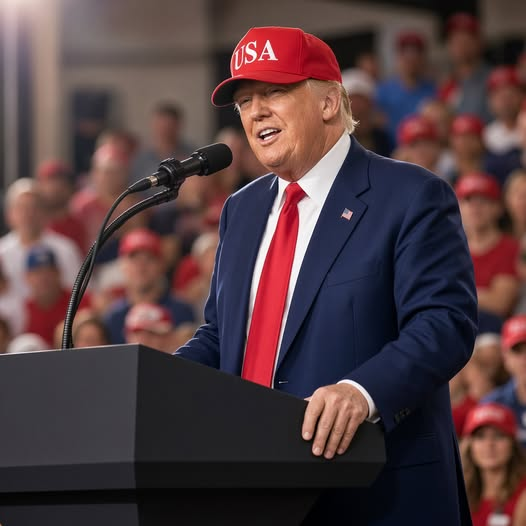
President Donald Trump used a campaign rally in North Carolina on Wednesday to promote Republican Senate candidate Michael Whatley, while also making a remark that appeared to connect future disaster assistance to the outcome of the November election.
Speaking in Gastonia, Whatley’s hometown, Trump discussed federal aid provided after Hurricane Helene and said additional money was still expected for North Carolina. He then told the crowd that if Whatley lost the Senate race, he would not send the additional funding.
Trump immediately added that he was “only kidding” and said North Carolina would receive the money. The comment nevertheless drew attention because it linked a federal disaster-relief decision to the political fortunes of a candidate Trump was actively campaigning for.
What Trump Said in Gastonia
Trump traveled to Gastonia on September 16 as part of an effort to support Whatley and other Republican candidates ahead of the 2026 midterm elections.
During the speech, Trump highlighted the federal response to Hurricane Helene, which devastated parts of western North Carolina in September 2024. He said his administration had already provided more than $2 billion in FEMA funding and discussed additional money for repairs to roads and bridges.
Trump then turned the discussion toward Whatley’s Senate campaign.
He said that North Carolina was waiting for additional funding and addressed Whatley directly before stating that if the Republican candidate lost, he would not send the money. Trump followed the statement by saying he was joking and assured the audience that Whatley would receive the funding.
The full transcript of the speech shows that the remarks came during a broader discussion of hurricane recovery and Trump’s support for Whatley. They were not presented as a formal announcement of a change in federal disaster policy.
Trump Was Campaigning for Michael Whatley
Whatley is the Republican nominee in the North Carolina Senate race. He previously served as chairman of the Republican National Committee and was selected by Trump to lead the national party before entering the Senate contest.
At the Gastonia rally, Trump repeatedly urged North Carolina voters to support Whatley. Whatley also spoke at the event and praised Trump’s political leadership.
The seat is being vacated by Republican Sen. Thom Tillis, who is not seeking another term. Former North Carolina Gov. Roy Cooper is the Democratic nominee.
Trump’s appearance therefore served two purposes: highlighting his administration’s record in the state and campaigning directly for the Republican Senate candidate.
The Disaster Aid Discussion Comes Two Years After Hurricane Helene
Hurricane Helene struck the southeastern United States in September 2024, producing catastrophic flooding across western North Carolina. The storm damaged homes, businesses, roads, bridges and other infrastructure and left some communities isolated.
North Carolina’s recovery is still continuing. State emergency management officials say assistance remains available through state and federal programs, including support for damaged private roads and bridges and disaster case management.
The state’s Helene Disaster Case Management Program was extended through January 22, 2027. New enrollments closed at the end of August, but households already receiving case-management services can continue receiving assistance during the program’s remaining period.
North Carolina also continues to administer programs connected to infrastructure recovery and mitigation. FEMA public assistance can provide funding for eligible disaster-related costs involving roads, bridges, public buildings, utilities and other infrastructure.
Trump’s Comment Was Followed by a Joke Disclaimer
The wording of Trump’s statement is significant because he did not leave the audience with an explicit announcement that disaster assistance would actually be conditioned on Whatley’s election.
After saying that funding would not be sent if Whatley lost, Trump immediately said he was kidding and repeated that Whatley would receive the money.
That means the remark should not be described as a confirmed policy decision to withhold federal disaster assistance from North Carolina based on its Senate vote. No such policy change was announced in the remarks.
At the same time, the sequence of the comments is clear from the transcript: Trump was discussing pending disaster assistance while campaigning for Whatley, connected the additional funding to Whatley’s election outcome, and then withdrew the statement by saying he was joking.
Federal Disaster Aid Is Normally Governed by Disaster Programs
Federal disaster assistance is administered through established programs with eligibility requirements and funding procedures. FEMA’s Public Assistance program, for example, provides financial assistance to state and local governments and certain private nonprofit organizations for eligible disaster-related work.
North Carolina’s emergency management agency says FEMA funding can support emergency protective measures, debris removal and the repair or replacement of eligible damaged infrastructure. Federal assistance is generally provided according to program requirements and cost-sharing rules.
Those existing mechanisms are separate from the political campaign taking place in North Carolina.
North Carolina officials have continued to describe Helene recovery as an ongoing process. State programs remain active even though some physical recovery centers have closed and certain assistance programs have moved into later stages of their operations.
Why the Remark Attracted Attention
The comment stood out because disaster assistance is intended to address damage caused by major emergencies, while the Senate race is an electoral contest.
Trump’s statement placed those two subjects next to each other during a campaign event. Although he subsequently characterized the statement as a joke, the remarks raised questions about how federal disaster funding should be discussed during an election campaign.
The distinction between a campaign remark and an actual federal funding decision is important. The speech itself does not establish that FEMA has changed North Carolina’s eligibility for assistance or that the federal government has formally conditioned future funding on the result of the Senate election.
Trump Also Highlighted Earlier Helene Assistance
Much of Trump’s discussion of North Carolina focused on his administration’s response to Helene.
He described the disaster as one of the worst he had seen and recalled visiting the state during the recovery period. He also credited Whatley with pressing the administration to respond to problems in the affected communities.
The White House separately promoted the administration’s record in North Carolina ahead of Trump’s visit, emphasizing federal assistance and other policies it said had benefited the state.
FEMA has previously reported that North Carolina received an extended period of enhanced federal cost sharing for Helene-related public assistance. The agency said the federal government initially covered 100 percent of certain eligible costs and later provided a 90 percent federal share for qualifying public-assistance work.
Recovery Work Is Still Underway
The timing of Trump’s remarks is also notable because North Carolina’s Helene recovery has not ended.
The state says disaster case managers have continued helping affected households navigate recovery resources. As of late August, North Carolina Emergency Management reported that the program had made more than 29,000 referrals to survivors and handled more than 32,000 calls through its contact center.
Other recovery programs cover damaged private roads, bridges and infrastructure. Some programs have already closed to new applications, while others remain active for projects that are still being completed.
That ongoing recovery means federal and state disaster funding remains an important issue for communities affected by the storm.
The Senate Race Is Now Part of the Broader Midterm Campaign
Trump’s visit to North Carolina was part of a broader effort by Republicans to mobilize voters ahead of the November midterms.
During the rally, Trump urged voters to support Whatley and attacked Cooper, who served as North Carolina governor during Helene and is now the Democratic Senate nominee.
Whatley has closely aligned himself with Trump during the campaign. His speech at the rally emphasized his long relationship with Trump and his support for the president’s agenda.
The election will determine who succeeds Tillis in the U.S. Senate. The outcome will also contribute to the balance of power in the chamber after the 2026 elections.
What We Know
Trump campaigned for Republican Senate candidate Michael Whatley in Gastonia, North Carolina, on September 16.
During the rally, Trump discussed more than $2 billion in FEMA funding and additional disaster-related money expected for North Carolina.
Trump said that if Whatley lost the election, he would not send the additional money.
Trump immediately said he was joking and told the audience that Whatley would receive the funding.
The remarks do not constitute an announced federal policy conditioning FEMA assistance on the outcome of the Senate election.
North Carolina continues to receive and administer disaster-recovery assistance related to Hurricane Helene.
The state’s Helene recovery programs remain active in 2026, with some programs continuing into 2027.
What Remains Unclear
It is not clear whether Trump’s comments will lead to any change in how the administration communicates about future North Carolina disaster assistance.
The speech itself did not identify a specific pending FEMA application that would be denied if Whatley lost, nor did it establish a new eligibility rule for disaster funding.
Any actual change in federal disaster assistance would need to be reflected through the relevant federal agencies and funding processes rather than inferred from the campaign remark alone.
What Happens Next
The North Carolina Senate campaign will continue through the November 3 midterm election, while communities affected by Helene continue their recovery efforts.
For now, the central development is the unusual juxtaposition of the two issues at Trump’s Gastonia rally: the president was campaigning for a Republican Senate candidate while discussing additional federal disaster assistance and briefly tying that funding to the candidate’s electoral success before saying he was joking.
North Carolina’s recovery programs remain governed by existing federal and state disaster-assistance processes, and the speech did not announce a formal change to those rules.