A sixth Melbourne man has been charged in an Australian Federal Police investigation into an alleged online extremist network accused of accessing, sharing and distributing ISIS propaganda and graphic violent material.
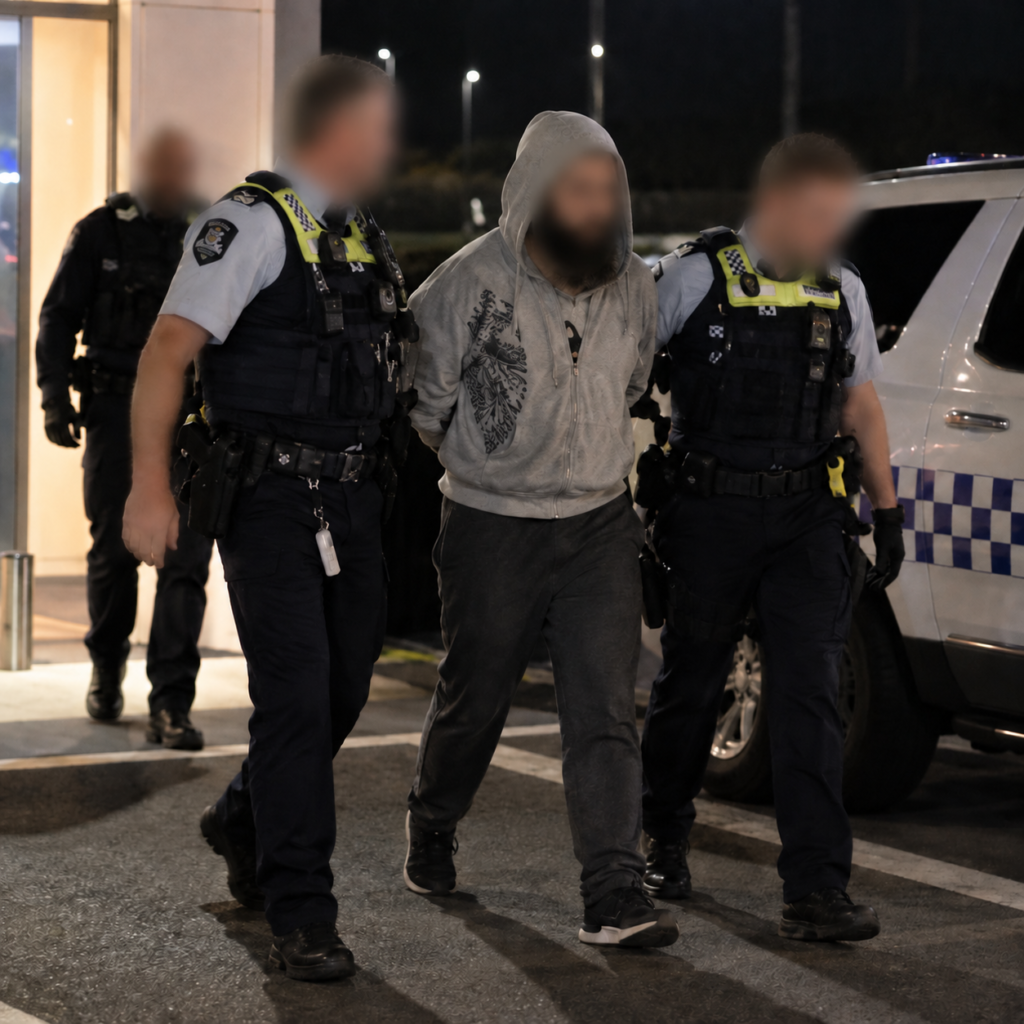
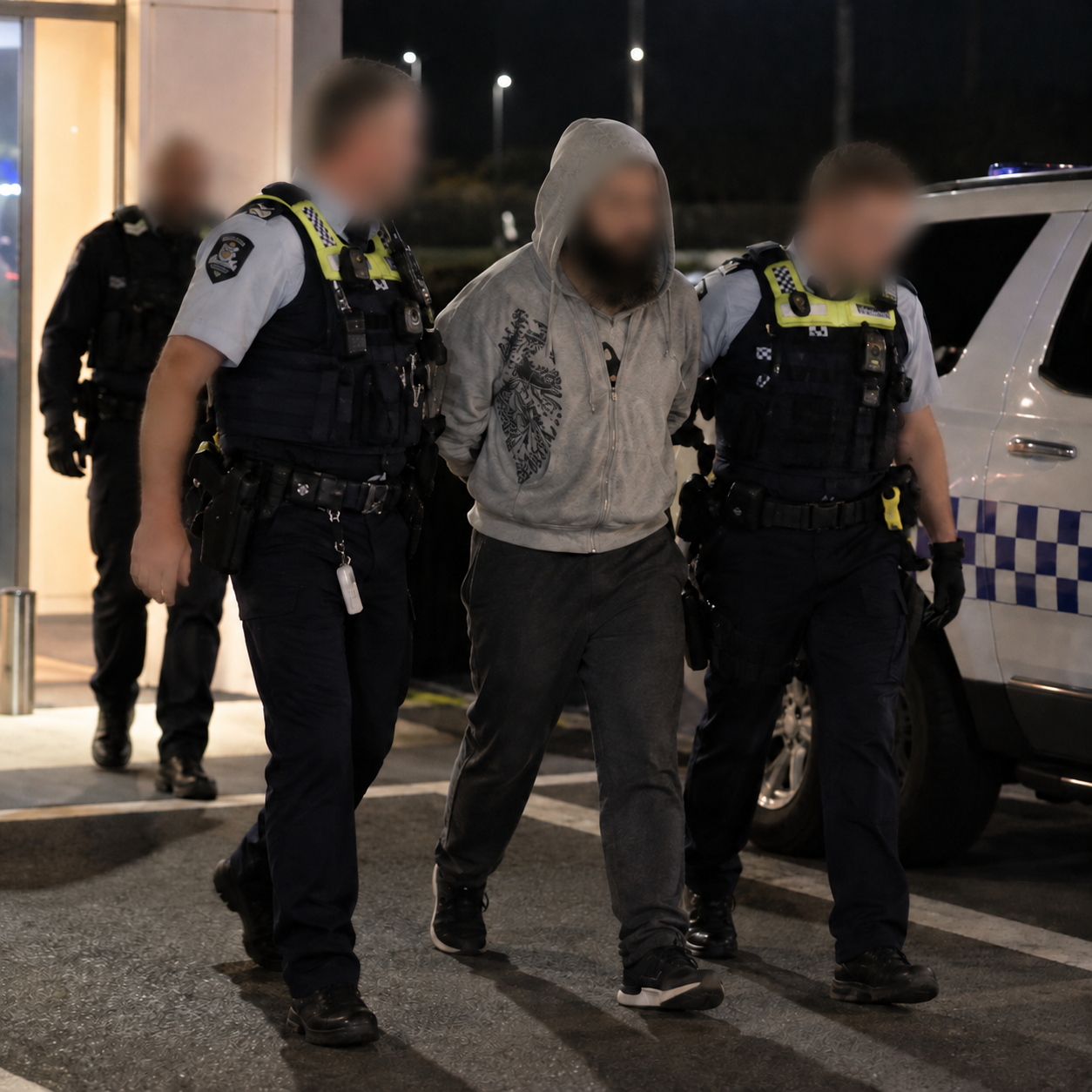
The 30-year-old Roxburgh Park man was arrested at Melbourne International Airport on Saturday night as he prepared to leave Australia.
Court reporting has identified him as Mohammad Emad Ahmadzai.
The AFP said he was departing on a flight bound for the Middle East. Subsequent court reporting said Ahmadzai was travelling towards Kabul and told the court the trip was to visit his sick father.
His arrest is the latest development in an investigation that has now resulted in six Victorian men being charged over alleged violent extremist material linked to Islamic State.
Police do not allege in the charges currently before the court that Ahmadzai was a member of Islamic State, was preparing a terrorist attack or was travelling overseas to join the organisation.
Instead, he has been charged with possessing violent extremist material and with allegedly refusing to provide investigators access to electronic devices despite a court order.
Those distinctions are important.
The AFP alleges Ahmadzai was part of an online group whose members were sending, receiving and sharing material including ISIS propaganda.
He has not been convicted of either charge, and the allegations against him and the other men remain before the courts.
Ahmadzai appeared before Melbourne Magistrates’ Court on Sunday via video link.
His bail hearing was only partly heard after the magistrate sought further evidence from AFP investigators who were not available to attend that day.
He was remanded in custody, with the matter scheduled to return to court on Tuesday.
The first charge is one count of possessing or controlling violent extremist material obtained or accessed using a carriage service under section 474.45C of the Commonwealth Criminal Code.
The offence carries a maximum penalty of five years in prison.
The second charge concerns an order made under section 3LA of the Crimes Act 1914.
Police allege that after Ahmadzai was arrested at the airport, he refused to provide access to electronic devices when presented with a court order requiring assistance.
Contravening such a requirement can carry a maximum penalty of 10 years’ imprisonment.
Maximum penalties set the upper limit available to a court and should not be confused with the sentence that would necessarily follow if a person were convicted.
The AFP says the case is connected to devices seized months earlier.
Officers from the AFP and Victoria Police executed a search warrant at a Roxburgh Park home on May 7 and seized multiple electronic devices.
Police say specialist forensic examination subsequently identified material they allege was inspired by Islamic State.
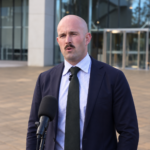
AFP Counter Terrorism South Commander Paula Hudson said investigators believed the man formed part of a dedicated online network operating inside Australia.
“We allege this individual was part of a dedicated online network operating within Australia, motivated by sharing and distributing violent extremist material, including ISIS propaganda,” Hudson said.
She said the AFP regarded the circulation of such material as more than an online-content problem because repeated exposure to graphic extremist propaganda could contribute to radicalisation and escalation towards violence.
Hudson said violent extremist material could include images and videos depicting beheadings, shootings, bombings, rape and violent assaults.
“Creating and sharing violent extremist material can be the gateway to terrorism,” she said.
“It desensitises individuals, including youth, to violence and creates a permissive environment to normalise hate.”
That is also the theory underpinning the relatively new Commonwealth offences being used in the Melbourne investigation.
Under the Criminal Code, “violent extremist material” is not simply material containing violence.
The statutory definition requires material that describes, depicts, instructs, supports or facilitates serious violence and that, viewed objectively in its circumstances, is intended to advance a political, religious or ideological cause.
It must also be intended to assist, encourage or induce involvement in intimidatory violence or association with an organisation engaged in such conduct.
The law contains defences and exceptions for legitimate activities including law enforcement, court proceedings, research and qualifying news or current-affairs purposes.
The possession offence therefore does not criminalise every person who encounters footage of terrorism online.
Prosecutors must establish the elements set out in the legislation.
That issue will ultimately be for the courts in the cases involving Ahmadzai and the other accused men.
The investigation that led to the six charges stretches back almost two years.
Authorities say the first significant discovery occurred on November 29, 2024, when Australian Border Force officers intercepted a Roxburgh Park man, now aged 20, after he arrived in Melbourne from Turkey.
During a routine examination, officers allegedly located suspicious material on his phone and referred the matter to the AFP.
The phone was later seized for forensic examination.
A second Roxburgh Park man, now aged 21, came to the attention of authorities on June 1, 2025, when Border Force officers intercepted him at Melbourne Airport before he was due to leave for Turkey.
Police say suspicious material was again found on a mobile phone.
The AFP subsequently alleged forensic examination of the devices showed the men had been sending, sharing and receiving suspected violent extremist material, including images and videos of previous terrorist attacks and other ISIS propaganda.
That inquiry expanded.
On May 7 this year, the AFP’s National Security Investigations team, assisted by Victoria Police and the AFP Tactical Response Team, executed four search warrants at properties in Roxburgh Park, Clyde South and Meadow Heights.
Two Roxburgh Park men and two Clyde North men, then aged between 19 and 29, were arrested and charged with possessing violent extremist material.
During one of the searches at Roxburgh Park, an AFP firearm was unintentionally discharged.
No one was injured.
A fifth man, aged 25 and from Meadow Heights, was charged nine days later.
He was arrested at Melbourne International Airport on May 16 after returning from Malaysia.
Border Force had previously intercepted him before his departure from Australia on May 5 and allegedly found suspicious material on his phone.
AFP forensic examination was then said to have identified ISIS-inspired violent extremist content.
He was charged with possession of violent extremist material and remanded in custody.
Police say all five earlier accused remain before the courts.
The latest arrest therefore does not represent a separate investigation but an expansion of the same inquiry into an alleged online network.
What police have not publicly alleged is equally important.
There has been no announcement that the six men were preparing a particular attack.
Ahmadzai has not been charged with membership of a terrorist organisation.
Nor has the AFP publicly alleged that his airport departure was an attempt to travel to Islamic State territory or undertake terrorist activity overseas.
His presence at an international airport is relevant because it was where the arrest occurred and because police allege he refused a device-access order afterwards.
It does not, by itself, establish the purpose of his travel.
That distinction is particularly significant in terrorism reporting, where the difference between extremist propaganda possession, terrorist-organisation membership, attack planning and foreign-incursion offences can easily be lost in inflammatory headlines.
They are different offences requiring different evidence.
Australia’s security agencies nevertheless regard online radicalisation as a serious and evolving threat.
The national terrorism threat level remains at “Probable”, meaning authorities assess there is a greater than 50 per cent chance of an onshore terrorist attack or attack planning occurring within the following 12 months.
That assessment does not mean authorities know of a specific imminent attack.
Australia’s national-security guidance describes a much broader and increasingly fragmented extremist environment in which social media allows violent ideologies to spread quickly and reach people who may previously have had little contact with organised extremist movements.
Islamic State remains part of that threat.
The government’s national-security assessment says IS and its affiliates retain the capability and intent to conduct external operations and regard Western countries, including Australia, as legitimate targets.
But security agencies have also repeatedly stressed that violent extremism in Australia is not confined to one religion or political ideology.
Authorities monitor threats across ideological spectrums, including religiously motivated violent extremism, nationalist and racist violent extremism, anti-government beliefs and mixed or highly individualised grievance-based ideologies.
That broader context matters when reporting a case such as the Melbourne investigation.
The AFP allegation concerns ISIS-inspired material and should be reported plainly as such.
But a suspect’s perceived ethnicity, surname or presumed religion is not a substitute for evidence about criminal conduct.
The AFP’s public material on the latest arrest identifies the accused by his suburb, age and alleged conduct, not by a religious label.
The alleged network itself remains the focus.
Investigators say the six men were connected through online communications in which violent extremist material was allegedly accessed and circulated.
That creates a different challenge from traditional counter-terrorism investigations built around physical meetings, weapons acquisition or a clearly identified attack plan.
Encrypted messaging, private group chats and vast quantities of digital content allow authorities to identify networks long before — or sometimes without evidence that — anyone has moved towards physical violence.
Police argue that intervention at that earlier stage is precisely the point.
Hudson said authorities did not need to wait for alleged radicalisation to progress to the most serious level before disrupting an online network.
“We know that intervening early helps to ensure individuals are disrupted before they reach the most serious levels of offending and prevent any potential for escalation to violence,” she said.
That preventive approach inevitably places heavy importance on digital forensics.
Investigators must establish not only what files were found on a device, but whether an accused knowingly possessed or controlled them, how they were obtained and whether they meet the statutory definition of violent extremist material.
Context also matters.
A graphic ISIS video may have radically different legal significance when held by a counter-terrorism researcher, journalist or police investigator than when prosecutors allege it was retained and circulated as propaganda within an extremist network.
Those distinctions will form part of the legal process rather than being determined through police statements alone.
The six accused men remain entitled to the presumption of innocence.
For the AFP, however, the latest arrest demonstrates that the investigation remains active rather than ending with the May raids.
Police have warned that inquiries into the alleged accessing and distribution of extremist material are continuing.
The agency has also urged parents, educators and health professionals to recognise possible signs of online radicalisation and to report genuine national-security concerns through the National Security Hotline.
For now, Ahmadzai’s immediate future will be determined in Melbourne Magistrates’ Court.
His case will test allegations about what was found on his devices, what role police say he played in the online group and why investigators say the material crossed the line from disturbing internet content into a Commonwealth criminal offence.
What it does not yet establish is that he belonged to Islamic State or intended to commit an act of terrorism.
Those are allegations the AFP has not made in the charges presently before the court.
The public-interest issue is serious enough without going beyond the evidence: six Victorian men are now before the courts as federal investigators pursue what they allege was an Australian online network distributing propaganda associated with one of the world’s most notorious terrorist organisations.