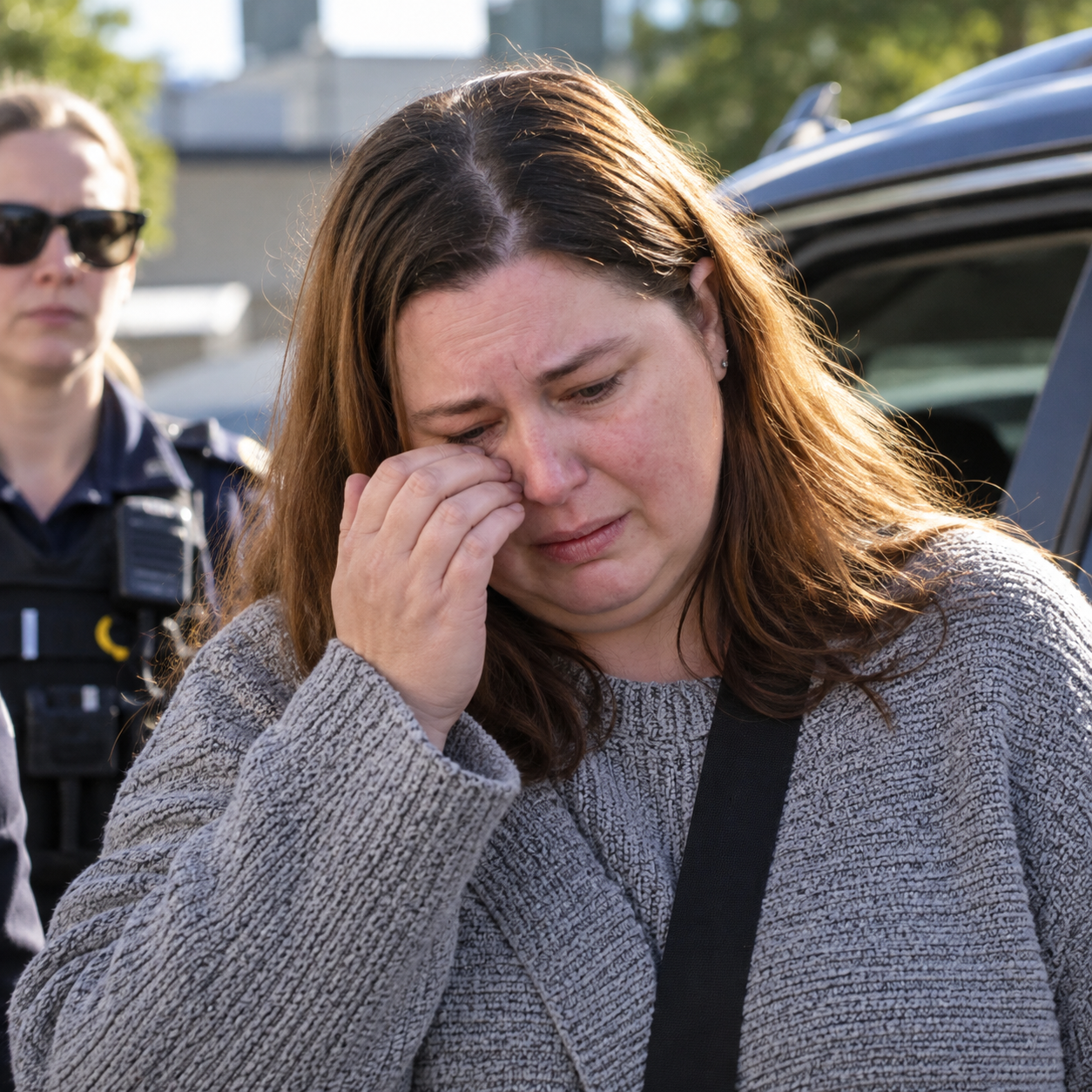
A prisoner-rights group has described Erin Patterson’s near-constant isolation as “torture” and called for her prison conditions to be eased, as the convicted mushroom murderer waits for Victoria’s Court of Appeal to rule on her bid to overturn her convictions.
Patterson, 51, is serving life imprisonment with a 33-year non-parole period at the Dame Phyllis Frost Centre in Melbourne’s west after being convicted of murdering Don Patterson, Gail Patterson and Heather Wilkinson and attempting to murder Ian Wilkinson.
The four relatives became critically ill after eating a beef Wellington lunch containing death cap mushrooms at Patterson’s Leongatha home in July 2023.
Don and Gail Patterson and Heather Wilkinson died. Ian Wilkinson survived after spending weeks in hospital.
A jury found Patterson guilty in July 2025 of deliberately serving the poisonous meal. She has continued to maintain that the poisoning was accidental and is now challenging those verdicts in Victoria’s Court of Appeal.
But a separate battle over how she is being held in prison has become increasingly significant.
Justice Action, a prisoner advocacy organisation, says Patterson is confined to her cell for at least 22 hours a day and has extremely limited interaction with other prisoners.
The organisation has called on Corrections Victoria to allow her greater human contact and has offered to arrange a trained peer-support mentor at no cost to the state.
Justice Action co-ordinator Brett Collins said the prolonged isolation was putting Patterson at risk of lasting psychological harm.
“She’s a frightened woman, understandably so,” Collins told AAP.
He said information received from prisoners in Patterson’s unit suggested she was becoming increasingly unaccustomed to being around other people.
Collins characterised the conditions as “torture”.
That is the advocacy group’s description rather than a judicial finding.
Justice Action has also acknowledged it has not yet been permitted direct contact with Patterson, meaning its latest assessment of her mental condition is based partly on accounts supplied by other prisoners.
What is not in serious dispute is that Patterson is living under exceptionally restrictive conditions.
Evidence given by Corrections Victoria during her sentencing proceedings established that she had spent long periods in the Gordon Unit, a highly controlled management unit at Dame Phyllis Frost Centre.
She was assessed as being at significant risk from other prisoners because of her notoriety.
Corrections officials said Patterson herself had not been assessed as posing a danger to other inmates, but the threat to her safety meant she could not mix freely with the wider prison population.
While in the Gordon Unit, Patterson was confined to her cell for at least 22 hours each day.
At times, prison lockdowns left her inside for a full 24 hours.
Her isolation was so significant that it became an important part of the sentence ultimately imposed on her.
When Justice Christopher Beale sentenced Patterson in September 2025, he said the harsh conditions she had already endured — and the prospect that substantial isolation would continue for years — were “important and weighty considerations”.
He sentenced her to life imprisonment but fixed a non-parole period of 33 years.
That does not mean Patterson will automatically be released after 33 years.
It means she could become eligible to apply for parole after serving that minimum period. Any release would require a later decision by Victoria’s Adult Parole Board.
Justice Beale made clear that the possibility of eventual parole was not intended to diminish the severity of Patterson’s crimes.
He described the offending as falling within the worst category of murder and attempted murder and said it represented an “enormous betrayal of trust”.
The victims were Patterson’s relatives by marriage and had, the judge said, treated her and her children well for many years.
But Beale concluded there had to be some practical way for the sentencing process to recognise the unusually harsh conditions in which Patterson was likely to spend her imprisonment.
The non-parole period was that mechanism.
Prosecutors now say that was wrong.
Victoria’s Director of Public Prosecutions has appealed Patterson’s sentence and is asking the Court of Appeal to remove the possibility of parole altogether.
The Crown argues the scale and gravity of the offending warranted life imprisonment without parole and that Patterson’s present prison arrangements should not have justified fixing a minimum term.
During appeal proceedings in August, Director of Public Prosecutions Brendan Kissane KC argued there was no evidence Patterson would necessarily remain under the same restrictive regime for the rest of her life.
The court heard she had access to facilities including a library, recreation centre, exercise yard and treadmill, as well as video contact with her children and hobbies such as crocheting.
Her lawyers disputed the suggestion that those facilities fundamentally altered the nature of her isolation.
Defence barrister Richard Edney KC told the Court of Appeal that Patterson’s custody arrangements met the United Nations definition of solitary confinement because she spent at least 22 hours a day without meaningful human contact.
That definition comes from the United Nations Standard Minimum Rules for the Treatment of Prisoners, commonly known as the Nelson Mandela Rules.
Under Rule 44, solitary confinement means holding a prisoner for 22 hours or more a day without meaningful human contact.
Isolation lasting more than 15 consecutive days is defined as prolonged solitary confinement.
The Mandela Rules say solitary confinement should be used only in exceptional circumstances, as a last resort, for as short a time as possible and subject to independent review.
They prohibit prolonged and indefinite solitary confinement.
Those standards do not themselves mean an Australian court has legally ruled Patterson is being tortured.
But they explain why the language being used by Justice Action goes beyond a general complaint that prison is unpleasant.
The concern is about the mental consequences of extended social deprivation over months or years.
Australian courts and human-rights bodies have previously recognised that prolonged solitary confinement can cause serious psychological harm.
Victoria’s own Ombudsman has also used the Mandela Rules’ 22-hour threshold when examining restrictive conditions at Dame Phyllis Frost Centre.
Patterson’s case therefore sits within a much larger debate about when protective custody becomes damaging isolation.
The state has a clear reason to protect her.
Few Australian prisoners have entered custody with the level of public notoriety generated by the mushroom murder case.
The trial attracted national and international media attention, with Patterson becoming one of the most recognisable convicted prisoners in the country.
Corrections officials have said that profile leaves her vulnerable to attacks from other prisoners.
Moving her freely into the mainstream prison population could therefore create an obvious safety risk.
But keeping her separated for potentially decades produces another problem.
If the only practical way to protect a high-profile inmate is to hold that person alone for most of every day, prisoner advocates argue the protective measure can itself become harmful.
Justice Action’s proposed solution is peer support.
The organisation wants Patterson to be allowed regular contact with a trained prisoner mentor who could provide social interaction and psychological support while still allowing prison authorities to manage security risks.
The group says it would organise that support without cost to taxpayers.
Whether Corrections Victoria accepts that proposal remains uncertain.
The timing of the intervention is significant because Patterson’s legal future is already before the state’s highest court.
Her lawyers appeared in the Court of Appeal on August 19 seeking leave to overturn her convictions on seven grounds.
The prosecution responded that the jury’s guilty verdicts were supported by the evidence and should stand.
The following day, the court heard the Crown’s separate appeal seeking a harsher sentence.
Justices Leslie Taylor, Stephen McLeish and Peter Kidd reserved their decisions after the two-day hearing.
No date has been announced for judgment.
Patterson is therefore not simply “waiting for a retrial”.
She has not been granted one.
Her current convictions remain valid and her life sentence remains in force unless and until the Court of Appeal rules otherwise.
If her conviction appeal succeeds, the court would determine the appropriate remedy. Depending on its findings, that could potentially include quashing the convictions and ordering a new trial.
If she loses, her convictions remain intact.
The prosecution’s sentence appeal creates a second possibility: Patterson could retain her convictions but lose even the distant prospect of parole if the Crown succeeds in persuading the judges that life without parole is required.
That makes her prison conditions relevant to both sides of the litigation.
For Patterson, the restrictions support the argument that her punishment is already unusually severe.
For prosecutors, her offending was so grave that the conditions should not outweigh what they say is the need for a sentence ensuring she never leaves prison.
The facts underlying those sentences remain stark.
Patterson invited Don and Gail Patterson, Heather Wilkinson and Ian Wilkinson to lunch at her Leongatha home on July 29, 2023.
She served individual beef Wellingtons containing death cap mushrooms.
The jury concluded she had deliberately poisoned the four guests.
The prosecution case relied on a large body of circumstantial evidence, including Patterson’s actions before and after the lunch, her explanations about the source of the mushrooms and her disposal of a food dehydrator after the deaths.
Patterson maintained throughout the trial that she had not intended to poison anyone.
The jury rejected her account.
The legal presumption now is that those guilty verdicts stand unless successfully overturned on appeal.
Concern about Patterson’s treatment in custody does not alter that verdict, nor does it minimise the deaths of Gail and Don Patterson and Heather Wilkinson or the catastrophic poisoning suffered by Ian Wilkinson.
Prisoner-rights advocates argue those are separate questions.
A person can be guilty of extraordinarily serious crimes and still retain rights concerning humane treatment in custody.
That principle is central to the international prison standards Justice Action is invoking.
The organisation’s intervention is therefore not a campaign to release Patterson or reduce the seriousness of her convictions.
Its immediate demand is that the conditions under which she serves her sentence should not cause unnecessary psychological deterioration.
For Corrections Victoria, the challenge is equally stark: Patterson must be kept safe in an institution where her notoriety may itself put her at risk.
For the courts, the same conditions have already become intertwined with the question of punishment.
Justice Beale considered the prospect of long-term isolation severe enough to influence the parole component of Patterson’s sentence.
The Director of Public Prosecutions is now asking three appeal judges to conclude that the enormity of her crimes outweighs that concern.
Until those judges deliver their rulings, Patterson remains where she has been for much of her time in custody — serving a life sentence, separated from the wider prison population and spending most of each day behind the door of a cell.