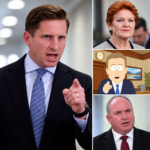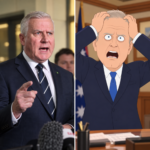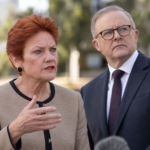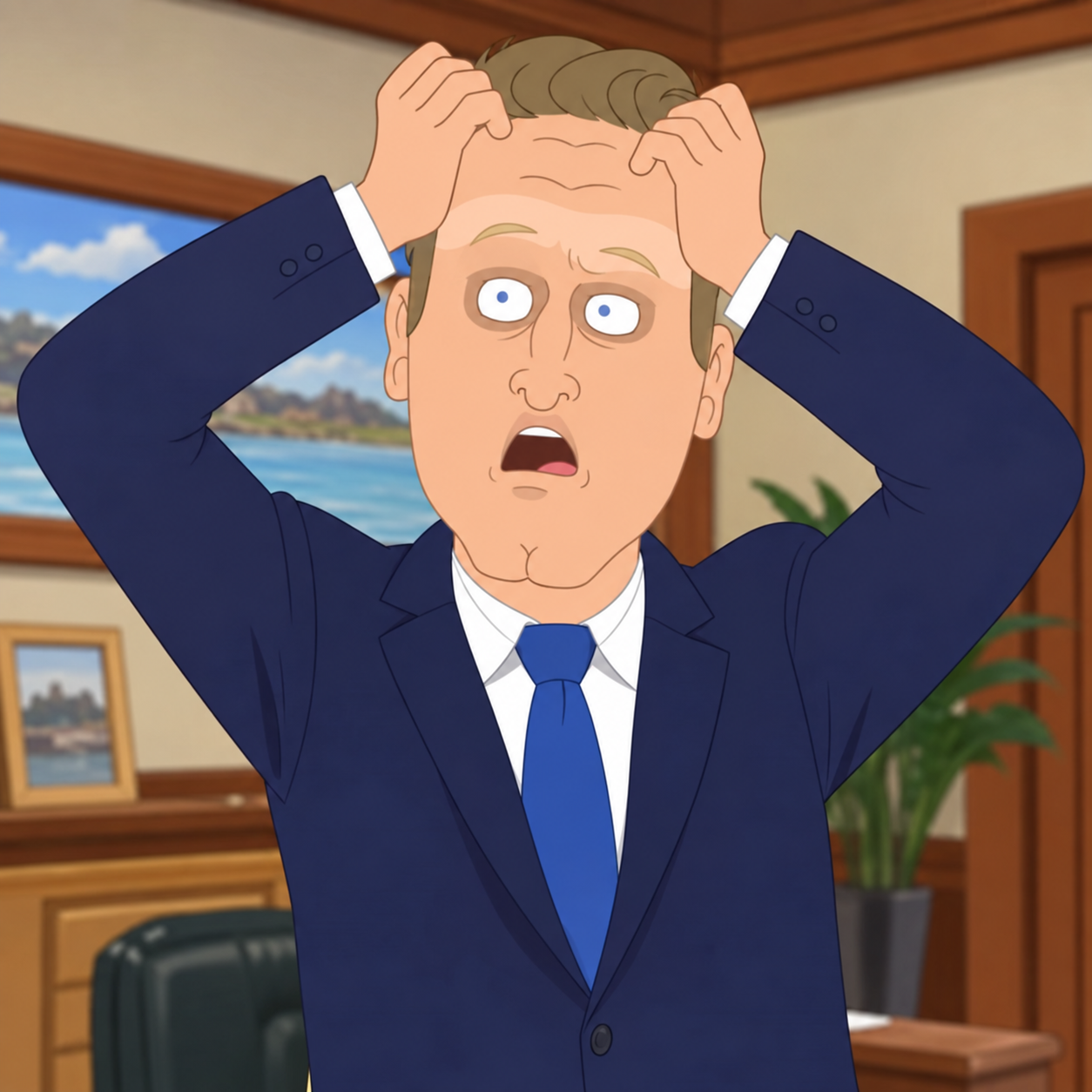
Andrew Hastie has accused Pauline Hanson and Barnaby Joyce of being “lying cowards” in an escalating confrontation over a One Nation cartoon that repeatedly portrays the former SAS officer as a “traitor”.
The Liberal frontbencher, who represents the Western Australian seat of Canning, produced a copy of the social media post at Parliament House as he challenged Senator Hanson and Mr Joyce to either defend the cartoon’s language or have it removed.
“Yesterday I said that Pauline Hanson and One Nation had called me a traitor to my own country, and today Barnaby Joyce and Pauline Hanson both denied it,” Mr Hastie told reporters.
“Today I’m calling them lying cowards.”
Mr Hastie said the animation had been posted to Senator Hanson’s X account on July 23 and remained online. He said the word “traitor” appeared eight times in connection with the cartoon version of him.
“I’m proud of my service to this country, in uniform and in this parliament,” he said. “It’s a slur on me, it’s a slur on other veterans who have given, under oath, evidence to Federal Court.”
He issued Senator Hanson and Mr Joyce with a blunt choice: explain why he and other veterans should be regarded as traitors, or delete the cartoon.
The cartoon behind the confrontation
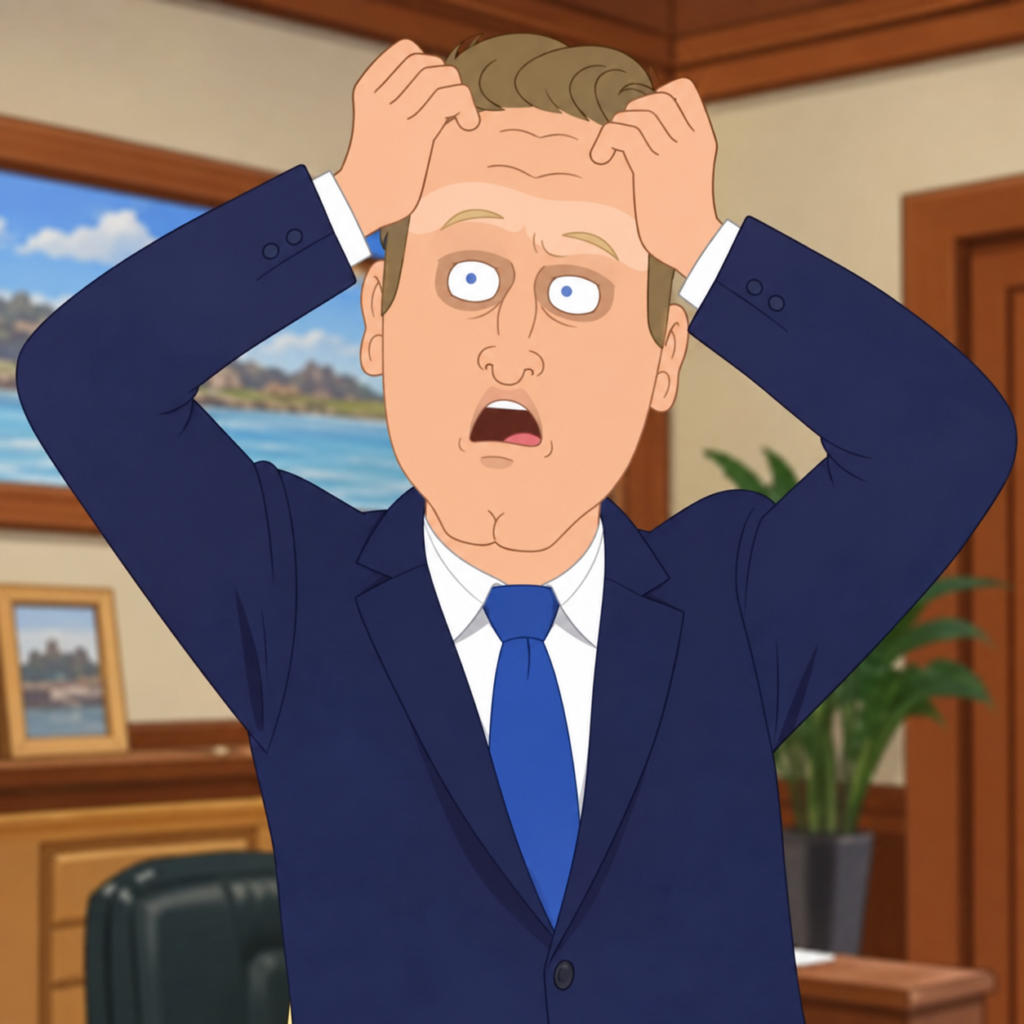
The dispute centres on “Don’t Be Hastie”, an episode of One Nation’s long-running animated political satire series Please Explain.
The animation presents a caricature of Mr Hastie complaining that people are calling him a traitor and links that criticism to two politically sensitive issues: his evidence in the Ben Roberts-Smith defamation case and his eventual support for amended federal legislation dealing with extremist organisations.
In one exchange, the cartoon character representing Treasurer Jim Chalmers asks why people are calling Hastie a traitor.
The Hastie character responds by referring to giving evidence involving Mr Roberts-Smith and supporting government legislation after earlier promising to oppose it.
The cartoon then continues the “traitor” theme as part of a broader satire about Mr Hastie’s politics and possible Liberal leadership ambitions.
Mr Hastie’s objection is not that Senator Hanson personally stood at a microphone and used the word against him. His argument is that she published and promoted political content through her own account that repeatedly used the term, making her responsible for the message it conveyed.
He has rejected attempts to draw a distinction between Senator Hanson’s personal words and material published as part of One Nation’s political operation.
Hanson says she never called Hastie a traitor
Senator Hanson has refused to accept Mr Hastie’s characterisation of her conduct.
In a combative television interview on Wednesday, she maintained that she had never personally described the Liberal MP as a traitor and said the animation was plainly satire.
She also refused to delete it.
“I don’t think he is a traitor, and I’ve never called him a traitor,” Senator Hanson said, while also saying she respected people who had served in the Australian Defence Force.
Her position is that Mr Hastie is treating an animated political attack as though it were a literal personal accusation.
She dismissed the controversy as an overreaction and suggested Mr Hastie’s increasingly aggressive campaign against One Nation might be connected to his own ambitions inside the Liberal Party.
Mr Hastie has not accepted that explanation.
He said Senator Hanson could not authorise and publish political satire that repeatedly depicted him as a traitor and then avoid accountability by pointing to the fact that the words were spoken by animated characters.
By Thursday, he was arguing that the dispute raised a broader question about whether Senator Hanson had the judgment required of somebody presenting herself as an alternative national political leader.
Joyce distances himself from the attack
Barnaby Joyce, who joined One Nation after leaving the Nationals, has sought to put distance between himself and the cartoon.
Mr Joyce said he had “never said a bad word” about Mr Hastie and had not previously seen the video that triggered the dispute.
He said Senator Hanson had told him she had not called Mr Hastie a traitor.
Mr Joyce has since reached out to the Canning MP, according to ABC reporting on Thursday.
That has not stopped Mr Hastie grouping the pair together in his attack on One Nation.
During an appearance on News24, he drew a sharp distinction between his own military experience and that of the two One Nation figures.
Mr Hastie served as an Australian Army officer from 2007 until 2015, including service with the Special Air Service Regiment between 2010 and 2015.
He deployed to Afghanistan and received several service medals before entering federal parliament through the 2015 Canning by-election.
He argued that politicians who had not served on military operations had no authority to use the Anzac tradition as a weapon against veterans who had given evidence under oath.
What Hastie actually did in the Roberts-Smith case
The history behind that part of the cartoon is important.
Mr Hastie did not volunteer as a prosecution witness in the current criminal case against Ben Roberts-Smith.
He was subpoenaed to give evidence in 2022 during the civil defamation proceedings brought by Mr Roberts-Smith against newspapers then published by Fairfax and owned by Nine.
Mr Roberts-Smith had sued over reports alleging misconduct during his military service in Afghanistan.
Mr Hastie was among a number of current and former Australian soldiers who gave evidence during the lengthy Federal Court case.
In 2023, Justice Anthony Besanko dismissed Mr Roberts-Smith’s defamation proceeding after finding that the newspapers had established the substantial truth of a number of allegations to the civil standard of the balance of probabilities.
Those findings were civil findings, not criminal convictions.
A separate criminal case is now under way.
On April 7, 2026, the Australian Federal Police and Office of the Special Investigator arrested Mr Roberts-Smith and charged him with five offences of the war crime of murder.
Commonwealth prosecutors allege the offences relate to the deaths of five Afghan nationals between 2009 and 2012.
Mr Roberts-Smith denies wrongdoing and has not been convicted of the charges. The case remains before the courts, with the next listed appearance scheduled for October.
Mr Hastie has repeatedly defended his earlier testimony as a matter of obeying a subpoena, giving truthful evidence under oath and respecting the rule of law.
His anger at the cartoon is therefore also directed at what he sees as an attack on other SAS veterans who participated in the Federal Court process.
He has asked whether One Nation regards those veterans as traitors as well.
The hate-laws claim is more complicated than the cartoon suggests
The second allegation embedded in the animation concerns Mr Hastie’s position on Labor’s hate and extremism legislation in January.
Mr Hastie initially announced publicly that he intended to vote against the government’s original bill, describing it as a threat to freedoms of conscience, speech and religion.
But the legislation changed substantially during negotiations between Labor and the Liberal opposition.
Mr Hastie eventually voted in favour of an amended bill.
He has since argued that this did not amount to abandoning his original position because the provisions he regarded as unacceptable had been removed.
In a June radio interview, Mr Hastie said the section of the original proposal dealing with hate speech had been “excised” before the final vote and that he supported the remaining measures, including provisions aimed at extremist groups.
Other contemporary reporting similarly recorded that Liberal MPs who had opposed the original package supported the revised legislation after the Coalition secured changes.
That does not prevent political opponents from accusing Mr Hastie of reversing his position.
It does mean the claim that he simply promised to oppose “hate speech laws” and then broke that promise leaves out a significant part of what happened between his first statement and the final parliamentary vote.
A fight with major consequences in Canning
The argument is not taking place in an electoral vacuum.
One Nation is openly targeting Mr Hastie’s federal seat of Canning at the next election, and the party’s recent breakthrough in Western Australia demonstrated why the Liberal MP is taking that threat seriously.
On August 29, One Nation’s Luke Herdegen won the state seat of Secret Harbour in a dramatic by-election result, securing the party’s first Western Australian lower-house seat.
The electorate lies largely within Mr Hastie’s federal division.
With about 79 per cent of the count recorded in the ABC’s latest election figures, Mr Herdegen led Labor by 57.2 per cent to 42.8 per cent after preferences. One Nation’s primary vote was about 39.1 per cent, a rise of more than 30 percentage points from the previous state election result in the district.
By-elections do not necessarily predict federal results, and Secret Harbour had previously been a Labor seat rather than a Liberal stronghold.
But the result demonstrated One Nation’s capacity to attract disaffected outer-suburban voters in precisely the part of Western Australia where Mr Hastie must defend his own seat.
Mr Hastie had already criticised sections of the WA Liberal Party for treating One Nation’s rise chiefly as a problem for Labor.
His position has been that the Liberals must compete directly for every conservative voter rather than assume One Nation preferences will eventually return to them.
The cartoon dispute has now made that strategic argument intensely personal.
Veterans’ backlash broadens
By Thursday, Mr Hastie was no longer fighting the issue alone.
Independent Tasmanian senator and former Army corporal Jacqui Lambie launched a furious attack on Senator Hanson and demanded the cartoon be removed.
RSL Australia also entered the debate, warning that depicting a veteran who gave evidence in court as a traitor had implications beyond a single politician.
The backlash has given Mr Hastie an unusual range of political allies, including figures who disagree with him strongly on other policy questions.
It has also shifted the issue away from the original electoral contest between the Liberals and One Nation towards a broader argument about the treatment of military witnesses and personal responsibility for political campaigning.
Senator Hanson remains unwilling to remove the video and insists she does not believe Mr Hastie is a traitor.
Mr Joyce says the cartoon was not his work and was not something he had seen before the controversy erupted.
Mr Hastie, meanwhile, has made clear that he regards neither explanation as sufficient.
For a politician who has been urging his party to fight One Nation more aggressively, the dispute has become both a defence of his military record and an early battle for the political future of Canning.
And after calling two of One Nation’s most recognisable figures “lying cowards” in front of the national media, there is little sign that Mr Hastie intends to retreat.