The Albanese government is facing a major Senate rebuke over its planned changes to veterans’ allied health care after senators voted 36–21 against the controversial $5,000 annual threshold underpinning hundreds of millions of dollars in Budget savings.
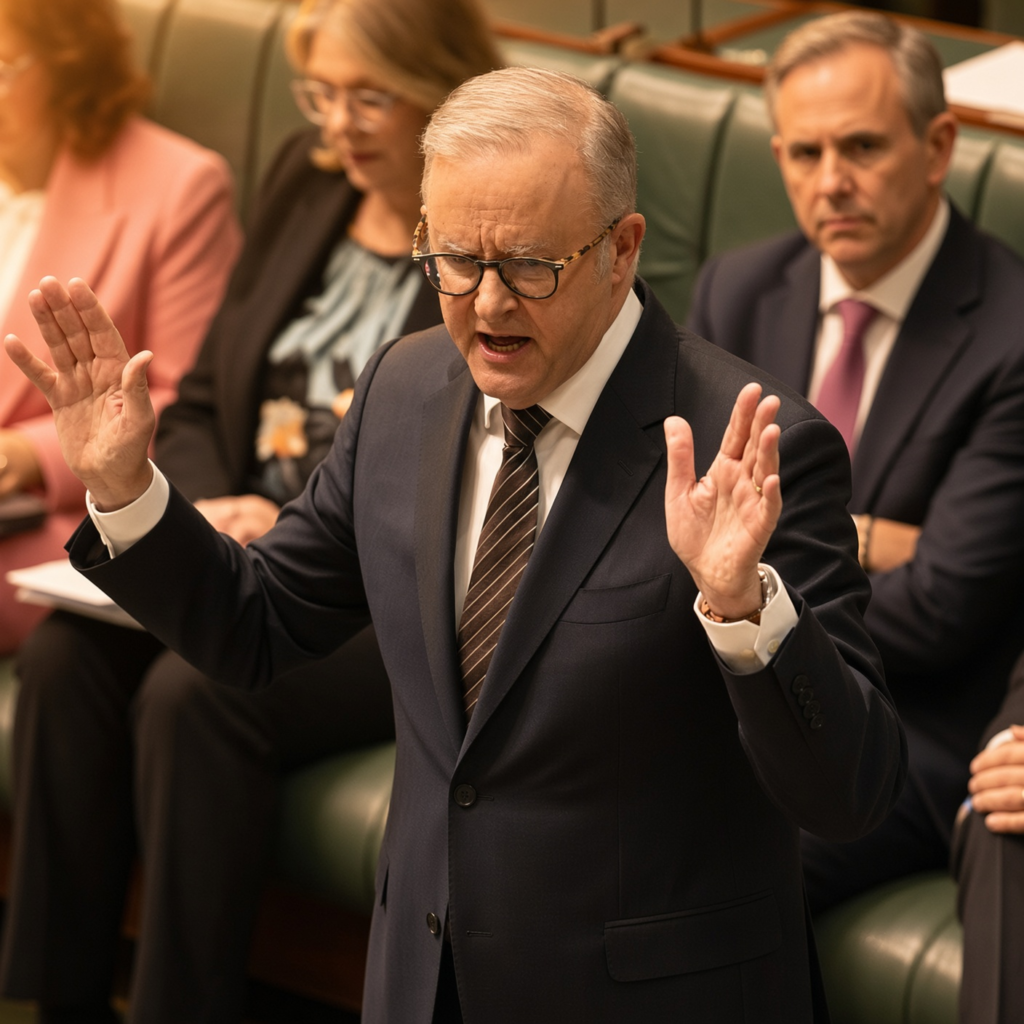
The urgency motion passed on Tuesday with support from the Coalition, the Greens, One Nation and independent senators, while Labor senators voted against it.
The vote does not itself abolish the policy. The change is an administrative Budget measure scheduled to begin on July 1, 2027 and, according to the government’s own Budget documentation, is not dependent on separate legislation passing Parliament.
But politically, the 36–21 result leaves Labor increasingly isolated over a proposal that has drawn criticism from veterans, ex-service organisations and opposition politicians since it was announced in the May Budget.
At the centre of the dispute is an uncomfortable set of numbers.
The 2026–27 Budget committed $169.7 million over five years to increase the fees paid to allied health professionals treating Veteran Card holders, responding to a recommendation from the Royal Commission into Defence and Veteran Suicide that DVA provider fees needed to rise.
At the same time, Budget documents explicitly said that investment would be “enabled” by $748 million in savings over three years from 2027–28 through the introduction of a new $5,000 Annual Monetary Limit on allied health services.
The same measure was projected to save another $340.2 million a year on an ongoing basis.
A further $30.1 million in three-year savings was attached to simplified referral arrangements.
Those figures have become central to the political fight because the government is simultaneously insisting veterans will continue to receive all clinically necessary treatment they require, including treatment costing more than $5,000 a year.
The question opponents are now demanding Labor answer is straightforward: if clinically necessary treatment will continue above the threshold, where exactly will the original $748 million in reduced expenditure come from?
From an ‘Annual Monetary Limit’ to a ‘review threshold’
The language used by the Department of Veterans’ Affairs to describe the measure has changed substantially since Budget night.
Official DVA material published in May described a “$5,000 Annual Monetary Limit”.
A separate DVA notice to allied health providers was even more direct, telling providers that from July 2027 there would be “a cap of $5,000 on allied health treatment”, while noting that additional funding could be sought where a veteran had a valid clinical need.
More recent DVA material no longer presents the arrangement in those terms.
The department now describes it as a “$5,000 annual threshold for reviewing treatment” or a “review threshold”.
Under the latest version of the policy, a veteran approaching $5,000 in relevant allied health expenditure would have their treatment reviewed with their health care team.
DVA says clinically necessary services above the threshold will continue to be funded and that treatment can continue while an application for additional care is being assessed.
The government has also announced exemptions.
The threshold will not apply to Veteran Card holders receiving the Special Rate Disability Pension or the Totally and Permanently Incapacitated Pension, or veterans determined to be catastrophically injured.
Psychology and counselling provided through Open Arms will not count towards the $5,000 threshold either.
The affected allied health categories include services such as physiotherapy, psychology outside Open Arms, occupational therapy, podiatry, chiropractic, exercise physiology, dietetics, social work and speech therapy.
Medical care delivered by GPs and specialists, including psychiatry, is outside the threshold, as are dental, optical and hearing services.
The changes remain under consultation, with detailed implementation arrangements not yet finalised and submissions open until October 30.
That evolving design is one reason critics accuse the government of rewriting the policy after the backlash began.
Labor’s position is that consultation was always intended to determine how the scheme would operate before its July 2027 commencement date.
More than 25,000 veterans already exceed $5,000
The number of veterans potentially affected has also attracted intense scrutiny.
During an earlier Senate debate, Nationals Senator Ross Cadell said more than 25,000 veterans had received more than $5,000 worth of allied health services during 2024–25.
DVA Secretary Alison Frame has separately told Budget Estimates that current usage indicates about one in every 10 Veteran Card holders uses more than $5,000 in allied health services in a year.
DVA’s own figures show approximately 105,000 Veteran Card — All Conditions holders and another 193,000 Veteran Card — Specific Conditions holders.
The department argues that reaching $5,000 will not mean a veteran suddenly loses treatment.
Instead, it says the threshold will trigger additional scrutiny of whether treatment remains clinically appropriate and effective.
The government has pointed to cases of unusually intensive treatment as evidence that stronger oversight is necessary.
Frame told Senate Estimates the department was aware of billing patterns indicating some veterans had received almost daily treatment from multiple allied health professionals.
DVA says such patterns are inconsistent with how allied health treatment is normally provided and may reflect “sharp practices” by a small number of providers.
Veterans’ Affairs Minister Matt Keogh has similarly argued that the reforms are partly designed to deal with overservicing and suspected provider fraud while increasing legitimate provider fees.
Critics do not dispute that fraudulent or inappropriate billing should be investigated.
The argument is over whether a spending threshold affecting tens of thousands of veterans is the appropriate mechanism for dealing with misconduct by providers.
Cadell told the Senate that evidence heard during estimates had included two cases involving individual veterans with allied health expenditure exceeding $100,000.
He argued that if individual providers were responsible for inappropriate billing, enforcement action should be directed towards them rather than creating an additional review hurdle for every veteran who reaches $5,000.
Lambie intensifies pressure
Independent Tasmanian Senator Jacqui Lambie, a former Australian Army corporal, has become one of the strongest critics of the change.
She previously moved an urgency motion in August demanding that the government immediately scrap what she described as the $5,000 cap, arguing veterans should receive treatment according to clinical need.
Lambie has also warned that additional uncertainty and bureaucracy surrounding medical care could have serious consequences for veterans already struggling with physical and psychological injuries.
Her criticism carries particular political weight following the Royal Commission into Defence and Veteran Suicide, which documented systemic problems veterans face when seeking support and called for major reforms to the institutions responsible for their care.
The Royal Commission recommended increasing DVA’s allied health fee schedules because low reimbursement rates were making it harder for veterans to find providers willing to treat them.
The government’s $169.7 million fee increase responds to that recommendation.
The Royal Commission did not recommend introducing a $5,000 monetary threshold.
That distinction has become a repeated line of attack from opponents who argue the government has bundled a welcomed improvement in provider fees with a separate cost-saving policy.
What happened to the $748 million?
The most important unresolved Budget question concerns how subsequent exemptions and policy changes affect the original savings estimate.
On Budget night, the calculation was clear enough to appear in government documentation: $748 million over three years beginning in 2027–28, followed by $340.2 million in annual ongoing savings.
Since then, DVA has emphasised that veterans can receive more than $5,000 where clinically required, identified groups to whom the threshold will not apply at all and guaranteed treatment can continue during the approval process.
According to reporting surrounding this week’s Senate fight, DVA has declined to provide an updated estimate showing how those exemptions change the original $748 million figure, indicating the financial impact will be reflected in a future government economic update.
Shadow Veterans’ Affairs Minister Michael McCormack says that lack of clarity suggests the government is developing significant parts of the arrangement after announcing the savings.
Labor rejects the broader accusation that it is abandoning veterans.
Keogh points to increasing DVA expenditure overall and says the government expects veterans to receive the treatment they genuinely need while reducing cases of inappropriate servicing.
DVA says the government will spend $5.7 billion in 2026–27 supporting the health, wellbeing and care of eligible veterans and their dependants.
It says the allied health provider increase is the largest in more than two decades.
Those are substantial investments.
They do not, however, make the $748 million savings figure irrelevant.
If anything, the coexistence of a major provider fee increase, a major expenditure reduction and a promise that clinically necessary care will not be cut makes transparency about the modelling more important.
The foreign aid comparison
Critics have also contrasted the veterans policy with Australia’s overseas aid expenditure.
Australia’s Official Development Assistance allocation for 2026–27 is $5.209 billion, including approximately $2.2 billion directed to the Pacific and $1.4 billion to Southeast Asia.
The government argues foreign aid advances Australia’s strategic, humanitarian and security interests, particularly in the Indo-Pacific.
There is no direct Budget mechanism under which foreign aid spending caused or funded the veterans allied health savings, so presenting the two figures as though one was literally chosen instead of the other would overstate the evidence.
But governments ultimately make political choices about taxation and spending across the entire Budget, and opponents are entitled to question why hundreds of millions of dollars in savings were sought from a health program serving former Defence personnel.
That argument has particular force because the veterans policy was announced less than two years after the Royal Commission delivered its final report into Defence and veteran suicide.
A political defeat, but the policy remains
For now, Tuesday’s Senate vote represents a significant political defeat for Labor rather than the legal end of the $5,000 arrangement.
The Senate’s official records show allied health services for veterans were the subject of both an order for production of documents and an urgency motion on September 8, illustrating the intensity of parliamentary scrutiny.
The government can still proceed with the policy because it does not require a standalone Act of Parliament.
But it now faces pressure from almost every other grouping in the Senate to change course before the July 2027 start date.
The central dispute is no longer simply whether “$5,000” should be called a cap, a limit or a review threshold.
DVA has made clear that veterans with demonstrated clinical need can receive treatment beyond that amount.
The harder question is how a scheme projected to remove $748 million from future allied health expenditure can simultaneously guarantee that nobody who genuinely needs care will lose it — particularly when tens of thousands of veterans already use services costing more than the threshold each year.
Until the government publishes updated modelling showing how its exemptions, reviews and above-threshold approvals interact with that savings target, the Senate fight is unlikely to disappear.
Veterans have been told their care will remain based on clinical need.
Parliament is now demanding the numbers that demonstrate how that promise fits with the Budget.