UNMASKING THE SILENCE: THE CHILLING DETAILS RE-EXAMINED IN THE LINDSAY CLANCY VIDEO
The tragic story surrounding Lindsay Clancy has captured public attention, triggering endless debates on mental health, accountability, and the dark corners of maternal despair. When a case hits an impasse in the courtroom, public fascination rarely dies down; instead, it migrates to the internet. Online communities dissect every piece of available media, re-watching clips to find overlooked clues that might explain the unexplainable choices made on that fateful, harrowing day.
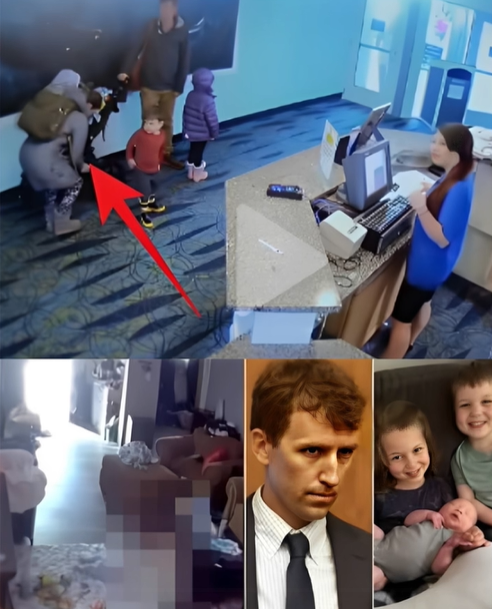
Recently, a specific clip showing Lindsay with her children has resurfaced, sparking intense analysis across social platforms. In the video, what appears to be a routine family stroll has been subjected to frame-by-frame scrutiny by millions of armchair detectives. Viewers are searching for subtle psychological markers, attempting to read the unreadable expression on a mother’s face seconds before a domestic routine spiraled into an unimaginable, heartbreaking historical tragedy.
At first glance, the footage presents a picture of mundane suburban peacefulness. Sunlight filters through the trees as a mother guides her young children down a quiet path. There are no sudden movements, no visible arguments, and no immediate red flags that would cause a casual observer to pause. It looks like thousands of other family videos uploaded online every single day, capturing brief, innocent fragments of normal childhood.
However, internet sleuths argue that the true horror lies precisely within that overwhelming sense of normalcy. They point to a specific moment when one of the children looks up and innocently asks where they are going. At that exact second, Lindsay’s facial expression undergoes a minute shift—a brief, icy stillness that lasts for only a fraction of a second, yet sends a shiver down the spine of those looking closely.
Analyzing facial micro-expressions has become a popular, albeit controversial, tool for digital investigators. Observers claim that Lindsay’s eyes appear strangely vacant, devoid of the natural warm responsiveness typical of a parent engaging with their toddler. Some describe it as a blank, thousand-yard stare, suggesting a mind completely detached from immediate reality, functioning on a mechanical, detached autopilot while battling severe, internal, unvoiced psychological turbulence.
Critics of this digital forensic frenzy argue that people are simply projecting hindsight bias onto an innocent, tired moment. Raising young children is inherently exhausting, and a fleeting look of fatigue or distraction is a universal experience for every parent. To interpret a split-second blank stare as definitive proof of premeditated intent or severe psychosis, they contend, is a dangerous form of armchair psychology that distorts basic facts.
This fundamental disagreement highlights the deep divide within public opinion regarding the nature of the tragedy. One side sees the video as tragic confirmation of severe post-partum psychosis, where the individual is completely consumed by altered perceptions, detached from reality, and operating under devastating delusions. For them, the vacant look in her eyes is a heartbreaking cry for help that went entirely unnoticed until it was far too late.
On the other side of the debate are those who view the gesture with deep skepticism, questioning whether mental illness can fully excuse such catastrophic actions. They scrutinize the clip for any subtle signs of deliberate awareness, calculated movement, or intentional behavior. To this group, the calm composure in the video suggests a chilling level of control, sparking fierce debates over the boundaries of legal responsibility and criminal accountability.
The phenomenon of “internet sleuths” taking over complex legal cases is a double-edged sword in modern culture. On one hand, public interest ensures that critical questions remain unanswered and that cases are not swept under the rug. Online communities bring massive collective energy to examining details that traditional investigations might occasionally overlook, creating a space where every single second of evidence is relentlessly tested and re-examined.
On the other hand, crowdsourced investigations frequently cross the line into wild sensationalism and baseless conspiracy theories. Without formal training in forensic psychology, behavioral science, or legal standards of evidence, casual viewers often mistake normal human behaviors for sinister clues. A simple blink, a shift in posture, or a tired sigh can easily be blown out of proportion when analyzed through a biased lens.
Psychological experts caution against drawing definitive conclusions from brief video snippets stripped of context. Human behavior is vastly complex, and micro-expressions are notoriously difficult to interpret accurately without comprehensive clinical evaluations. A mother’s quiet exterior can mask immense love, severe exhaustion, profound depression, or detachment—none of which can be definitively diagnosed through a pixelated smartphone video circulated on social media platforms.
Despite these warnings, the viral clip continues to generate millions of views and thousands of heated comments. Viewers re-watch the exact second the child speaks, pausing and zooming in on Lindsay’s eyes, searching for a definitive answer that science and the legal system have so far struggled to provide. The fixation reveals a deep human need to make sense of the unthinkable and find logic within chaos.
When confronted with horrific acts involving parents and children, the human mind instinctively seeks explanations to restore a sense of order. Believing that a hidden detail in a video holds the secret key allows us to feel as though the tragedy was predictable and, therefore, preventable. It offers a comforting illusion of control in a world where mental illness can sometimes strike silently without warning.
The tragedy surrounding Lindsay Clancy and her children serves as a grim, lingering reminder of the invisible struggles taking place behind closed doors. Whether one views the controversial clip as shocking evidence of severe psychosis or merely a tired moment blown out of proportion, it forces a necessary conversation about maternal mental health, societal pressure, and the warning signs we often fail to recognize in time.
As the debate rages on across forums, comment sections, and media outlets, the core tragedy remains unchanged. Lives were lost, a family was destroyed, and a community was left permanently scarred by events that defy simple explanation. The digital obsession with frame-by-frame analysis reflects our collective grief and frustration when faced with an outcome that offers no easy comfort or clear resolution.
The lingering impact of this video lies not in whether it provides courtroom-ready proof, but in how it haunts the public imagination. It stands as a chilling mirror reflecting our deepest fears about human fragility, the hidden depth of mental illness, and the terrifying speed with which a ordinary, peaceful walk can fall into darkness, leaving behind only questions and sorrow.
Ultimately, no amount of digital enhancement, slow-motion playback, or online speculation can rewrite the ending of this heartbreaking story. The final clip of Lindsay Clancy and her children will continue to be debated, re-analyzed, and argued over, serving as a permanent testament to a tragedy that left an indelible mark on the conscious mind of the public forever.