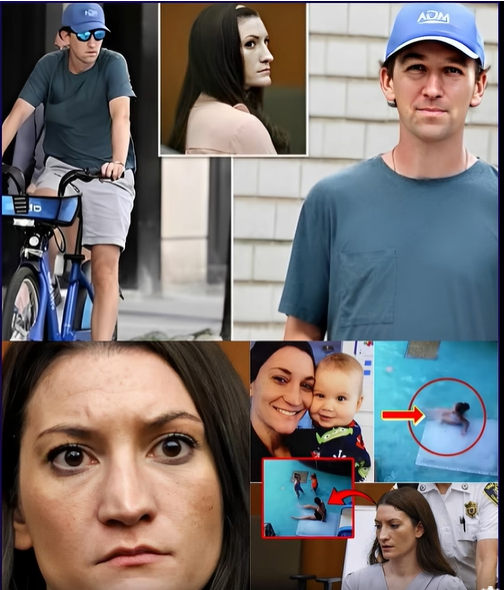
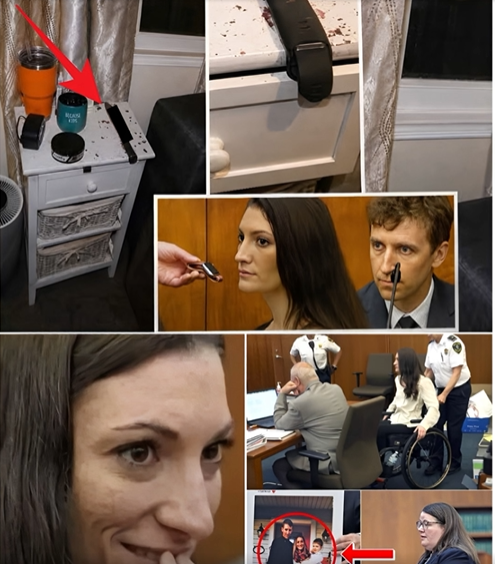
The internet has erupted into absolute chaos over an astonishing leak that is threatening to completely rewrite one of the most heartbreaking tragedies in recent memory. Whispers and alleged court documents sweeping across social media claim that Patrick Clancy was secretly harboring a devious second life, engaging in an affair and quietly marrying a prominent Manhattan physician just moments before his ex-wife faced her ultimate judgment. This sudden revelation has left millions paralyzed with shock, completely shattering the initial, tidy narrative that society had so eagerly swallowed whole without a second thought.
People everywhere are now passionately debating whether this unspeakable nightmare was purely the result of an isolated mental breakdown or the tragic climax of deliberate psychological destruction. The haunting question echoing through online forums is simple: was a fragile mother systematically pushed into total madness by a calculating husband, or is this all just a bizarre, cruel coincidence weaponized for online sensationalism? The public sentiment is rapidly shifting as people re-examine every single piece of evidence previously taken at face value.
To truly understand the massive scale of this burning controversy, one must look back at the terrifying afternoon that originally stopped the world in its tracks. Lindsay Clancy was widely perceived as the absolute picture-perfect suburban mother, a dedicated labor and delivery nurse who spent her entire career bringing life into the world with gentle care and endless empathy. Her devotion to her three beautiful, smiling children was documented endlessly online, showcasing what appeared to be an enviable, picture-perfect family life filled with joy, laughter, and affection.
Behind that polished, glowing social media facade, however, a dark and insidious shadow was quietly consuming her mental sanity piece by piece. She was desperately battling severe, paralyzing postpartum depression, crippling anxiety, and dangerous psychotic episodes that slowly stripped away her ability to process reality normally. She sought help continuously, faithfully visiting medical specialists, taking countless prescribed medications, and pleading for relief from an invisible force that was gradually dismantling her mind.
Yet, despite the countless red flags and clear cries for help, the unthinkable eventually happened on a deceptively normal winter day. The news shocked the global conscience as three innocent, precious young lives were brutally stolen in a matter of terrifying, agonizing minutes. The sheer horror of the act left the entire community completely numb with disbelief, unable to fathom how a loving, gentle mother could ever commit such an unimaginable atrocity against her own blood.
In the immediate, devastating aftermath of the tragedy, the primary narrative was focused squarely on the deadly flaws of modern maternal healthcare systems and severe post-birth mental illnesses. Millions wept for the lost children while simultaneously debating the complex, terrifying reality of postpartum psychosis that often goes undetected until it is tragically too late. Patrick Clancy initially emerged as a stoic, grieving father who lost his entire world in one single afternoon of total madness.
His early statements offered a blanket forgiveness that moved millions of hearts around the globe to tears and generated immense, overwhelming public support. He was viewed nationwide as an ultimate victim of unprecedented tragedy, a broken husband carrying an impossible, agonizing burden that no human being should ever have to endure alone. Donations poured in continuously, and support groups rallied around his immense grief, framing him as a saintly figure navigating an unimaginable personal hell.
However, this newly leaked testimony has abruptly shattered that carefully constructed image into a thousand razor-sharp, dangerous pieces. The explosive accusations claim that beneath his public veil of profound sorrow lay a calculated campaign of emotional distance, psychological manipulation, and outright betrayal that actively crushed his wife’s fragile psyche. If these terrifying claims hold even a shred of truth, the underlying dynamic of this home was far darker than anyone could have ever conceived.
The sudden appearance of a wealthy Manhattan doctor in this messy, complicated equation adds a sinister layer of deliberate calculated deceit. Critics on social media now speculate wildly that the emotional isolation Lindsay felt was not merely an unfortunate byproduct of her mental condition, but a cold, intentional abandonment by the one person meant to protect her. A human mind already dangling precariously over a sheer cliff cannot withstand the soul-crushing weight of secret cruelty and romantic betrayal.
Psychologists have long argued that extreme emotional trauma combined with severe mental illness can act as an immediate, volatile catalyst for complete cognitive destruction. When a person suffering from severe postpartum psychosis is subjected to deep emotional isolation, their warped perception of reality can spiral into catastrophic paranoia. The desperate need to escape intense psychological pain can manifest in terrifyingly destructive ways that defy all human logic and natural instincts.
This dynamic raises uncomfortable, deeply disturbing questions about accountability and hidden domestic abuse that rarely leaves visible, physical bruises on the skin. Is it possible that Lindsay’s devastating actions were a misguided, horrific act of ultimate revenge against a husband she felt was abandoning her and her children? Or was her broken mind simply weaponized by extreme stress, driving her to destroy the very things that connected her to a painful reality she could no longer survive?
Internet sleuths are meticulously picking apart every past interview, court statement, and social media post to uncover subtle clues that were previously completely overlooked. Every quiet gesture, every awkward pause in police interrogations, and every legal maneuver is now being heavily analyzed under a unforgiving, intense public microscope. The overwhelming urge to assign absolute blame in such an unnatural tragedy drives society to search relentlessly for a clear, understandable villain.
The fierce online debate has divided commentators into two passionately uncompromising camps with entirely fundamentally opposing viewpoints. On one side, furious advocates argue that Patrick’s alleged cold-hearted betrayals directly systematically pushed an unstable woman completely over the edge, making him morally responsible for creating the ultimate pressure cooker environment. They argue that emotional cruelty, secret affairs, and systemic neglect are form of insidious violence that can drive fragile minds into absolute darkness.
Conversely, another strong faction maintains that nothing can ever excuse or explain away the horrifying destruction of three defenseless, innocent young children. They argue vehemently that regardless of Patrick’s personal faults or alleged marital indiscretions, the physical act of murder rests solely on the person who carried it out. In their eyes, shifting the blame onto an unfaithful partner dangerously minimizes the severity of the crime and disrespects the memory of the young victims.
This fierce clash of perspectives highlights our society’s deep-seated struggle with understanding the chaotic, uncomfortable complexities of severe mental illness and human cruelty. We desperately crave simple, clear-cut stories of absolute good versus absolute evil because the truth is often far too terrifying to comfortably digest. The reality that extreme psychological breakdown and hidden domestic dysfunction can intertwine to create a perfect storm of total destruction is deeply deeply unsettling.
What makes this evolving narrative so utterly captivating and deeply distressing is the constant unsettling shift in our collective moral perspective. Just when the public feels confident in its moral judgment, another layer of secret history is abruptly ripped open, forcing everyone to reconsider their assumptions. The human psyche is drawn to complex, real-life mysteries where the line between victim and perpetrator becomes blurred beyond standard recognition.
As the legal proceedings continue to unfold behind closed doors, the public remains utterly spellbound, eagerly awaiting every tiny fragment of new information that emerges. The tragic story of the Clancy family has transcended a simple news report, transforming into a dark cultural reflection on marriage, mental health, and the hidden pressures of modern life. It forces us to wonder what terrifying secrets might be hiding behind the immaculate, smiling doors of our own quiet neighborhoods.
The memory of those three innocent children remains the most heartbreaking, devastating centerpiece of this entire catastrophic, horrific ordeal. Regardless of which narrative eventually proves true in the cold light of a courtroom, three precious lives were permanently cut short far too soon. Their innocent laughter, bright futures, and untapped potential were forever extinguished in a terrifying flash of overwhelming darkness that should have been prevented.
As the debate rages on across the internet, one fundamental, haunting question continues to linger in the minds of millions who follow this case daily. Can a heartless betrayal truly push a loving mother to commit the ultimate, unforgivable crime, or are we simply witnessing the tragic, chaotic aftermath of a mind that was already completely beyond saving? The disturbing answers may forever remain buried beneath layers of grief, legal defense strategies, and heartbreaking human tragedy.