Prime Minister Anthony Albanese has urged Labor supporters to confront the rise of One Nation, but a bruising by-election defeat and a fresh controversy over the government’s political messaging have raised a more uncomfortable question for the party: whether some of its problems are being created from within.
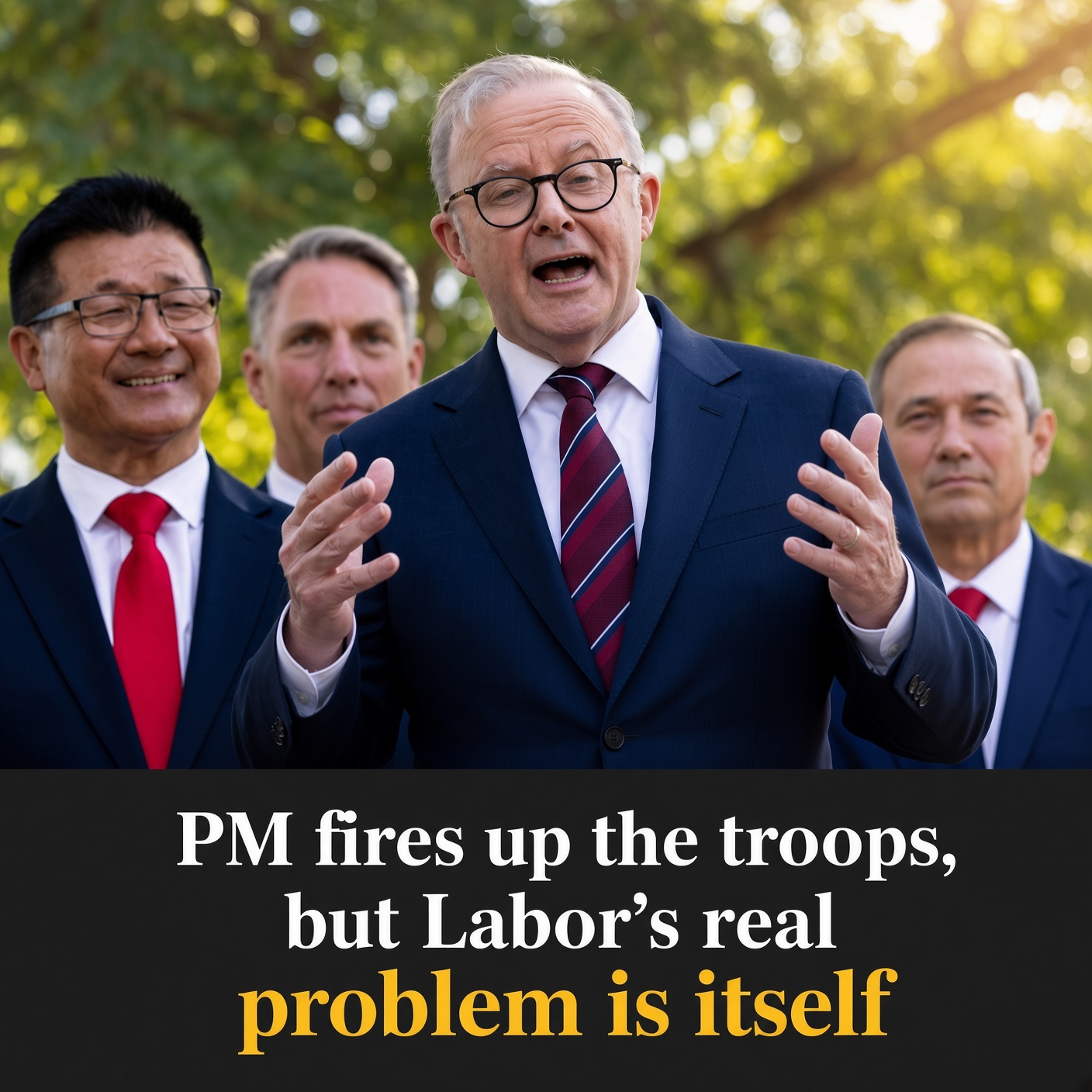
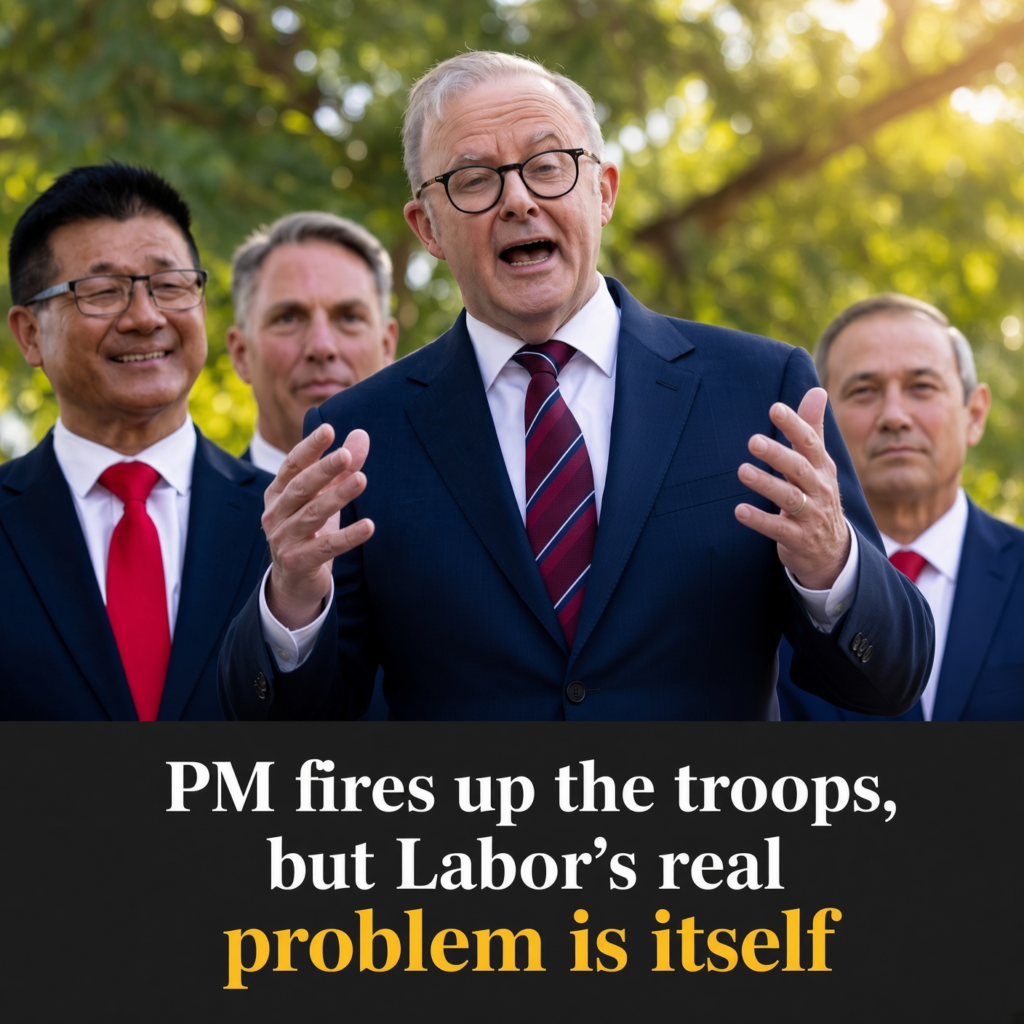
Addressing the Queensland Labor State Conference in Brisbane on Sunday, August 30, Albanese delivered an energetic call to arms against what he described as the global advance of “hard right populists”, arguing that movements such as One Nation offered division rather than serious solutions.
The timing was impossible to ignore.
Only hours earlier, One Nation had secured a historic victory in the Western Australian seat of Secret Harbour, taking a constituency that had long been considered Labor territory and turning what might otherwise have been a routine party conference speech into a test of how the government intends to respond to a rapidly changing political environment.
“Across the world hard right populists are on the march,” Albanese told Labor delegates.
He accused such movements of promoting dangerous and divisive politics, bending facts and turning Australians against each other.
He then singled out One Nation, arguing the party had no serious answers to Australia’s problems and attacking its positions on workplace rights, multiculturalism and domestic violence.
Albanese told the room the answer was for Labor to remain positive and offer Australians “real hope of a better future”.
As a speech to the faithful, it had an obvious purpose: rally the membership, draw a clear ideological line between Labor and Pauline Hanson’s party, and reassure activists that the government was prepared to fight rather than retreat in the face of One Nation’s growing support.
Outside the conference hall, however, the political calculation is more complicated.
The result in Secret Harbour was not a marginal loss that Labor could easily dismiss as electoral noise.
One Nation candidate Luke Herdegen defeated Labor’s Georgia Tree with 57.2 per cent of the two-candidate-preferred vote according to the ABC’s updated count, with Herdegen leading by almost 4,000 votes.
On first preferences, One Nation secured 39.1 per cent, while Labor fell to 24.1 per cent — a 22.5 percentage-point drop in Labor’s primary vote compared with the previous election.
The Liberal Party also suffered, recording just 17.2 per cent of first preferences.
That makes Secret Harbour a warning not only for Labor but for both major political blocs.
The by-election was triggered by the retirement of veteran Labor MP and former minister Paul Papalia, who left politics in July because of a serious illness affecting an immediate family member.
Labor entered the contest defending a seat it had previously held with an 11.5 per cent margin. Instead, One Nation emerged with its first lower-house seat in Western Australia.
The scale of the result has inevitably encouraged debate about whether Secret Harbour represents a local protest, a particular failure by WA Labor, or something more significant about the movement of voters away from the major parties.
There were certainly local factors.
Labor candidate Georgia Tree faced questions during the campaign about living outside the electorate. She owned a property closer to central Perth but said she would live in Port Kennedy during the campaign and emphasised her childhood connections to the area.
Her professional background also became an issue. Tree had worked in government relations for energy giant Woodside, creating an unusual point of attack for critics from both sides of politics in an electorate where economic concerns, energy policy and distrust of established institutions all played into the campaign.
None of those factors alone explains a 22.5-point collapse in Labor’s primary vote.
That is why the result has attracted national attention.
One Nation has been gaining support well beyond Western Australia, and a Newspoll published around the time of the Secret Harbour result placed the party on 30 per cent of the national primary vote, narrowly ahead of Labor on 29 per cent and well above the Coalition on 19 per cent.
A single opinion poll does not determine an election, and a state by-election cannot simply be projected onto a federal contest. But taken together, the numbers illustrate the political pressure now facing the established parties.
Albanese’s strategy is to confront that challenge directly.
His Brisbane speech framed the contest as one between a Labor government delivering practical economic and social measures and a populist movement built around grievance, misinformation and division.
He highlighted tax cuts, cheaper medicines, Medicare investment, Free TAFE, wage increases and housing reforms, arguing Labor needed to demonstrate that government could improve people’s lives.
The Prime Minister also linked the rise of populist parties internationally to economic insecurity, saying many people were under pressure as wars and global disruption drove inflation and political instability.
That recognition is important because it points to the tension at the centre of Labor’s strategy.
If voters moving towards One Nation are primarily motivated by economic frustration, housing pressure, migration concerns or disillusionment with traditional institutions, attacking One Nation may energise Labor supporters without necessarily persuading the voters who have already left.
That is the argument being made by critics of the government: that Labor risks describing the symptoms of voter anger rather than addressing why those voters are angry.
The political communication problem was sharpened days later by Communications Minister Anika Wells.
Wells attracted widespread criticism after publishing a social media video using Woolworths Ooshie collectibles to explain housing supply, demand and Labor’s recent property tax changes.
In the video, she compared housing investors with Ooshie collectors and explained the government’s first-home buyer deposit scheme by imagining an Ooshie that normally required $30 in savings instead requiring $1.50.
The video was part of Wells’ broader effort to explain government policy through popular culture and social media formats designed to reach audiences who might not watch traditional political interviews.
But critics, including Coalition MPs and a large number of online commenters, described the presentation as patronising and said it trivialised the financial pressure confronting Australians trying to buy or rent a home.
That does not mean the policy explanation itself was inaccurate simply because it used toys as a visual device.
Nor is there anything inherently wrong with politicians attempting to make complex policy easier to understand.
The political risk lies in tone.
Housing is one of the most financially consequential issues facing Australian households. For a young renter struggling to save a deposit, a family facing rising costs or an owner worried about the value of a recently purchased property, a playful analogy can be received very differently from the way its creator intended.
It is that gap between intention and reception that has become increasingly important for Labor.
The government argues it is delivering substantive reforms: changing investor tax settings, supporting first-home buyers and trying to shift investment towards construction of new housing.
But if voters believe their concerns are being simplified, dismissed or explained to them rather than listened to, even a technically defensible policy can become politically difficult to sell.
That challenge is not unique to Labor.
Politicians across the spectrum increasingly use short-form videos, memes, exercise clips and pop-culture references in an attempt to reach younger audiences. Some succeed. Others produce an immediate backlash because the format appears forced or disconnected from the seriousness of the issue being discussed.
One Nation has benefited from a very different communication model.
Its political appeal is frequently built around direct language, anger at established institutions and the promise that it will say things major-party politicians will not.
That approach can be polarising, and many of One Nation’s positions remain deeply contested. But its success in Secret Harbour demonstrates that dismissing the party as merely a fringe protest vehicle is becoming increasingly difficult.
The Liberal Party faces an equally serious strategic problem.
Its third-place finish in Secret Harbour showed that voters abandoning Labor are not automatically returning to the traditional centre-right alternative. One Nation is increasingly competing directly for voters who might once have moved between Labor and the Coalition.
For Albanese, that changes the political equation.
Labor can argue against Hanson’s policies and challenge claims it regards as misleading. But it must also persuade voters that their dissatisfaction is being heard rather than simply attributing the growth of One Nation to misinformation or extremism.
That is why Secret Harbour matters beyond the boundaries of a single WA electorate.
The result does not prove One Nation will reproduce the same performance at a federal election. By-elections routinely generate large swings, local candidates matter and the circumstances surrounding Papalia’s retirement were unusual.
But the scale of Labor’s primary-vote decline means the result cannot comfortably be dismissed either.
Albanese’s Brisbane speech showed a Prime Minister ready for a political fight.
The harder task is deciding what kind of fight Labor is actually facing.
If the government treats the problem purely as a contest against Pauline Hanson, it risks overlooking voters whose support for One Nation is less about ideological loyalty than dissatisfaction with housing, living costs, migration, trust in government or the behaviour of the major parties themselves.
If Labor instead treats Secret Harbour as a warning about its own political communication and its connection with outer-suburban and working-class voters, the defeat may prove more useful than damaging.
That distinction will matter greatly as Australia moves towards the next federal election.
Labor remains in government with significant institutional advantages, and one by-election does not overturn the national political order.
But the message from Secret Harbour was unmistakable: voters who once appeared safely attached to one of the major parties are increasingly prepared to go somewhere else.
Albanese can fire up the party faithful against One Nation. The more difficult challenge is convincing the voters walking away from Labor that the government understands why they left.