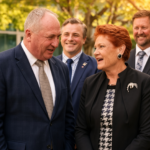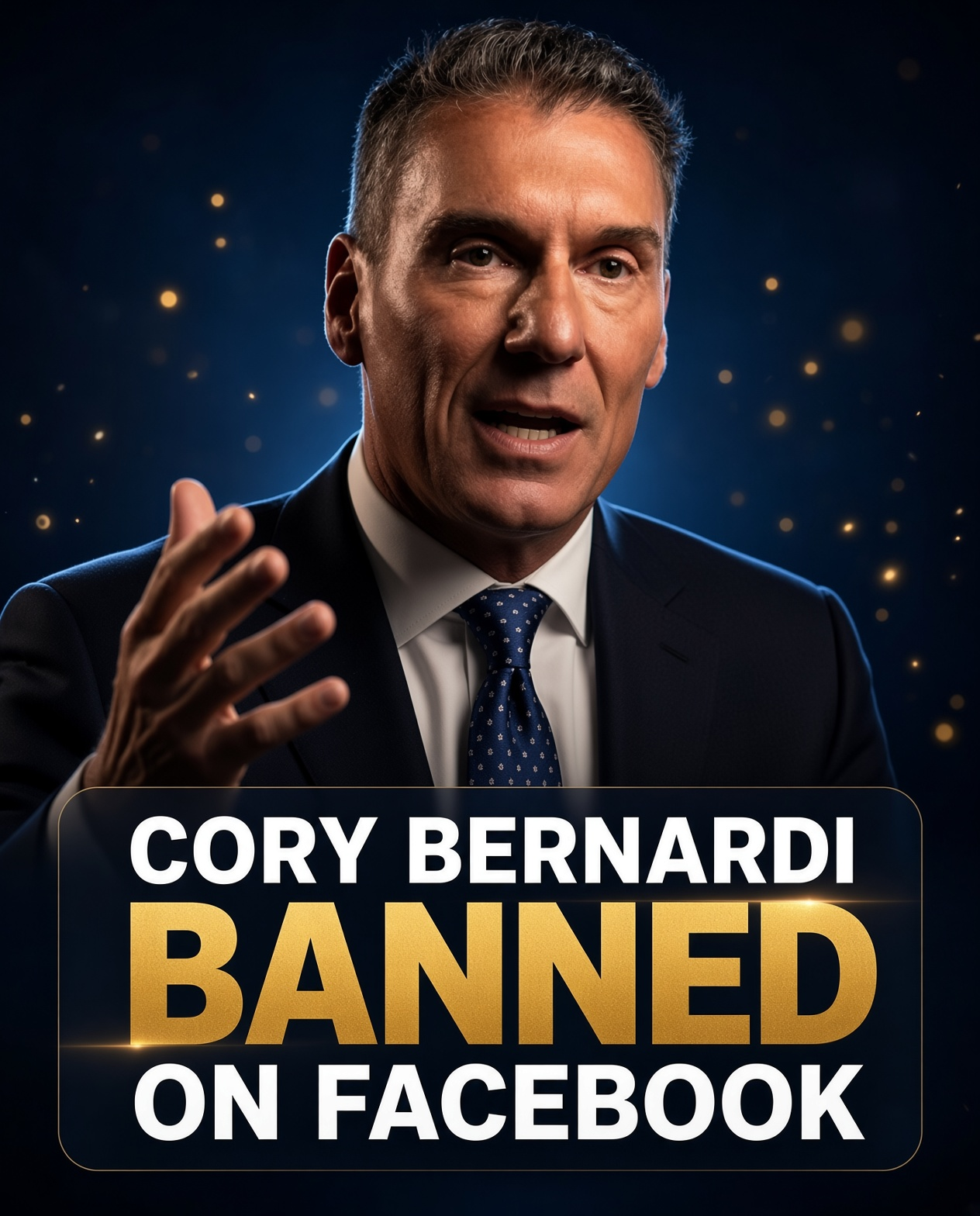
Cory Bernardi has been suspended from Facebook after a series of viral videos filmed at an anti-One Nation student protest triggered complaints and legal threats from parents of young people who appeared in the footage.
The One Nation South Australian leader announced the suspension on Saturday, saying his party had already appealed Facebook’s decision.
The development comes just days after One Nation confirmed lawyers acting for parents of children featured in videos from the August 13 protest outside South Australia’s Parliament House had demanded the footage be removed.
Bernardi linked the two developments when announcing his suspension.
“I have been suspended on Facebook,” he wrote.
“This follows legal threats from parents of kids at the anti-Hanson protest, demanding we delete our viral video of what happened in broad daylight on the steps of Parliament House.”
Bernardi defended the decision to publish the footage, arguing that the protesters were aware cameras were present and had deliberately participated in a highly public political demonstration.
“These students performed for the cameras, used vile language and made threats, knowing they were being filmed,” he said.
“One Nation has appealed the suspension. Update coming soon.”
However, while Bernardi has linked his suspension to the dispute with parents, no publicly available statement from Facebook or its parent company Meta has established that the legal threats were the reason his account was suspended.
The precise basis for the platform’s decision therefore remains unclear.
Videos at the centre of the dispute
The controversy began during nationwide student demonstrations against Pauline Hanson and One Nation earlier this month.
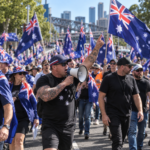
Hundreds of protesters gathered outside South Australia’s Parliament House in Adelaide on August 13, many of them high school and university students who had walked out of classes.
Similar demonstrations were held in other Australian cities.
Bernardi, who sits in South Australia’s upper house and leads One Nation in the state, encountered the Adelaide demonstration as protesters assembled outside parliament.
Instead of simply walking past the gathering, he began recording.
Videos subsequently published on his social media accounts showed Bernardi speaking to his phone camera, approaching protesters and moving through parts of the crowd.
The exchanges quickly became confrontational.
ABC reporting from the event confirmed that protesters chanted against Hanson and One Nation, including profanity directed at both Hanson and Bernardi.
Bernardi responded with provocative language of his own.
In one video, he described demonstrators as “total losers” and a “bunch of incels”.
He also used an anti-trans slur while walking through the protest.
Those comments subsequently drew criticism from protest organisers and others who argued that a senior politician should not be speaking about young protesters in such terms.
Bernardi remained unapologetic.
Footage went viral
The confrontation rapidly escaped the boundaries of South Australian politics.
One of Bernardi’s videos accumulated more than 753,000 views and about 32,000 likes on Instagram, according to reporting on the dispute.
A version reposted by Turning Point Australia attracted more than 1.5 million views.
That enormous reach transformed what had initially been a heated encounter on the steps of parliament into a national social-media controversy.
Supporters of Bernardi argued the footage exposed the conduct and language of activists protesting against One Nation.
Critics focused instead on Bernardi’s decision to film young people at close range, his language towards them and the subsequent mass circulation of images containing minors.
The disagreement eventually moved beyond political argument.
Parents threatened legal action
On August 27, One Nation confirmed it had received what it described as “formal legal threats” relating to the videos.
According to InDaily, the communications came from lawyers acting for parents of children featured in the footage.
The parents were seeking removal of the videos.
Bernardi and One Nation resisted the demand.
The party’s position was that participants had attended a public political demonstration outside Parliament House and knew media and cameras were present.
The parents’ position has not been publicly detailed through a completed court case, and the existence of legal correspondence should not be confused with a judicial finding that Bernardi or One Nation acted unlawfully.
No such finding has been established in the reporting currently available.
That distinction is particularly important because the dispute involves minors and competing claims about privacy, political expression and publication.
Being in public does not resolve every legal question
The controversy has produced confident claims on social media about whether Australians can legally film people — particularly children — in public.
The reality is more complicated.
There is no broad Australian rule requiring photographers or journalists to obtain consent every time an identifiable person appears in footage captured in a public place.
But that does not mean every subsequent use or publication of every image is automatically lawful.
Different issues can arise depending on the circumstances, the material published, how it is presented and what claims accompany it.
Specific legal arguments raised by the parents’ lawyers have not been tested publicly in court.
It would therefore be premature either to declare that the parents have an established legal right to force the footage offline or to declare that One Nation faces no possible legal exposure.
For now, there is a legal dispute rather than a legal verdict.
Facebook suspension adds another question
Bernardi’s suspension has now introduced the separate issue of private platform moderation.
Facebook is not a court.
Its moderation system operates under platform rules that are distinct from the question of whether particular conduct is lawful under Australian law.
Material can potentially comply with Australian law and still breach a platform’s policies.
Conversely, the fact that Facebook suspends an account does not establish that the account holder has broken Australian law.
That is why the absence of a detailed public explanation from Meta matters.
Bernardi says the suspension followed the legal threats.
The chronology supports his statement that one event occurred after the other.
It does not, by itself, establish why Facebook made its decision.
Until Meta identifies the relevant policy or explains the action, claims about the exact reason for the suspension remain speculation.
One Nation says it will appeal
One Nation has made clear it intends to challenge the platform’s decision rather than accept it.
The party has increasingly framed disputes involving social-media moderation as part of a wider free-speech argument.
South Australian One Nation upper-house MP Carlos Quaremba reacted angrily to Bernardi’s suspension, describing Facebook’s action in blunt terms and accusing opponents of attempting to silence the party rather than debate it.
Quaremba argued that restrictions imposed on One Nation should concern people beyond the party because similar moderation powers could ultimately be applied to others.
That is the political argument One Nation is likely to emphasise as the appeal proceeds.
But the platform dispute also raises a difficult distinction.
Freedom of political communication does not necessarily provide an unrestricted entitlement to use a privately operated social-media service on whatever terms an account holder chooses.
Platforms establish their own standards and moderation systems, while Australian governments continue to debate how much transparency and accountability those companies should face when enforcing them.
Without Facebook’s detailed reasoning in this case, it is impossible to assess whether the suspension represents proportionate enforcement of a clearly identified rule.
Both sides used inflammatory language
Any account of the original Adelaide confrontation also needs to acknowledge what actually happened on the ground.
The protest was not a quiet gathering at which only Bernardi used inflammatory language.
ABC footage and reporting confirmed protesters repeatedly chanted profanity directed at Hanson, and Bernardi was also subjected to hostile chants.
Some placards contained sharply worded attacks on racism and One Nation.
At the same time, Bernardi was not merely a passive target recording abuse from a distance.
He moved through the gathering, approached attendees and made derogatory remarks of his own.
He described protesters as losers and incels and used an anti-trans slur.
That distinction matters because each side has attempted to frame the episode primarily through the behaviour of the other.
The publicly documented evidence shows a highly confrontational political encounter in which provocative language was used by protesters and by Bernardi.
The claim about ‘threats’ needs greater evidence
One part of Bernardi’s latest statement deserves particular care.
He says students in the videos “used vile language and made threats”.
The first part is supported by reporting from the event: profanity and aggressive chants were clearly documented.
The broader assertion about threats is less straightforward.
The publicly available reporting confirms heated exchanges and hostile political language, but does not provide sufficient detail to conclude that students shown in the videos collectively made criminal or actionable threats.
That allegation should therefore remain attributed to Bernardi unless further evidence or police findings emerge.
The distinction between offensive speech and a threat is important both legally and journalistically.
Speech can be ugly, abusive or deeply offensive without necessarily meeting the legal threshold for a threat.
A bigger fight over student activism
The Facebook controversy is also part of a broader political dispute over the student protests themselves.
One Nation has questioned why school students were able to leave classes to participate and has called for scrutiny of whether schools promoted or facilitated the demonstrations.
The party has asked South Australian Education Minister Lucy Hood to investigate which schools promoted, raised awareness of or advocated for the protest.
Protest organisers, meanwhile, have defended the students’ right to demonstrate against One Nation and have indicated they intend to continue mobilising.
Another Adelaide protest is planned for September 17, with organisers predicting a larger turnout.
The dispute therefore extends well beyond Bernardi’s Facebook account.
It touches on the role of political activism in schools, the participation of minors in public demonstrations and the responsibilities of politicians when engaging directly with young protesters.
Bernardi is once again at the centre of controversy
Bernardi returned to elected politics this year as One Nation’s South Australian leader after a long and often contentious career in conservative politics.
He previously served as a Liberal senator before leaving the party in 2017 to establish the Australian Conservatives.
After that party was deregistered, Bernardi stepped away from parliament before later joining One Nation and returning to South Australian politics.
His political identity has long been built around combative positions on cultural and social issues.
That style has made him a prominent figure within the expanding One Nation movement but also a frequent target of criticism.
The Adelaide protest demonstrated both sides of that political persona.
Bernardi’s supporters saw a politician willing to walk directly into a hostile crowd and challenge protesters to their faces.
His critics saw a senior elected representative deliberately provoking and ridiculing teenagers while filming them for an enormous online audience.
The Facebook suspension has now ensured the argument will continue.
The unanswered question is why Facebook acted
The next development may be the most important one.
If Facebook restores Bernardi’s account on appeal, One Nation will almost certainly portray the outcome as vindication.
If the suspension remains, attention will turn to whether Meta provides a specific explanation for its decision.
That explanation matters because several distinct issues have become entangled.
There are legal demands from parents.
There are concerns about footage containing minors.
There is Bernardi’s own language.
There is the language and behaviour of protesters.
And there are Facebook’s private content and account standards.
They are related, but they are not interchangeable.
A parent’s legal complaint does not automatically prove a platform violation.
A Facebook suspension does not prove unlawful conduct.
And participation in a public protest does not remove every possible question about how footage is subsequently edited, framed and distributed.
For now, the most firmly established facts are narrower.
Bernardi filmed and published videos from a highly charged anti-One Nation protest attended by many students.
The videos went viral.
Parents represented by lawyers subsequently demanded that footage featuring their children be removed.
Bernardi refused to retreat and publicly defended the videos.
Facebook has now suspended him.
And One Nation is appealing.
Until the platform explains why it acted — or the legal dispute produces an authoritative outcome — anything beyond those facts should be treated with appropriate caution.