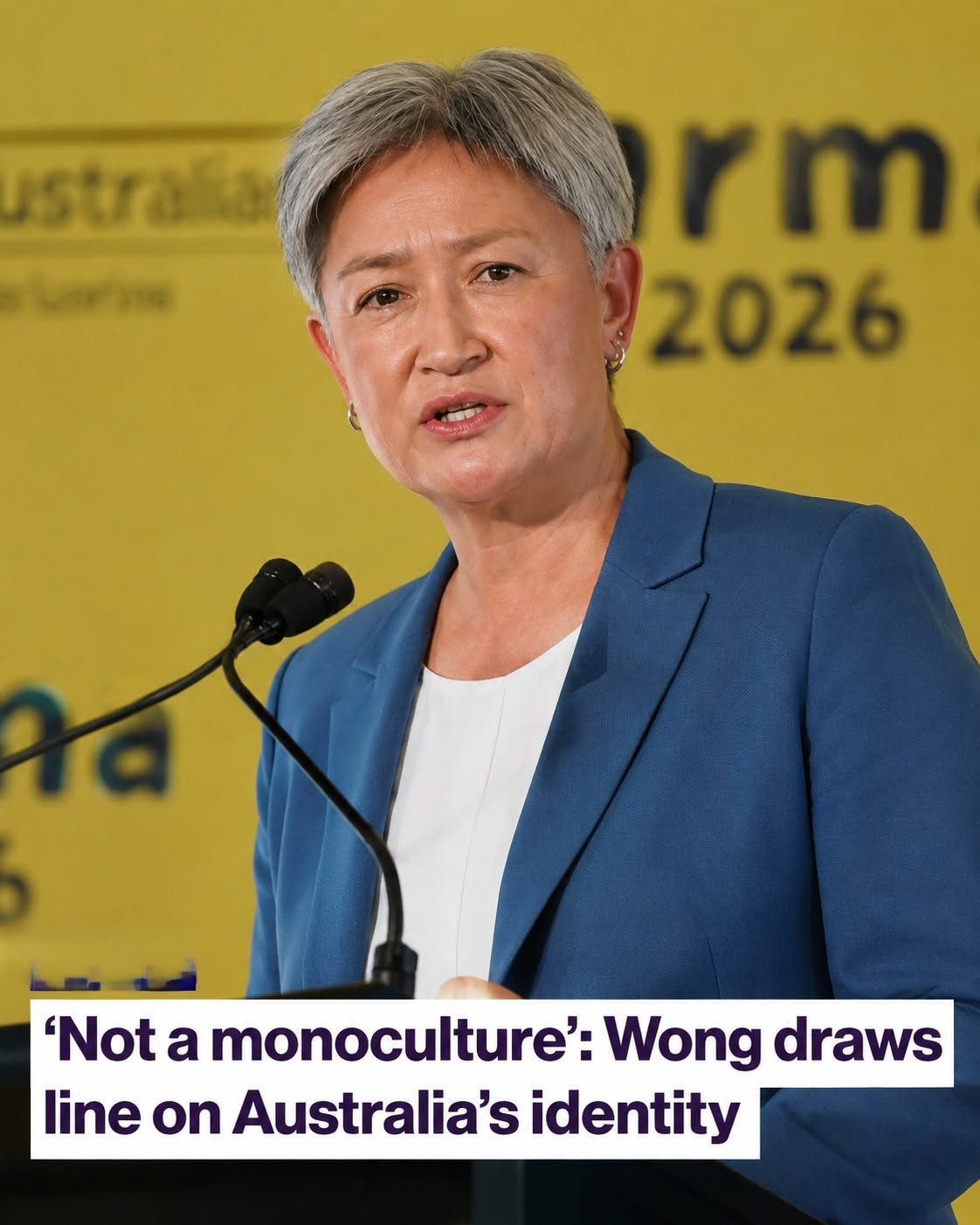
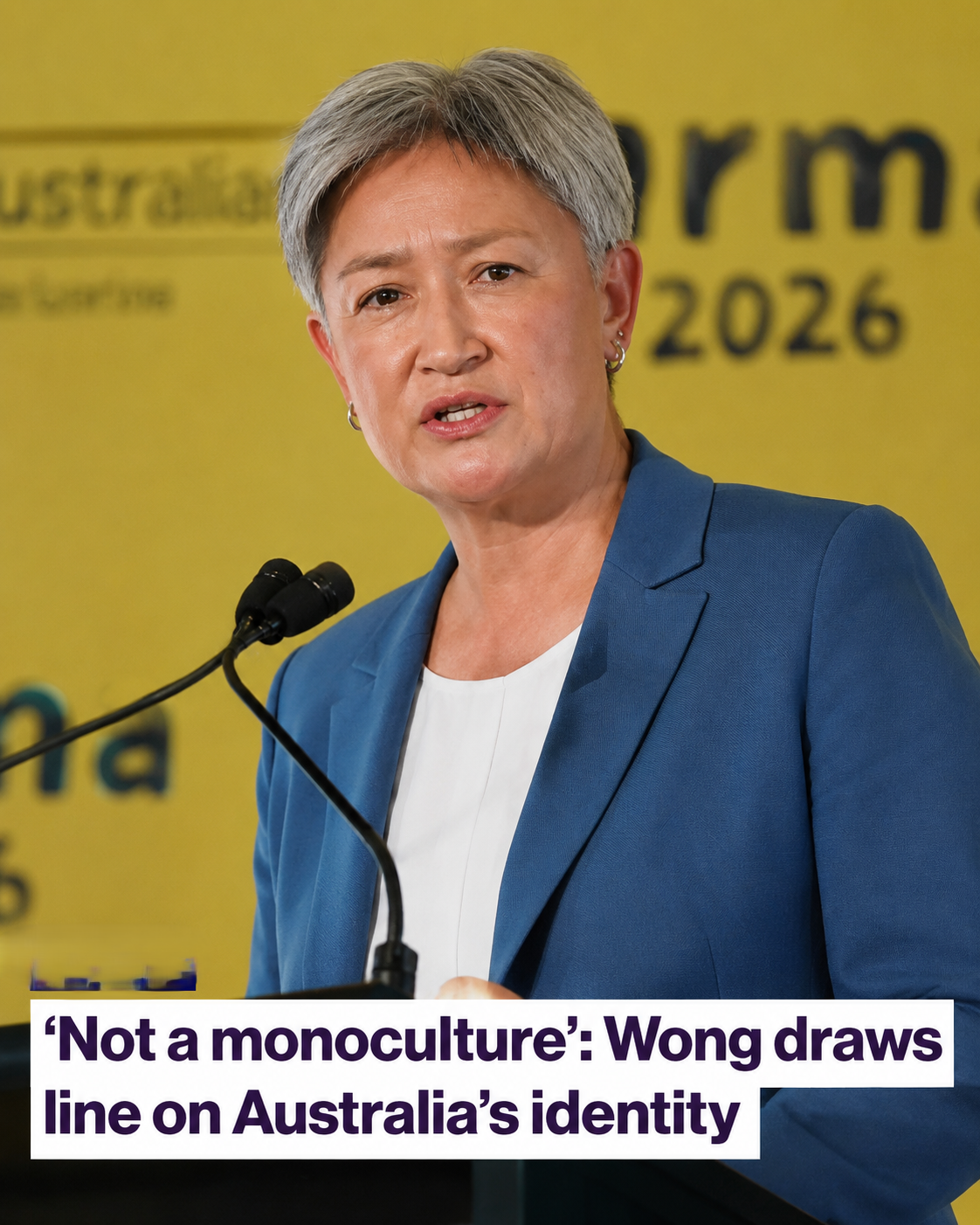
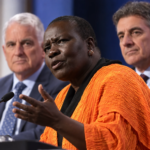
Foreign Minister Penny Wong has delivered a strong defence of multicultural Australia during a keynote address at the 2026 Garma Festival, declaring the nation “is not a monoculture and never has been” while arguing that Australia’s cultural diversity and First Nations heritage are central to its identity and international influence.
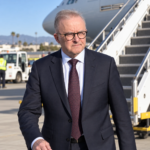
Speaking before thousands of delegates at the annual Indigenous gathering in northeast Arnhem Land, Senator Wong stepped in for Prime Minister Anthony Albanese, who was unable to attend this year’s festival despite having previously pledged to attend annually while serving as Prime Minister.
Addressing political leaders, Indigenous representatives, business executives and community members, Wong described Australia’s diversity as one of its greatest strengths and said it should be embraced both domestically and internationally.
“As I look around here at this festival, this is who we are,” she said.
“So rich in history. So rich in culture, home to more than 300 ancestries, and we share common ground with so many of the world’s peoples.”
“We are not a monoculture, and we have never been.”
The Foreign Minister argued that Australia’s Indigenous heritage and multicultural society should be viewed as national advantages rather than sources of division.
“Foreign policy starts with who we are,” Wong said.
“What we project to the world about who we are is an element of our national power.”
Her remarks placed Australia’s domestic identity at the centre of its international engagement, suggesting that the country’s cultural diversity strengthens relationships across the Indo-Pacific and beyond.
Wong also highlighted the long history of First Nations diplomacy, saying Aboriginal and Torres Strait Islander peoples connected Australia with neighbouring societies through trade, cultural exchange and diplomacy for centuries before European settlement.
She described First Nations Australians as the country’s “first diplomats” and “first traders”, arguing that recognising this history provides a fuller understanding of Australia’s place in the region.
The address was delivered at the Garma Festival, Australia’s largest annual Indigenous cultural gathering, hosted by the Yothu Yindi Foundation at the Gulkula ceremonial site in northeast Arnhem Land. Each year the festival brings together Indigenous leaders, governments, businesses, academics and community organisations to discuss Indigenous policy, culture, education and economic development alongside traditional Yolŋu ceremonies, music and art.
This year’s festival carries the Yolŋu theme Bukmak, broadly translated as “all of us, everyone, together”. Wong used that theme to reinforce her broader message about inclusion and shared national identity.
“No matter your background, no matter your culture, your race, your religion, or your language, Garma is an invitation to everyone to come together, to learn together,” she said.
“And at a time when there are those who seek to set us apart, First Nations peoples, with your generosity, remind us our many different stories brought together make us stronger.”
The speech comes at a politically sensitive time.
Questions surrounding multiculturalism, immigration, social cohesion and national identity have featured prominently in Australian political debate in recent months. Opinion polling released this week indicated Australians remain divided over the future of multiculturalism, while several political parties have advanced differing proposals on migration levels and integration policies.
Against that backdrop, Wong’s address represented one of the Albanese government’s clearest public reaffirmations of multiculturalism as official government policy.
Labor has consistently argued that Australia has been shaped by successive waves of migration while also acknowledging the unique status of Aboriginal and Torres Strait Islander peoples as the nation’s First Peoples.
The government maintains that recognising Indigenous history and embracing cultural diversity are complementary rather than competing ideas, and that both contribute to Australia’s economic prosperity, diplomatic influence and social cohesion.
Garma itself has become one of Australia’s most significant annual political forums.
While it remains fundamentally a celebration of Yolŋu culture, language and tradition, the festival has evolved into an important venue where national leaders outline Indigenous policy, discuss constitutional reform and engage directly with First Nations communities.
Prime ministers, opposition leaders, cabinet ministers, business executives and international guests have regularly attended the event over the past two decades, making it one of the country’s most influential Indigenous policy gatherings.
Anthony Albanese attended Garma every year from 2022 to 2025 and previously told festival participants he intended to continue doing so throughout his time as Prime Minister. His absence this year attracted public attention before the event, although senior ministers including Wong, Indigenous Australians Minister Malarndirri McCarthy and Education Minister Jason Clare attended on the government’s behalf.
Opposition figures also attended the festival, continuing Garma’s longstanding tradition of hosting representatives from across the political spectrum for discussions on Indigenous affairs and national policy.
Although Wong’s address focused on unity, it also reflected broader geopolitical themes.
She argued that Australia’s multicultural society enhances its ability to build relationships across Asia and the Pacific, particularly at a time when strategic competition has intensified throughout the Indo-Pacific region.
According to Wong, understanding Australia’s own diversity strengthens the country’s credibility when engaging with neighbouring nations whose societies are themselves culturally diverse.
The speech also sought to connect domestic inclusion with Australia’s international reputation.
Government ministers have increasingly argued that Australia’s democratic institutions, multicultural society and recognition of Indigenous heritage contribute to the country’s “soft power”—the ability to build influence through values, culture and diplomacy rather than military or economic pressure alone.
Critics of the government’s broader migration and multicultural policies have argued that stronger emphasis should instead be placed on social integration, shared civic values and controlling population growth. Those issues remain the subject of active political debate and were not directly addressed in detail during Wong’s keynote.
As a result, the Garma address is likely to be viewed as both a statement of values and a reaffirmation of Labor’s policy direction ahead of continuing national discussions about Australia’s identity.
For supporters, Wong’s message reinforced the view that Indigenous heritage and multiculturalism together define modern Australia and strengthen the country’s place in the world. For critics, the speech is likely to become part of the wider political debate over immigration, national identity and social cohesion that has intensified across Australia in recent months.
Regardless of those differing perspectives, Garma once again demonstrated its role as one of Australia’s most important forums for conversations about the nation’s future. Wong’s keynote placed diversity, Indigenous culture and Australia’s international outlook at the centre of that discussion, arguing that the country’s many histories and communities are not competing narratives but elements of a shared national story.