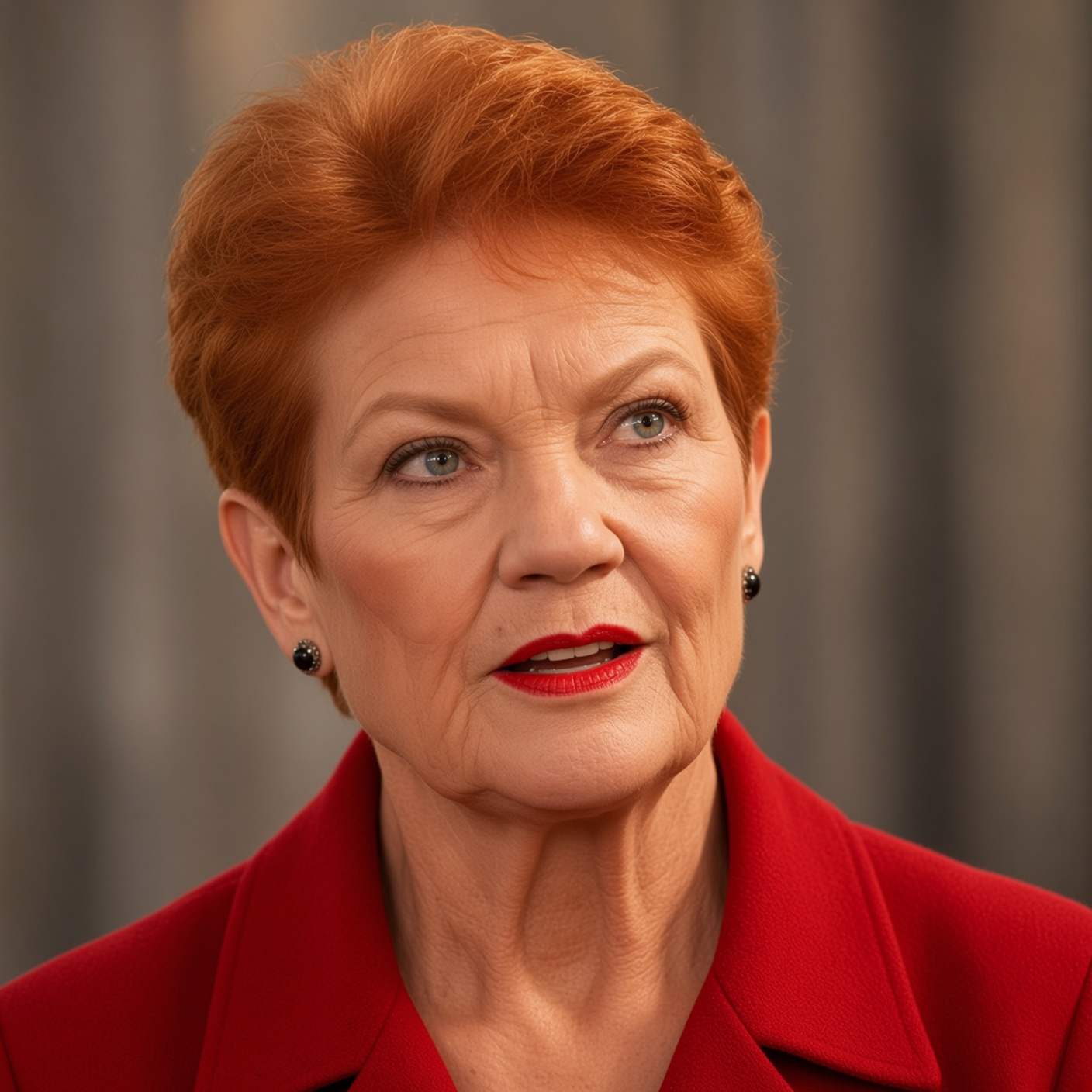
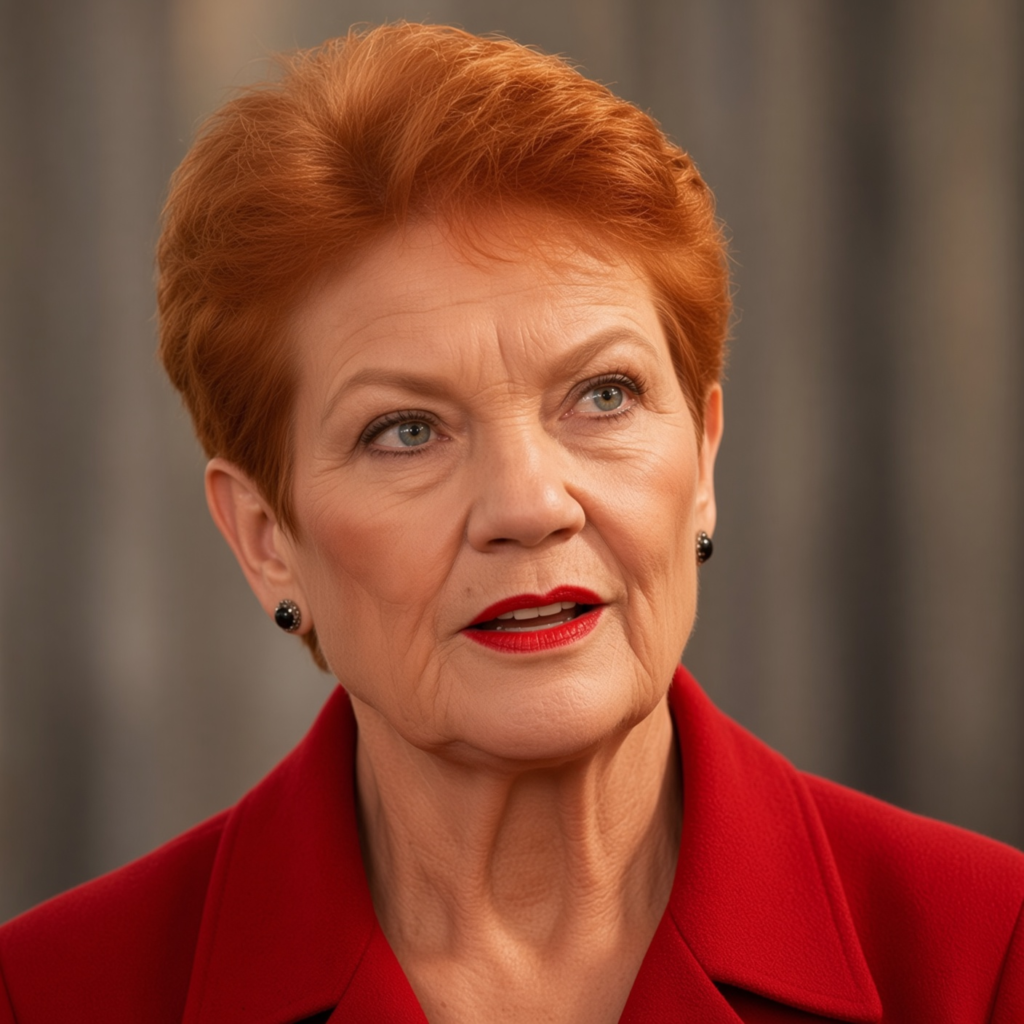
Pauline Hanson has stood by her decades-old opposition to the Sydney Gay and Lesbian Mardi Gras, saying she believes sexuality should be kept “behind closed doors” while insisting she accepts gay people and Australia’s legal recognition of same-sex marriage.
The One Nation leader was confronted on Sunday with comments she made during her first rise to national prominence in 1996, when she told 60 Minutes she did not like Mardi Gras because she believed it promoted something “not natural”.
Thirty years later, Hanson has not changed her personal view of the festival.
“Do I like the gay Mardi Gras? No, and I’ll tell you that now,” Hanson told News24.
“No, I still don’t like the gay Mardi Gras.”
But Hanson drew a distinction between disliking the event and opposing the legal rights of gay Australians.
She described her objection to Mardi Gras as a personal opinion and acknowledged that same-sex marriage is now legal and accepted in Australia.
“I think your own personal sexuality should be kept behind closed doors,” Hanson said.
She also acknowledged an argument frequently made in defence of the festival: that Mardi Gras is a major tourism and economic event.
“I know it brings a lot of tourists to the country. I know it brings a lot of money. I know all this, but that’s my personal opinion.”
Hanson said she had never attended Mardi Gras and had no intention of doing so.
Her remarks revive one of the most recognisable controversies from the beginning of her political career while exposing a much newer challenge for One Nation.
The party is attempting to broaden its electoral coalition at the same time as some of its most prominent figures carry social views formed during a very different period of Australian politics.
The difference between 1996 and 2026 is substantial.
When Hanson gave her original interview, same-sex couples could not legally marry in Australia and public attitudes towards homosexuality were markedly different.
By 2017, Australia had undergone a national debate over marriage equality.
The Australian Marriage Law Postal Survey attracted responses from 79.5 per cent of eligible Australians, with 7,817,247 people — 61.6 per cent of those expressing a valid view — voting in favour of changing the law to allow same-sex couples to marry.
Every state and territory recorded a majority Yes vote.
Parliament subsequently amended the Marriage Act, and from December 9, 2017, the right to marry in Australia was no longer determined by sex or gender.
Hanson now says she accepts that outcome.
That makes her current position more nuanced than simply repeating her 1996 remarks.
She continues to personally dislike Mardi Gras and believes sexuality should remain private, but she is not calling for same-sex marriage to be abolished.
The distinction matters because Mardi Gras and marriage equality are separate questions.
One concerns a public cultural and political event.
The other concerns equal access to a legal institution.
A person can oppose or dislike Mardi Gras without advocating the removal of marriage rights, just as support for marriage equality does not require participation in or approval of every Pride event.
Hanson is attempting to place herself within precisely that distinction.
Her comments nevertheless arrive at an awkward moment for One Nation.
Only days earlier, Barnaby Joyce attracted national attention by describing One Nation as “one of the gayest parties in Australia”.
The remark came during controversy surrounding Parminder Singh, who stood as a One Nation candidate in Western Australia in 2025.
Old social-media footage emerged in which Singh described homosexuality as a mental illness.
His profile was subsequently removed from One Nation’s website, while senior party figures distanced themselves from the comments.
Hanson said Singh’s views were not hers.
Joyce went considerably further.
He said One Nation had a significant number of gay members and described the party as one of the “gayest” in federal politics.
The comment was characteristically colourful, but it also pointed towards a genuine strategic question confronting One Nation.
Can a party historically associated with socially conservative politics attract gay voters who may agree with it on migration, energy, housing or cost-of-living issues?
ABC political analysis published on Monday identified exactly that tension, arguing One Nation would need to expand its voter base substantially if it hopes to replace the Liberals and Nationals as the dominant political force on the Australian right.
Gay voters are not a single political bloc.
Sexual orientation does not determine a person’s position on tax, immigration, nuclear energy, climate policy, housing, crime or government spending.
That creates an opportunity for a party such as One Nation to seek support among voters who may be gay but politically conservative on other issues.
But candidates or senior figures expressing hostility towards homosexuality can make that electoral pitch considerably harder.
Hanson appears to recognise that distinction.
She rejected Singh’s description of homosexuality as a mental illness while maintaining her own dislike of Mardi Gras.
Those are not identical positions.
The first makes a claim about gay people themselves.
Hanson’s current argument is instead that sexuality, whether gay or otherwise, is a private matter that she does not believe should be publicly celebrated in the way Mardi Gras celebrates it.
Critics will inevitably question whether that distinction is convincing.
Mardi Gras supporters regard public visibility as one of the event’s central purposes precisely because gay and lesbian Australians historically faced pressure to conceal their sexuality.
For them, telling sexuality to remain “behind closed doors” carries historical baggage extending far beyond a disagreement about a parade.
The Sydney Gay and Lesbian Mardi Gras began in 1978 as a protest for gay rights.
The first march ended in confrontation with police and arrests, becoming a defining moment in Australia’s LGBTQ rights movement.
Over subsequent decades, Mardi Gras developed from protest into a combination of political demonstration, cultural celebration, tourism event and internationally recognised festival.
That history explains why arguments over the event often involve more than whether somebody personally enjoys parades.
For supporters, visibility is the point.
For Hanson, privacy is the point.
Those competing principles remain difficult to reconcile.
Hanson’s acknowledgement of the event’s economic value adds another layer.
She does not dispute that Mardi Gras attracts visitors or generates money.
Her objection is cultural and personal rather than an argument that the festival provides no economic benefit.
Recent reporting similarly describes Mardi Gras as a major event attracting large crowds and contributing substantially to the NSW visitor economy.
Hanson’s position on marriage equality also separates her from some of the more socially conservative voices historically associated with the Australian right.
She told Sunday’s interview that same-sex marriage had become law and described that as acceptable.
That is significant because the legal debate over marriage equality was resolved nearly nine years ago.
Australia’s 2017 postal survey was voluntary but achieved an exceptionally high participation rate.
Almost eight in 10 eligible Australians responded, and 133 of the country’s then 150 federal electorates returned a Yes majority.
Parliament then passed the legislation overwhelmingly.
The contemporary political question is therefore less about whether same-sex couples should be legally permitted to marry and more about how political parties approach broader questions of sexuality, gender, culture and identity.
That creates a potentially difficult line for One Nation.
Its rapid political growth has increasingly required it to speak to voters beyond the constituency traditionally associated with Hanson.
ABC analysis argues that if the party genuinely intends to displace the Coalition as the major force on the right, it will need voters who may share its positions on immigration, energy or cost of living while rejecting some of the harder social views historically connected with the party.
The Singh controversy illustrates the risk.
A candidate describing homosexuality as a mental illness is not merely expressing discomfort with Mardi Gras.
It can directly alienate gay voters whom One Nation might otherwise hope to attract on economic or national-policy issues.
Hanson’s response therefore matters beyond the immediate controversy.
By saying Singh’s comments do not represent her views while simultaneously refusing to abandon her own criticism of Mardi Gras, she is defining where she believes One Nation’s line should sit.
Gay Australians are accepted.
Same-sex marriage is accepted.
Public celebration of sexuality through Mardi Gras is something Hanson personally dislikes.
Whether voters see those positions as compatible will be for them to decide.
There is also an important difference between personal opinion and government policy.
Hanson did not announce a policy to prohibit Mardi Gras.
She did not call for same-sex marriages to be invalidated.
Nor did she suggest gay Australians should lose legal rights.
Her comments concerned what she personally thinks of the festival and how publicly people should express their sexuality.
That does not make the comments politically insignificant.
Political leaders’ values influence how voters judge their parties even when those views are not translated directly into legislation.
But accurately describing the position requires separating dislike of an event from a proposal to restrict it.
That distinction is especially important because Hanson’s original 1996 comments have followed her throughout her political career.
At the time, her statement that Mardi Gras promoted something “not natural” became one of the many remarks that cemented her reputation as a provocative outsider challenging changing social norms.
The comment even entered Australian popular culture.
Drag performer Pauline Pantsdown later sampled Hanson’s voice in parody music, including the 1998 track I Don’t Like It, which entered that year’s Triple J Hottest 100.
Three decades later, Hanson is no longer simply the insurgent MP of 1996.
One Nation is attempting to become a much larger political force, bringing increased scrutiny not only to its migration and economic policies but to the social attitudes of its candidates and leadership.
That makes Sunday’s exchange revealing.
Hanson could have disowned her old comments entirely.
She did not.
She could also have returned to the 1996 formulation that homosexuality or Mardi Gras promoted something “not natural”.
She did not do that either.
Instead, she framed her current position around personal privacy and individual preference.
She still does not like Mardi Gras.
She still believes sexuality should stay behind closed doors.
But she acknowledges the festival’s tourism and economic benefits, accepts that other Australians want to participate and says she accepts same-sex marriage.
That combination may reflect how Hanson is trying to reconcile her longstanding personal conservatism with an Australian electorate that has changed dramatically since her first years in Parliament.
It also leaves One Nation with a political test.
Joyce can call it one of Australia’s “gayest” political parties.
Hanson can distance herself from candidates who describe homosexuality as an illness.
But if One Nation wants gay Australians to view the party as a genuine electoral option, voters will judge it on more than slogans.
They will look at who the party endorses, what those candidates say, which rights the party protects and whether senior figures treat gay Australians as ordinary citizens whose political views extend far beyond their sexuality.
Hanson’s latest remarks provide part of that answer, but not one likely to end the debate.
Thirty years after saying she did not like Mardi Gras, she still doesn’t.
The difference is that Australia around her has changed — and Hanson now says she accepts one of the most consequential legal changes that followed.