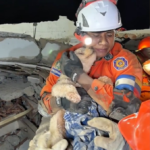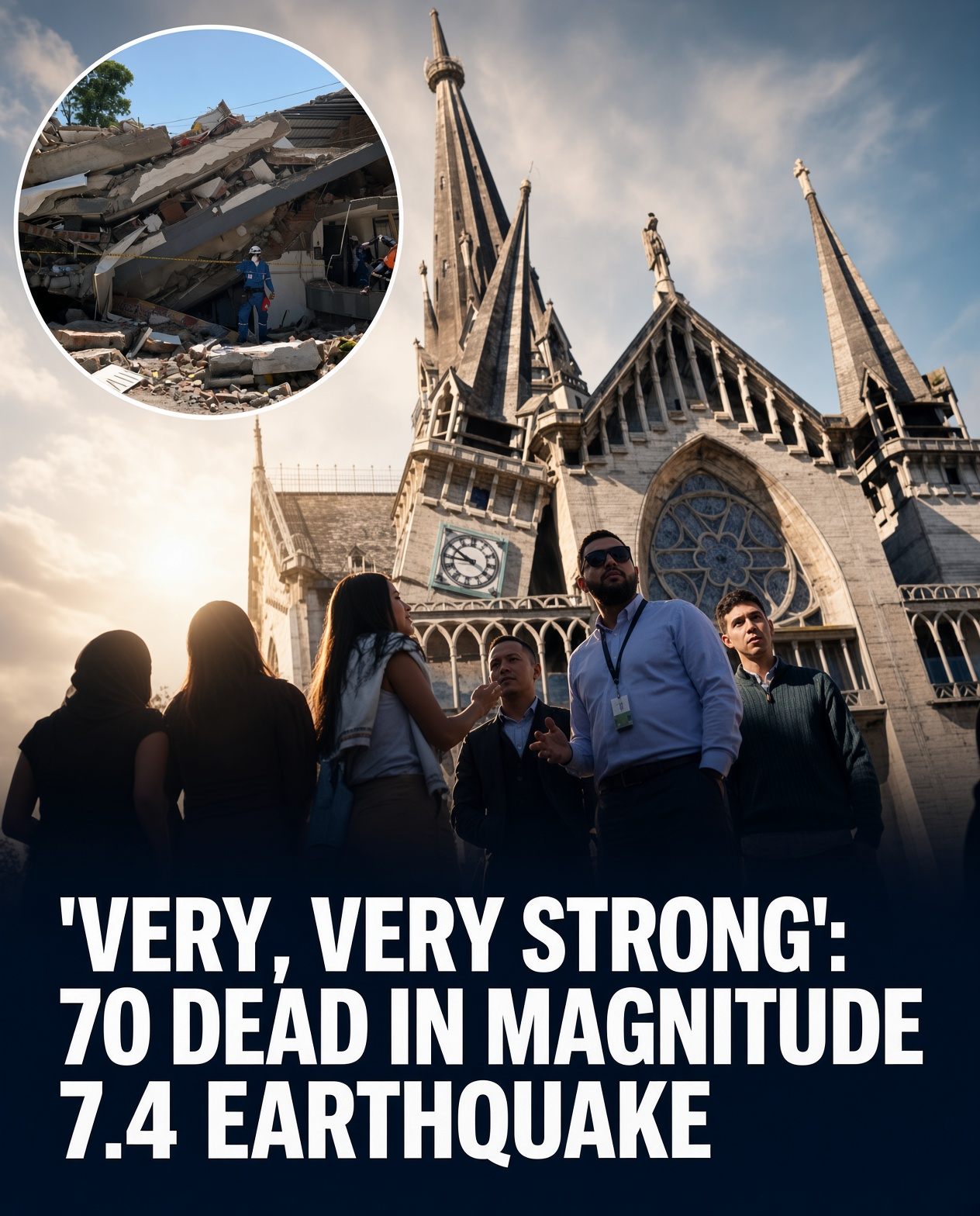
At least 111 people have been killed after a powerful magnitude-7.4 earthquake struck western Colombia, bringing down buildings, damaging hospitals and infrastructure and triggering a desperate search for survivors trapped beneath the rubble.
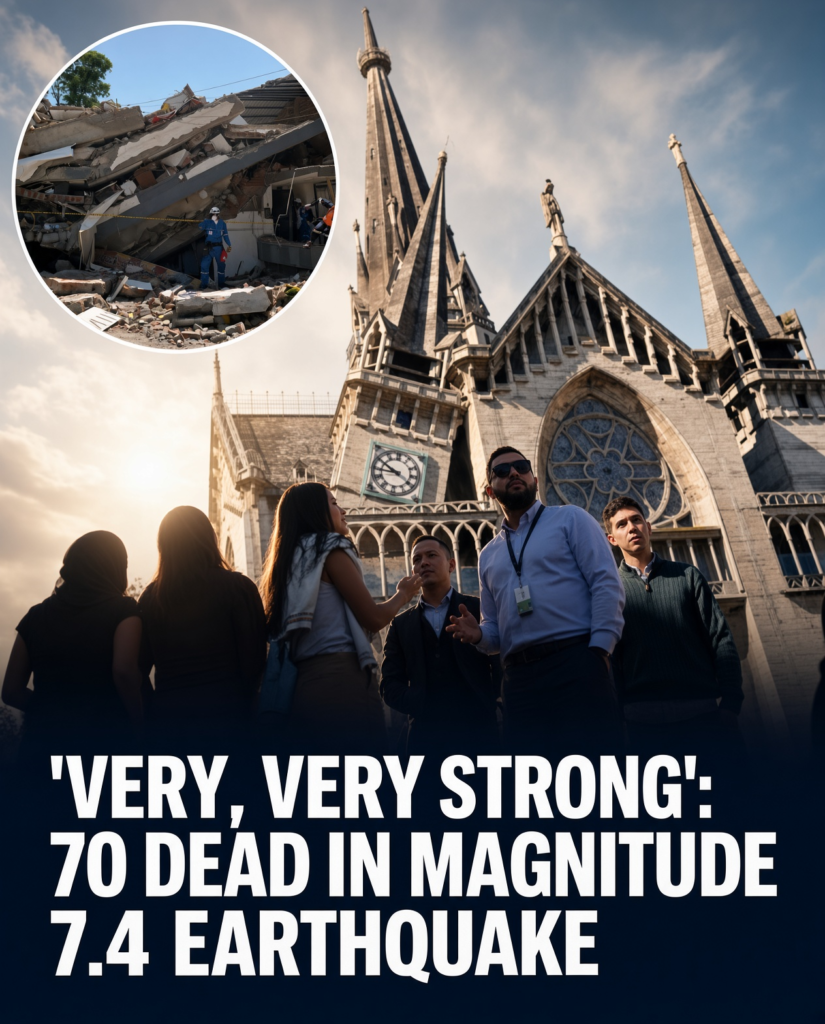
Colombia declared a national state of emergency as authorities confronted widespread destruction from the country’s strongest earthquake this century.
The earthquake struck at 7.34am local time on Monday, sending violent shaking through communities across western Colombia and being felt beyond the country’s borders.
The US Geological Survey recorded the earthquake at magnitude 7.4, with an epicentre about five kilometres east of San José del Palmar in Colombia’s Chocó department.
It recorded a depth of approximately 107 kilometres.
At least 111 people have been confirmed dead, 87 injured and dozens of buildings have collapsed, with authorities warning the toll could change as rescuers reach damaged communities and continue searching beneath the ruins.
Some of the most desperate scenes unfolded around collapsed buildings where emergency workers and ordinary residents began digging through debris in search of people who might still be alive.
Thousands of people gathered near damaged areas, with residents bringing food and supplies and others joining rescue efforts.
In Cali, rescuer Andres Felipe Mejia described a community mobilising around emergency crews as the search continued.
“We are trying to get everyone out alive,” he told AFP.
In one extraordinary moment, a rescuer reportedly called for anyone trapped beneath the debris to whistle.
Someone whistled back.
The exchange provided a moment of hope amid scenes of widespread devastation.
But every passing hour is critical for people trapped in collapsed structures.
Search teams must remove unstable concrete, masonry and twisted material while attempting to avoid triggering further collapses around possible survivors.
Aftershocks create another danger.
Buildings that survived the initial earthquake can already have sustained structural damage invisible from outside.
A further tremor can cause weakened walls, ceilings or entire structures to collapse.
That risk applies not only to residents attempting to return home but to the rescuers entering damaged buildings to search for victims.
Colombian authorities have established emergency operations as the scale of the disaster becomes clearer.
President Abelardo de la Espriella declared a national emergency following reports from affected regions.
Government figures put the number of collapsed buildings at at least 61, while hundreds more have reportedly sustained varying degrees of damage.
Hospitals and other essential infrastructure were among the facilities affected.
Road and communications damage is complicating efforts to determine the full impact in more remote communities.
The geography of western Colombia makes that task particularly difficult.
Chocó contains mountainous terrain, dense rainforest and communities where transport links can already be challenging under normal conditions.
An earthquake can turn those difficulties into serious obstacles for emergency services.
Landslides can block roads.
Bridges can become unsafe.
Electricity and telecommunications can fail.
Communities may therefore suffer substantial damage before national authorities receive a reliable assessment of casualties.
That means early death tolls following a major earthquake should always be treated as provisional.
The current figure of at least 111 deaths reflects confirmed information available from authorities.
It is not necessarily the final toll.
The same applies to the number of injured and collapsed buildings.
As emergency teams enter previously inaccessible areas, those figures can rise.
The earthquake was felt across a broad section of the region.
Reports indicated shaking was experienced not only across Colombia but in neighbouring Ecuador and Panama.
Residents in major cities rushed from buildings as the ground moved.
In affected areas closer to the epicentre, the shaking was strong enough to bring structures down.
Reuters reported that the earthquake toppled buildings and damaged hospitals and infrastructure across western Colombia.
The destruction has prompted a large-scale mobilisation involving emergency services, government agencies and civilians.
Images emerging from affected communities show residents working alongside professional rescuers.
In major disasters, that immediate civilian response can be critical.
People already at the scene can begin searching before specialist rescue teams arrive.
They know where family members and neighbours were likely to have been when a building collapsed.
They can identify bedrooms, businesses and other areas where people may be trapped.
But civilian rescue efforts also carry enormous risks.
Collapsed buildings are unstable environments.
Moving the wrong piece of debris can shift weight onto a void where someone has survived.
Damaged electricity lines, gas supplies, broken glass and unstable concrete can create additional hazards.
Specialist urban search-and-rescue teams therefore work systematically through collapsed structures, listening for sounds and looking for survivable spaces.
The reported whistle from beneath one collapsed site demonstrates why silence and careful searching can matter.
A person buried beneath tonnes of material may be unable to shout continuously.
Small sounds can become the only indication that someone remains alive.
Search teams may use listening equipment, cameras, trained dogs and other technology to identify survivors.
The work can continue around the clock.
For relatives waiting outside damaged buildings, however, the process can be agonisingly slow.
Authorities have to balance speed against the possibility that rushing into an unstable structure could kill both victims and rescuers.
The disaster is also becoming a humanitarian emergency for people whose homes remain standing but are no longer safe to occupy.
After a major earthquake, structural inspections become essential.
A building can appear intact while having sustained serious damage to columns, foundations or load-bearing walls.
Residents may therefore be forced to sleep outside or move into temporary shelters until engineers determine whether they can safely return.
Access to drinking water can become another immediate problem if pipes or treatment infrastructure are damaged.
Electricity outages affect refrigeration, communications and medical equipment.
Road damage can interrupt deliveries of food, fuel and medicine.
Hospitals face the simultaneous challenge of treating large numbers of trauma patients while determining whether their own buildings remain safe.
Those secondary effects mean the consequences of an earthquake continue long after the shaking stops.
Colombia now faces the enormous task of determining which buildings can be repaired and which must be demolished.
Families who have lost homes may require temporary accommodation for weeks or months.
Businesses can remain closed.
Schools may need alternative premises.
Transport routes and public infrastructure can require major reconstruction.
The immediate priority, however, remains finding people alive.
Authorities and residents were continuing to search collapsed buildings as emergency crews moved through affected communities.
The scale of the response reflects the magnitude of the earthquake.
The USGS placed its epicentre near San José del Palmar, a community in the Chocó region of western Colombia.
The magnitude figure is scientifically significant because the scale used to measure earthquakes is logarithmic rather than linear.
A magnitude-7.4 earthquake therefore represents an enormous release of seismic energy.
Magnitude alone does not determine how destructive an earthquake will be.
Depth, distance from population centres, local geology and the resilience of buildings are also critical.
A very large earthquake deep underground can sometimes produce less severe surface damage than a smaller but extremely shallow earthquake directly beneath a densely populated city.
Building standards also play a major role in whether severe shaking becomes a mass-casualty disaster.
Modern structures designed to move with seismic forces generally perform better than older or poorly constructed buildings.
But even strong building codes cannot eliminate the risk from a major earthquake.
Colombia sits in a seismically active part of the world where tectonic forces involving several plates generate significant earthquake hazards.
The country has experienced destructive earthquakes throughout its history.
Monday’s event is being described as its strongest earthquake this century.
The disaster has also prompted updated advice for Australians travelling in Colombia.
The Australian government’s Smartraveller service has specifically noted that a magnitude-7.4 earthquake struck western Colombia on August 10.
It says there are reports of damage in Cali, Manizales and other locations.
Travellers in earthquake-affected areas need to follow the directions of Colombian authorities and emergency services.
Aftershocks remain a particular concern.
People should avoid damaged buildings and should not enter structures that authorities have declared unsafe.
Transport disruption can also affect travel plans with little warning.
Road closures, damaged infrastructure and emergency operations may make previously planned routes unavailable.
Australians in the region should monitor official local information as conditions change.
Smartraveller’s inclusion of the earthquake in its Colombia advice is important because tourists can underestimate the dangers after the main shock has passed.
The absence of visible shaking does not mean an affected area is immediately safe.
Aftershocks can occur without warning.
Damaged facades can fall onto footpaths.
Power lines can remain hazardous.
Transport infrastructure may have suffered damage that has not yet been fully assessed.
Mobile networks can also become overloaded as residents attempt to contact relatives.
For Australians trying to reach family or friends in Colombia, temporary communications failures therefore do not necessarily indicate that someone has been injured.
Networks can fail simply because of power outages, physical damage or overwhelming demand.
Meanwhile, Colombian authorities face an increasingly complex emergency as the initial search-and-rescue operation moves towards a broader disaster response.
The declaration of a national emergency gives the government greater scope to coordinate resources across agencies and regions.
Medical teams need to be deployed where casualties are concentrated.
Heavy equipment is required to remove large sections of collapsed structures.
Engineers must assess damaged buildings.
Police and emergency authorities have to secure unsafe areas.
Temporary shelter, food and water must reach displaced residents.
At the same time, rescuers cannot simply use heavy machinery indiscriminately while people may still be alive beneath the rubble.
That makes the first stage of the operation painfully labour-intensive.
Concrete may need to be broken and removed piece by piece.
Searchers listen repeatedly for signs of life.
Families wait nearby for news.
The effort in Cali described by Mejia captures the collective nature of the response.
Residents have brought supplies and food to assist both rescuers and people affected by the disaster.
Such spontaneous community mobilisation is common after catastrophic earthquakes.
It can provide vital assistance before formal aid systems are fully established.
But the coming days will require increasingly organised support.
People who survived the earthquake may have lost identification documents, medicines, clothing and every possession inside their homes.
Some will have lost relatives.
Others may not yet know whether missing family members are alive.
Hospitals and emergency workers will face sustained pressure even after the active search phase ends.
Mental health consequences can also last far beyond physical reconstruction.
Survivors can experience anxiety every time an aftershock occurs.
Children may be frightened to enter buildings.
Families who escaped collapsing homes can struggle to feel safe returning even after structures are declared secure.
Entire communities can carry the psychological impact of a disaster for years.
For now, however, Colombia remains focused on the possibility that people are still alive beneath collapsed buildings.
The whistle heard from the rubble in Cali is a reminder of what rescuers are working for.
Behind every damaged building are families waiting for someone to emerge.
Behind every official casualty number is a person whose relatives received devastating news on an ordinary Monday morning.
And behind the current figure of at least 111 dead is the possibility that the full scale of the disaster has not yet been discovered.
The earthquake lasted only moments.
The search for its missing — and Colombia’s recovery from the destruction it left behind — will take far longer.