An unlikely political partnership between Prime Minister Anthony Albanese and one of One Nation’s newest MPs has raised hopes that 78 threatened SunRice jobs in the NSW Riverina can be saved.
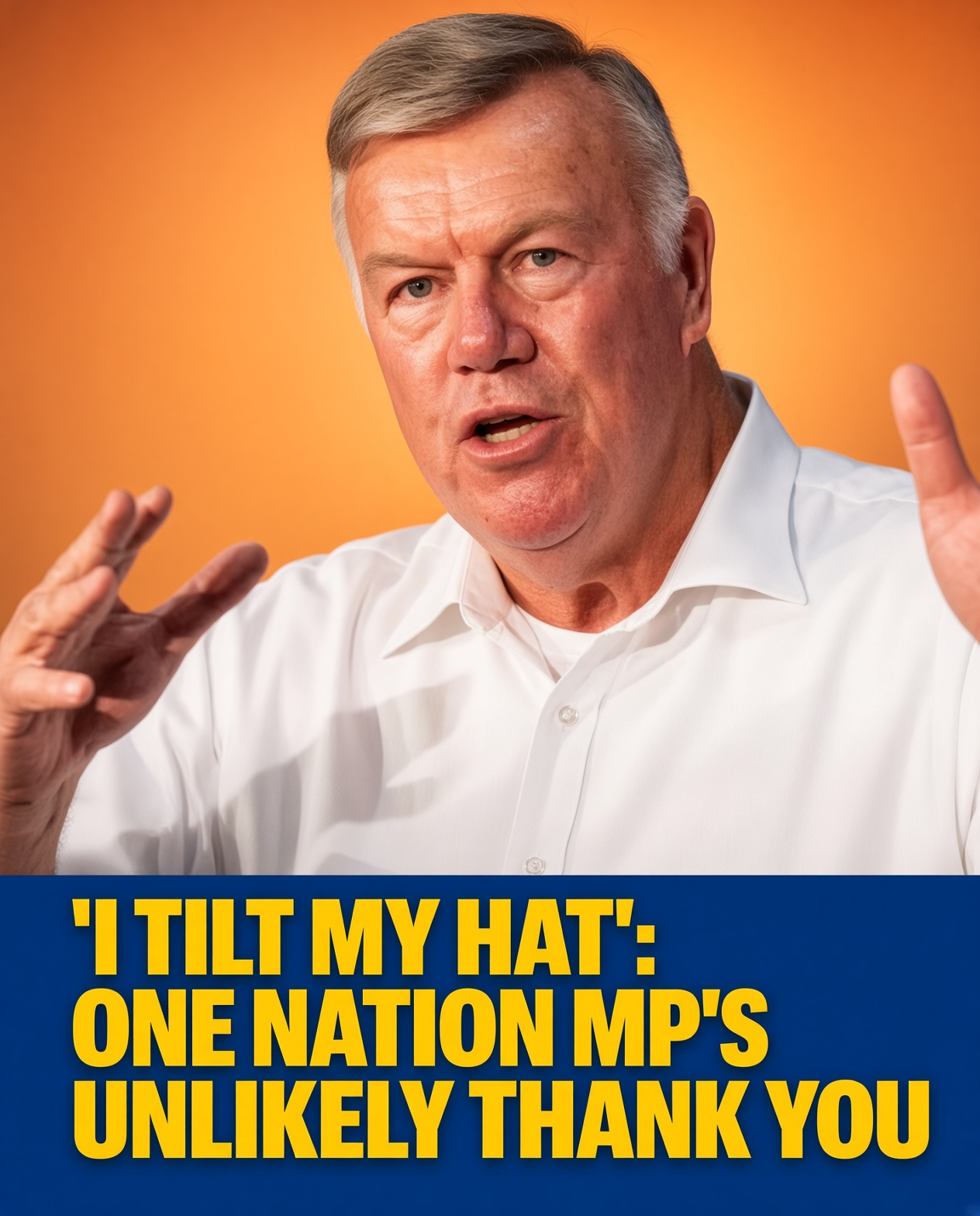
Federal Member for Farrer David Farley has praised Albanese for personally intervening in the dispute after SunRice announced sweeping changes to its operations at Leeton and Deniliquin, including 78 redundancies.
The One Nation MP says discussions are progressing towards a multimillion-dollar investment package that could protect the jobs and support new investment in SunRice’s Riverina operations.
It is an unusual moment of cross-party cooperation at a time when One Nation and Labor are attacking each other on almost every major national issue.
Farley said Albanese approached him at a recent Governor-General’s event and raised the SunRice situation without prompting.
“Look, I’m aware of it. I’m working on it. We’ll get it done,” Farley recalled the Prime Minister telling him.
The two subsequently continued discussing possible government assistance while walking from the House of Representatives towards the Senate.
Farley, who has been fiercely critical of Labor’s Murray-Darling Basin water policies, responded with an unusually generous assessment of his political opponent.
“I tilt my hat to them,” he told ABC’s Insiders.
But while the intervention has dramatically improved the prospects of a rescue package, the final arrangement has not yet been publicly completed.
The federal government says it has received a verbal proposal from SunRice for potential new investment in packaging facilities in the Riverina and will consider co-investment once a formal proposal is submitted.
That distinction matters: there is now a serious government-backed pathway towards protecting the jobs, but the precise amount, conditions and final employment guarantees have yet to be announced.
How 78 Riverina jobs came under threat
SunRice confirmed earlier this month that 78 employees would lose their jobs following a review of its Riverina operations.
A further 92 positions were affected by operational changes across the company’s Leeton and Deniliquin mills and Australian Grain Storage operations, with 14 workers expected to be redeployed.
The impact was particularly severe in Deniliquin, where 68 families were expected to be affected by redundancies. Another 10 positions were to be lost in Leeton.
For major cities, 78 jobs can disappear into monthly labour-force statistics.
In regional communities built around agriculture and processing, the consequences can be considerably larger.
SunRice employs about 650 people across the Riverina. Its mills also support businesses involved in transport, machinery, maintenance, agricultural services and other parts of the regional supply chain.
Edward River Mayor Ashley Hall warned when the cuts were first foreshadowed that the consequences would extend well beyond SunRice employees.
Truck drivers, mechanics, auto electricians, local businesses, schools and families all depend to varying degrees on the economic activity generated by agricultural processing.
The United Workers Union similarly warned that employees with years of service faced the prospect of either losing secure work or relocating to find comparable employment.
That multiplier effect helps explain why the issue quickly became a major political priority for Farley.
A $15 million proposal emerges
Farley has been lobbying for a co-investment model rather than accepting the redundancies as inevitable.
He has discussed a proposal under which the Commonwealth would match approximately $15 million in industry investment, providing capital for new or upgraded SunRice operations while preserving employment.
The federal government has not yet announced that exact funding package as a completed agreement.
Environment Minister Murray Watt’s office has confirmed, however, that it has received a verbal proposal from SunRice concerning potential investment in new packaging facilities in the Riverina.
The government has indicated it is prepared to consider co-investment after receiving a formal proposal.
That represents a substantial shift from the position confronting workers only weeks ago.
In July, SunRice was still consulting staff over reduced shifts as declining rice supplies forced the company to scale back milling.
By August 12, the company had confirmed the 78 redundancies.
Less than two weeks later, the Prime Minister and the local One Nation MP were discussing how federal assistance might prevent those losses.
Farley said he was happy with the direction of the negotiations.
For a newly elected opposition MP, securing the Prime Minister’s direct involvement in a local employment crisis represents an early political victory regardless of the eventual structure of the package.
The bigger problem is a shortage of Australian rice
Government funding may protect processing jobs in the short term, but it does not resolve the fundamental problem confronting SunRice.
The Riverina is producing much less rice.
Last summer’s Australian rice crop was about 180,000 tonnes, the smallest since the severe 2019-20 drought.
Rice is an annual irrigated crop, making production particularly sensitive to both water availability and water prices.
The current drought has already reduced supply.
General-security irrigators in the Murray and Murrumbidgee valleys have also faced zero water allocations heading into the coming season, adding further pressure to growers deciding whether planting rice is commercially viable.
SunRice responded by reducing production hours.
Its Leeton mill was scheduled to move from continuous 24-hour, seven-day production to 16-hour shifts five days a week.
Deniliquin was also to operate five days a week, but daily processing was cut from 24 hours to eight.
SunRice chief executive Paul Serra said the company did not take the decisions lightly and had sought to retain employees through redeployment wherever possible.
But he also made clear that SunRice believes government water policy is part of the problem, saying the company would continue advocating over the “adverse impacts of water policy settings” on the Riverina rice industry.
The political fight over water buybacks
That is where the SunRice employment dispute becomes part of a much larger national argument.
The Albanese Government has resumed voluntary water purchasing as one method of recovering water for the environment under the Murray-Darling Basin Plan.
Supporters of water recovery argue a healthy river system is essential to the long-term survival of the communities, agriculture and ecosystems that depend on the Basin.
Critics in irrigation communities argue removing productive water from agriculture increases its scarcity and price, making water-intensive annual crops such as rice progressively more difficult to grow.
Leeton Shire Council has placed responsibility for the SunRice cuts squarely on Commonwealth policy.
Council general manager Jackie Kruger argued that buybacks distort the temporary water market and reduce the commercial viability of annual crops.
The rice industry has made similar arguments.
A 2024 Australian Bureau of Agricultural and Resource Economics and Sciences analysis examining additional water recovery identified rice as among the agricultural activities most exposed to reductions in water availability.
Farley has therefore argued that providing SunRice with taxpayer assistance while continuing water policies that he believes reduce rice production treats the symptom rather than the cause.
His preferred solution includes making more water available for productive agriculture when it is surplus to environmental requirements.
The federal government rejects the suggestion that environmental water recovery can simply be abandoned.
It says Basin communities need a sustainable river system and points to assistance programs intended to help regional economies adjust as water use changes.
NSW has received $50 million this year through the Sustainable Communities Program, in addition to $85 million allocated through earlier rounds.
The Murray-Darling Basin Plan is also undergoing a review that will influence how the system is governed into the future.
Farley’s intervention carries unusual political significance
The SunRice negotiations are particularly notable because of who is involved.
Farley is not a Labor backbencher lobbying his own government.
He represents One Nation, a party whose national rise has increasingly threatened both Labor and the Coalition.
He entered Parliament after winning the Farrer by-election following the resignation of former Liberal leader Sussan Ley, delivering One Nation a significant breakthrough in the House of Representatives.
Farrer covers an enormous section of southern and western NSW and includes communities where irrigation, agriculture and water policy are fundamental economic issues.
The SunRice dispute therefore sits directly within Farley’s political constituency.
His willingness to publicly praise Albanese is equally noteworthy.
One Nation’s broader political strategy is built around presenting both Labor and the Coalition as failing Australians on issues including immigration, energy, housing and regional policy.
But Farley’s comments demonstrate what can happen when the responsibilities of representing a local electorate collide with national partisan politics.
If cooperation with a Labor prime minister protects 78 local jobs, Farley appears prepared to acknowledge it.
Albanese, for his part, has little incentive to refuse cooperation simply because the local MP represents One Nation.
Saving regional manufacturing and food-processing jobs fits comfortably within the government’s broader argument that Australia should retain strategically important domestic industries.
Labor has shown it will intervene to protect major employers
The SunRice discussions also come immediately after a much larger government intervention in another NSW industry.
The Commonwealth and Minns governments recently announced a combined $2.5 billion package to secure the future of the Tomago Aluminium smelter in the Hunter beyond 2028.
More than 1,000 direct jobs are tied to Tomago, with thousands more indirectly connected to the facility.
Tomago Aluminium agreed to invest at least $1.1 billion of its own money under that arrangement, including $100 million for further decarbonisation work.
The scale is dramatically different from the potential SunRice package, but the principle is similar.
The Albanese Government has demonstrated a willingness to use public co-investment where it believes strategically important regional industrial employment is at risk.
That approach also generates criticism.
Opponents argue governments should address the policy settings that make industries uncompetitive rather than repeatedly spending taxpayer money to prevent individual employers from reducing operations.
In the Riverina, that criticism focuses on water policy.
Farley can therefore support federal money to protect SunRice workers while continuing to attack the government over the conditions he says created the problem.
A rescue package can buy time, but it cannot create rice
This is the central economic question hanging over any agreement.
Modernising packaging facilities or investing in higher-value processing could improve SunRice’s Riverina operations and help protect jobs.
But mills ultimately need product to process.
If Australian rice production remains at historically low levels because of drought, allocations, water prices or changing government policy, capital investment alone cannot restore the volumes on which traditional milling operations were built.
That makes the proposed deal potentially valuable but not a complete solution.
The longer-term future of SunRice employment in the Riverina will depend on several factors: seasonal rainfall, irrigation allocations, water-market prices, future Basin policy, the competitiveness of Australian rice and SunRice’s ability to shift more of its regional operations towards value-added products.
Those issues will remain after the immediate argument over 78 redundancies has ended.
An unexpected alliance with 78 families at its centre
Australian politics currently offers few examples of One Nation and the Albanese Government publicly praising one another.
The SunRice dispute has produced one.
Farley says the Prime Minister approached him, understood the problem and promised to work towards a solution.
The government says it is prepared to consider co-investment when SunRice submits its formal proposal.
The remaining details will determine whether all 78 threatened jobs are ultimately preserved and what taxpayers and the company will each contribute.
Until that agreement is finalised, claims that the jobs have definitively been saved should be treated cautiously.
But the political intervention has changed the outlook dramatically from August 12, when SunRice confirmed that the redundancies would proceed.
For Riverina communities, the party labels attached to the negotiations are ultimately less important than the outcome.
Ten affected families in Leeton and 68 around Deniliquin are waiting to learn whether jobs that appeared lost only days ago can now be retained.
If the emerging package succeeds, it will also provide an unusual lesson from an increasingly divided Parliament: a Labor prime minister and a One Nation MP can still find common ground when regional jobs are on the line.