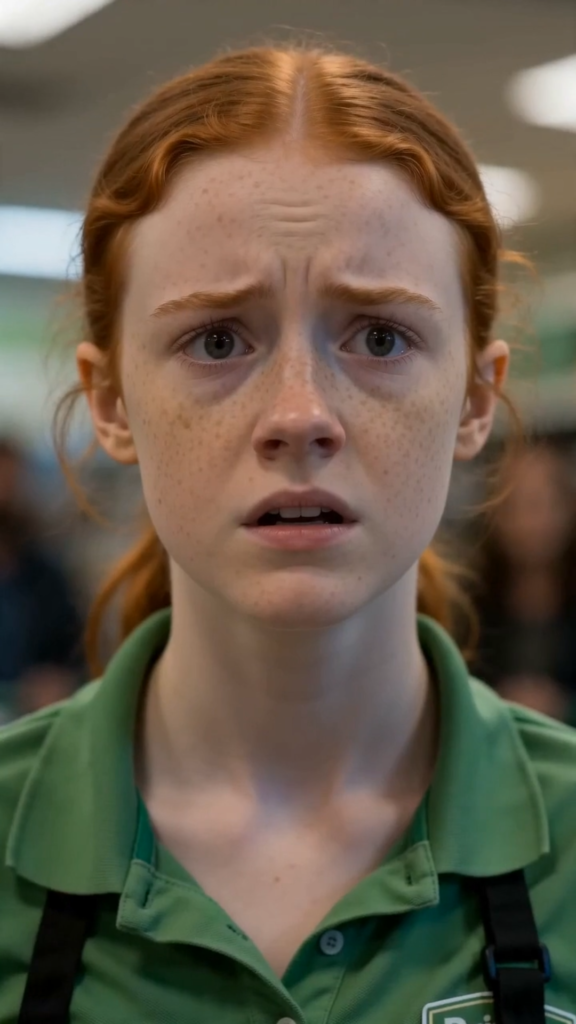
The Cashier Who Gave Away Her Last Dollar
Part 1: The Carton of Milk
The old man walked into Maple Grocery carrying nothing but a torn shopping bag and the kind of exhaustion no one could hide.
Rainwater dripped from his brown jacket, forming small dark circles on the polished tile floor. His gray hair clung to his forehead, and his thin shoulders trembled beneath the soaked fabric.
Most people barely noticed him.
It was six thirty on a Friday evening, the busiest hour of the week. Every checkout lane was crowded. Shopping carts rattled across the floor. Children begged their parents for candy. Office workers stared impatiently at their phones while the storm outside pounded against the supermarket’s large glass windows.
Employees hurried through the aisles, stacking cereal boxes and replacing empty shelves. Headlights from the parking lot shimmered through the rain, casting cool blue reflections across the warm yellow lights inside.
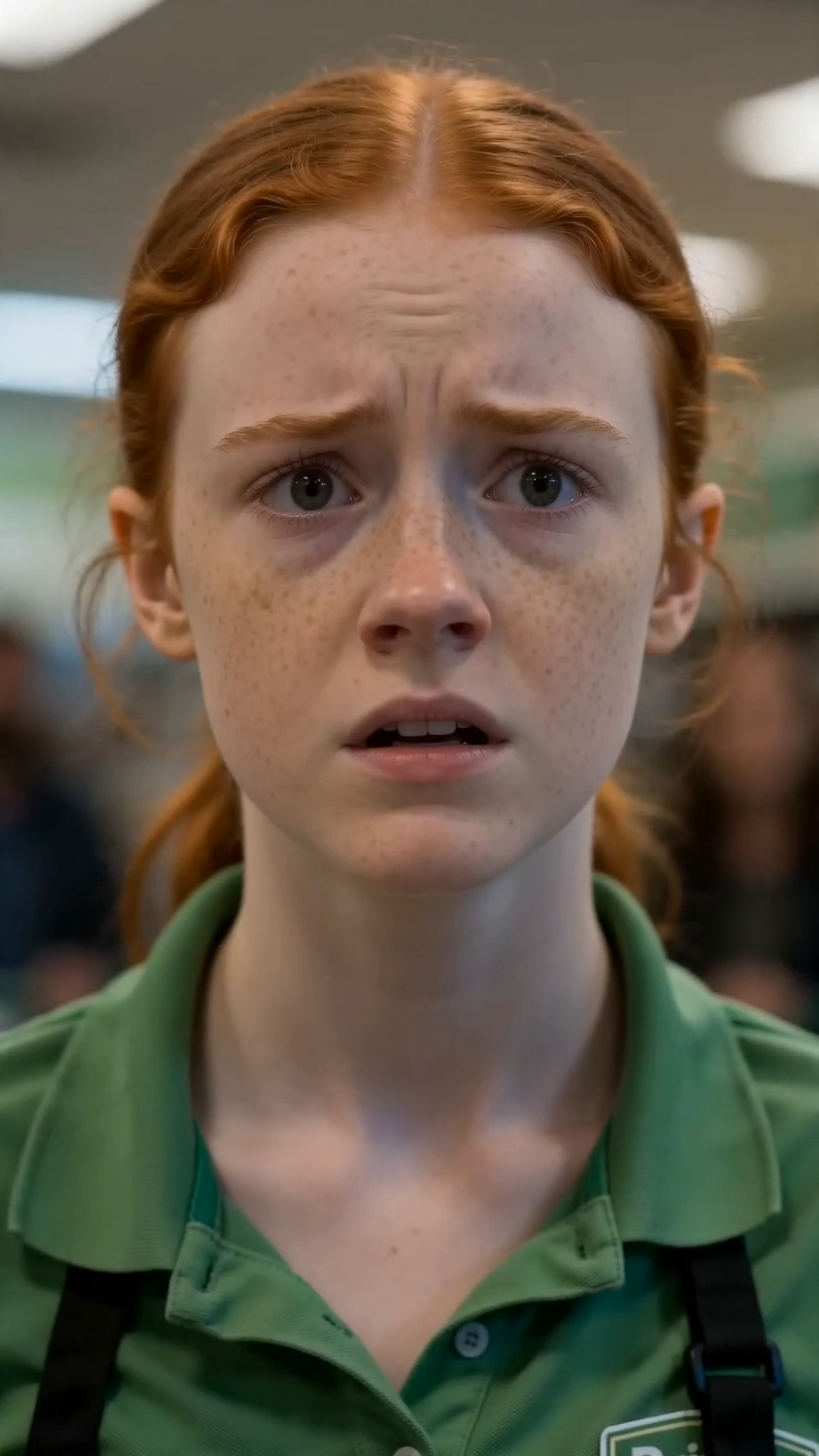
At register seven, eighteen-year-old Emma Brooks worked as quickly as she could.
She wore a green polo shirt, faded jeans, and a black apron tied tightly around her waist. Her chestnut hair was pulled into a loose ponytail, with several strands falling around her tired face.
Emma had been standing for almost eight hours.
Her feet hurt.
Her stomach was empty.
And in the pocket of her apron were the last twelve dollars she owned until payday.
She had planned to use that money after her shift to buy bread, eggs, and a small container of soup for herself and her younger brother, Noah.
Their mother had died three years earlier.
Their father had disappeared long before that.
Since then, Emma had become more than a sister.
She was the one who paid the electricity bill.
The one who attended parent-teacher conferences.
The one who stayed awake when Noah had a fever.
The one who told him everything would be fine, even when she had no idea how they would make it through the month.
“Next, please,” Emma said, forcing a polite smile.
A man in a blue suit pushed a cart forward and placed several expensive bottles of wine on the conveyor belt.
Behind him, the old man stood quietly.
He held only one item.
A carton of milk.
When it was finally his turn, he placed the milk carefully on the belt as though it were something precious.
Emma scanned it.
“Three dollars and forty-nine cents,” she said.
The old man nodded and reached into the pockets of his wet jacket.
He searched the left pocket.
Then the right.
His hands shook so badly that he dropped a handful of coins onto the floor.
Several rolled beneath the register.
The woman behind him sighed loudly.
Emma stepped around the counter and helped gather them.
“That’s all right,” she said softly. “Take your time.”
The old man counted the coins.
One dollar and eighty-seven cents.
He swallowed.
Then he pulled out an old debit card, its edges worn and faded.
“Could you try this?” he asked.
His voice was weak.
Emma inserted the card.
The register beeped.
DECLINED.
The sound was not loud.
But in that moment, it seemed to echo through the entire checkout lane.
The old man looked down.
“Try it again,” he whispered.
Emma did.
DECLINED.
Behind him, the line grew restless.
A teenage boy lifted his phone and quietly began recording.
A woman in a gray office dress shook her head.
“Some of us are in a hurry,” she muttered.
The old man heard her.
His face turned red.
“I’m sorry,” he said. “I thought there was enough.”
Emma looked at the milk.
Then at his trembling hands.
“Do you have another card?” she asked gently.
He shook his head.
“No.”
He picked up his coins one by one and put them back into his pocket.
Then he pushed the carton toward Emma.
“It’s all right,” he said. “I don’t need it.”
But the way he stared at the milk told a different story.
He needed it.
He simply did not want anyone to know how badly.
The old man turned toward the exit.
Emma watched him take three slow steps.
Then she heard her mother’s voice in her memory.
Kindness only matters when it costs you something.
Emma had heard those words hundreds of times as a child.
Her mother used to say them whenever she gave food to a stranger, offered someone a ride, or stayed late to help a neighbor.
At the time, Emma had never fully understood.
Now she did.
“Sir,” she called.
The old man stopped.
Emma reached into her apron and pulled out a crumpled five-dollar bill.
It was part of the last twelve dollars she had.
She opened the register drawer, placed the money inside, and completed the purchase.
The receipt printed.
Emma took the milk and walked around the counter.
“You forgot this,” she said.
The old man stared at her.
“I didn’t pay for it.”
“I did.”
His eyes widened.
“No,” he said quickly. “You shouldn’t.”
“It’s okay.”
“It isn’t okay,” he replied. “You don’t know me.”
Emma smiled faintly.
“I don’t have to know you to know you need help.”
Before he could answer, a sharp voice came from behind her.
“Emma.”
The store manager, David Collins, stood at the end of the register.
He was fifty years old, with neatly combed hair, a white shirt, a black tie, and the permanent expression of a man who believed rules mattered more than people.
He had been watching from the customer service desk.
“That’s against store policy,” he said.
The checkout lane grew quiet.
Emma turned toward him.
“I paid for it myself.”
“You are not allowed to leave your register during a transaction.”
“I was helping a customer.”
“You were delaying the line.”
The woman in the gray dress nodded in agreement.
The manager stepped closer.
“And employees are not permitted to give personal money to customers while on duty.”
Emma looked at the old man.
He was holding the milk against his chest.
“He needs it more than I do,” she said.
The manager’s jaw tightened.
“This is not a charity.”
“No,” Emma replied. “It’s a grocery store. People come here because they need food.”
Several customers looked up.
The manager lowered his voice.
“You’ve already received two warnings this month.”
“One was for giving a child a damaged banana that was being thrown away.”
“You ignored procedure.”
“The other was because I stayed five minutes late to help an elderly woman carry groceries to her car.”
“You left your assigned station.”
Emma’s voice remained calm.
“But no one was waiting.”
“That isn’t the point.”
The old man stepped forward.
“This is my fault,” he said. “Please don’t punish her.”
The manager barely looked at him.
“This does not concern you anymore.”
He turned back to Emma.
“Turn in your badge.”
For several seconds, no one moved.
Emma thought she had misunderstood.
“What?”
“You’re fired.”
A customer gasped.
The teenage boy continued recording.
The old man’s face went pale.
“Please,” he said. “She only bought me milk.”
The manager ignored him.
“Your badge, Emma.”
Emma stood completely still.
She thought of Noah waiting at home.
She thought of the overdue electricity bill on the kitchen table.
She thought of the rent due in six days.
Then she looked at the carton of milk in the old man’s hands.
Slowly, she reached toward her apron and removed the small plastic name badge.
She placed it on the counter.
“I’d make the same choice again,” she said.
The manager stared at her, surprised by the lack of fear in her voice.
“Then you clearly learned nothing.”
Emma untied her apron.
She folded it carefully and laid it beside the badge.
The old man’s eyes filled with tears.
“I’m sorry,” he whispered.
Emma looked at him and forced a smile.
“Don’t be.”
Then something unexpected happened.
The old man reached inside his soaked jacket.
The customers leaned back, unsure of what he was doing.
He pulled out a smartphone.
Not an old phone.
Not a cheap prepaid device.
It was a brand-new, top-of-the-line model in a slim black case.
The manager’s expression changed.
The old man unlocked it with a steady hand.
His posture seemed to shift.
His shoulders straightened.
The weakness in his face disappeared.
He pressed a contact and raised the phone to his ear.
When he spoke again, his voice was calm, clear, and authoritative.
“Approve the acquisition.”
Silence fell across the entire front of the store.
The manager blinked.
“What acquisition?” he asked.
The old man did not look at him.
He listened for a moment.
Then he said, “Yes. I’m outside Maple Grocery.”
Several customers lowered their phones.
The old man’s eyes moved toward Emma.
“And make sure the board is ready,” he continued. “I’ve found the person I was looking for.”
Emma stared at him.
The manager’s confidence began to disappear.
Outside, two black vehicles turned into the parking lot through the rain.
They stopped directly in front of the supermarket entrance.
Men and women in dark business coats stepped out.
And suddenly, everyone inside Maple Grocery understood one thing.
The man they had judged was not who he appeared to be.
But none of them yet knew the full truth.
Part 2: The Man in the Rain
The automatic doors opened.
Cold air rushed into the supermarket, carrying the smell of wet pavement.
Four people entered.
The first was a tall woman in a navy suit holding a leather portfolio.
Beside her walked a silver-haired attorney, followed by two executives wearing long dark coats.
They moved quickly and confidently through the crowded entrance.
Customers stepped aside.
The manager stared at them.
“Mr. Walker,” the woman said as she approached the old man. “Are you all right?”
Emma looked at him.
“Mr. Walker?”
The old man gave a small nod.
“I’m fine, Claire.”
The woman glanced at his soaked clothes.
“You’ve been outside in this weather for nearly two hours.”
“I needed the test to be honest.”
The manager stepped forward.
“I’m sorry, but who exactly are you?”
The old man turned.
“My name is Robert Walker.”
The manager forced a nervous smile.
“Yes, I heard that. But what is this about?”
The attorney opened his portfolio.
“Robert Walker is the founder and chairman of Walker Retail Holdings.”
A murmur spread through the crowd.
Even Emma recognized the name.
Walker Retail Holdings owned supermarkets, distribution centers, restaurants, and commercial properties across the country.
Robert Walker was one of the wealthiest private investors in the state.
His company had recently announced plans to expand into neighborhood grocery chains.
The manager’s face drained of color.
“That can’t be right.”
Claire removed a folder from her bag.
“Maple Grocery has been negotiating a sale for six months,” she said. “Mr. Walker signed the final acquisition documents this afternoon.”
The manager looked around as though someone might tell him it was a joke.
“You bought this store?”
Robert’s expression remained calm.
“I bought the entire company.”
No one spoke.
The register lights continued blinking.
Rain struck the windows.
The teenage boy slowly lowered his phone.
Emma looked from Robert to the executives.
She felt as though the floor had shifted beneath her.
The old man she had helped was not homeless.
He was not penniless.
He had entered the store intentionally.
The realization hurt more than she expected.
“You were testing us,” she said.
Robert turned toward her.
“Yes.”
Emma’s face tightened.
“You pretended your card didn’t work?”
“The card was inactive.”
“You pretended you couldn’t afford milk?”
“Yes.”
The kindness in Emma’s expression disappeared.
“I lost my job because of a test.”
The manager quickly stepped forward.
“That was an unfortunate misunderstanding. I had no idea who you were.”
Robert looked at him.
“That is exactly the problem.”
The manager stopped.
Robert placed the milk on the counter.
“You believe respect should depend on knowing a person’s title.”
“No, sir, that isn’t—”
“You ignored me when I was cold, hungry, and embarrassed. You did not ask if I was all right. You did not ask why I needed help. But the moment you heard my name, you called me sir.”
Several customers looked away.
The manager’s lips parted, but no words came out.
Robert continued.
“I have visited seventeen stores over the past six weeks. I wore the same jacket. I used the same declined card. I watched employees, managers, and customers respond to someone they believed had nothing.”
Claire opened the portfolio.
“Mr. Walker is creating a new leadership program for the company,” she explained. “He wanted to identify employees who showed compassion without expecting recognition.”
The manager pointed toward Emma.
“She violated multiple policies.”
“She spent her own money,” Robert said.
“She left her station.”
“For less than thirty seconds.”
“She argued with management.”
“She defended a hungry man.”
The manager’s voice rose.
“This is a business. We cannot allow employees to make emotional decisions every time someone claims to need help.”
Emma finally spoke.
“He never claimed anything.”
Everyone looked at her.
“He tried to leave,” she continued. “He didn’t ask me for money. He didn’t beg. I made the choice.”
Robert watched her carefully.
Emma looked back at him.
“But I still don’t like what you did.”
Claire appeared surprised.
The manager almost smiled, relieved that Emma might be turning against Robert.
“You embarrassed everyone,” Emma said. “You made us part of an experiment without telling us. People could lose jobs, homes, or trust because of what happened tonight.”
Robert’s expression softened.
“You’re right.”
The answer surprised the room.
Emma had expected him to defend himself.
Instead, he nodded.
“I believed the only way to see the truth was to become invisible,” he said. “But sometimes, tests reveal more than we intend.”
He looked toward the manager.
“Still, your firing stands.”
The manager’s face brightened slightly.
Then Robert added, “But not hers.”
The manager froze.
Robert turned to the attorney.
“Remove Mr. Collins from duty pending a full employment review.”
“You can’t do that,” the manager said.
The attorney looked at him.
“As of four fifteen this afternoon, Mr. Walker can.”
Security approached from the front office.
The manager’s fear turned into anger.
“This is insane. I gave fifteen years to this company.”
“And in fifteen seconds,” Robert replied, “you showed me what kind of company you helped create.”
The manager pointed at Emma.
“She is irresponsible. She’s late, distracted, and constantly making exceptions.”
Emma looked down.
Some of that was true.
She had been late twice because Noah missed the school bus.
She had made mistakes during double shifts.
She had covered for coworkers who were struggling.
The manager continued.
“You think one kind gesture makes her a hero? She can barely manage her own life.”
“That’s enough,” Robert said.
“No, she needs to hear it. She’s eighteen years old. No degree. No future. She’ll be working registers for the rest of her life.”
Emma felt every word.
They touched the fears she carried silently each day.
The fear that she would never escape poverty.
The fear that she would fail Noah.
The fear that kindness would always cost her more than she could afford.
Robert stepped between them.
“Her future will not be decided by you.”
The manager laughed bitterly.
“And you know her after five minutes?”
“No,” Robert said. “But I know character when I see it.”
Security escorted the manager toward the back office.
As he passed Emma, he lowered his voice.
“You’ll regret this.”
She did not respond.
When he disappeared, the customers began whispering again.
Some looked ashamed.
The woman in the gray dress approached Emma.
“I’m sorry,” she said. “I was impatient.”
Emma nodded, but she did not know what to say.
The teenage boy held up his phone.
“The whole thing is online,” he said. “People are already sharing it.”
Emma’s stomach dropped.
“You posted it?”
“I thought people should see what happened.”
“You didn’t ask me.”
The boy lowered the phone.
“I’m sorry.”
Emma looked around.
Dozens of strangers were staring at her.
Some admired her.
Some pitied her.
Some were still recording.
She suddenly felt exposed.
Robert noticed.
“Claire,” he said, “clear the front area.”
The executives asked customers to continue shopping or move toward other lanes.
Emma walked toward the employee break room.
Robert followed at a distance.
Inside, the small room smelled of coffee and microwave dinners.
Emma sat at the table and covered her face with both hands.
For several minutes, neither spoke.
Then Robert placed the carton of milk in front of her.
“I owe you more than an apology,” he said.
Emma looked up.
“What happens now?”
“I would like to offer you a new position.”
She shook her head immediately.
“No.”
“You haven’t heard it.”
“I don’t want a reward for buying milk.”
“It isn’t a reward.”
“That’s what everyone will think.”
Robert sat across from her.
“I want you to join the employee advisory council for the new company.”
Emma stared at him.
“I scan groceries.”
“You understand customers.”
“I’m eighteen.”
“You understand hardship.”
“I didn’t finish college.”
“Neither did I.”
Emma hesitated.
Robert leaned back.
“When I was fourteen, my father disappeared. My mother worked nights cleaning offices. At sixteen, I dropped out of school to help pay rent.”
Emma looked at him more closely.
“I started with one delivery truck,” he continued. “It broke down every week. I slept inside it because I couldn’t afford an apartment.”
“Then why test people like this?”
“Because I forgot what hunger looked like from the outside.”
Emma said nothing.
Robert looked toward the rain-covered window.
“My wife used to remind me,” he said. “She could walk into any room and see the person no one else noticed.”
His voice grew quieter.
“She died last year.”
Emma’s anger softened.
“I’m sorry.”
“After she died, I visited one of our stores. I watched a manager throw out sandwiches while a man searched the trash outside. The employees said policy prevented them from giving food away.”
Robert looked at her.
“I realized I had built companies that knew how to track every dollar but had forgotten how to recognize human need.”
Emma glanced at the milk.
“So you started testing people.”
“Yes.”
“And what were you looking for?”
“Someone who would choose compassion before knowing who was watching.”
Emma thought of the five-dollar bill.
She thought of Noah’s empty refrigerator.
“You found someone who made a reckless choice.”
Robert shook his head.
“No. I found someone willing to carry the cost of her values.”
Emma looked away.
Her phone vibrated.
It was a message from Noah.
Are you bringing dinner?
Emma’s throat tightened.
She had forgotten.
Robert noticed her expression.
“Is everything all right?”
“My brother is waiting for me.”
“I’ll have a car take you home.”
“No.”
“Emma—”
“I don’t need a car. I need my paycheck.”
Robert nodded.
“You will receive it.”
“I was fired.”
“You were reinstated.”
“I don’t even know if I want to stay.”
“That decision is yours.”
Emma stood.
“I need to go.”
Robert reached into his pocket and placed a business card on the table.
“Meet me tomorrow morning. Nine o’clock.”
“I have nothing to wear.”
“Wear what you own.”
“I don’t know anything about business.”
“Neither do most people in business.”
Despite herself, Emma almost smiled.
Robert pushed the card toward her.
“You challenged me when everyone else was afraid. That matters.”
Emma picked up the card.
“Where?”
Robert pointed to the address.
Walker Retail Holdings.
Corporate headquarters.
Emma stared at the gold lettering.
Then she slipped the card into her pocket.
“I’m not promising anything.”
“I didn’t ask for a promise.”
When Emma left Maple Grocery that night, the rain had slowed.
But outside the entrance, dozens of people were waiting.
Reporters.
Local bloggers.
Customers holding phones.
Someone shouted her name.
“Emma, how does it feel to become an internet hero?”
Another person asked, “Did you know he was a billionaire?”
Lights flashed in her face.
Emma stepped back.
She was not ready for any of it.
Robert emerged behind her.
The crowd moved toward him.
Emma took the opportunity to slip away.
She walked through the rain for forty minutes.
When she reached her apartment, Noah was sitting on the front steps.
He was eleven years old, thin, with curly brown hair and a backpack beside him.
He ran toward her.
“Are you famous?”
Emma stopped.
“What?”
He held up his tablet.
The video had already been viewed more than two million times.
The title read:
CASHIER FIRED FOR HELPING HUNGRY OLD MAN—THEN HE REVEALS WHO HE REALLY IS
Emma stared at the screen.
Comments appeared faster than Noah could read them.
She deserves a million dollars.
Someone give her a scholarship.
The manager should be ashamed.
This has to be fake.
Why would she risk her job over milk?
Emma handed the tablet back.
Noah smiled.
“You did the right thing.”
She looked at him.
“We have seven dollars left.”
His smile faded.
Emma sat beside him on the steps.
“I don’t know what happens next.”
Noah rested his head against her shoulder.
“Mom would be proud.”
Those words broke something inside her.
Emma began to cry.
Not loudly.
Not dramatically.
Just quiet tears she had held back for too long.
Noah wrapped his arms around her.
The rain continued falling around them.
Across the city, millions of people watched the video.
Some saw a hero.
Some saw a billionaire’s publicity stunt.
Some saw a cruel manager.
But Emma saw only a carton of milk, seven dollars in her pocket, and a future that had suddenly become more uncertain than ever.
The next morning, she stood outside Walker Retail Holdings wearing the only clean white blouse she owned.
In her hand was Robert’s business card.
Behind the glass doors waited a decision that could change her life.
But first, she would have to face the man whose test had already taken control of it.